



3X FLAG peptide
Based on 36 publication(s) in Google Scholar
3X FLAG peptides are FLAG-tagged peptides containing three repeats of the Asp-Tyr-Lys-Xaa-Xaa-Asp motif. 3X FLAG peptide can be used for protein separation and purification, and competitive elution with target proteins.
Nos produits utilisent uniquement pour la recherche. Nous ne vendons pas aux patients.
- Pureté : 99.77%
- CAS No.: 402750-12-3
- Formule: C120H169N31O49S
- Masse moléculaire:2861.87
-
Stockage:
Sealed storage, away from moisture.
Powder -80°C, 2 years , -20°C, 1 year* In solvent : -80°C, 6 months; -20°C, 1 month (sealed storage, away from moisture)


To place orders, for customer services and technical support, please contact: MedChemExpress USA
Tel: 609-228-6898 E-mail: [email protected] [email protected]


-
 Activité biologique
-
Chemical Information
-
Solvant et solubilité
- Protocole
- Pureté et documentation
- Références
-
 Help & FAQs


-
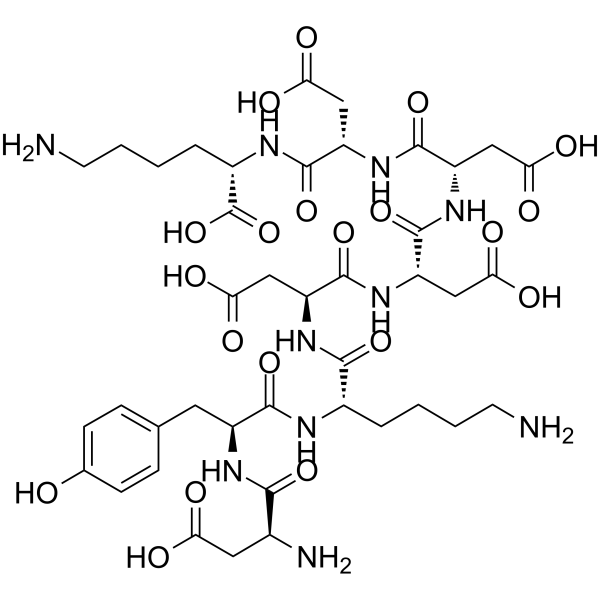
HY-P0223
FLAG peptideFLAG Tag Peptide -
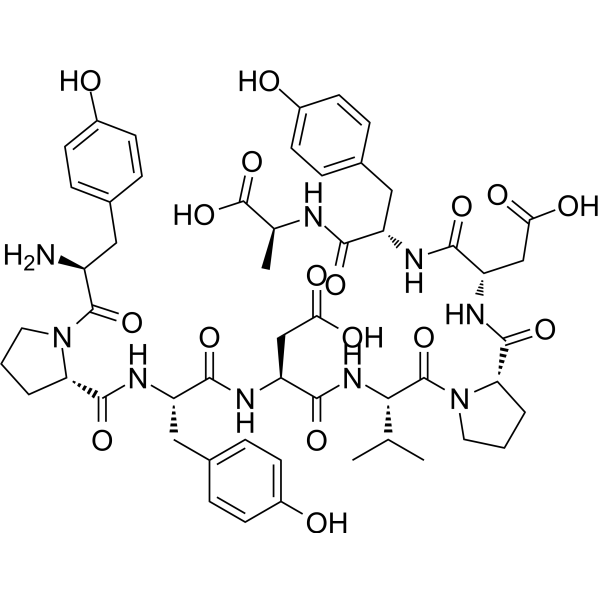
HY-P0239
HA PeptideImmunoreactive Tag -
HY-K0207
Anti-Flag Magnetic Beads -

HY-K0217
Anti-Flag Affinity Gel -
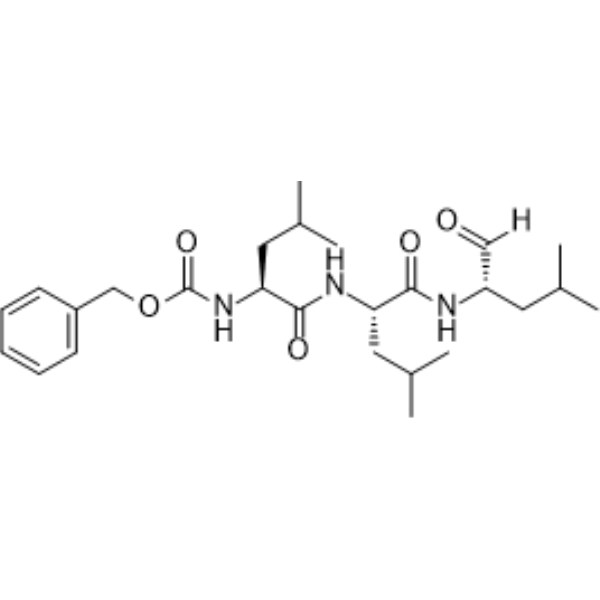
HY-13259
MG-132Proteasome Inhibitor -
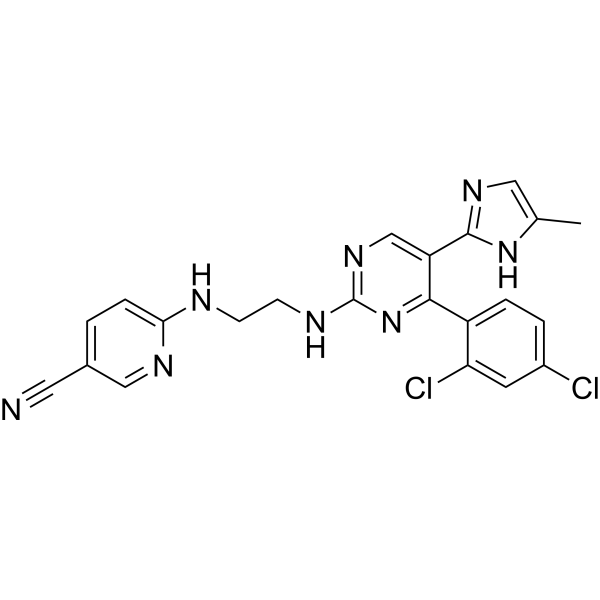
HY-10182
LaduviglusibGSK-3 Inhibitor -
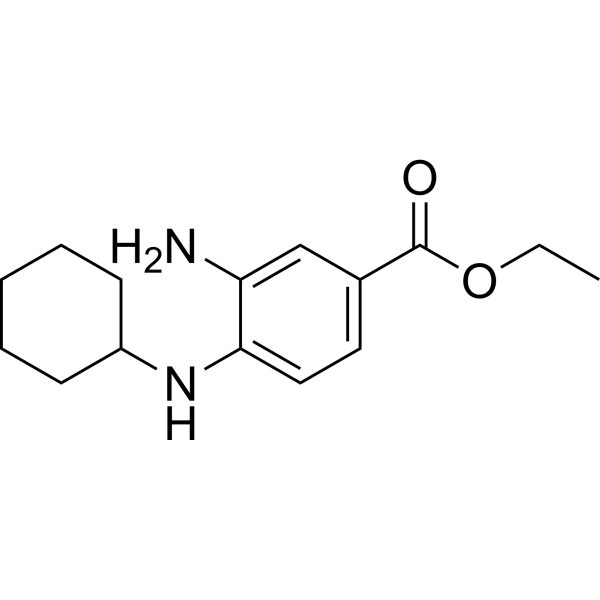
HY-100579
Ferrostatin-1Ferroptosis Inhibitor -
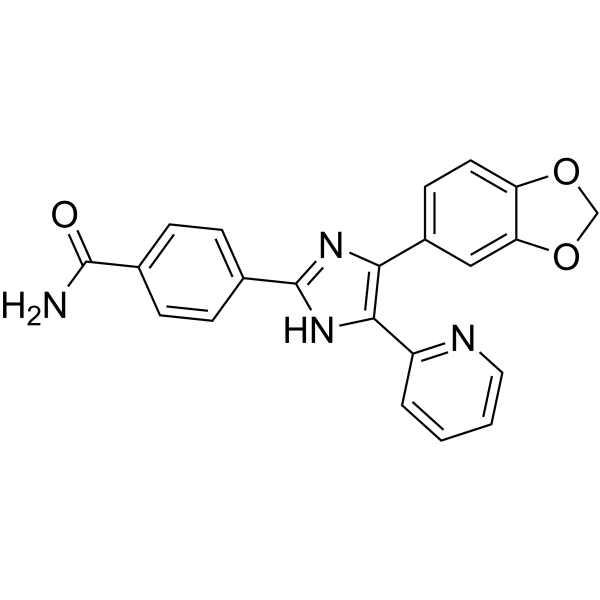
HY-10431
SB-431542TGF-β Receptor Kinase Inhibitor -
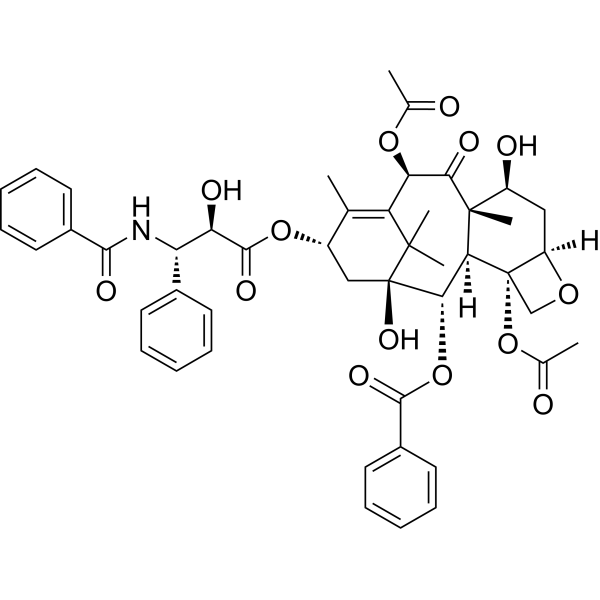
HY-B0015
PaclitaxelAntitumor Agent -
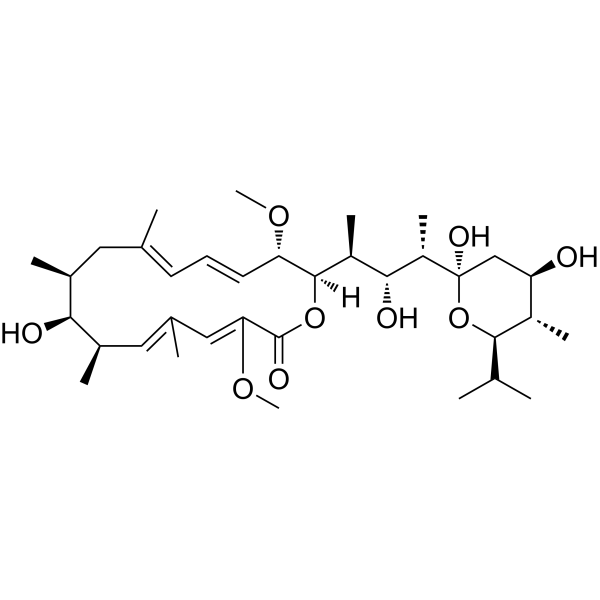
HY-100558
Bafilomycin A1V-ATPase Inhibitor -
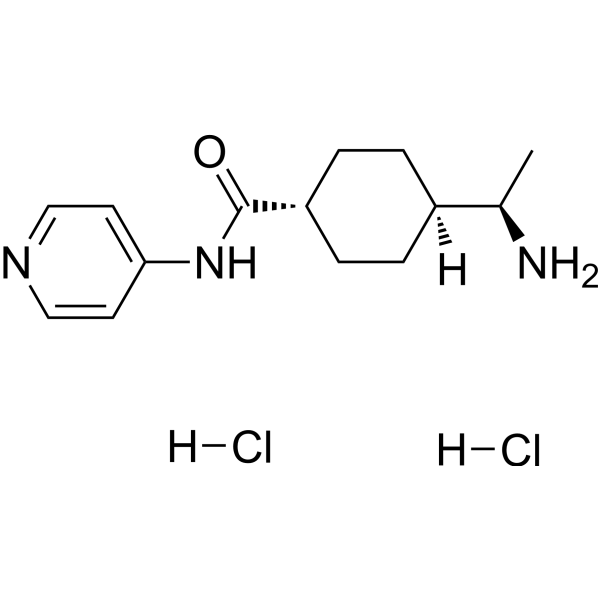
HY-10583
Y-27632 dihydrochlorideROCK Inhibitor -
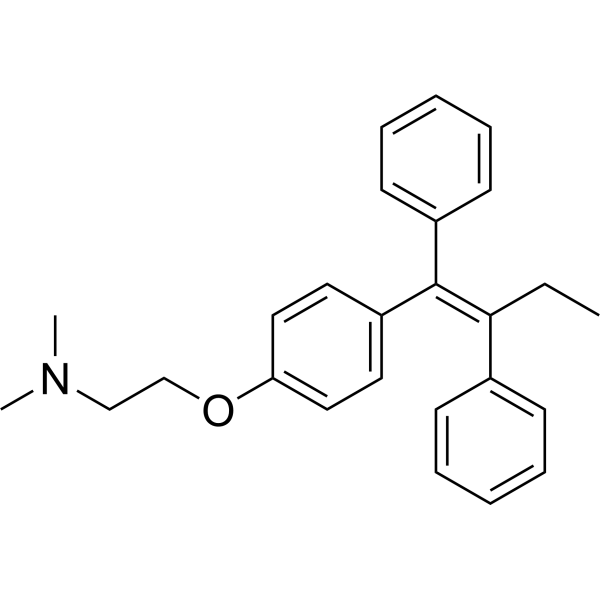
HY-13757A
TamoxifenEstrogen Receptor Modulator
Publications Citing Use of MedChemExpress (MCE) 3X FLAG peptide
More- Nature. 2026 Apr;652(8112):1362-1374. [Abstract]
- Cell Res. 2025 Apr 1. [Abstract]
- Nat Cancer. 2020 Feb;1(2):222-234. [Abstract]
- Nat Microbiol. 2021 May;6(5):658-671. [Abstract]
- Nat Commun. 2026 Jun 11. [Abstract]
- Nat Commun. 2025 Sep 2;16(1):8182. [Abstract]
- Exp Mol Med. 2026 Jun;58(6):2007-2023. [Abstract]
- J Adv Res. 2026 Jul 6:S2090-1232(26)00529-1. [Abstract]
- J Adv Res. 2025 Aug:74:225-236. [Abstract]
- Cell Discov. 2023 Aug 1;9(1):83. [Abstract]
- Cell Discov. 2022 Jun 28;8(1):60. [Abstract]
- J Clin Invest. 2026 Sep 29:e202751.
- Adv Sci (Weinh). 2026 Jun 10:e75991. [Abstract]
- J Integr Plant Biol. 2022 Sep;64(9):1789-1802. [Abstract]
- Cell Death Dis. 2025 Aug 7;16(1):595. [Abstract]
- Cancer Lett. 2026 Feb 28:639:218221. [Abstract]
- Int J Biol Macromol. 2025 Mar:295:139619. [Abstract]
- Free Radic Biol Med. 2026 Jun 19:254:243-252. [Abstract]
- Cell Rep. 2026 Apr 1;45(4):117178. [Abstract]
- Cell Rep. 2026 Mar 27;45(4):117205. [Abstract]
- Commun Biol. 2026 Mar 23. [Abstract]
- Int J Mol Sci. 2025 Mar 29;26(7):3159. [Abstract]
- PLoS Pathog. 2026 Feb 27;22(2):e1014000. [Abstract]
- J Mol Biol. 2024 Aug 15;436(16):168672. [Abstract]
- J Biol Chem. 2024 Aug;300(8):107575. [Abstract]
- Res Sq. 2026 Jul 3.
- University of Saskatchewan. 2026.
- bioRxiv. 2026 May 8:2026.05.07.723605. [Abstract]
- bioRxiv. 2026 Jan 2.
- Technical University of Darmstadt. 2025 Oct 8.
- Res Sq. 2025 Aug 31.
- bioRxiv. 2025 Sep 7.
- Complutense University of Madrid. 2025.
- bioRxiv. 2025 April 28.
- bioRxiv. 2025 March 25.
- bioRxiv. 2023 Nov 4.


Activité biologique
Description
In Vitro
1. Purification of FLAG tagged proteins through 3X FLAG peptide competition[2]
(1) Plasmid transfection: Transfect plasmids of mIRS-1, hIRS-1, or their mutants labeled with FLAG into 293 T cells for 2 days.
(2) Cell collection: Cells were harvested by centrifugation at 14000 rpm for 10 minutes at 4 °C, and lysed with HEPES buffer (150 mM NaCl, 50 mM HEPES, pH 7.4, 5 mM EDTA, 1% (w/v) sodium deoxycholate, 1% (v/v) Triton X-100, 0.2% sodium fluoride, 0.1% sodium orthovanadate, and protease inhibitor mixture).
(3) Using Anti-FLAG magnetic beads for protein separation and purification: Add Anti-Flag magnetic beads (HY-K0207)/Anti-c-Myc magnetic beads (1 μm) (HY-K0217) to the cell lysate, and incubate at room temperature for 2 hours or at 4 °C overnight. Then wash with a washing buffer and elute with a buffer containing 1 mg/mL 3X FLAG. Finally, use a gel filtration column for further purification of the supernatant, which is equilibrated with the storage buffer. All purified proteins are concentrated using centrifugal filtration and aliquoted for storage at -80 °C.
(4) Protein quantification and validation: The purified protein was quantified using an ND-2000 NanoDrop spectrophotometer with OD 280 and validated by Coomassie Brilliant Blue staining.
2. Co-IP and co-IP-MS analysis using the 3X FLAG peptide[3]
(1) Centrifuge the cell lysate at 13300 rpm for 15 minutes at 4 °C to remove intact cells.
(2) The supernatant was incubated overnight with control immunoglobulin G (IgG) or primary antibody in immunoprecipitation buffer (150 mM NaCl, 20 mM HEPES, pH 7.4, 1% Triton X-100, 12.5 mM β - glycerophosphate, 1.5 mM MgCl2, 2 mM EGTA, containing phosphatase and protease inhibitors), and then incubated with 20 μL resuspended A/G protein beads at 4 °C for 2 hours to precipitate bound proteins.
(3) For continuous immunoprecipitation, incubate 3X FLAG eluent solution (final concentration 150 μg/mL) with 5 times the volume of gel at 4 °C for 2 hours, elute the bound protein from beads, followed by Western blotting.
(4) Alternatively, the samples were run on SDS-PAGE gel and then dyed (Bio Rad). Subsequently, cut off the tape, decolorize, digest with trypsin, and perform MS analysis to determine individual proteins using liquid chromatography-MS.
MedChemExpress (MCE) has not independently confirmed the accuracy of these methods. They are for reference only.


Chemical Information
-
CAS No. 402750-12-3
-
Appearance Solid
-
Masse moléculaire 2861.87
-
Formule C120H169N31O49S
-
Color White to off-white
-
Sequence
Met-Asp-Tyr-Lys-Asp-His-Asp-Gly-Asp-Tyr-Lys-Asp-His-Asp-Ile-Asp-Tyr-Lys-Asp-Asp-Asp-Asp-Lys
-
Sequence Shortening
MDYKDHDGDYKDHDIDYKDDDDK
-
Livraison
Room temperature in continental US; may vary elsewhere.
-
Stockage
Sealed storage, away from moisture
Powder -80°C 2 years -20°C 1 year * In solvent : -80°C, 6 months; -20°C, 1 month (sealed storage, away from moisture)


Publications (36)
-
Journal Impact Factor
-
Most Recent
-
Nature
2026 Apr;652(8112):1362-1374. PMID: 42020739 -
Cell Res
2025 Apr 1. PMID: 40164768 -
Nat Cancer
MTSS1 suppresses mammary tumor-initiating cells by enhancing RBCK1-mediated p65 ubiquitination. [Abstract]2020 Feb;1(2):222-234. PMID: 35122005 -
Nat Microbiol
The Salmonella effector protein SopD targets Rab8 to positively and negatively modulate the inflammatory response. [Abstract]2021 May;6(5):658-671. PMID: 33603205 -
Nat Commun
Cryo-EM structure of the LARS1:IARS1 complex reveals a nutrient-responsive switch controlling mTORC1 signaling. [Abstract]2026 Jun 11. PMID: 42276995 -
Nat Commun
2025 Sep 2;16(1):8182. PMID: 40897715 -
Exp Mol Med
Keratin 18 functions as a lactyltransferase to trigger necroptosis in diabetic kidney disease by modulating Fas transcription. [Abstract]2026 Jun;58(6):2007-2023. PMID: 42286157 -
J Adv Res
MDH1 K298 succinylation stabilizes redox homeostasis to protect against cardiac ferroptosis in ischemia-reperfusion injury. [Abstract]2026 Jul 6:S2090-1232(26)00529-1. PMID: 42409167 -
J Adv Res
Hippocampal dipeptidyl peptidase 9 bidirectionally regulates memory associated with synaptic plasticity. [Abstract]2025 Aug:74:225-236. PMID: 39369958 -
Cell Discov
VAPB-mediated ER-targeting stabilizes IRS-1 signalosomes to regulate insulin/IGF signaling. [Abstract]2023 Aug 1;9(1):83. PMID: 37528084 -
Cell Discov
Phase separation of insulin receptor substrate 1 drives the formation of insulin/IGF-1 signalosomes. [Abstract]2022 Jun 28;8(1):60. PMID: 35764611 -
-
Adv Sci (Weinh)
RNF138-Mediated Ubiquitination and Degradation of NS5 Restricts Tick-Borne Encephalitis Virus Infection. [Abstract]2026 Jun 10:e75991. PMID: 42267516 -
J Integr Plant Biol
PROTEIN S-ACYL TRANSFERASE 13/16 modulate disease resistance by S-acylation of the nucleotide binding, leucine-rich repeat protein R5L1 in Arabidopsis. [Abstract]2022 Sep;64(9):1789-1802. PMID: 35778928 -
Cell Death Dis
Activation of AKT via a dual mechanism enhances the susceptibility of melanoma cells to glucose deprivation. [Abstract]2025 Aug 7;16(1):595. PMID: 40774947 -
Cancer Lett
2026 Feb 28:639:218221. PMID: 41412211 -
Int J Biol Macromol
SIRT5 desuccinylating IDH2 to alleviate oxidative stress in bovine mammary epithelial cells induced by ammonia. [Abstract]2025 Mar:295:139619. PMID: 39788270 -
Free Radic Biol Med
SIRT5 desuccinylates ME2 to suppress oxidative stress in bovine mammary epithelial cells. [Abstract]2026 Jun 19:254:243-252. PMID: 42320846 -
Cell Rep
2026 Apr 1;45(4):117178. PMID: 41926286 -
Cell Rep
Polyglutamine homorepeat regulates Runx2 condensation and cellular localization in a KPNA3-dependent manner. [Abstract]2026 Mar 27;45(4):117205. PMID: 41903133 -
Commun Biol
Cleavage region organizes the structural architecture of the SINE-derived B2 repressive ribozyme. [Abstract]2026 Mar 23. PMID: 41872304 -
Int J Mol Sci
The Role of Puccinia polysora Underw Effector PpEX in Suppressing Plant Defenses and Facilitating Pathogenicity. [Abstract]2025 Mar 29;26(7):3159. PMID: 40243911 -
PLoS Pathog
2026 Feb 27;22(2):e1014000. PMID: 41758870 -
J Mol Biol
Human CST Stimulates Base Excision Repair to Prevent the Accumulation of Oxidative DNA Damage. [Abstract]2024 Aug 15;436(16):168672. PMID: 38908783 -
J Biol Chem
Phosphorylation of GCN2 by mTOR confers adaptation to conditions of hyper-mTOR activation under stress. [Abstract]2024 Aug;300(8):107575. PMID: 39013537 -
-
-
bioRxiv
2026 May 8:2026.05.07.723605. PMID: 42146656 -
-
-
-
-
-
-
-


Solvant et solubilité
In Vitro:
H2O : 33.33 mg/mL (11.65 mM; ultrasonic and adjust pH to 2 with 1 M HCL)
DMSO : 10 mg/mL (3.49 mM; Need ultrasonic; Hygroscopic DMSO has a significant impact on the solubility of product, please use newly opened DMSO)
Please refer to the solubility information to select the appropriate solvent. Once prepared, please aliquot and store the solution to prevent product inactivation from repeated freeze-thaw cycles.
Storage method and period of stock solution: -80°C, 6 months; -20°C, 1 month (sealed storage, away from moisture). When stored at -80°C, please use it within 6 months. When stored at -20°C, please use it within 1 month.
* Note: If you choose water as the stock solution, please dilute it to the working solution, then filter and sterilize it with a 0.22 μm filter before use.
Please refer to the solubility information to select the appropriate solvent. Once prepared, please aliquot and store the solution to prevent product inactivation from repeated freeze-thaw cycles.
Storage method and period of stock solution: -80°C, 6 months; -20°C, 1 month (sealed storage, away from moisture). When stored at -80°C, please use it within 6 months. When stored at -20°C, please use it within 1 month.
* Note: If you choose water as the stock solution, please dilute it to the working solution, then filter and sterilize it with a 0.22 μm filter before use.
Concentration (start) × Volume (start) = Concentration (final) × Volume (final)
In Vivo:
For the following dissolution methods, please prepare the working solution directly:
It is recommended to prepare fresh solutions and use them promptly within a short period of time.
The percentages shown for the solvents indicate their volumetric ratio in the final prepared solution. If precipitation or phase separation occurs during preparation, heat and/or sonication can be used to aid dissolution.
Add each solvent one by one: PBS
Solubility: 50 mg/mL (17.47 mM); Clear solution; Need ultrasonic


Pureté et documentation
-
Fiche technique (283 KB)
-
SDS (254 KB)
- English - EN (254 KB)
- Français - FR (254 KB)
- Deutsch - DE (254 KB)
- Norwegian - NO (254 KB)
- Español - ES (254 KB)
- Swedish - SV (254 KB)
- Italian - IT (254 KB)
- Korean - KR (254 KB)
- Portuguese - PT (254 KB)
-
Instruction de manipulation (2659 KB)
Références
[1]. Zilio N, et al. Improved Tandem Affinity Purification Tag and Methods for Isolation of Proteins and Protein Complexes from Schizosaccharomyces pombe. Cold Spring Harb Protoc. 2017 Mar 1;2017(3):pdb.prot091611. [Content Brief]
[2]. Gao XK, et al. Phase separation of insulin receptor substrate 1 drives the formation of insulin/IGF-1 signalosomes. Cell Discov. 2022 Jun 28;8(1):60. [Content Brief]
[3]. Cong M, et al. MTSS1 suppresses mammary tumor-initiating cells by enhancing RBCK1-mediated p65 ubiquitination. Nat Cancer. 2020 Feb;1(2):222-234. [Content Brief]


Complete Stock Solution Preparation Table
Please refer to the solubility information to select the appropriate solvent. Once prepared, please aliquot and store the solution to prevent product inactivation from repeated freeze-thaw cycles.
Storage method and period of stock solution: -80°C, 6 months; -20°C, 1 month (sealed storage, away from moisture). When stored at -80°C, please use it within 6 months. When stored at -20°C, please use it within 1 month.
| Optional Solvent | Concentration Solvent Mass | 1 mg | 5 mg | 10 mg | 25 mg |
|---|---|---|---|---|---|
| DMSO / H2O | 1 mM | 0.3494 mL | 1.7471 mL | 3.4942 mL | 8.7355 mL |
| H2O | 5 mM | 0.0699 mL | 0.3494 mL | 0.6988 mL | 1.7471 mL |
| 10 mM | 0.0349 mL | 0.1747 mL | 0.3494 mL | 0.8736 mL |
* Note: If you choose water as the stock solution, please dilute it to the working solution, then filter and sterilize it with a 0.22 μm filter before use.


3X FLAG peptide Related Classifications
HY-P0319 Related Classifications
 Powered by Bioz