



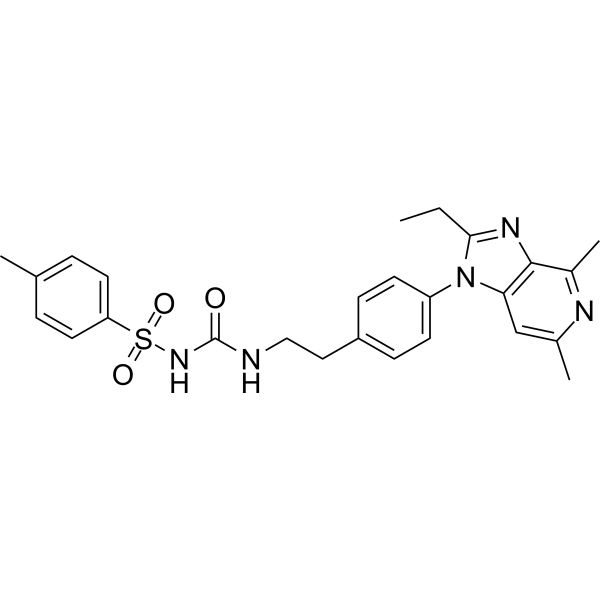
Grapiprant
Based on 4 publication(s) in Google Scholar
Grapiprant (CJ-023423) is a selective EP4 receptor antagonist whose physiological ligand is prostaglandin E2 (PGE2). Grapiprant displaces [3H]-PGE2 (1 nM) binding to dog recombinant EP4 receptor with IC50 value of 35 nM and Ki value of 24 nM. Grapiprant has the potential for osteoarthritic pain and inflammation treatment[3] .
Nos produits utilisent uniquement pour la recherche. Nous ne vendons pas aux patients.
- Pureté : 99.57%
- CAS No.: 415903-37-6
- Formule: C26H29N5O3S
- Masse moléculaire:491.61
-
Stockage:Powder -20°C, 3 years , 4°C, 2 years ; In solvent -80°C, 2 years , -20°C, 1 year

To place orders, for customer services and technical support, please contact: MedChemExpress USA
Tel: 609-228-6898 E-mail: [email protected] [email protected]


-
 Activité biologique
-
Chemical Information
-
Solvant et solubilité
- Protocole
- Pureté et documentation
- Références
-
 Help & FAQs


-
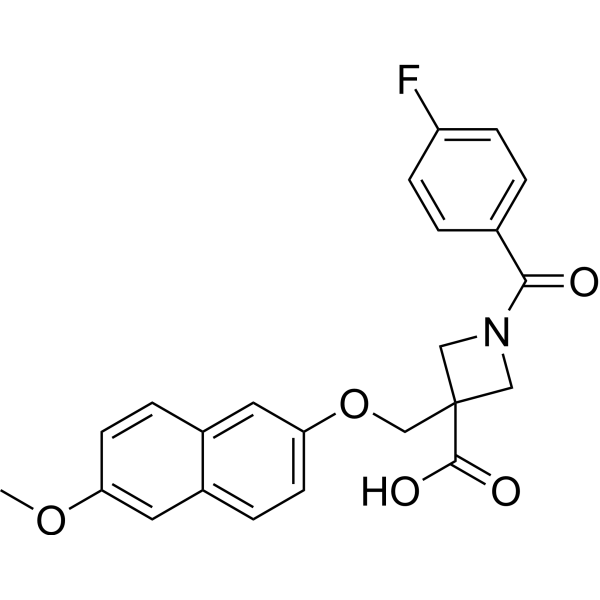
HY-18966
PF-04418948EP2 Receptor Antagonist -
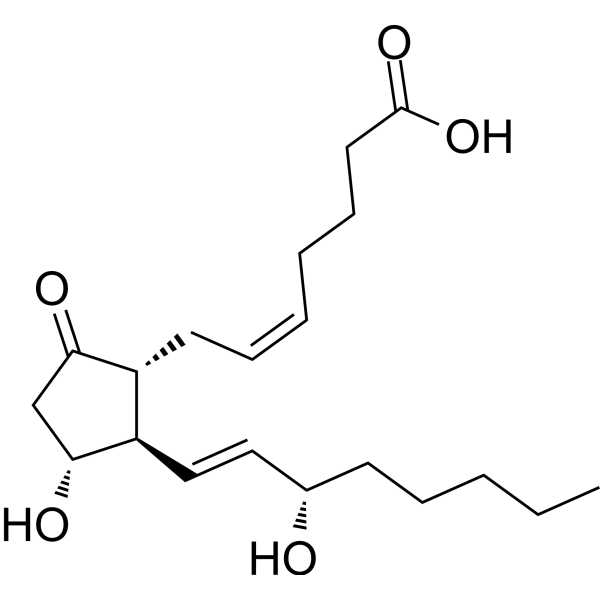
HY-101952
Prostaglandin E2Prostaglandin Receptor Agonist -
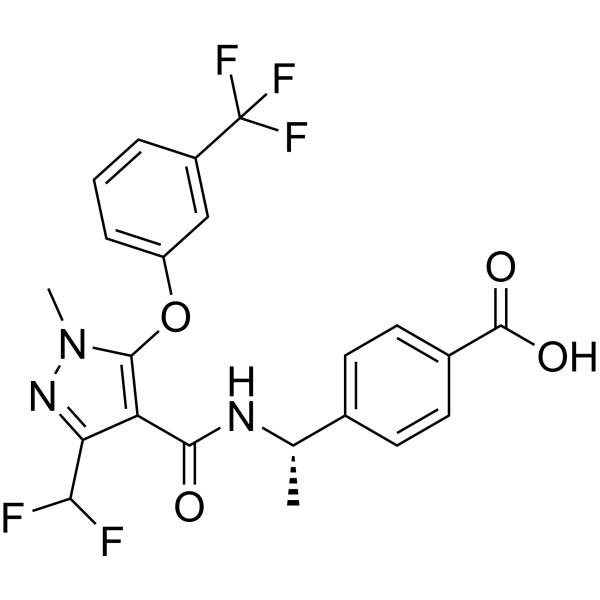
HY-103088
PalupiprantEP4 Antagonist -
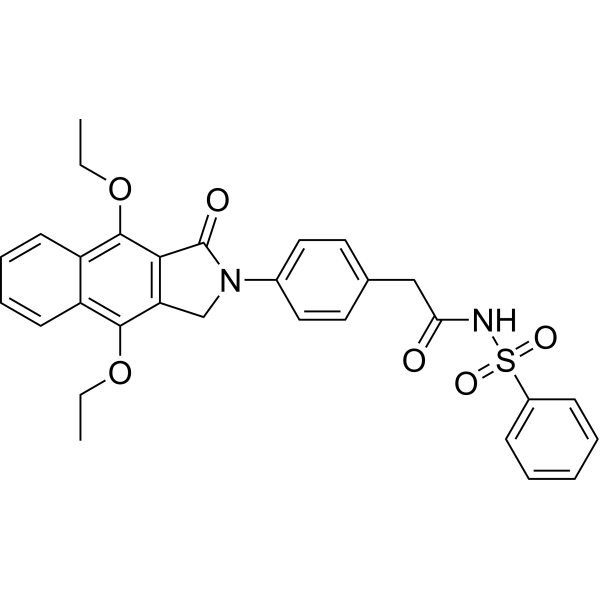
HY-16963
GW627368Prostaglandin Receptor Antagonist -
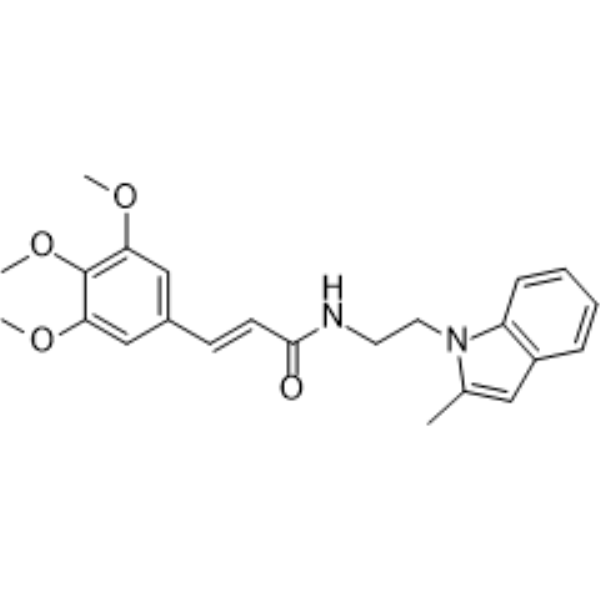
HY-18971
TG4-155EP2 Receptor Antagonist -
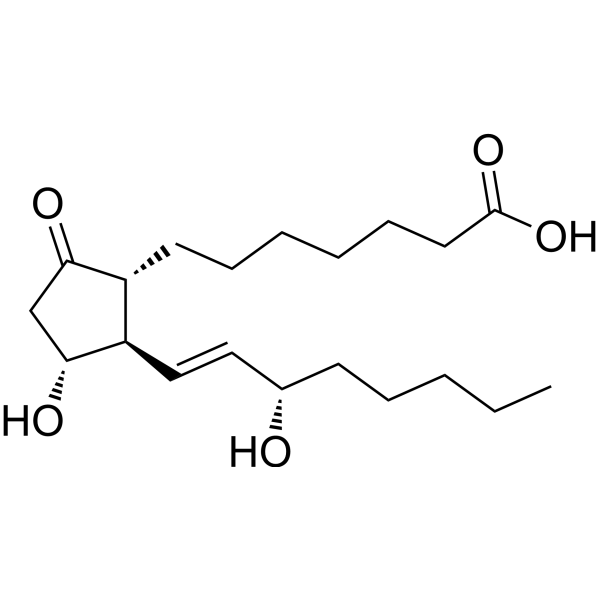
HY-B0131
Prostaglandin E1Vasodilator -
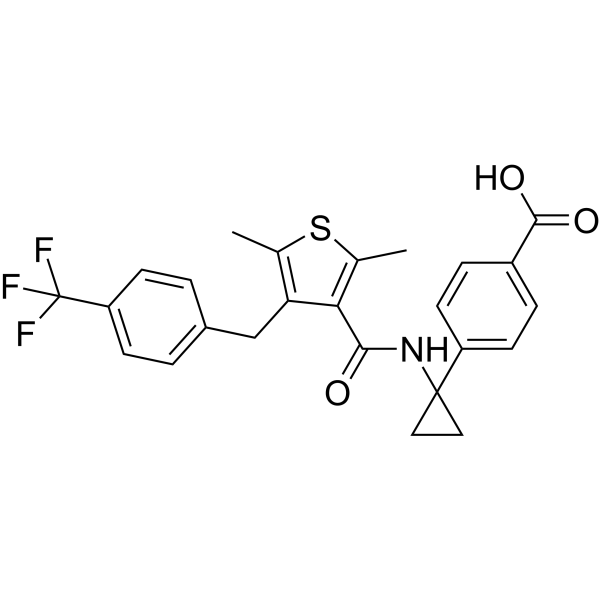
HY-10413
MK-2894EP4 Receptor Antagonist -
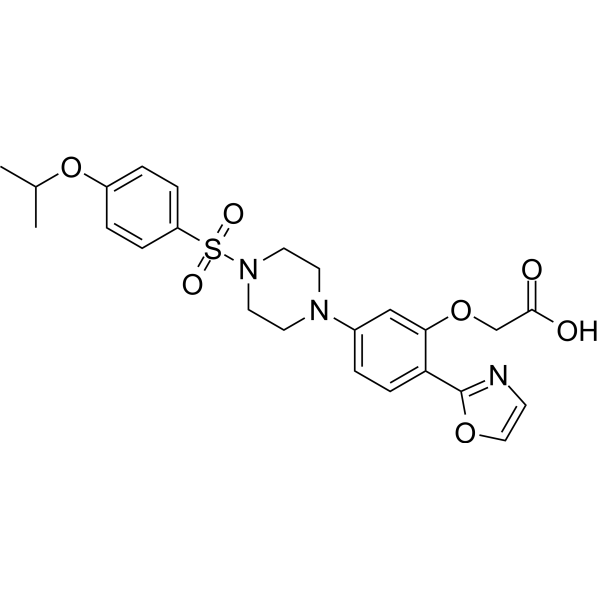
HY-16763
AsapiprantProstaglandin Receptor Antagonist -
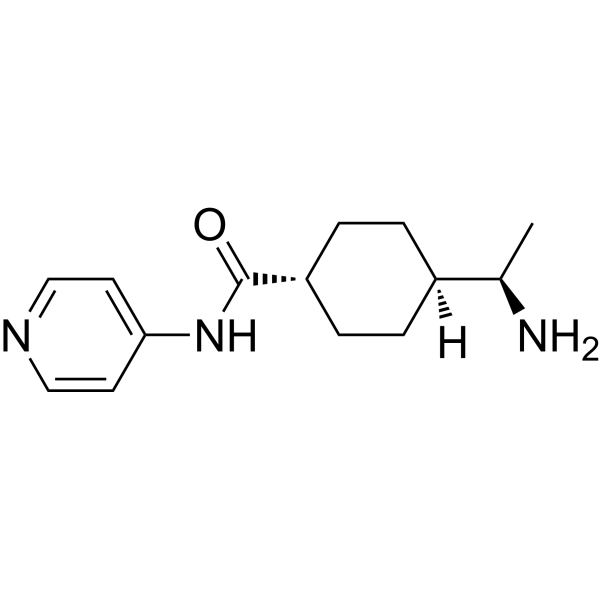
HY-10071
Y-27632ROCK Inhibitor -
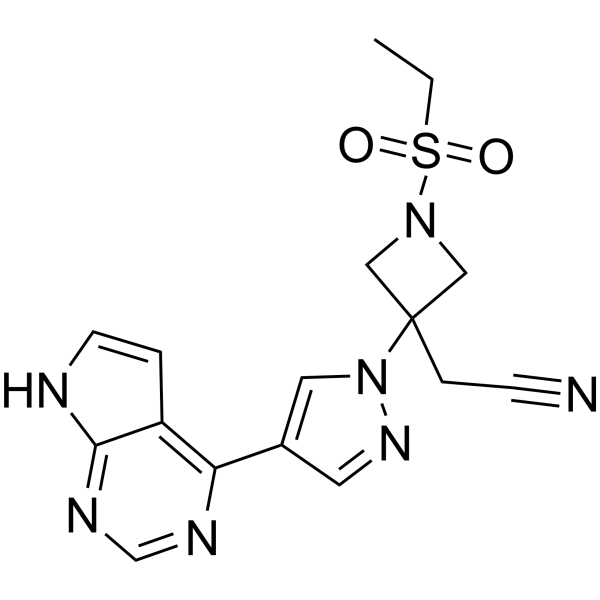
HY-15315
BaricitinibJAK1/2 Inhibitor -
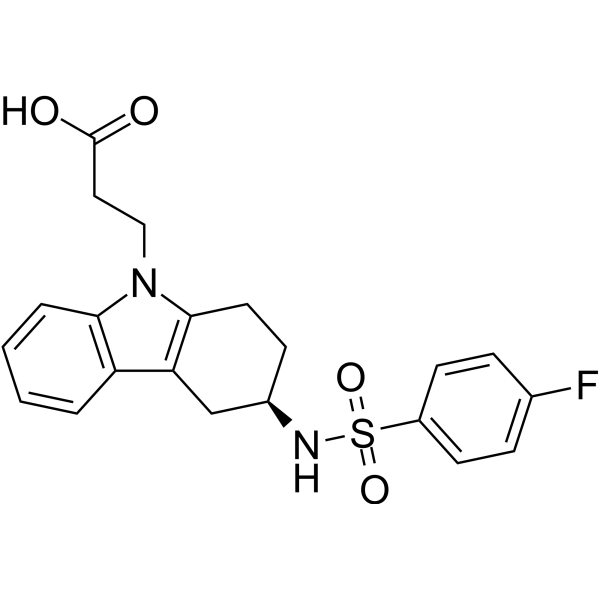
HY-B0745
RamatrobanThromboxane A2 Receptor Antagonist -
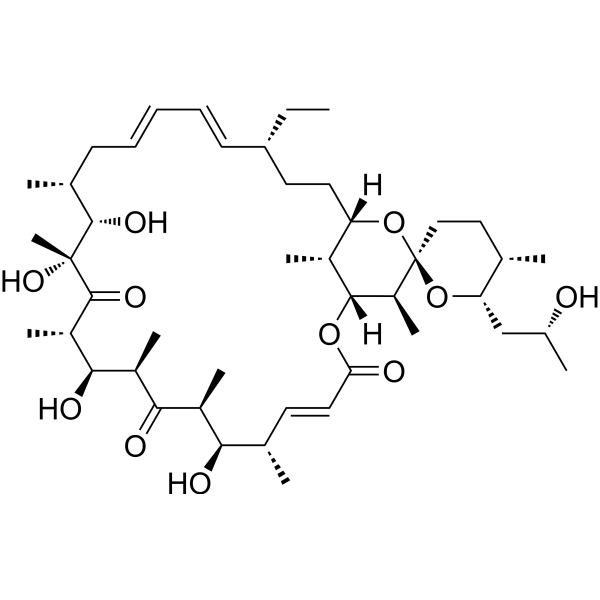
HY-16589
Oligomycin AMitochondrial ATP Synthase Inhibitor
Publications Citing Use of MedChemExpress (MCE) Grapiprant
More

Activité biologique
Description
IC50 & Target
[2]|
dog EP4 35 nM (IC50) |
dog EP4 24 nM (Ki) |
Cellular Effect
|
Cell Line

|
Type | Value | Description | References |
|---|---|---|---|---|
| HEK293 | IC50 |
11.7 nM
Compound: 1
|
Antagonist activity at recombinant human EP4 receptor expressed in HEK293 cells assessed as inhibition of PGE2-stimulated cAMP accumulation by scintillation proximity assay in presence of [125I]-cAMP
Antagonist activity at recombinant human EP4 receptor expressed in HEK293 cells assessed as inhibition of PGE2-stimulated cAMP accumulation by scintillation proximity assay in presence of [125I]-cAMP
|
[PMID: 26091726] |
| HEK293 | IC50 |
11.7 nM
Compound: 1; CJ-023,423
|
Antagonist activity against human EP4 expressed in HEK293 cells assessed as inhibition of PGE2-stimulated production of cAMP incubated for 20 mins by HTRF assay
Antagonist activity against human EP4 expressed in HEK293 cells assessed as inhibition of PGE2-stimulated production of cAMP incubated for 20 mins by HTRF assay
|
[PMID: 27020304] |
| HEK293 | IC50 |
11.7 nM
Compound: 1; CJ-023423
|
Antagonist activity at human EP4 receptor in HEK293 cells assessed as inhibition of PGE2-induced cAMP accumulation
Antagonist activity at human EP4 receptor in HEK293 cells assessed as inhibition of PGE2-induced cAMP accumulation
|
[PMID: 26608552] |
| HEK293 | IC50 |
689 nM
Compound: 1
|
Displacement of [3H]-PGE2 from recombinant human EP4 receptor expressed in HEK293 cell membranes after 90 mins by liquid scintillation counting analysis
Displacement of [3H]-PGE2 from recombinant human EP4 receptor expressed in HEK293 cell membranes after 90 mins by liquid scintillation counting analysis
|
[PMID: 26091726] |
In Vivo
MedChemExpress (MCE) has not independently confirmed the accuracy of these methods. They are for reference only.
-
Animal Model:36 beagles of both sexes (9-month-old)[3]
-
Dosage:0 mg/kg, 1 mg/kg, 6 mg/kg, or 50 mg/kg
-
Administration:Oral administration; every 24 hours; for 9 months
-
Result:Long-term oral administration was safe for dogs.
Essai clinique
| NCT Number | Sponsor | Condition | Start Date |
Phase
|
|---|---|---|---|---|
| NCT01329991 | 2011-05 | PHASE1 |


Chemical Information
-
CAS No. 415903-37-6
-
Appearance Solid
-
Masse moléculaire 491.61
-
Formule C26H29N5O3S
-
Color White to off-white
-
SMILES
O=S(C1=CC=C(C)C=C1)(NC(NCCC2=CC=C(N3C(CC)=NC4=C3C=C(C)N=C4C)C=C2)=O)=O
-
Synonyms
CJ-023423; RQ-00000007; AAT-007
-
Livraison
Room temperature in continental US; may vary elsewhere.
-
Stockage
Powder -20°C 3 years 4°C 2 years In solvent -80°C 2 years -20°C 1 year


Publications (4)
-
Journal Impact Factor
-
Most Recent
-
Nat Commun
2023 Dec 6;14(1):8067. PMID: 38057319 -
JCI Insight
Restoration of the type I IFN-IL-1 balance through targeted blockade of PTGER4 inhibits autoimmunity in NOD mice. [Abstract]2018 Feb 8;3(3):e97843. PMID: 29415894 -
Xenobiotica
Comparison of predicted intrinsic hepatic clearance of 30 pharmaceuticals in canine and feline liver microsomes. [Abstract]2019 Feb;49(2):177-186. PMID: 29405805 -


Solvant et solubilité
In Vitro:
DMSO : ≥ 50 mg/mL (101.71 mM; Hygroscopic DMSO has a significant impact on the solubility of product, please use newly opened DMSO)
* "≥" means soluble, but saturation unknown.
Please refer to the solubility information to select the appropriate solvent. Once prepared, please aliquot and store the solution to prevent product inactivation from repeated freeze-thaw cycles.
Storage method and period of stock solution: -80°C, 2 years; -20°C, 1 year. When stored at -80°C, please use it within 2 years. When stored at -20°C, please use it within 1 year.
Please refer to the solubility information to select the appropriate solvent. Once prepared, please aliquot and store the solution to prevent product inactivation from repeated freeze-thaw cycles.
Storage method and period of stock solution: -80°C, 2 years; -20°C, 1 year. When stored at -80°C, please use it within 2 years. When stored at -20°C, please use it within 1 year.
Concentration (start) × Volume (start) = Concentration (final) × Volume (final)
In Vivo:
Select the appropriate dissolution method based on your experimental animal and administration route.
- For the following dissolution methods, please ensure to first prepare a clear stock solution using an In Vitro approach and then sequentially add co-solvents:
- To ensure reliable experimental results, the clarified stock solution can be appropriately stored based on storage conditions. As for the working solution for In Vivo experiments, it is recommended to prepare freshly and use it on the same day.
- The percentages shown for the solvents indicate their volumetric ratio in the final prepared solution. If precipitation or phase separation occurs during preparation, heat and/or sonication can be used to aid dissolution.
Add each solvent one by one: 10% DMSO 40% PEG300 5% Tween-80 45% Saline
Solubility: ≥ 2.5 mg/mL (5.09 mM); Clear solution
This protocol yields a clear solution of ≥ 2.5 mg/mL (saturation unknown).
Taking 1 mL working solution as an example, add 100 μL DMSO stock solution (25.0 mg/mL) to 400 μL PEG300, and mix evenly; then add 50 μL Tween-80 and mix evenly; then add 450 μL Saline to adjust the volume to 1 mL.
Preparation of Saline: Dissolve 0.9 g sodium chloride in ddH₂O and dilute to 100 mL to obtain a clear Saline solution.
Add each solvent one by one: 10% DMSO 90% (20% SBE-β-CD in Saline)
Solubility: ≥ 2.5 mg/mL (5.09 mM); Clear solution
This protocol yields a clear solution of ≥ 2.5 mg/mL (saturation unknown).
Taking 1 mL working solution as an example, add 100 μL DMSO stock solution (25.0 mg/mL) to 900 μL 20% SBE-β-CD in Saline, and mix evenly.
Preparation of 20% SBE-β-CD in Saline (4°C, storage for one week): 2 g SBE-β-CD powder is dissolved in 10 mL Saline, completely dissolve until clear.
In Vivo Dissolution Calculator
Please enter the basic information of animal experiments:
-
-
-
-
Recommended: Prepare an additional quantity of animals to account for potential losses during experiments.
Please enter your animal formula composition:
-
%DMSO +
Recommended: Keep the proportion of DMSO in working solution below 2% if your animal is weak.
-
%+
-
+%Tween-80 + +
-
%Saline +
The co-solvents required include: DMSO, . All of co-solvents are available by MedChemExpress (MCE). , Tween 80. All of co-solvents are available by MedChemExpress (MCE).
Working solution concentration: 0.22 mg/mL
Method for preparing stock solution: mg drug dissolved in μL DMSO. Stock solution concentration: mg/mL.
1. Take μL DMSO stock solution;
2. Add μL .
μL , mix evenly;
3. Then add μL Tween 80, mix evenly;
4. Then add μL
Please ensure that the stock solution in the first step is dissolved to a clear state, and add co-solvents in sequence. You can use ultrasonic heating (ultrasonic cleaner, recommended frequency 20-40 kHz), vortexing, etc. to assist dissolution.


Pureté et documentation
-
Fiche technique (276 KB)
-
SDS (393 KB)
- English - EN (393 KB)
- Français - FR (393 KB)
- Deutsch - DE (393 KB)
- Norwegian - NO (393 KB)
- Español - ES (393 KB)
- Swedish - SV (393 KB)
- Italian - IT (393 KB)
- Korean - KR (393 KB)
- Portuguese - PT (393 KB)
-
Instruction de manipulation (2659 KB)
Références
[1]. Vito VD, et al. Detection and quantification of the selective EP4 receptor antagonist CJ-023423 (grapiprant) in canine plasma by HPLC with spectrofluorimetric detection. J Pharm Biomed Anal. 2016 Jan 25;118:251-8. [Content Brief]
[2]. Nagahisa A, et al. Pharmacology of grapiprant, a novel EP4 antagonist: receptor binding, efficacy in a rodent postoperative pain model, and a dose estimation for controlling pain in dogs. J Vet Pharmacol Ther. 2017 Jun;40(3):285-292. [Content Brief]
[3]. Rausch-Derra LC, et al. Evaluation of the safety of long-term, daily oral administration of grapiprant, a novel drug for treatment of osteoarthritic pain and inflammation, in healthy dogs.Am J Vet Res. 2015 Oct;76(10):853-9. [Content Brief]


Complete Stock Solution Preparation Table
Please refer to the solubility information to select the appropriate solvent. Once prepared, please aliquot and store the solution to prevent product inactivation from repeated freeze-thaw cycles.
Storage method and period of stock solution: -80°C, 2 years; -20°C, 1 year. When stored at -80°C, please use it within 2 years. When stored at -20°C, please use it within 1 year.
| Optional Solvent | Concentration Solvent Mass | 1 mg | 5 mg | 10 mg | 25 mg |
|---|---|---|---|---|---|
| DMSO | 1 mM | 2.0341 mL | 10.1707 mL | 20.3413 mL | 50.8533 mL |
| 5 mM | 0.4068 mL | 2.0341 mL | 4.0683 mL | 10.1707 mL | |
| 10 mM | 0.2034 mL | 1.0171 mL | 2.0341 mL | 5.0853 mL | |
| 15 mM | 0.1356 mL | 0.6780 mL | 1.3561 mL | 3.3902 mL | |
| 20 mM | 0.1017 mL | 0.5085 mL | 1.0171 mL | 2.5427 mL | |
| 25 mM | 0.0814 mL | 0.4068 mL | 0.8137 mL | 2.0341 mL | |
| 30 mM | 0.0678 mL | 0.3390 mL | 0.6780 mL | 1.6951 mL | |
| 40 mM | 0.0509 mL | 0.2543 mL | 0.5085 mL | 1.2713 mL | |
| 50 mM | 0.0407 mL | 0.2034 mL | 0.4068 mL | 1.0171 mL | |
| 60 mM | 0.0339 mL | 0.1695 mL | 0.3390 mL | 0.8476 mL | |
| 80 mM | 0.0254 mL | 0.1271 mL | 0.2543 mL | 0.6357 mL | |
| 100 mM | 0.0203 mL | 0.1017 mL | 0.2034 mL | 0.5085 mL |


Grapiprant Related Classifications
HY-16781 Related Classifications
 Powered by Bioz