



Benzalkonium bromide

Based on 1 Customer Validation
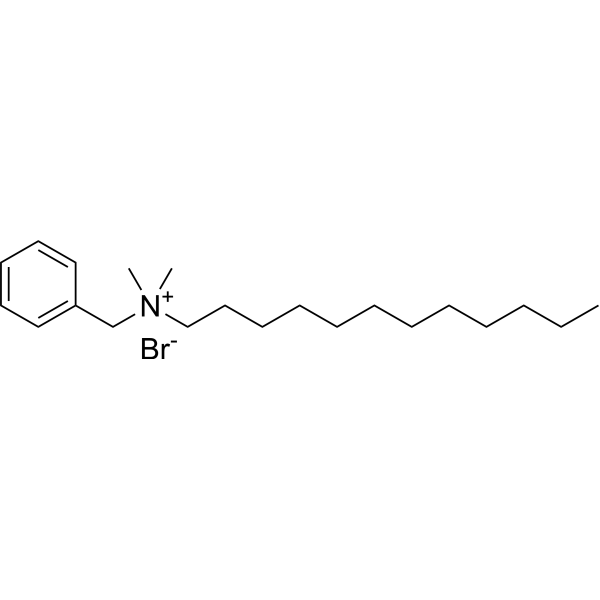
N-Benzyl-N, N-dimethyldodecan-1-aminium bromide, also known as Benzalkonium Chloride (BAC), is a quaternary ammonium compound widely used as an antimicrobial and surfactant in various industries. BAC is commonly used as a disinfectant and antiseptic in a variety of products including hand sanitizers, disinfectant wipes and eye drops. Its ability to kill bacteria, viruses and fungi makes it an effective tool in preventing the spread of infection. BAC is also used as a preservative and disinfectant in the food industry. It is added to food packaging and processing equipment to prevent the growth of microorganisms and increase the shelf life of foods. Additionally, BACs are found in many household products such as cleaning solutions, fabric softeners and personal care products. Its surfactant properties allow it to be used to reduce surface tension and increase the effectiveness of cleaning agents. Although BAC has many uses, ingestion or exposure to high concentrations of BAC can cause skin irritation and other adverse effects.
Nos produits utilisent uniquement pour la recherche. Nous ne vendons pas aux patients.
- Assay : 98.98%
- CAS No.: 7281-04-1
- Formule: C21H38BrN
- Masse moléculaire:384.44
-
Stockage:
4°C, sealed storage, away from moisture
* In solvent : -80°C, 6 months; -20°C, 1 month (sealed storage, away from moisture)

To place orders, for customer services and technical support, please contact: MedChemExpress USA
Tel: 609-228-6898 E-mail: [email protected] [email protected]


-
 Activité biologique
-
Chemical Information
-
Solvant et solubilité
- Protocole
- Pureté et documentation
-
 Help & FAQs


-
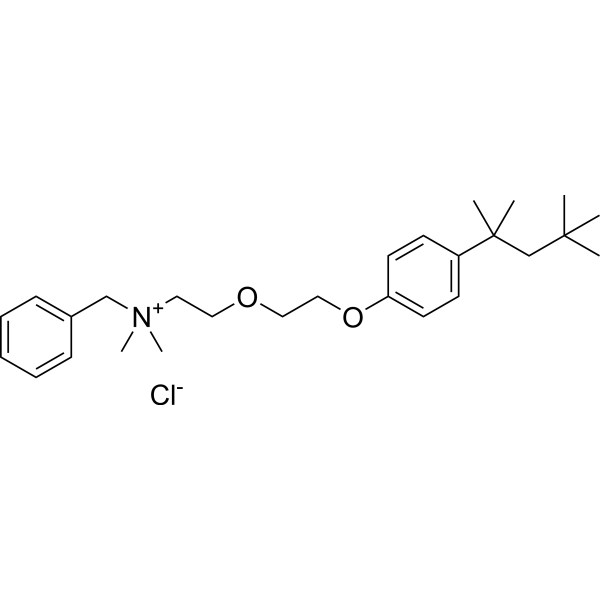
HY-B0942
Benzethonium chlorideMicrobiocidal Agent -
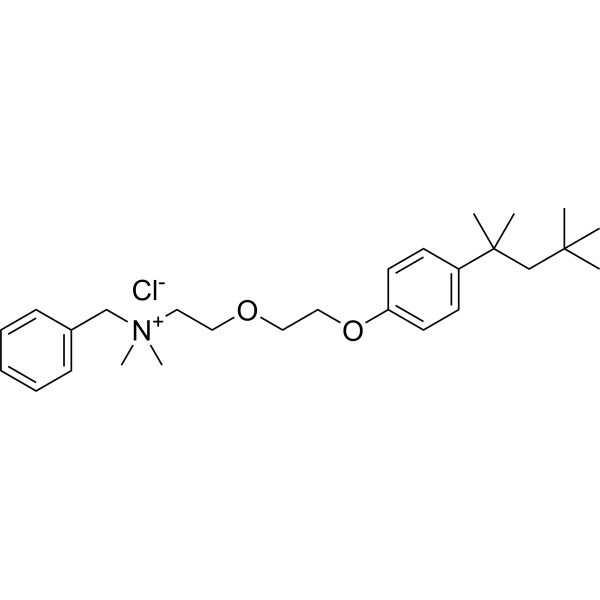
HY-B0942R
Benzethonium chloride (Standard)Microbiocidal Agent -
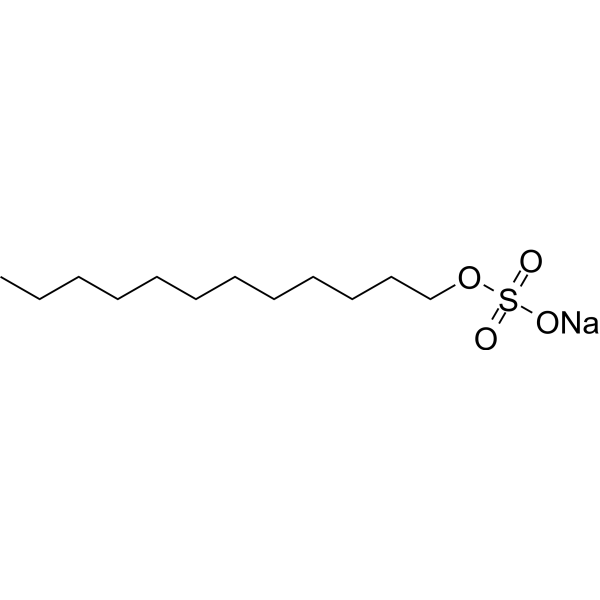
HY-Y0316B
Sodium dodecyl sulfate for electrophoresisBiochemical Assay Reagent -
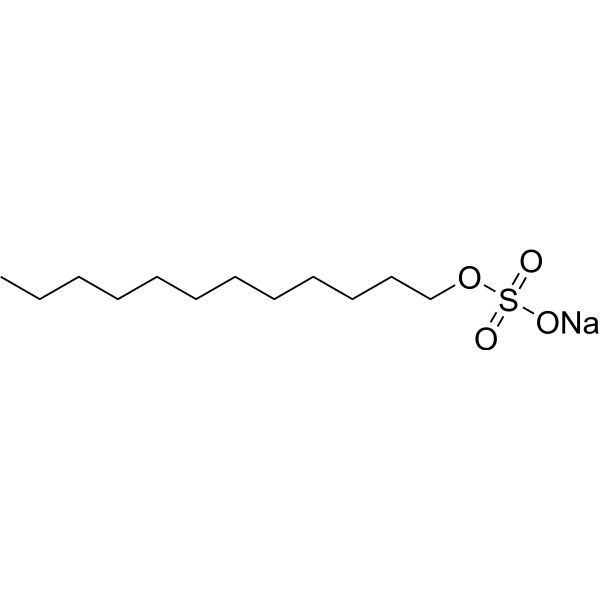
HY-Y0316
Sodium dodecyl sulfatePharmaceutical Excipient -
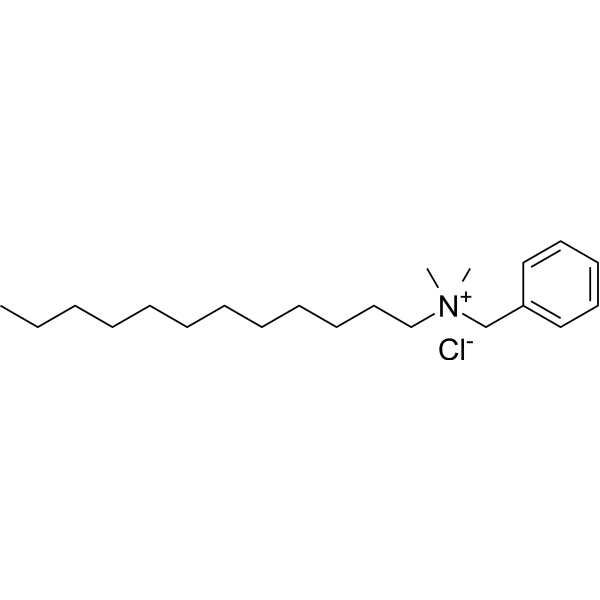
HY-B1549
Lauryl benzalkonium chlorideCationic Surfactant -
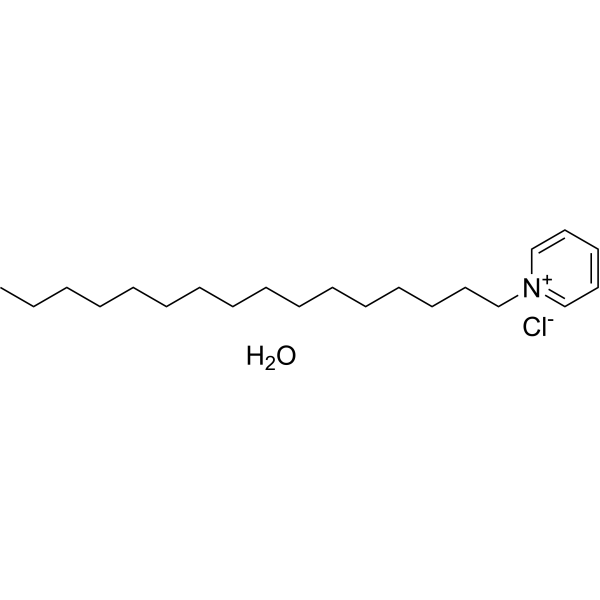
HY-B1289
Cetylpyridinium chloride monohydrateBacterial Inhibitor -

HY-Y1891
Tween 80 -

HY-W016021
Trimethyloctadecylammonium chlorideBiochemical Assay Reagent -
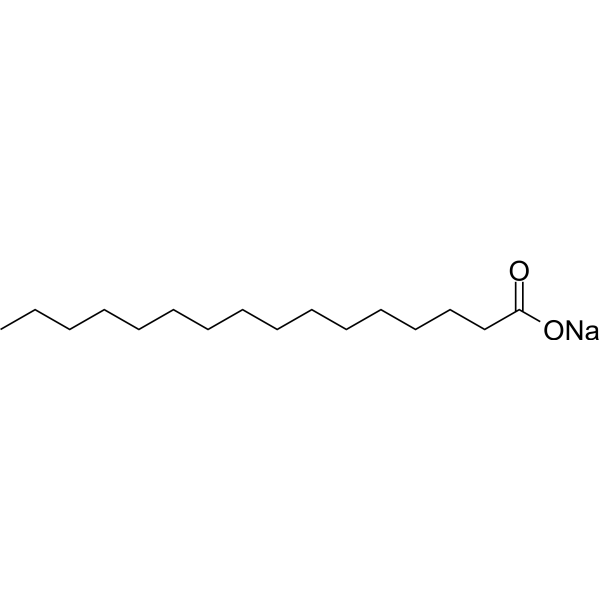
HY-N0830B
Palmitic acid sodiumEndogenous Metabolite -

HY-141415
Tween 20Nonionic Surfactant -
HY-W129988
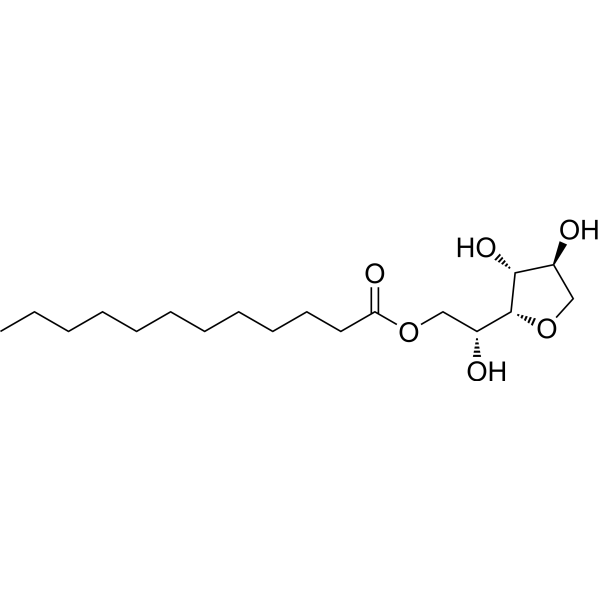
Sorbitan monododecanoatePharmaceutical Excipient -
HY-B1597
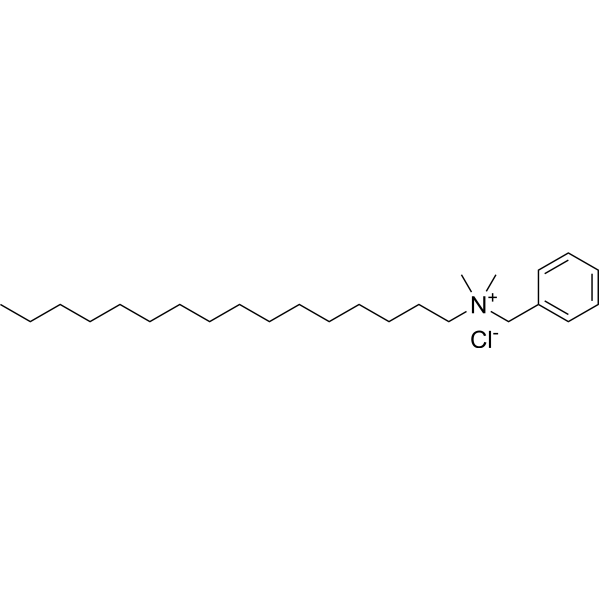
Cetalkonium chlorideAntiseptic Agent


Activité biologique
Description
Cellular Effect
|
Cell Line

|
Type | Value | Description | References |
|---|---|---|---|---|
| CHO-K1 | IC50 |
29 μM
Compound: B12
|
Cytotoxicity against CHOK1 cells after 24 hrs by MTT assay
Cytotoxicity against CHOK1 cells after 24 hrs by MTT assay
|
[PMID: 25442318] |
| CHO-K1 | IC50 |
29 μM
Compound: B12
|
Cytotoxicity against CHOK1 cells after 24 hrs by MTT assay
Cytotoxicity against CHOK1 cells after 24 hrs by MTT assay
|
[PMID: 26774252] |
| HEK293 | IC50 |
1 μg/mL
Compound: BAB
|
Cytotoxicity against HEK293 cells assessed as reduction in cell viability after 48 hrs by MTS assay
Cytotoxicity against HEK293 cells assessed as reduction in cell viability after 48 hrs by MTS assay
|
[PMID: 30562698] |
| HeLa | IC50 |
3.98 μg/mL
Compound: BAB
|
Cytotoxicity against human HeLa cells assessed as reduction in cell viability after 48 hrs by MTS assay
Cytotoxicity against human HeLa cells assessed as reduction in cell viability after 48 hrs by MTS assay
|
[PMID: 30562698] |
In Vitro
N-Benzyl-N,N-dimethyldodecan-1-aminium bromide is a biochemical reagent that can be used as a biological material or organic compound for life science related research.
MedChemExpress (MCE) has not independently confirmed the accuracy of these methods. They are for reference only. Further protocols information, click here.


Chemical Information
-
CAS No. 7281-04-1
-
Appearance <38°C Solid,>43°C Liquid
-
Masse moléculaire 384.44
-
Formule C21H38BrN
-
Color Colorless to off-white
-
SMILES
CCCCCCCCCCCC[N+](C)(C)CC1=CC=CC=C1.[Br-]
-
Synonyms
Benzyldimethyldodecylammonium bromide
-
Livraison
Room temperature in continental US; may vary elsewhere.
-
Stockage
4°C, sealed storage, away from moisture
* In solvent : -80°C, 6 months; -20°C, 1 month (sealed storage, away from moisture)


Solvant et solubilité
In Vitro:
DMSO : 100 mg/mL (260.12 mM; Need ultrasonic; Hygroscopic DMSO has a significant impact on the solubility of product, please use newly opened DMSO)
Please refer to the solubility information to select the appropriate solvent. Once prepared, please aliquot and store the solution to prevent product inactivation from repeated freeze-thaw cycles.
Storage method and period of stock solution: -80°C, 6 months; -20°C, 1 month (sealed storage, away from moisture). When stored at -80°C, please use it within 6 months. When stored at -20°C, please use it within 1 month.
Please refer to the solubility information to select the appropriate solvent. Once prepared, please aliquot and store the solution to prevent product inactivation from repeated freeze-thaw cycles.
Storage method and period of stock solution: -80°C, 6 months; -20°C, 1 month (sealed storage, away from moisture). When stored at -80°C, please use it within 6 months. When stored at -20°C, please use it within 1 month.
Concentration (start) × Volume (start) = Concentration (final) × Volume (final)
In Vivo:
Select the appropriate dissolution method based on your experimental animal and administration route.
- For the following dissolution methods, please ensure to first prepare a clear stock solution using an In Vitro approach and then sequentially add co-solvents:
- To ensure reliable experimental results, the clarified stock solution can be appropriately stored based on storage conditions. As for the working solution for In Vivo experiments, it is recommended to prepare freshly and use it on the same day.
- The percentages shown for the solvents indicate their volumetric ratio in the final prepared solution. If precipitation or phase separation occurs during preparation, heat and/or sonication can be used to aid dissolution.
Add each solvent one by one: 10% DMSO 40% PEG300 5% Tween-80 45% Saline
Solubility: ≥ 2.5 mg/mL (6.50 mM); Clear solution
This protocol yields a clear solution of ≥ 2.5 mg/mL (saturation unknown).
Taking 1 mL working solution as an example, add 100 μL DMSO stock solution (25.0 mg/mL) to 400 μL PEG300, and mix evenly; then add 50 μL Tween-80 and mix evenly; then add 450 μL Saline to adjust the volume to 1 mL.
Preparation of Saline: Dissolve 0.9 g sodium chloride in ddH₂O and dilute to 100 mL to obtain a clear Saline solution.
In Vivo Dissolution Calculator
Please enter the basic information of animal experiments:
-
-
-
-
Recommended: Prepare an additional quantity of animals to account for potential losses during experiments.
Please enter your animal formula composition:
-
%DMSO +
Recommended: Keep the proportion of DMSO in working solution below 2% if your animal is weak.
-
%+
-
+%Tween-80 + +
-
%Saline +
The co-solvents required include: DMSO, . All of co-solvents are available by MedChemExpress (MCE). , Tween 80. All of co-solvents are available by MedChemExpress (MCE).
Working solution concentration: 0.22 mg/mL
Method for preparing stock solution: mg drug dissolved in μL DMSO. Stock solution concentration: mg/mL. * In solvent : -80°C, 6 months; -20°C, 1 month (sealed storage, away from moisture)
1. Take μL DMSO stock solution;
2. Add μL .
μL , mix evenly;
3. Then add μL Tween 80, mix evenly;
4. Then add μL
Please ensure that the stock solution in the first step is dissolved to a clear state, and add co-solvents in sequence. You can use ultrasonic heating (ultrasonic cleaner, recommended frequency 20-40 kHz), vortexing, etc. to assist dissolution.

Protocole
-
Research Protocol for Infectious Diseases
Infectious-disease experiments test how pathogens interact with host barriers, innate immune receptors, inflammatory signaling, pathogen replication, and tissue injury; pattern-recognition receptors such as TLRs, RIG-I-like receptors, NOD-like receptors, and inflammasomes detect microbial molecules and activate NF-κB, interferon, and cytokine responses. The central hypothesis is that infection severity reflects the balance between pathogen burden and host response: protective inflammation restricts pathogen growth, whereas excessive or mislocalized inflammation contributes to tissue damage and disease phenotype. Unresolved questions include which host pathways are protective versus pathogenic, why some infection models fail to translate to human disease, and which combined readouts best predict clinically relevant infection outcomes.
-
Dermal Irritation/Dermal Toxicity Study
This protocol assesses dermal irritation using reconstructed human epidermis (RhE) models such as EpiDerm, EPISKIN, and SkinEthic RHE, in which a test substance is applied topically and tissue viability is measured after exposure; reduced viability reflects cytotoxic injury associated with skin irritation potential. The primary readout is MTT reduction, where viable cells convert tetrazolium salt into colored formazan measured by spectrophotometry; this signal is used as a quantitative viability endpoint for classifying irritant versus non-irritant responses. The historical in vivo comparator is the Draize rabbit skin irritation method, which scores erythema and edema after topical exposure, but validated RhE assays were developed to replace or reduce reliance on this animal-based endpoint.


Pureté et documentation
-
Fiche technique (241 KB)
-
SDS (481 KB)
- English - EN (481 KB)
- Français - FR (481 KB)
- Deutsch - DE (481 KB)
- Norwegian - NO (481 KB)
- Español - ES (481 KB)
- Swedish - SV (481 KB)
- Italian - IT (481 KB)
- Korean - KR (481 KB)
- Portuguese - PT (481 KB)
-
Instruction de manipulation (2659 KB)


Complete Stock Solution Preparation Table
Please refer to the solubility information to select the appropriate solvent. Once prepared, please aliquot and store the solution to prevent product inactivation from repeated freeze-thaw cycles.
Storage method and period of stock solution: -80°C, 6 months; -20°C, 1 month (sealed storage, away from moisture). When stored at -80°C, please use it within 6 months. When stored at -20°C, please use it within 1 month.
| Optional Solvent | Concentration Solvent Mass | 1 mg | 5 mg | 10 mg | 25 mg |
|---|---|---|---|---|---|
| DMSO | 1 mM | 2.6012 mL | 13.0059 mL | 26.0119 mL | 65.0297 mL |
| 5 mM | 0.5202 mL | 2.6012 mL | 5.2024 mL | 13.0059 mL | |
| 10 mM | 0.2601 mL | 1.3006 mL | 2.6012 mL | 6.5030 mL | |
| 15 mM | 0.1734 mL | 0.8671 mL | 1.7341 mL | 4.3353 mL | |
| 20 mM | 0.1301 mL | 0.6503 mL | 1.3006 mL | 3.2515 mL | |
| 25 mM | 0.1040 mL | 0.5202 mL | 1.0405 mL | 2.6012 mL | |
| 30 mM | 0.0867 mL | 0.4335 mL | 0.8671 mL | 2.1677 mL | |
| 40 mM | 0.0650 mL | 0.3251 mL | 0.6503 mL | 1.6257 mL | |
| 50 mM | 0.0520 mL | 0.2601 mL | 0.5202 mL | 1.3006 mL | |
| 60 mM | 0.0434 mL | 0.2168 mL | 0.4335 mL | 1.0838 mL | |
| 80 mM | 0.0325 mL | 0.1626 mL | 0.3251 mL | 0.8129 mL | |
| 100 mM | 0.0260 mL | 0.1301 mL | 0.2601 mL | 0.6503 mL |


Benzalkonium bromide Related Classifications
HY-W099594 Related Classifications
 Powered by Bioz