



Cilazapril
Based on 1 publication(s) in Google Scholar
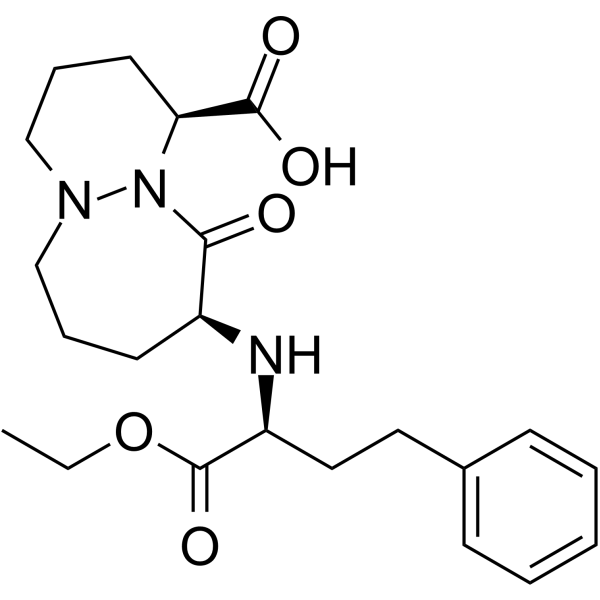
Cilazapril is an orally active prodrug of the angiotensin-converting enzyme (ACE) inhibitor Cilazaprilat (HY-A0113). Cilazapril reduces plasma ACE activity. Cilazapril can be used in the research of hypertension (including essential and renal hypertension) and congestive heart failure.
Nos produits utilisent uniquement pour la recherche. Nous ne vendons pas aux patients.
- CAS No.: 88768-40-5
- Formule: C22H31N3O5
- Masse moléculaire:417.50
-
Stockage:
Please store the product under the recommended conditions in the Certificate of Analysis.

To place orders, for customer services and technical support, please contact: MedChemExpress USA
Tel: 609-228-6898 E-mail: [email protected] [email protected]


-
 Activité biologique
-
Chemical Information
- Protocole
- Pureté et documentation
- Références
-
 Help & FAQs


-
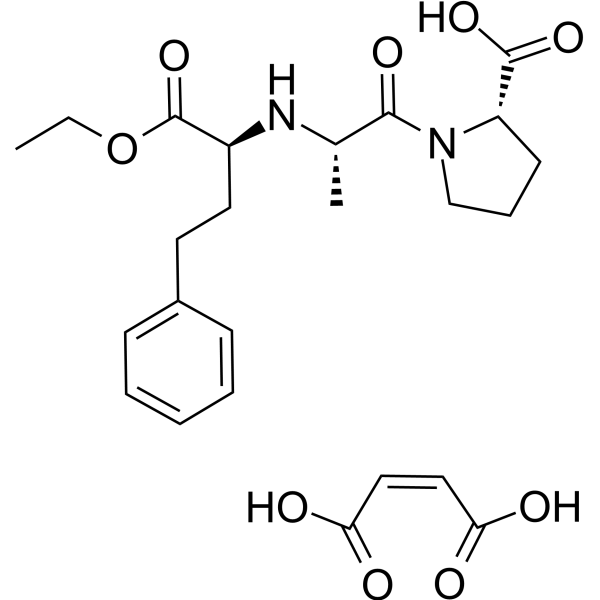
HY-B0331A
Enalapril maleateAngiotensin-Converting Enzyme Inhibitor -
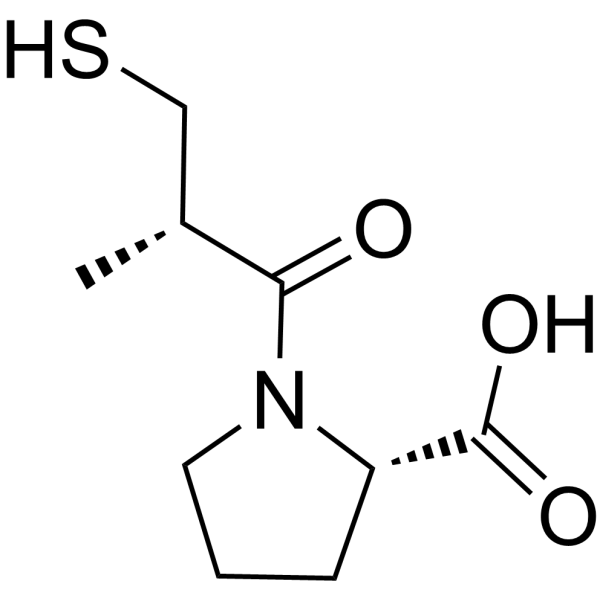
HY-B0368
CaptoprilACE Inhibitor -

HY-A0043R
Cilazapril (Standard)Standard Of Cilazapril -

HY-B0331AR
Enalapril maleate (Standard)Reference Standard -
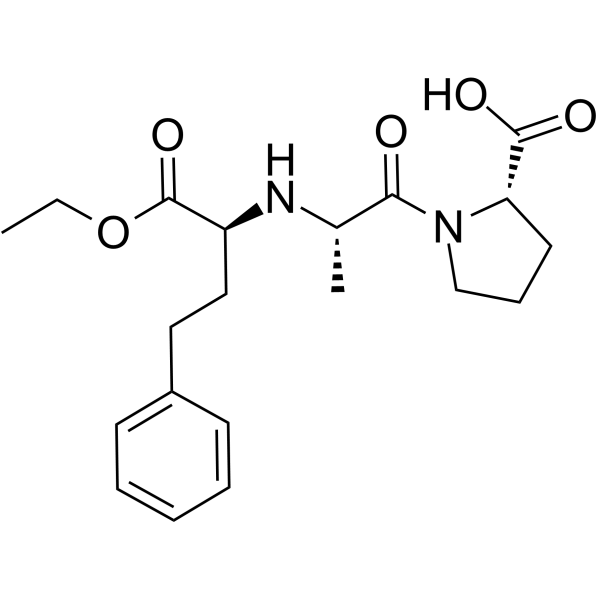
HY-B0331
EnalaprilAngiotensin-Converting Enzyme Inhibitor -
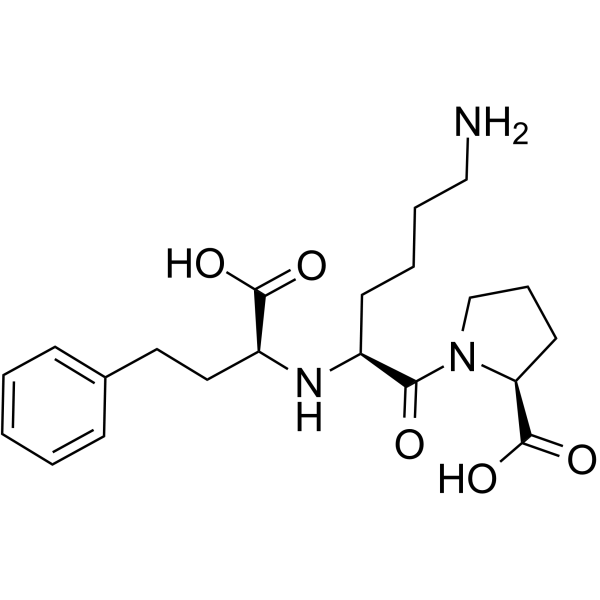
HY-18206
LisinoprilACE Inhibitor -
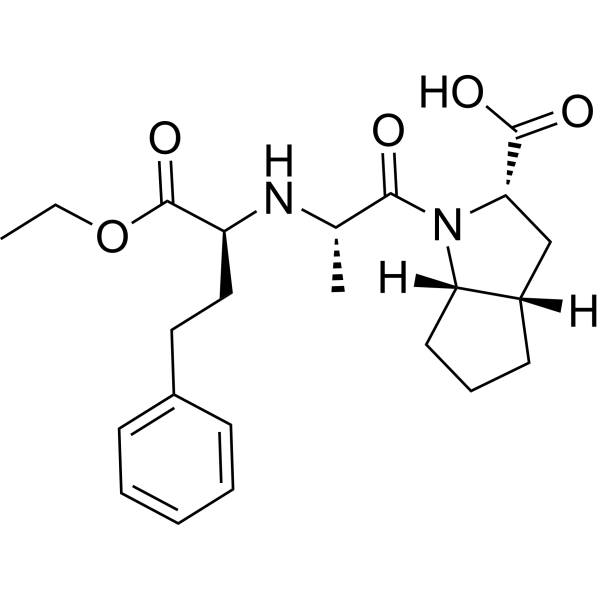
HY-B0279
RamiprilACE Inhibitor -
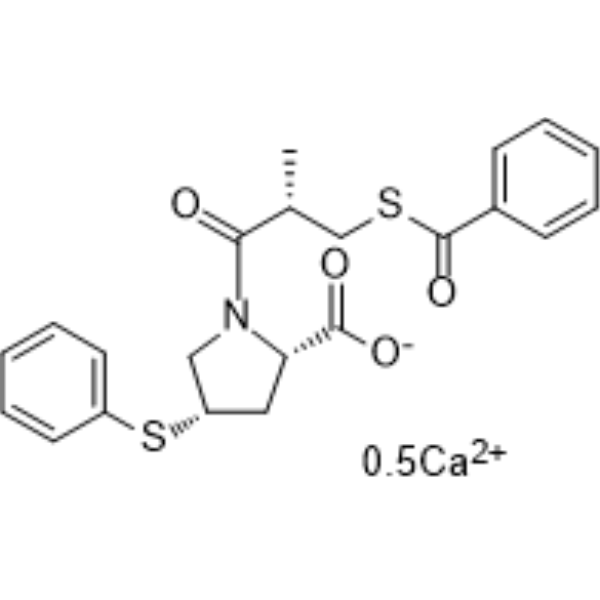
HY-B0655
Zofenopril calciumACE Inhibitor -
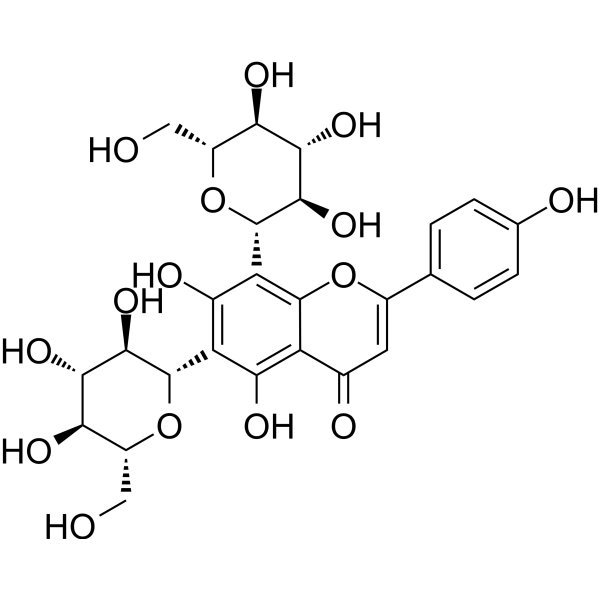
HY-N2165
Vicenin 2ACE Inhibitor -
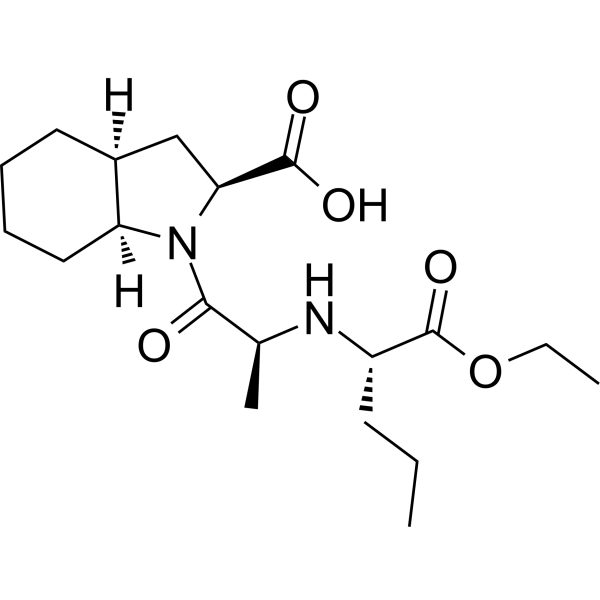
HY-B0130
PerindoprilAngiotensin-converting enzyme Inhibitor -
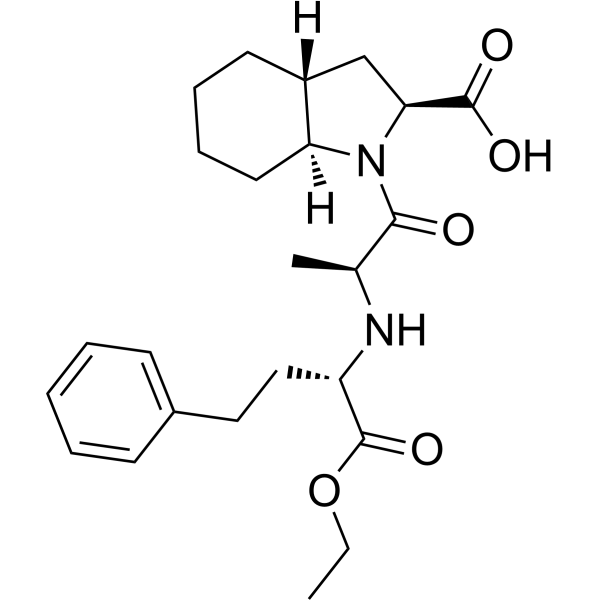
HY-B0592
TrandolaprilACE Inhibitor -

HY-122445
ResorcinolnaphthaleinACE2 Enhancer
Publications Citing Use of MedChemExpress (MCE) Cilazapril
More

Activité biologique
Description
In Vivo
Cilazapril (0.1-0.3 mg/kg orally) dose-dependently reduces plasma ACE activity and the pressor response to angiotensin in cats[1].
Cilazapril (10 mg/kg orally twice daily for 3.5 days) gradually reduces blood pressure in dogs with volume-depleted renal hypertension.
Cilazapril (10 mg/kg; p.o.; 2 weeks) decreases blood pressure, reduces heart weight to body weight ratio, and improves postischemic myocardial function in hyperthyroid rats[3].
MedChemExpress (MCE) has not independently confirmed the accuracy of these methods. They are for reference only.


Chemical Information
-
CAS No. 88768-40-5
-
Masse moléculaire 417.50
-
Formule C22H31N3O5
-
SMILES
O=C([C@@H]1CCCN2N1C([C@@H](N[C@@H](CCC3=CC=CC=C3)C(OCC)=O)CCC2)=O)O
-
Synonyms
Ro 31-2848
-
Livraison
Room temperature in continental US; may vary elsewhere.
-
Stockage
Please store the product under the recommended conditions in the Certificate of Analysis.


Publications (1)
-
Journal Impact Factor
-
Most Recent


Pureté et documentation
Références
[1]. Waterfall JF. A review of the preclinical cardiovascular pharmacology of cilazapril, a new angiotensin converting enzyme inhibitor. Br J Clin Pharmacol. 1989;27 Suppl 2(Suppl 2):139S-150S. [Content Brief]
[2]. Asahi T, et al. Cilazapril prevents cardiac hypertrophy and postischemic myocardial dysfunction in hyperthyroid rats. Thyroid. 2001 Nov;11(11):1009-15. [Content Brief]
[3]. Bhutto IA, et al. Effects of cilazapril on the retinal vessels in spontaneously hypertensive rats: corrosion cast and scanning electron microscopic study. Life Sci. 1999;64(3):PL27-39. [Content Brief]
[4]. Szucs, T., Cilazapril. A review. Drugs, 1991. 41 Suppl 1: p. 18-24. [Content Brief]
[5]. Nussberger, J., et al., Repeated administration of the converting enzyme inhibitor cilazapril to normal volunteers. J Cardiovasc Pharmacol, 1987. 9(1): p. 39-44. [Content Brief]

Calculators
Concentration (start) × Volume (start) = Concentration (final) × Volume (final)


Cilazapril Related Classifications
HY-A0043 Related Classifications
 Powered by Bioz