



Diltiazem
Based on 11 publication(s) in Google Scholar
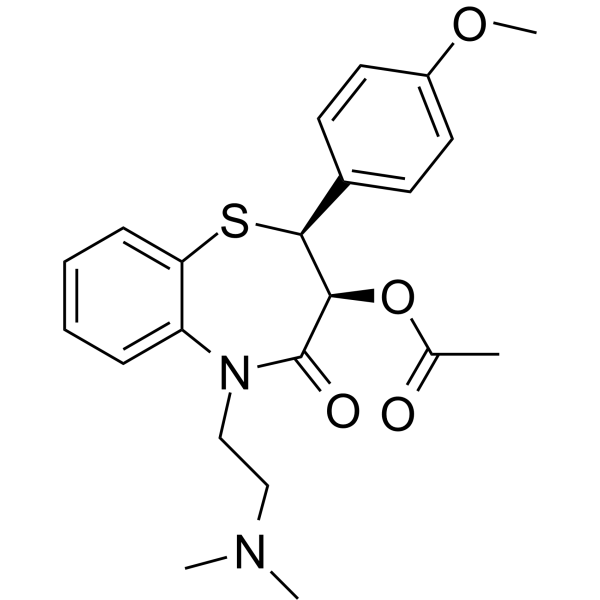
Diltiazem is an orally active L-type Ca2+ channel blocker. Diltiazem shows antihypertensive and antiarrhythmic effects. Diltiazem can be used for the research of cardiac arrhythmia, hypertension, and angina pectoris.
Nos produits utilisent uniquement pour la recherche. Nous ne vendons pas aux patients.
- Pureté : 99.70%
- CAS No.: 42399-41-7
- Formule: C22H26N2O4S
- Masse moléculaire:414.52
-
Stockage:Powder -20°C, 3 years ; In solvent -80°C, 6 months , -20°C, 1 month

To place orders, for customer services and technical support, please contact: MedChemExpress USA
Tel: 609-228-6898 E-mail: [email protected] [email protected]


-
 Activité biologique
-
Chemical Information
-
Solvant et solubilité
- Protocole
- Pureté et documentation
- Références
-
 Help & FAQs


-
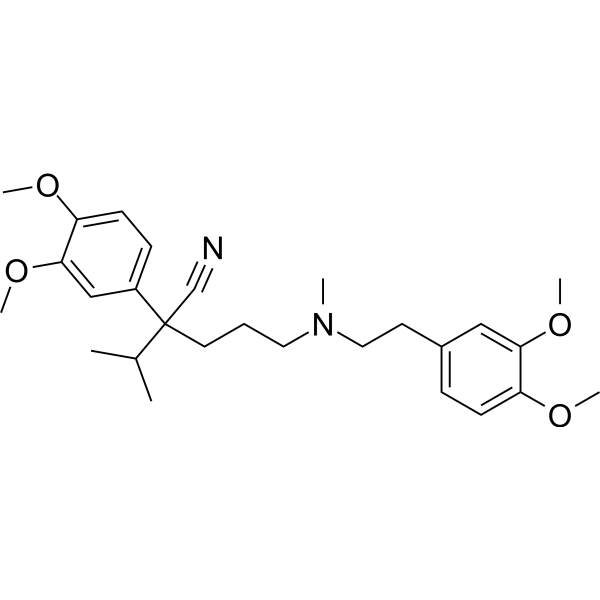
HY-14275
VerapamilCalcium Channel Blocker -
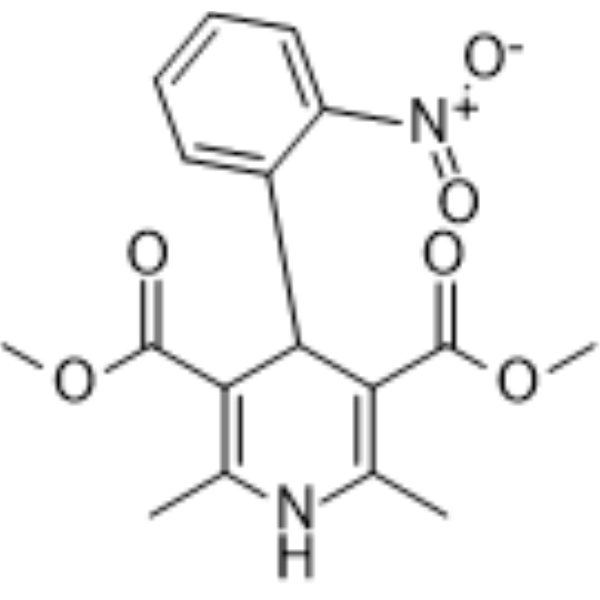
HY-B0284
NifedipineCalcium Channel Antagonist -
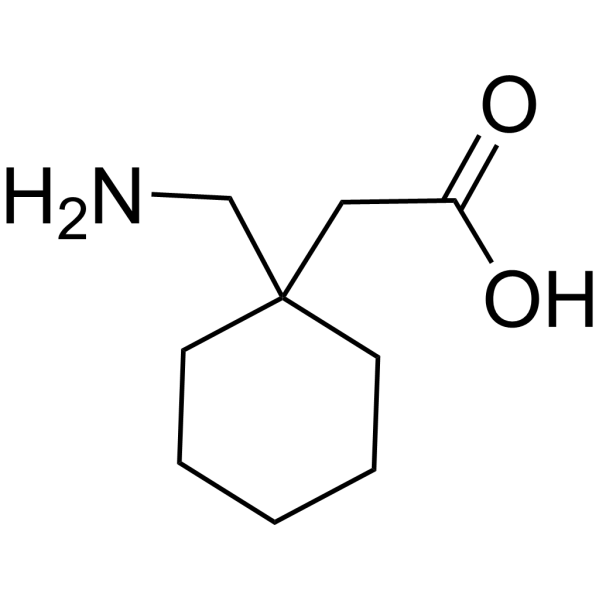
HY-A0057
GabapentinCalcium Channel Blocker. -
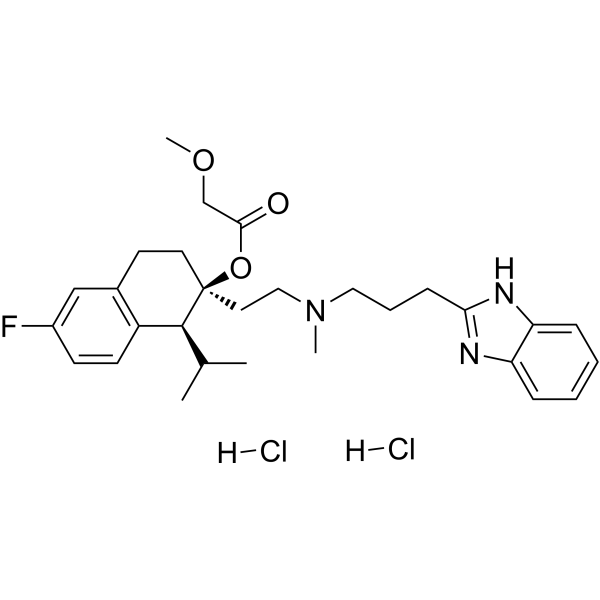
HY-15553A
Mibefradil dihydrochlorideCalcium Channel Blocker -
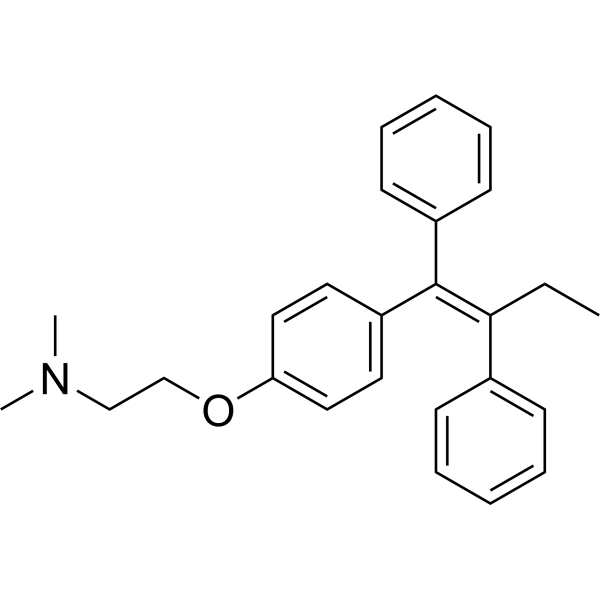
HY-13757A
TamoxifenEstrogen Receptor Modulator -
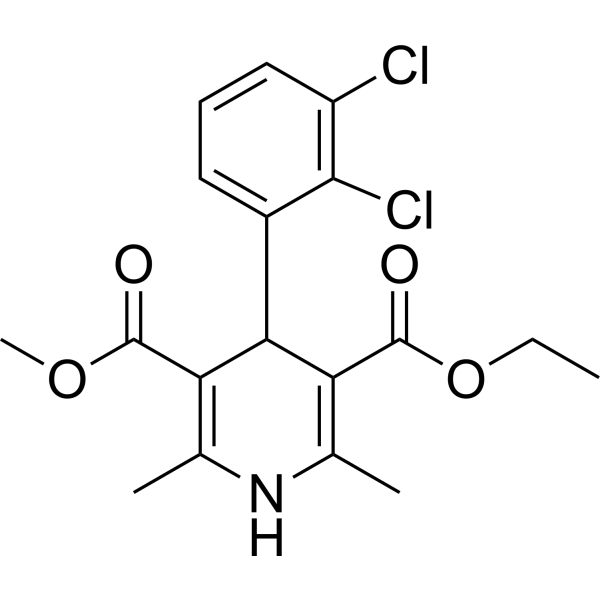
HY-B0309
FelodipineCalcium Channel Antagonist -
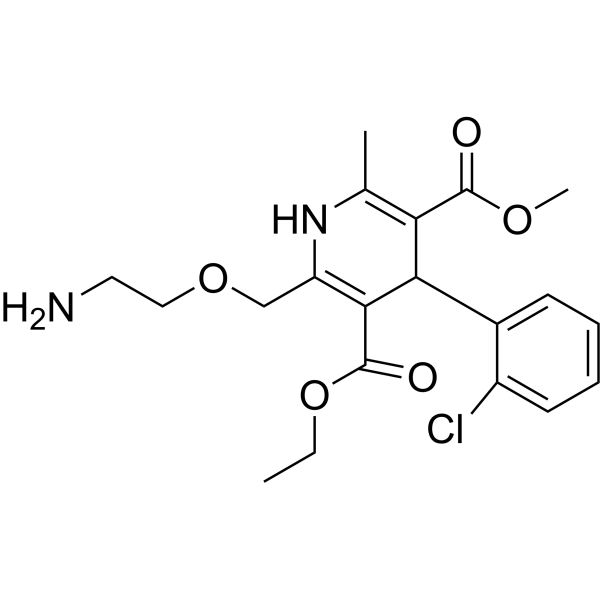
HY-B0317
AmlodipineCalcium Channel Blocker -
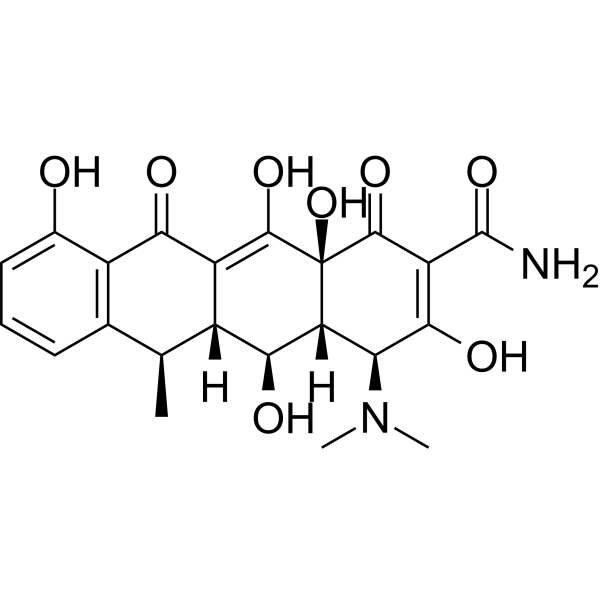
HY-N0565
DoxycyclineMMP Inhibitor -
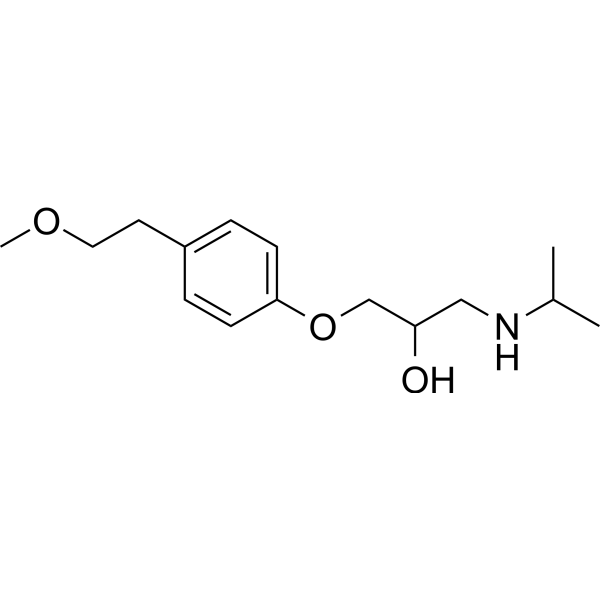
HY-17503
MetoprololBeta1-adrenoceptor Antagonist -
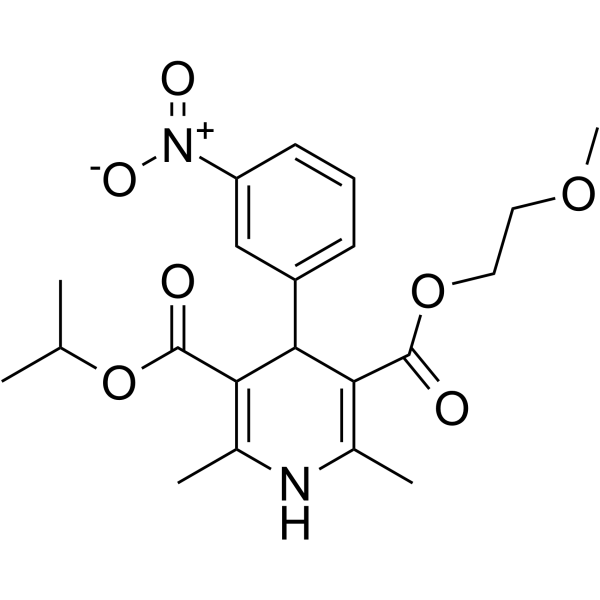
HY-B0265
NimodipineDihydropyridine Calcium Antagonist -
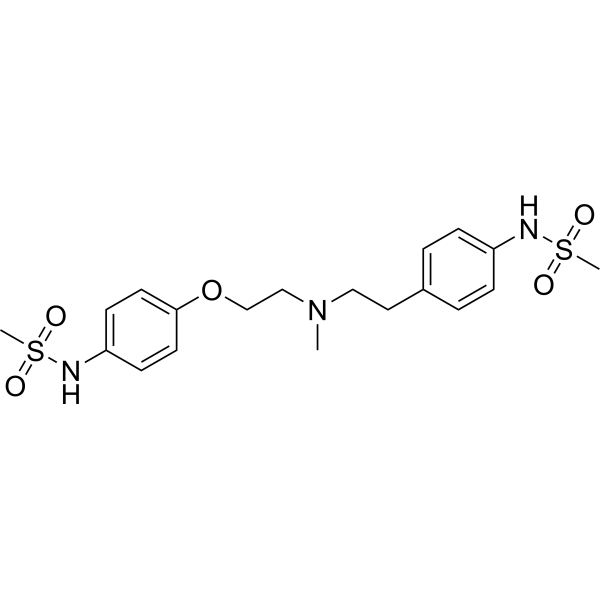
HY-B0232
DofetilideIKr Blocker -
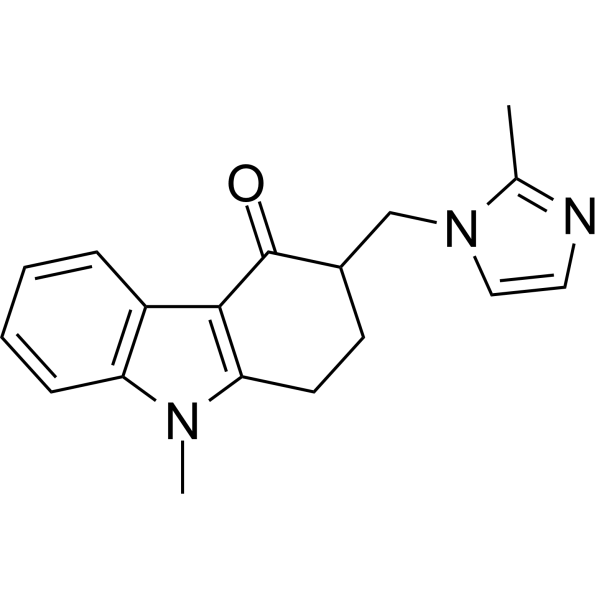
HY-B0002B
Ondansetron5-HT Receptor Antagonist
Publications Citing Use of MedChemExpress (MCE) Diltiazem
More- Nat Commun. 2024 Jun 19;15(1):5230. [Abstract]
- ACS Environ Au. 2025 Aug 5;5(6):573-582. [Abstract]
- Anal Chem. 2025 Jun 3;97(21):11099-11109. [Abstract]
- J Gen Physiol. 2026 May 4;158(3):e202513819. [Abstract]
- Immunobiology. 2026 Sep;231(5):153237.
- Vet Sci. 2025 Sep 5;12(9):864. [Abstract]
- J Cardiovasc Transl Res. 2023 Aug;16(4):758-767. [Abstract]
- Pharmacol Res Perspect. 2021 Oct;9(5):e00879. [Abstract]
- Pharmacol Res Perspect. 2020 Apr;8(2):e00575. [Abstract]
- Virology. 2020 Jan 2:539:38-48. [Abstract]
- medRxiv. 2025 May 21.
 Customer Validation & Images

-
Bio/Physico-chemical Assay

Voir tous les produits spécifiques à Isoform Calcium Channel
More

Activité biologique
Description
IC50 & Target
|
L-type calcium channel |
Cellular Effect
|
Cell Line

|
Type | Value | Description | References |
|---|---|---|---|---|
| A2780 | IC50 |
163 μM
Compound: diltiazem
|
Antiproliferative activity against human A2780 cells after 3 days by MTT assay
Antiproliferative activity against human A2780 cells after 3 days by MTT assay
|
[PMID: 19093883] |
| A2780 ADR | IC50 |
49 μM
Compound: Diltiazem
|
Inhibition of P-glycoprotein-mediated multidrug resistance in adriamycin-resistant human A2780/ADR cells by calcein AM assay
Inhibition of P-glycoprotein-mediated multidrug resistance in adriamycin-resistant human A2780/ADR cells by calcein AM assay
|
[PMID: 19250834] |
| CHO | IC50 |
0.76 μM
Compound: diltiazem
|
Inhibition of Cav1.2 current measured using QPatch automatic path clamp system in CHO cells expressing Cav1.2, beta-2 and alpha-2/delta-1 subunits
Inhibition of Cav1.2 current measured using QPatch automatic path clamp system in CHO cells expressing Cav1.2, beta-2 and alpha-2/delta-1 subunits
|
[PMID: 23812503] |
| HEK293 | IC50 |
12.4 μM
Compound: diltiazem
|
Inhibition of 4-(4-(dimethylamino)styryl)-N-methylpyridinium uptake at human OCT1 expressed in HEK293 cells by confocal microscopy
Inhibition of 4-(4-(dimethylamino)styryl)-N-methylpyridinium uptake at human OCT1 expressed in HEK293 cells by confocal microscopy
|
[PMID: 18788725] |
| HEK293 | IC50 |
44 μM
Compound: Diltiazem
|
Inhibition of L-type calcium channel measured using 2-electrode voltage-clamp in human embryonic kidney cells heterologically expressing alpha-1C subunit
Inhibition of L-type calcium channel measured using 2-electrode voltage-clamp in human embryonic kidney cells heterologically expressing alpha-1C subunit
|
[PMID: 22761000] |
| LLC-PK1 | IC50 |
77.7 μM
Compound: Diltiazem
|
TP_TRANSPORTER: inhibition of Digoxin transepithelial transport (basal to apical) (Digoxin: 0.1 uM) in MDR1-expressing LLC-PK1 cells
TP_TRANSPORTER: inhibition of Digoxin transepithelial transport (basal to apical) (Digoxin: 0.1 uM) in MDR1-expressing LLC-PK1 cells
|
[PMID: 12128170] |
In Vitro
Diltiazem (200 µM) elicits a use-dependent blockade that proceeded within a relatively small number of pulses[1].
Diltiazem reduces Ca2+ influx by accelerating inactivation during action potentials, and that the use-dependent blockade is due to increases in the number of channels in a sustained closed state[1].
MedChemExpress (MCE) has not independently confirmed the accuracy of these methods. They are for reference only.
In Vivo
Diltiazem limits aortic aneurysm formation in mice by a blood pressure-independent anti-inflammatory effect on monocytic cells[3].
Diltiazem (2 mg/kg; i.v.) exhibits T1/2 of 61.2 min, CLel of 3.2 mL/min in rats[4].
MedChemExpress (MCE) has not independently confirmed the accuracy of these methods. They are for reference only.
-
Animal Model:Male ApoE−/− mice, angiotensin II induced aneurysms[3]
-
Dosage:100 mg/kg
-
Administration:Oral administration, in drinking water, for 4 weeks
-
Result:Srongly reduced the vascular remodeling but also lowered the blood pressure.
-
Animal Model:Rat (200-250 g)[4]
-
Dosage:2 mg/kg (Pharmacokinetic Analysis)
-
Administration:Intravenous injection
-
Result:T1/2 (61.2 min), CLel (3.2 mL/min)
Essai clinique
| NCT Number | Sponsor | Condition | Start Date |
Phase
|
|---|---|---|---|---|
| NCT01329991 | 2011-05 | PHASE1 |


Chemical Information
-
CAS No. 42399-41-7
-
Appearance Solid
-
Masse moléculaire 414.52
-
Formule C22H26N2O4S
-
Color White to off-white
-
SMILES
CN(C)CCN1C2=CC=CC=C2S[C@@H](C3=CC=C(OC)C=C3)[C@@H](OC(C)=O)C1=O
-
Livraison
Room temperature in continental US; may vary elsewhere.
-
Stockage
Powder -20°C 3 years In solvent -80°C 6 months -20°C 1 month


Publications (11)
-
Journal Impact Factor
-
Most Recent
-
Nat Commun
Small molecule in situ resin capture provides a compound first approach to natural product discovery. [Abstract]2024 Jun 19;15(1):5230. PMID: 38898025 -
ACS Environ Au
Machine Learning-Assisted Recognition of Environmental Sulfur-Containing Chemicals in Nontargeted Mass Spectrometry Analysis of Inadequate Mass Resolution. [Abstract]2025 Aug 5;5(6):573-582. PMID: 41277996 -
Anal Chem
Exposome-Scale Investigation of Cl-/Br-Containing Chemicals Using High-Resolution Mass Spectrometry, Multistage Machine Learning, and Cloud Computing. [Abstract]2025 Jun 3;97(21):11099-11109. PMID: 40401576 -
J Gen Physiol
2026 May 4;158(3):e202513819. PMID: 41784565 -
-
Vet Sci
2025 Sep 5;12(9):864. PMID: 41012789 -
J Cardiovasc Transl Res
2023 Aug;16(4):758-767. PMID: 36715820
Diltiazem purchased from MedChemExpress. Usage Cited in: J Cardiovasc Transl Res. 2023 Aug;16(4):758-767. [Abstract]
Representative beating curves of NRVC exposed to Diltiazem (100 nM) or PBS for 24 h (n = 3) and quantitative analysis of the relative beating rate and intensity of NRVC exposed to Diltiazem (100 nM) or PBS for 0 h and 24 h (n = 3).
-
Pharmacol Res Perspect
Effects of membrane transport activity and cell metabolism on the unbound drug concentrations in the skeletal muscle and liver of drugs: A microdialysis study in rats. [Abstract]2021 Oct;9(5):e00879. PMID: 34628723 -
Pharmacol Res Perspect
Applicability of free drug hypothesis to drugs with good membrane permeability that are not efflux transporter substrates: A microdialysis study in rats. [Abstract]2020 Apr;8(2):e00575. PMID: 32266794 -
Virology
2020 Jan 2:539:38-48. PMID: 31670218 -


Solvant et solubilité
In Vitro:
DMSO : 50 mg/mL (120.62 mM; Need ultrasonic; Hygroscopic DMSO has a significant impact on the solubility of product, please use newly opened DMSO)
H2O : < 0.1 mg/mL (insoluble)
Please refer to the solubility information to select the appropriate solvent. Once prepared, please aliquot and store the solution to prevent product inactivation from repeated freeze-thaw cycles.
Storage method and period of stock solution: -80°C, 6 months; -20°C, 1 month. When stored at -80°C, please use it within 6 months. When stored at -20°C, please use it within 1 month.
Please refer to the solubility information to select the appropriate solvent. Once prepared, please aliquot and store the solution to prevent product inactivation from repeated freeze-thaw cycles.
Storage method and period of stock solution: -80°C, 6 months; -20°C, 1 month. When stored at -80°C, please use it within 6 months. When stored at -20°C, please use it within 1 month.
Concentration (start) × Volume (start) = Concentration (final) × Volume (final)
In Vivo:
Select the appropriate dissolution method based on your experimental animal and administration route.
- For the following dissolution methods, please ensure to first prepare a clear stock solution using an In Vitro approach and then sequentially add co-solvents:
- To ensure reliable experimental results, the clarified stock solution can be appropriately stored based on storage conditions. As for the working solution for In Vivo experiments, it is recommended to prepare freshly and use it on the same day.
- The percentages shown for the solvents indicate their volumetric ratio in the final prepared solution. If precipitation or phase separation occurs during preparation, heat and/or sonication can be used to aid dissolution.
Add each solvent one by one: 10% DMSO 40% PEG300 5% Tween-80 45% Saline
Solubility: ≥ 5 mg/mL (12.06 mM); Clear solution
This protocol yields a clear solution of ≥ 5 mg/mL (saturation unknown).
Taking 1 mL working solution as an example, add 100 μL DMSO stock solution (50.0 mg/mL) to 400 μL PEG300, and mix evenly; then add 50 μL Tween-80 and mix evenly; then add 450 μL Saline to adjust the volume to 1 mL.
Preparation of Saline: Dissolve 0.9 g sodium chloride in ddH₂O and dilute to 100 mL to obtain a clear Saline solution.
Add each solvent one by one: 10% DMSO 90% (20% SBE-β-CD in Saline)
Solubility: ≥ 2.5 mg/mL (6.03 mM); Clear solution
This protocol yields a clear solution of ≥ 2.5 mg/mL (saturation unknown).
Taking 1 mL working solution as an example, add 100 μL DMSO stock solution (25.0 mg/mL) to 900 μL 20% SBE-β-CD in Saline, and mix evenly.
Preparation of 20% SBE-β-CD in Saline (4°C, storage for one week): 2 g SBE-β-CD powder is dissolved in 10 mL Saline, completely dissolve until clear.
In Vivo Dissolution Calculator
Please enter the basic information of animal experiments:
-
-
-
-
Recommended: Prepare an additional quantity of animals to account for potential losses during experiments.
Please enter your animal formula composition:
-
%DMSO +
Recommended: Keep the proportion of DMSO in working solution below 2% if your animal is weak.
-
%+
-
+%Tween-80 + +
-
%Saline +
The co-solvents required include: DMSO, . All of co-solvents are available by MedChemExpress (MCE). , Tween 80. All of co-solvents are available by MedChemExpress (MCE).
Working solution concentration: 0.22 mg/mL
Method for preparing stock solution: mg drug dissolved in μL DMSO. Stock solution concentration: mg/mL.
1. Take μL DMSO stock solution;
2. Add μL .
μL , mix evenly;
3. Then add μL Tween 80, mix evenly;
4. Then add μL
Please ensure that the stock solution in the first step is dissolved to a clear state, and add co-solvents in sequence. You can use ultrasonic heating (ultrasonic cleaner, recommended frequency 20-40 kHz), vortexing, etc. to assist dissolution.


Pureté et documentation
-
Fiche technique (283 KB)
-
SDS (393 KB)
- English - EN (393 KB)
- Français - FR (393 KB)
- Deutsch - DE (393 KB)
- Norwegian - NO (393 KB)
- Español - ES (393 KB)
- Swedish - SV (393 KB)
- Italian - IT (393 KB)
- Korean - KR (393 KB)
- Portuguese - PT (393 KB)
-
Instruction de manipulation (2659 KB)
Références
[1]. Yoshinari Niimi, et al. Diltiazem facilitates inactivation of single L-type calcium channels in guinea pig ventricular myocytes. Jpn Heart J. 2003 Nov;44(6):1005-14. [Content Brief]
[2]. S Lin Tang, et l. Structural Basis for Diltiazem Block of a Voltage-Gated Ca2+ Channel. Mol Pharmacol. 2019 Oct; 96(4): 485-492. [Content Brief]
[3]. Anja Mieth , et al. L-type calcium channel inhibitor diltiazem prevents aneurysm formation by blood pressure-independent anti-inflammatory effects. Hypertension. 2013 Dec;62(6):1098-104. [Content Brief]
[4]. S. J. Downing, et al. Diltiazem pharmacokinetics in the rat and relationship between its serum concentration and uterine and cardiovascular effects. Br J Pharmacol. 1987 Aug; 91(4): 735-745. [Content Brief]


Complete Stock Solution Preparation Table
Please refer to the solubility information to select the appropriate solvent. Once prepared, please aliquot and store the solution to prevent product inactivation from repeated freeze-thaw cycles.
Storage method and period of stock solution: -80°C, 6 months; -20°C, 1 month. When stored at -80°C, please use it within 6 months. When stored at -20°C, please use it within 1 month.
| Optional Solvent | Concentration Solvent Mass | 1 mg | 5 mg | 10 mg | 25 mg |
|---|---|---|---|---|---|
| DMSO | 1 mM | 2.4124 mL | 12.0621 mL | 24.1243 mL | 60.3107 mL |
| 5 mM | 0.4825 mL | 2.4124 mL | 4.8249 mL | 12.0621 mL | |
| 10 mM | 0.2412 mL | 1.2062 mL | 2.4124 mL | 6.0311 mL | |
| 15 mM | 0.1608 mL | 0.8041 mL | 1.6083 mL | 4.0207 mL | |
| 20 mM | 0.1206 mL | 0.6031 mL | 1.2062 mL | 3.0155 mL | |
| 25 mM | 0.0965 mL | 0.4825 mL | 0.9650 mL | 2.4124 mL | |
| 30 mM | 0.0804 mL | 0.4021 mL | 0.8041 mL | 2.0104 mL | |
| 40 mM | 0.0603 mL | 0.3016 mL | 0.6031 mL | 1.5078 mL | |
| 50 mM | 0.0482 mL | 0.2412 mL | 0.4825 mL | 1.2062 mL | |
| 60 mM | 0.0402 mL | 0.2010 mL | 0.4021 mL | 1.0052 mL | |
| 80 mM | 0.0302 mL | 0.1508 mL | 0.3016 mL | 0.7539 mL | |
| 100 mM | 0.0241 mL | 0.1206 mL | 0.2412 mL | 0.6031 mL |


Diltiazem Related Classifications
HY-B0632 Related Classifications
 Powered by Bioz