



Moxonidine

Based on 1 Customer Validation
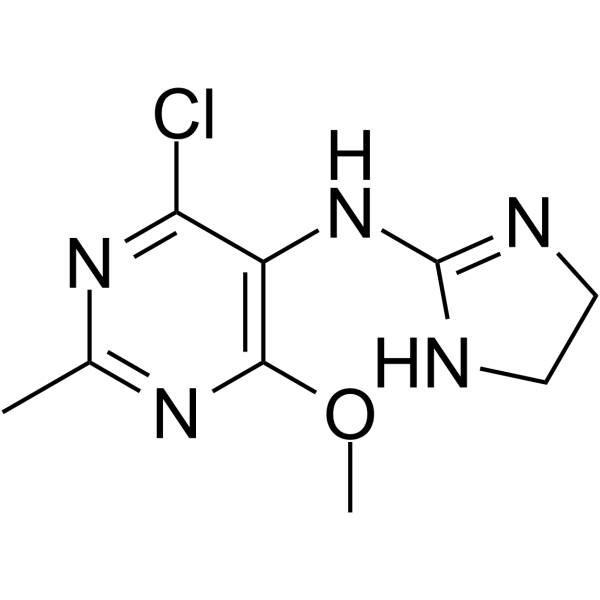
Moxonidine (BDF5895) is an orally active imidazoline type 1 receptor (I1-R) agonist. Moxonidine activates imidazoline I1 receptors and α2 adrenoceptors, affecting oxidized low-density lipoprotein uptake. Moxonidine reduces atherosclerotic lesions and lowers blood pressure. Moxonidine can be used in the study of hypertension, heart failure, and atherosclerosis.
Nos produits utilisent uniquement pour la recherche. Nous ne vendons pas aux patients.
- Pureté : 99.72%
- CAS No.: 75438-57-2
- Formule: C9H12ClN5O
- Masse moléculaire:241.68
-
Stockage:Powder -20°C, 3 years , 4°C, 2 years ; In solvent -80°C, 2 years , -20°C, 1 year

To place orders, for customer services and technical support, please contact: MedChemExpress USA
Tel: 609-228-6898 E-mail: [email protected] [email protected]


-
 Activité biologique
-
Chemical Information
-
Solvant et solubilité
- Protocole
- Pureté et documentation
- Références
-
 Help & FAQs


-
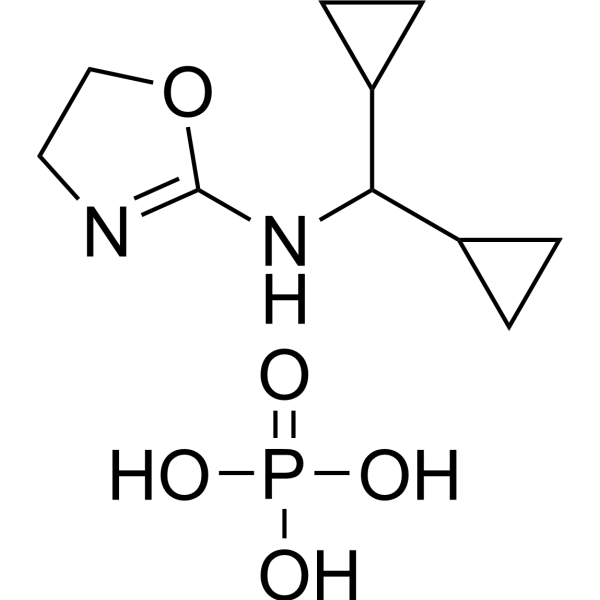
HY-100490B
Rilmenidine phosphateI1 Imidazoline Receptor/α2-Adrenoceptor Agonist -
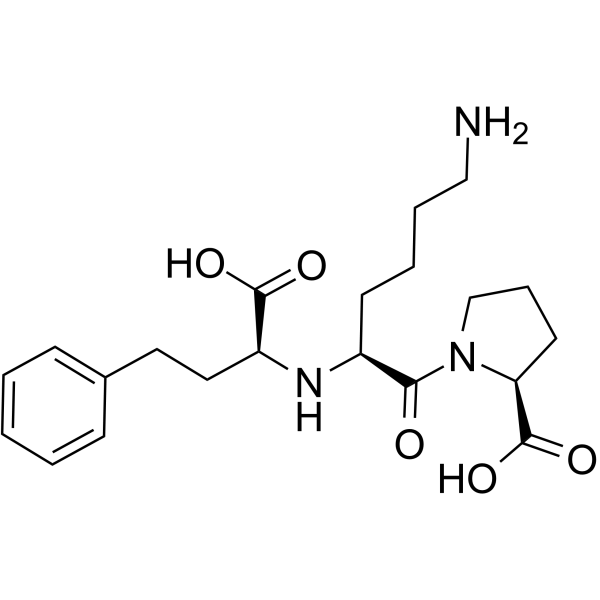
HY-18206
LisinoprilACE Inhibitor -

HY-B0374R
Moxonidine (Standard)Standard Of Moxonidine -
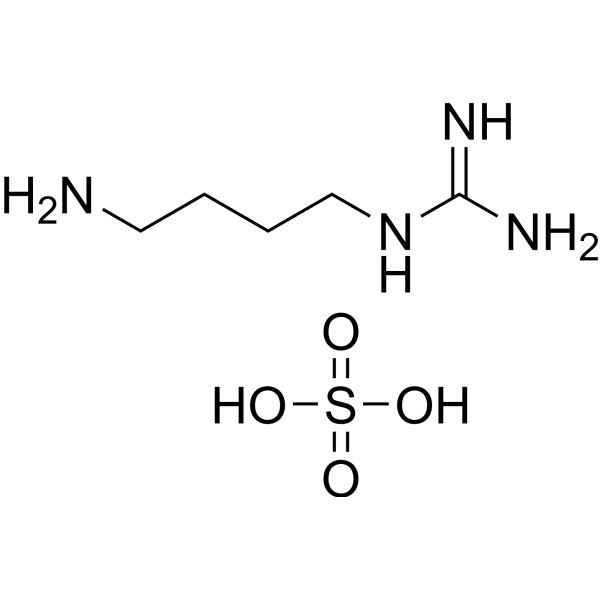
HY-101238
Agmatine sulfateNO Synthase Inhibitor -
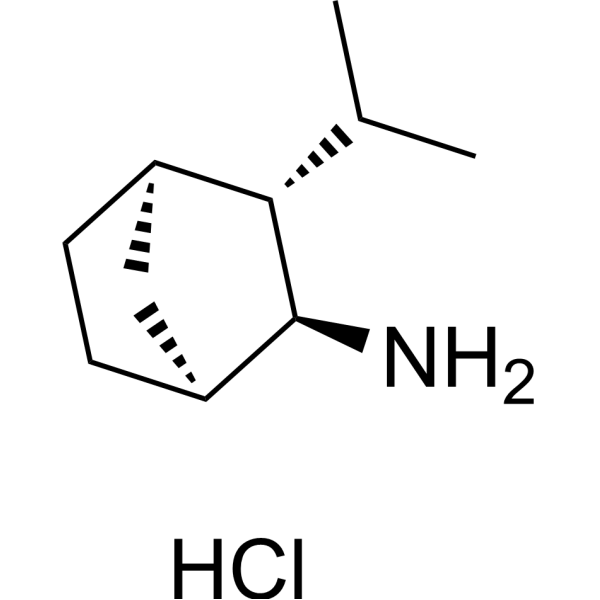
HY-101374A
AGN 192403 hydrochlorideImidazoline-1 Receptor Antagonist -

HY-101238R
Agmatine sulfate (Standard)NO Synthase Inhibitor -
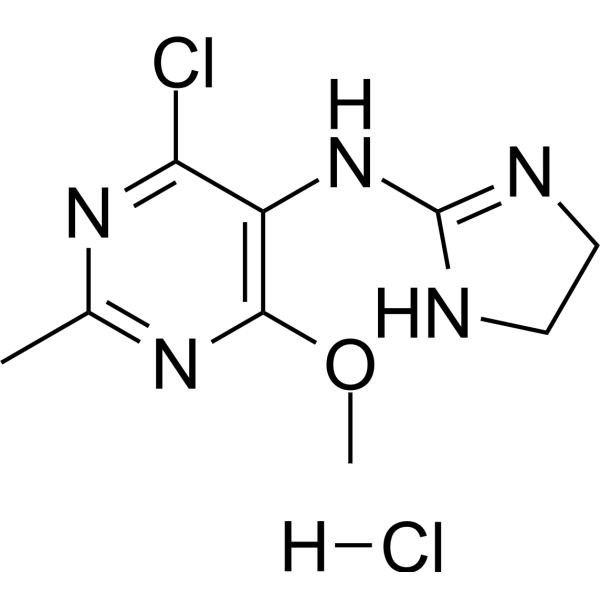
HY-B0374A
Moxonidine hydrochlorideImidazoline Receptor Agonist -
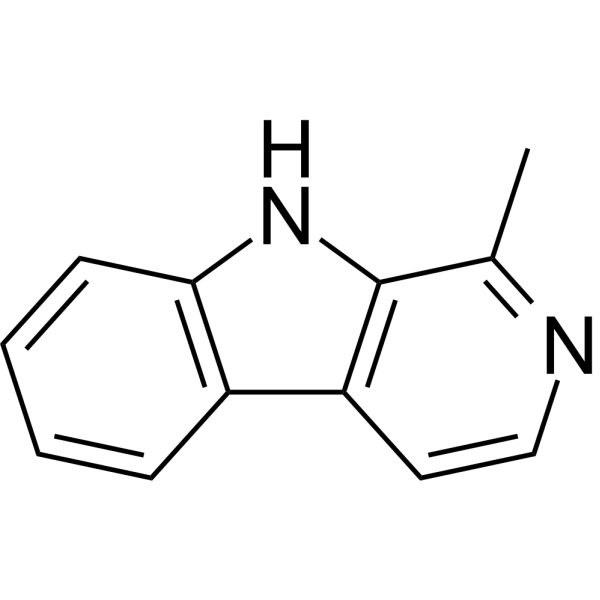
HY-101392
HarmaneMAO Inhibitor -
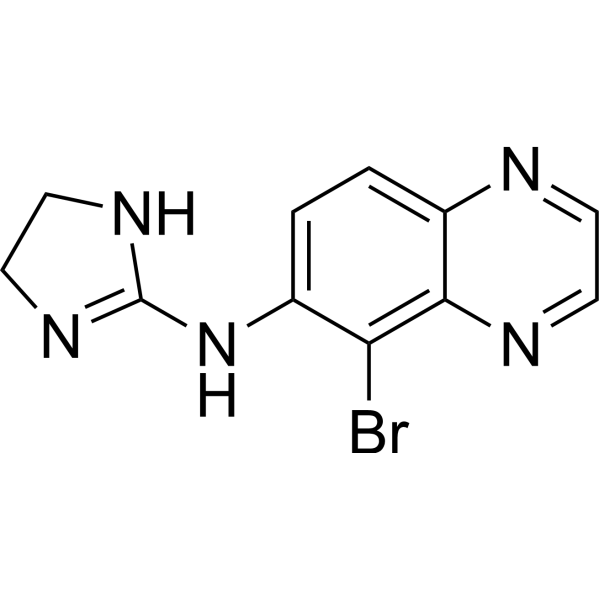
HY-B0659
BrimonidineAdrenergic Receptor Agonist -
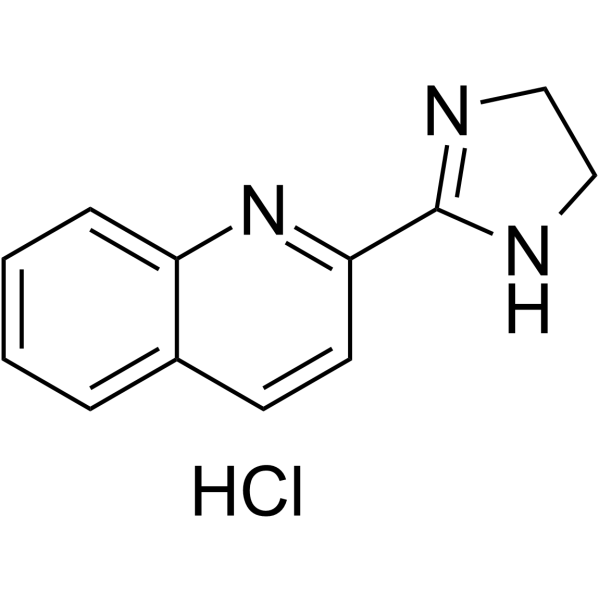
HY-101170
BU224 hydrochlorideI2 Receptor Ligand -
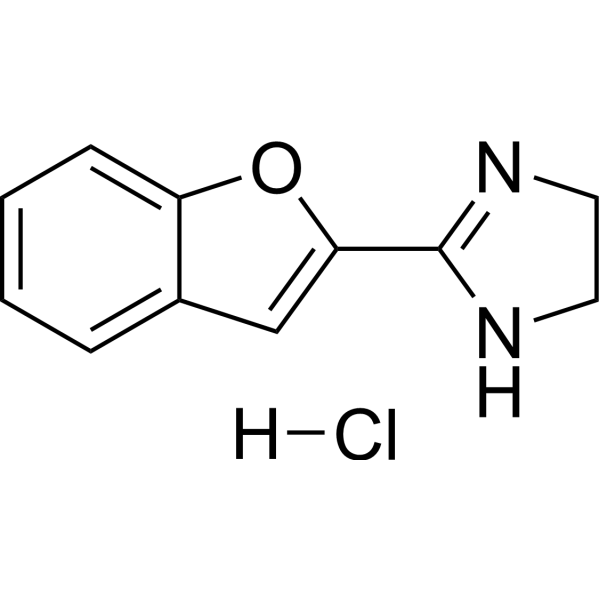
HY-100904
RX 801077 hydrochlorideI2R Agonist -
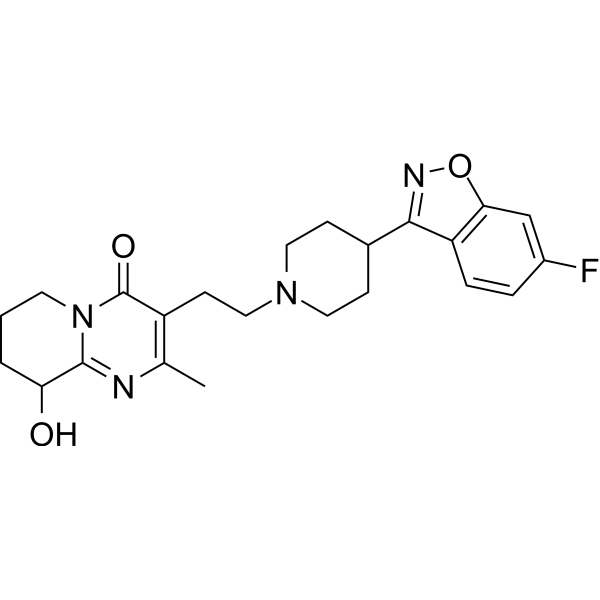
HY-A0019
PaliperidoneDopamine D2/5-HT2A Antagonist
Voir tous les produits spécifiques à Isoform Adrenergic Receptor
More

Activité biologique
Description
In Vitro
Moxonidine (10 μM; 48 h) prevents the mild reduction in cardiomyocyte viability/mitochondrial activity induced by IL-1β and TNF-α[1].
Moxonidine (10 μM; 2 h) increases uptake of oxidised low-density lipoprotein in cultured vascular smooth muscle cells via α2 Adrenoceptors[2].
Moxonidine (30 μM) inhibits voltage-dependent N-type Ca2+ current by activating imidazoline I1 receptors in rat superior cervical ganglion neurons[3].
MedChemExpress (MCE) has not independently confirmed the accuracy of these methods. They are for reference only.
In Vivo
Moxonidine (100-1000 μg/kg; i.v.) causes dose-dependent hypotension and bradycardia in conscious wild-type mice[4].
Moxonidine (3-6 mg/kg/day; subcutaneous implantation via osmotic minipumps; 21 days) dose-dependently suppresses myocardial infarction-induced sympathetic activation, and the high dose normalizes ventricular weight-body weight ratio and interstitial collagen in rats with myocardial infarction [5].
Moxonidine (20-80 nmol; intracerebroventricular injection into the fourth ventricle) dose-dependently lowers mean arterial pressure, heart rate and sympathetic outflow in conscious spontaneously hypertensive rats, with stronger effects than when injected into the lateral ventricle[6].
MedChemExpress (MCE) has not independently confirmed the accuracy of these methods. They are for reference only.


Chemical Information
-
CAS No. 75438-57-2
-
Appearance Solid
-
Masse moléculaire 241.68
-
Formule C9H12ClN5O
-
Color White to off-white
-
SMILES
CC1=NC(OC)=C(NC2=NCCN2)C(Cl)=N1
-
Synonyms
BDF5895
-
Livraison
Room temperature in continental US; may vary elsewhere.
-
Stockage
Powder -20°C 3 years 4°C 2 years In solvent -80°C 2 years -20°C 1 year


Solvant et solubilité
In Vitro:
DMSO : 20 mg/mL (82.75 mM; Need ultrasonic; Hygroscopic DMSO has a significant impact on the solubility of product, please use newly opened DMSO)
Please refer to the solubility information to select the appropriate solvent. Once prepared, please aliquot and store the solution to prevent product inactivation from repeated freeze-thaw cycles.
Storage method and period of stock solution: -80°C, 2 years; -20°C, 1 year. When stored at -80°C, please use it within 2 years. When stored at -20°C, please use it within 1 year.
Please refer to the solubility information to select the appropriate solvent. Once prepared, please aliquot and store the solution to prevent product inactivation from repeated freeze-thaw cycles.
Storage method and period of stock solution: -80°C, 2 years; -20°C, 1 year. When stored at -80°C, please use it within 2 years. When stored at -20°C, please use it within 1 year.
Concentration (start) × Volume (start) = Concentration (final) × Volume (final)
In Vivo:
Select the appropriate dissolution method based on your experimental animal and administration route.
- For the following dissolution methods, please ensure to first prepare a clear stock solution using an In Vitro approach and then sequentially add co-solvents:
- To ensure reliable experimental results, the clarified stock solution can be appropriately stored based on storage conditions. As for the working solution for In Vivo experiments, it is recommended to prepare freshly and use it on the same day.
- The percentages shown for the solvents indicate their volumetric ratio in the final prepared solution. If precipitation or phase separation occurs during preparation, heat and/or sonication can be used to aid dissolution.
Add each solvent one by one: 10% DMSO 40% PEG300 5% Tween-80 45% Saline
Solubility: ≥ 2 mg/mL (8.28 mM); Clear solution
This protocol yields a clear solution of ≥ 2 mg/mL (saturation unknown).
Taking 1 mL working solution as an example, add 100 μL DMSO stock solution (20.0 mg/mL) to 400 μL PEG300, and mix evenly; then add 50 μL Tween-80 and mix evenly; then add 450 μL Saline to adjust the volume to 1 mL.
Preparation of Saline: Dissolve 0.9 g sodium chloride in ddH₂O and dilute to 100 mL to obtain a clear Saline solution.
Add each solvent one by one: 10% DMSO 90% (20% SBE-β-CD in Saline)
Solubility: ≥ 2 mg/mL (8.28 mM); Clear solution
This protocol yields a clear solution of ≥ 2 mg/mL (saturation unknown).
Taking 1 mL working solution as an example, add 100 μL DMSO stock solution (20.0 mg/mL) to 900 μL 20% SBE-β-CD in Saline, and mix evenly.
Preparation of 20% SBE-β-CD in Saline (4°C, storage for one week): 2 g SBE-β-CD powder is dissolved in 10 mL Saline, completely dissolve until clear.
In Vivo Dissolution Calculator
Please enter the basic information of animal experiments:
-
-
-
-
Recommended: Prepare an additional quantity of animals to account for potential losses during experiments.
Please enter your animal formula composition:
-
%DMSO +
Recommended: Keep the proportion of DMSO in working solution below 2% if your animal is weak.
-
%+
-
+%Tween-80 + +
-
%Saline +
The co-solvents required include: DMSO, . All of co-solvents are available by MedChemExpress (MCE). , Tween 80. All of co-solvents are available by MedChemExpress (MCE).
Working solution concentration: 0.22 mg/mL
Method for preparing stock solution: mg drug dissolved in μL DMSO. Stock solution concentration: mg/mL.
1. Take μL DMSO stock solution;
2. Add μL .
μL , mix evenly;
3. Then add μL Tween 80, mix evenly;
4. Then add μL
Please ensure that the stock solution in the first step is dissolved to a clear state, and add co-solvents in sequence. You can use ultrasonic heating (ultrasonic cleaner, recommended frequency 20-40 kHz), vortexing, etc. to assist dissolution.


Pureté et documentation
-
Fiche technique (278 KB)
-
SDS (624 KB)
- English - EN (624 KB)
- Français - FR (624 KB)
- Deutsch - DE (624 KB)
- Norwegian - NO (624 KB)
- Español - ES (624 KB)
- Swedish - SV (624 KB)
- Italian - IT (624 KB)
- Korean - KR (624 KB)
- Portuguese - PT (624 KB)
-
Instruction de manipulation (2659 KB)
Références
[1]. Aceros H, et al. Moxonidine modulates cytokine signalling and effects on cardiac cell viability. Eur J Pharmacol. 2014 Oct 5;740:168-82. [Content Brief]
[2]. Wang Y, et al. Moxonidine Increases Uptake of Oxidised Low-Density Lipoprotein in Cultured Vascular Smooth Muscle Cells and Inhibits Atherosclerosis in Apolipoprotein E-Deficient Mice. Int J Mol Sci. 2023 Feb 14;24(4):3857. [Content Brief]
[3]. Kim YH, et al. Modulation of N-type Ca²⁺ currents by moxonidine via imidazoline I₁ receptor activation in rat superior cervical ganglion neurons. Biochem Biophys Res Commun. 2011 Jun 17;409(4):645-50. [Content Brief]
[4]. Zhu QM, et al. Cardiovascular effects of rilmenidine, moxonidine and clonidine in conscious wild-type and D79N alpha2A-adrenoceptor transgenic mice. Br J Pharmacol. 1999 Mar;126(6):1522-30. [Content Brief]
[5]. Van Kerckhoven R, et al. Chronic administration of moxonidine suppresses sympathetic activation in a rat heart failure model. Eur J Pharmacol. 2000 May 26;397(1):113-20. [Content Brief]
[6]. Nurminen ML, et al. Effect of moxonidine on blood pressure and sympathetic tone in conscious spontaneously hypertensive rats. Eur J Pharmacol. 1998 Nov 27;362(1):61-7. [Content Brief]
[7]. Tsutsui H, et al. Moxonidine prevents ischemia/reperfusion-induced renal injury in rats. Eur J Pharmacol. 2009 Jan 28;603(1-3):73-8. [Content Brief]


Complete Stock Solution Preparation Table
Please refer to the solubility information to select the appropriate solvent. Once prepared, please aliquot and store the solution to prevent product inactivation from repeated freeze-thaw cycles.
Storage method and period of stock solution: -80°C, 2 years; -20°C, 1 year. When stored at -80°C, please use it within 2 years. When stored at -20°C, please use it within 1 year.
| Optional Solvent | Concentration Solvent Mass | 1 mg | 5 mg | 10 mg | 25 mg |
|---|---|---|---|---|---|
| DMSO | 1 mM | 4.1377 mL | 20.6885 mL | 41.3770 mL | 103.4426 mL |
| 5 mM | 0.8275 mL | 4.1377 mL | 8.2754 mL | 20.6885 mL | |
| 10 mM | 0.4138 mL | 2.0689 mL | 4.1377 mL | 10.3443 mL | |
| 15 mM | 0.2758 mL | 1.3792 mL | 2.7585 mL | 6.8962 mL | |
| 20 mM | 0.2069 mL | 1.0344 mL | 2.0689 mL | 5.1721 mL | |
| 25 mM | 0.1655 mL | 0.8275 mL | 1.6551 mL | 4.1377 mL | |
| 30 mM | 0.1379 mL | 0.6896 mL | 1.3792 mL | 3.4481 mL | |
| 40 mM | 0.1034 mL | 0.5172 mL | 1.0344 mL | 2.5861 mL | |
| 50 mM | 0.0828 mL | 0.4138 mL | 0.8275 mL | 2.0689 mL | |
| 60 mM | 0.0690 mL | 0.3448 mL | 0.6896 mL | 1.7240 mL | |
| 80 mM | 0.0517 mL | 0.2586 mL | 0.5172 mL | 1.2930 mL |


Moxonidine Related Classifications
HY-B0374 Related Classifications
 Powered by Bioz