



Teprasiran
Teprasiran (QPI-1002) is a small interfering RNA that temporarily inhibits p53-mediated cell death that underlies acute kidney injury (AKI).
Nos produits utilisent uniquement pour la recherche. Nous ne vendons pas aux patients.
- CAS No.: 1231737-88-4
- Masse moléculaire:12320.00
-
Stockage:
4°C, sealed storage, away from moisture
* In solvent : -80°C, 6 months; -20°C, 1 month (sealed storage, away from moisture)


To place orders, for customer services and technical support, please contact: MedChemExpress USA
Tel: 609-228-6898 E-mail: [email protected] [email protected]


-
 Activité biologique
-
Chemical Information
- Protocole
- Pureté et documentation
- Références
-
 Help & FAQs


-
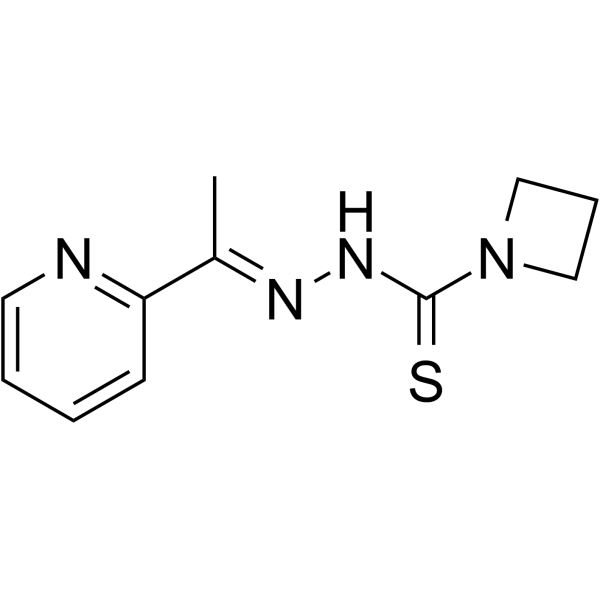
HY-18634
NSC319726MDM-2/p53 p53 Activator -
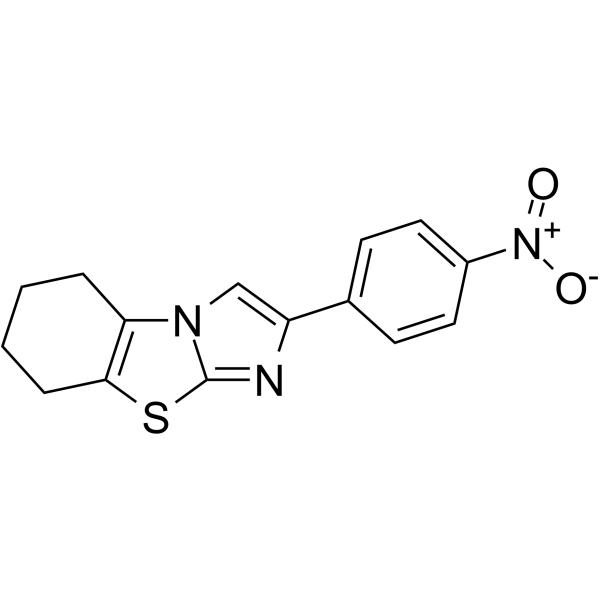
HY-123076
Pifithrin-α, p-Nitro, Cyclicp53 Inhibitor -
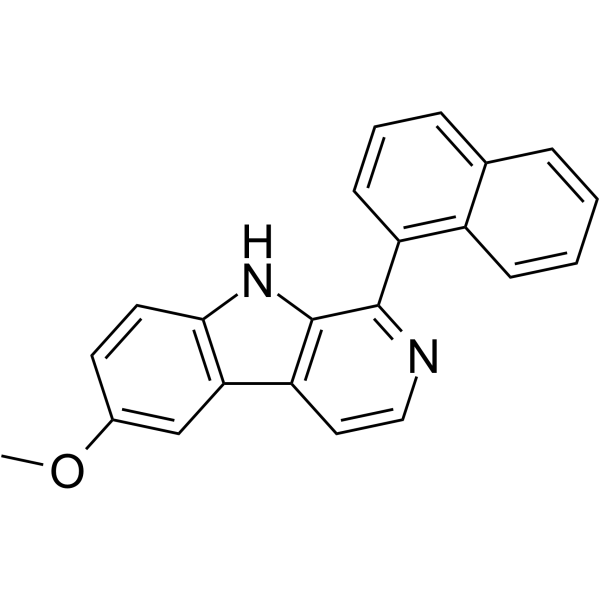
HY-110182
SP-141MDM2 Inhibitor -
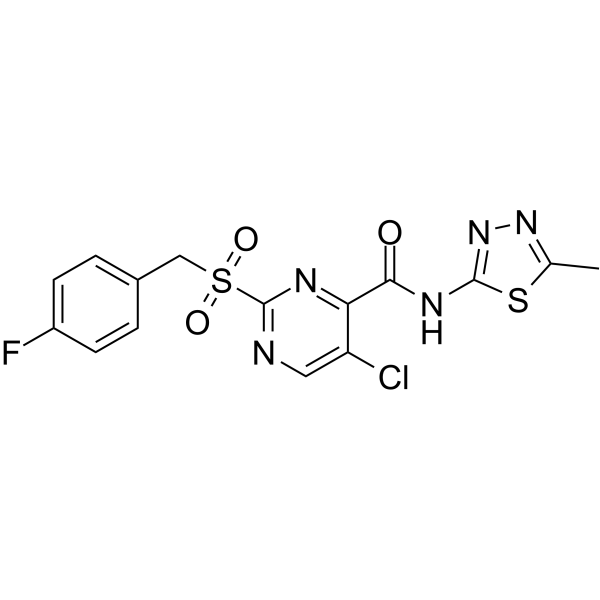
HY-128784
PK11007Anti-p53 Agent -
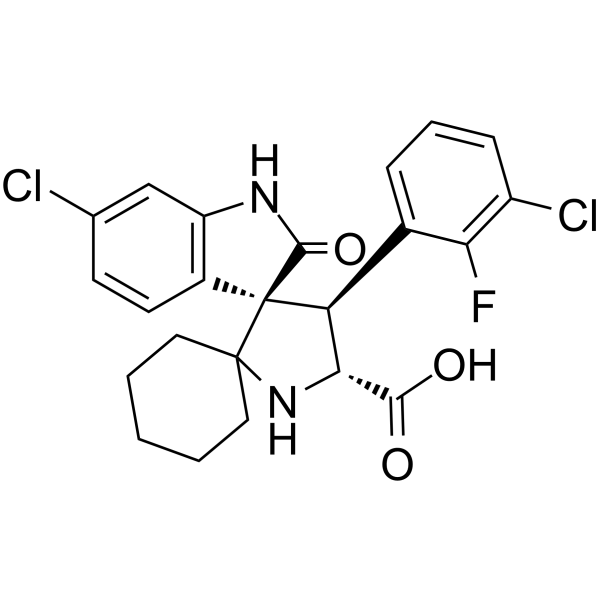
HY-130684
MDM2 ligand 5MDM2 Ligand -
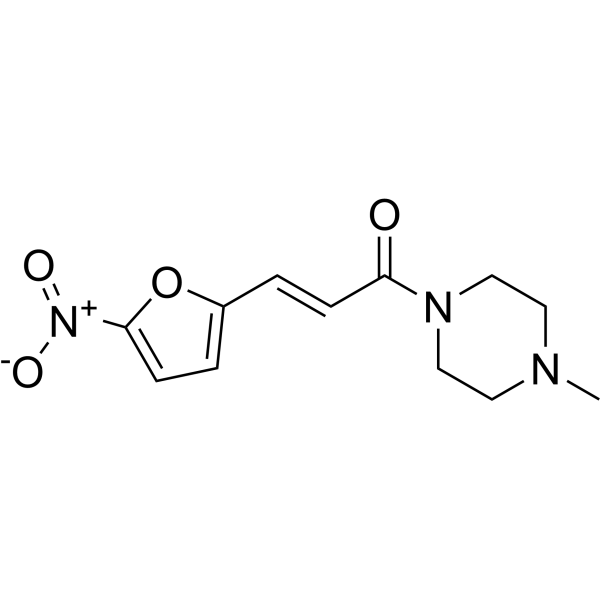
HY-19726
NSC59984MDM-2/p53 p53 Activator -
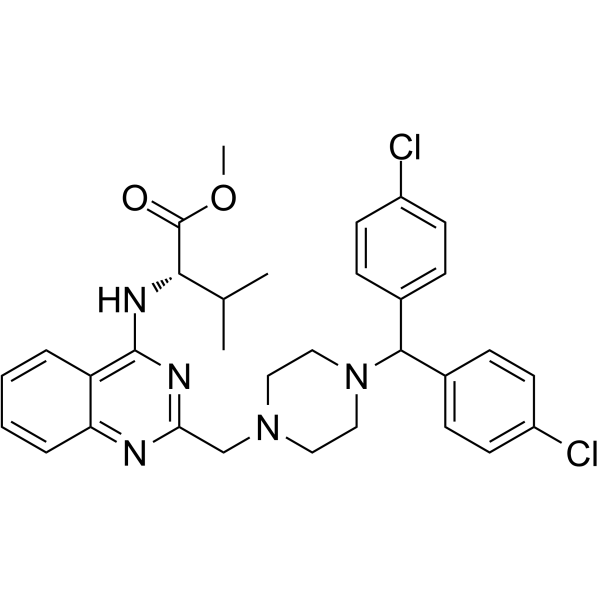
HY-122578
P53R3p53 Reactivator -
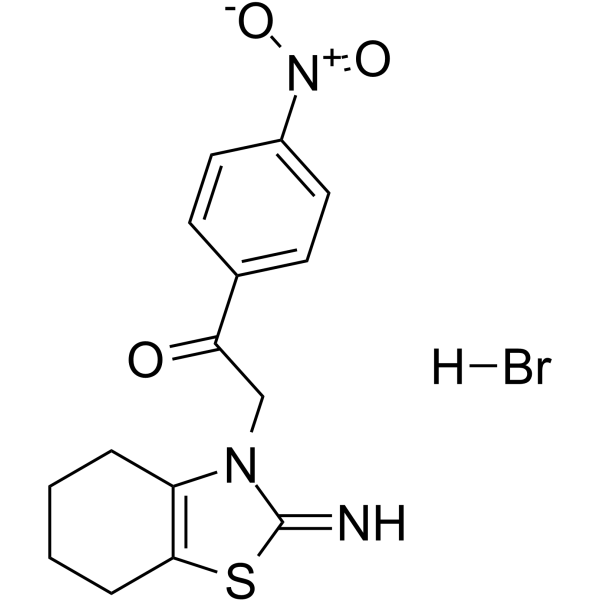
HY-130437
p-nitro-Pifithrin-αp53 Inhibitor -
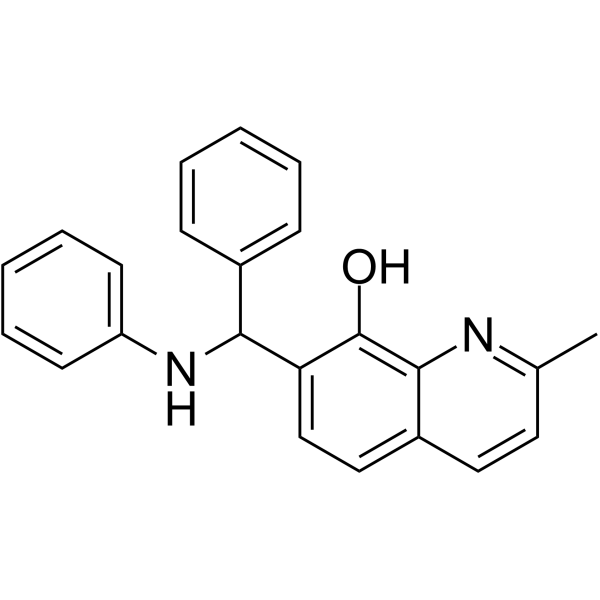
HY-14967
NSC 66811p53 Activator -
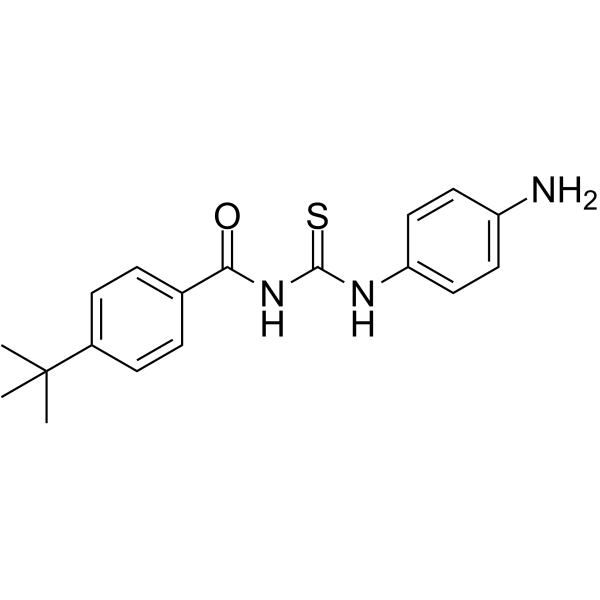
HY-19339
Tenovin-3p53 Activator -
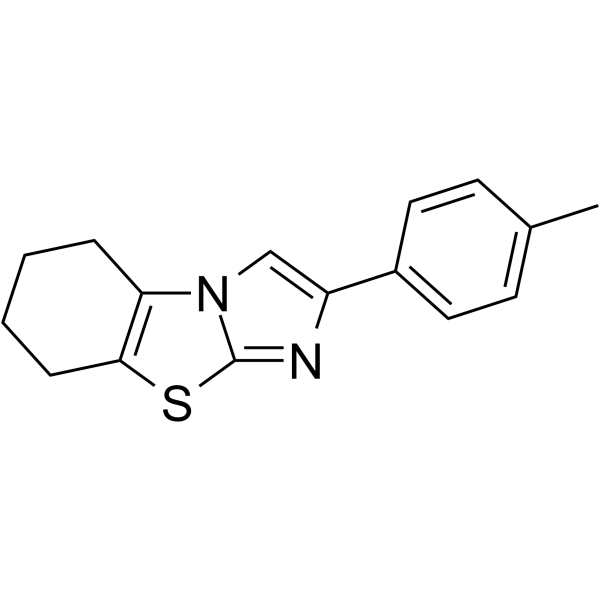
HY-16702
Pifithrin-βMDM-2/p53 p53 Inhibitor


Activité biologique
Description
In Vitro
Teprasiran is a synthetic, chemically stabilized small interfering RNA (siRNA) acting through RNA interference, which temporarily inhibits p53 expression for ≈48 to 72 hours[1].
MedChemExpress (MCE) has not independently confirmed the accuracy of these methods. They are for reference only. Further protocols information, click here.
Essai clinique
| NCT Number | Sponsor | Condition | Start Date |
Phase

|
|---|---|---|---|---|
| NCT01329991 | Plexxikon| | 2011-05 | PHASE1 |


Chemical Information
-
CAS No. 1231737-88-4
-
Appearance Solid
-
Masse moléculaire 12320.00
-
Color White to off-white
-
SMILES
[Teprasiran]
-
Synonyms
QPI-1002
-
Sequence
RNA, (G-Am-G-Am-A-Um-A-Um-U-Um-C-Am-C-Cm-C-Um-U-Cm-A), complex with RNA (Um-G-Am-A-Gm-G-Gm-U-Gm-A-Am-A-Um-A-Um-U-Cm-U-Cm) (1:1)
-
Livraison
Room temperature in continental US; may vary elsewhere.
-
Stockage
4°C, sealed storage, away from moisture
* In solvent : -80°C, 6 months; -20°C, 1 month (sealed storage, away from moisture)

Protocole
-
Nephrotoxicity Study
This protocol assesses nephrotoxicity by combining functional kidney injury readouts, urinary/tissue injury biomarkers, and renal histopathology. Serum creatinine and BUN reflect impaired kidney function, while KIM-1, NGAL, clusterin, osteopontin, IL-18, cystatin C, nephrin, Oat5, urinary protein, glucose, and alkaline phosphatase have been used to detect tubular injury in cisplatin-, gentamicin-, and acetaminophen-induced nephrotoxicity models.
-
Cell Cytotoxicity Assay
Cytotoxicity assays are usually based on the assessment of cell membrane damage, which can also be indirectly detected by measuring cell viability. Detection methods include MTT assay, CKK-8 assay, LDH assay and ATP assay, etc.
-
Mammalian live/dead viability and cytotoxicity staining
Live/dead viability and cytotoxicity staining assays are based on the simultaneous detection of intracellular esterase activity in metabolically active (viable) cells and membrane integrity loss in non-viable cells. In commonly used dual-staining approaches, membrane-permeant fluorogenic substrates are converted by intracellular esterases into fluorescent products in live cells, while impermeant DNA-binding dyes selectively enter cells with compromised plasma membranes and label nucleic acids in dead or dying cells, enabling discrimination between viable and non-viable populations by fluorescence microscopy or flow cytometry.
-
Apoptosis Solutions
Apoptosis is a regulated, generally non-lytic cell-death pathway that removes unwanted, damaged, infected, or abnormal cells through coordinated morphological changes, caspase activation, DNA fragmentation, and membrane remodeling. The intrinsic apoptosis pathway is controlled mainly by mitochondrial outer membrane permeabilization, BCL-2 family proteins, cytochrome c release, apoptosome formation, caspase-9 activation, and downstream executioner caspase-3/7 activation. The extrinsic apoptosis pathway is initiated by death receptors such as Fas, TNFR, and TRAIL receptors, which recruit adaptor proteins and activate caspase-8 before engaging executioner caspases or mitochondrial amplification through BID cleavage. Apoptosis is linked to many phenotypes, including cancer cell killing, tissue homeostasis, immune regulation, neurodegeneration, infection response, and treatment-induced cytotoxicity; unresolved questions include how apoptosis interacts with necroptosis, pyroptosis, ferroptos


Pureté et documentation
-
Fiche technique (266 KB)
-
SDS (254 KB)
- English - EN (254 KB)
- Français - FR (254 KB)
- Deutsch - DE (254 KB)
- Norwegian - NO (254 KB)
- Español - ES (254 KB)
- Swedish - SV (254 KB)
- Italian - IT (254 KB)
- Korean - KR (254 KB)
- Portuguese - PT (254 KB)
-
Instruction de manipulation (2242 KB)
Références

Calculators
Concentration (start) × Volume (start) = Concentration (final) × Volume (final)


Teprasiran Related Classifications
HY-132595 Related Classifications
 Powered by Bioz