



18794-84-8
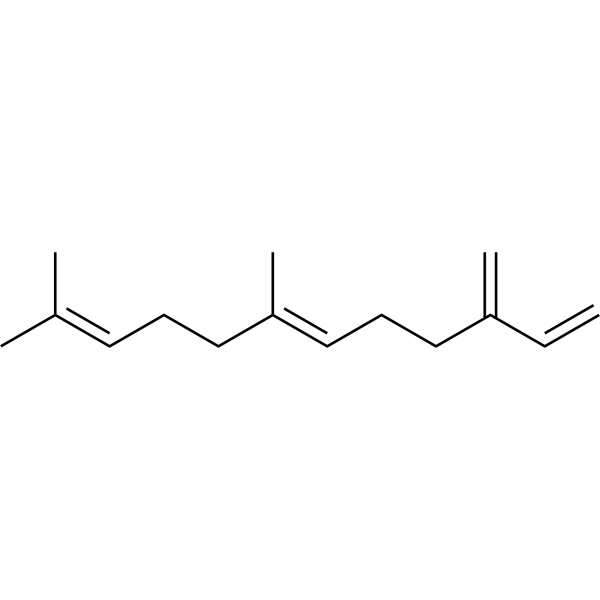
Chemical Structure
(E)-β-Farnesene
Synonym(s): trans-β-Farnesene
- CAS 番号: 18794-84-8
- Formula:C15H24
- Molecular Weight:204.35
IUPAC Name: (E)-7,11-dimethyl-3-methylenedodeca-1,6,10-triene
InChIKey: JSNRRGGBADWTMC-NTCAYCPXSA-N
SMILES: C=CC(CC/C=C(C)/CC/C=C(C)/C)=C
Biological Activity: (E)-β-Farnesene (trans-β-Farnesene) is an aphid alarm pheromone, which can be found in Phlomis aurea Decne essential oil. (E)-β-Farnesene shows good binding score with a value of -30.64 kcal/mol to the CDK2 receptor. (E)-β-Farnesene also exhibits good affinity to odorant-binding protein 3 (OBP3). (E)-β-Farnesene can be used as a feeding stimulant for the sand fly Lutzomyia longipalpis[1][2][3][4].
| 製品番号 | 製品名 | 純度 | 製品説明 | Pricing | |||||||||||||||||||
|---|---|---|---|---|---|---|---|---|---|---|---|---|---|---|---|---|---|---|---|---|---|---|---|
|
|
(E)-β-Farnesene | 99.92% | (E)-β-Farnesene (trans-β-Farnesene) is an aphid alarm pheromone, which can be found in Phlomis aurea Decne essential oil. (E)-β-Farnesene shows good binding score with a value of -30.64 kcal/mol to the CDK2 receptor. (E)-β-Farnesene also exhibits good affinity to odorant-binding protein 3 (OBP3). (E)-β-Farnesene can be used as a feeding stimulant for the sand fly Lutzomyia longipalpis. | ||||||||||||||||||||
|
loading...
/
|
|||||||||||||||||||||||
|
|
(E)-β-Farnesene (Standard) | 97.01% | (E)-β-Farnesene (Standard) is the analytical standard of (E)-β-Farnesene. This product is intended for research and analytical applications. (E)-β-Farnesene (trans-β-Farnesene) is a volatile sesquiterpene hydrocarbon which can be found in Phlomis aurea Decne essential oil. (E)-β-Farnesene can be used as a feeding stimulant for the sand fly Lutzomyia longipalpis. | ||||||||||||||||||||
|
loading...
/
|
|||||||||||||||||||||||
|
|
(E)-β-Farnesene-d6 | (E)-β-Farnesene-d6 is deuterated labeled (E)-β-Farnesene (HY-N7364). (E)-β-Farnesene (trans-β-Farnesene) is an aphid alarm pheromone, which can be found in Phlomis aurea Decne essential oil. (E)-β-Farnesene shows good binding score with a value of -30.64 kcal/mol to the CDK2 receptor. (E)-β-Farnesene also exhibits good affinity to odorant-binding protein 3 (OBP3). (E)-β-Farnesene can be used as a feeding stimulant for the sand fly Lutzomyia longipalpis. | |||||||||||||||||||||
|
loading...
/
|
|||||||||||||||||||||||
-
Similarity Score 0.85
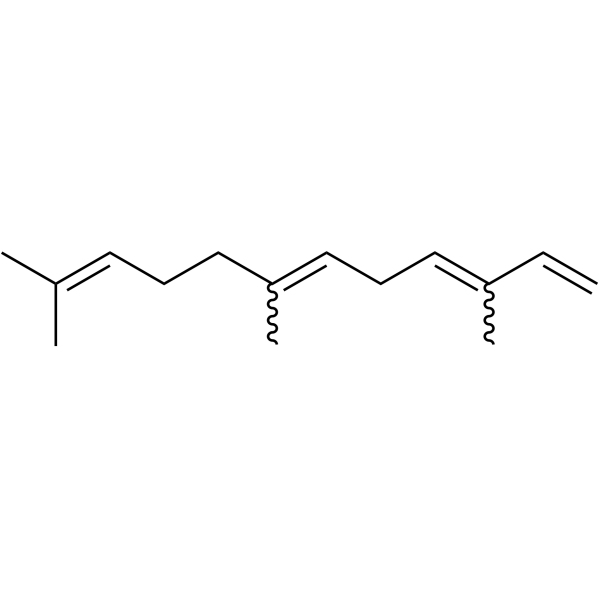 HY-14620AFarnesene (mixture of isomers)
-
Similarity Score 0.83
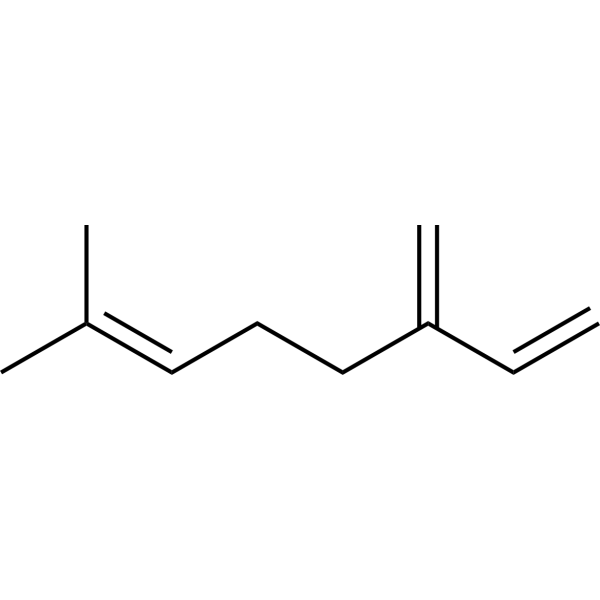 HY-N0803Myrcene,75% (stabilized with BHT)
-
Similarity Score 0.83
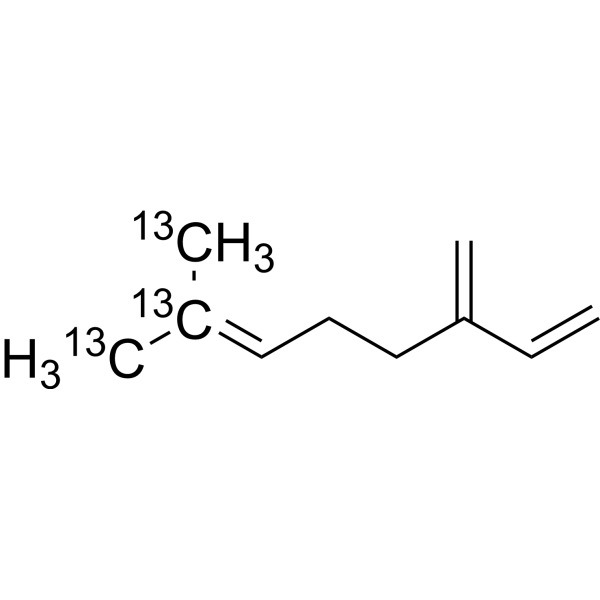 HY-N0803S1Myrcene-13C3
-
Similarity Score 0.82
 HY-W585885(3E)-4,8-Dimethylnona-1,3,7-triene
-
Similarity Score 0.82
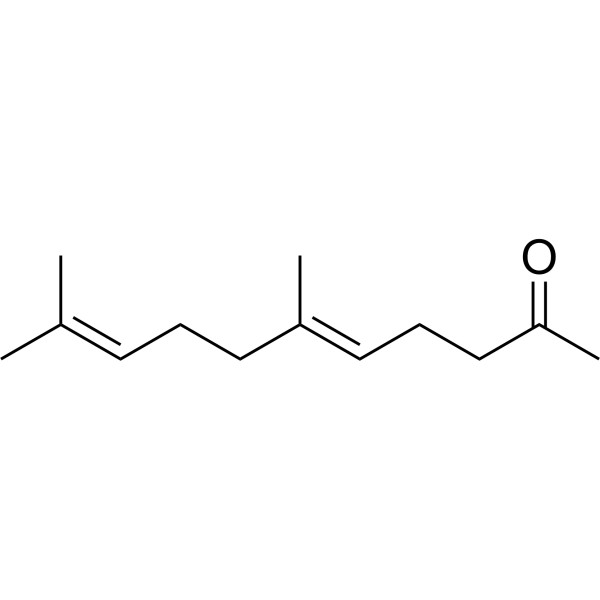 HY-142037Geranylacetone
-
Similarity Score 0.82
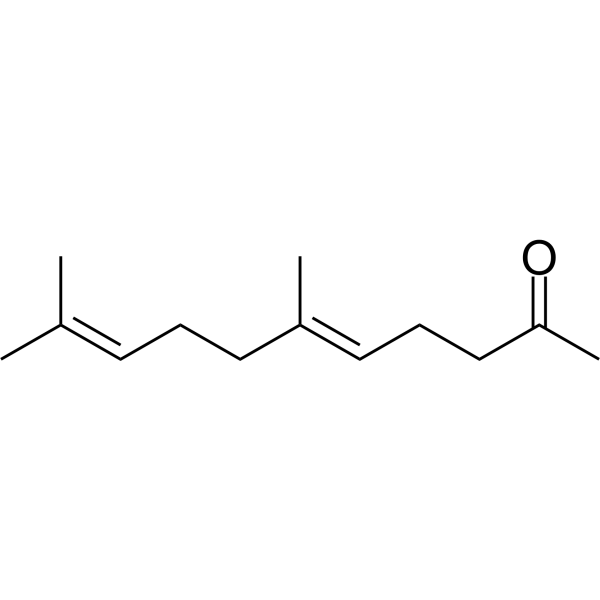 HY-N8446(E/Z)-Geranylacetone
-
Similarity Score 0.80
 HY-165605Homogeraniol
-
Similarity Score 0.78
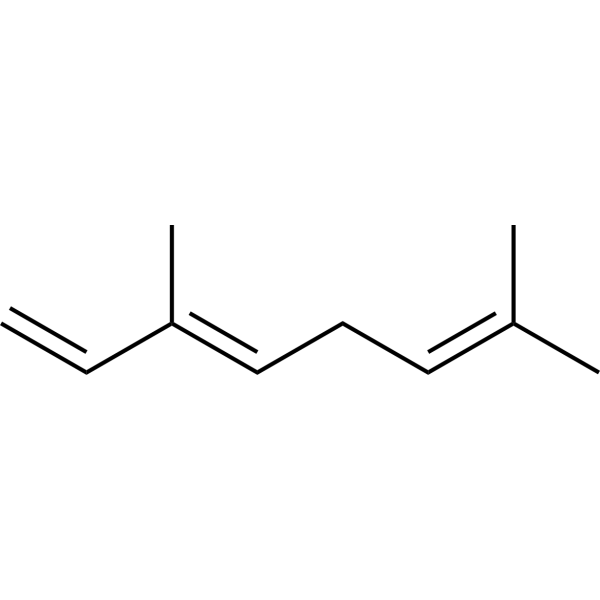 HY-117215β-Ocimene
-
Similarity Score 0.77
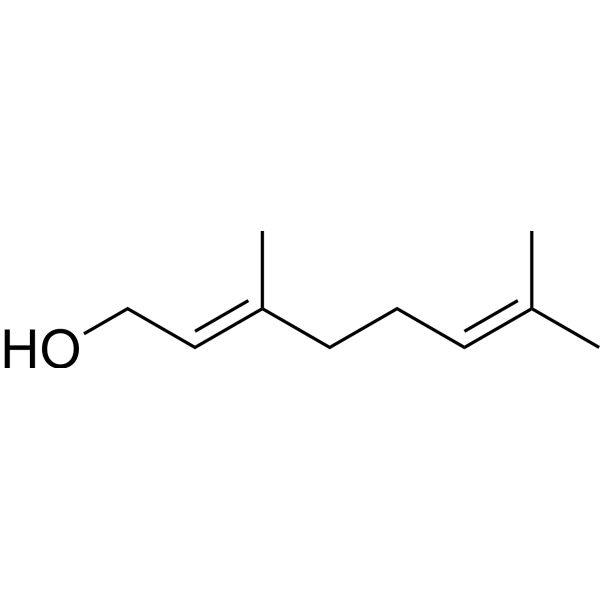 HY-N6952RGeraniol (Standard)
-

Explore the MedChemAI to find more analogs


References
- [1]. Tesh RB, et, al. Trans-beta-farnesene as a feeding stimulant for the sand fly Lutzomyia longipalpis (Diptera: Psychodidae). J Med Entomol. 1992 Mar;29(2):226-31. [Content Brief]
- [2]. Torky ZA, et, al. Chemical profiling, antiviral and antiproliferative activities of the essential oil of Phlomis aurea Decne grown in Egypt. Food Funct. 2021 May 21;12(10):4630-4643. [Content Brief]
- [3]. Li J, et al. Tissue specificity of (E)-β-farnesene and germacrene D accumulation in pyrethrum flowers. Phytochemistry. 2021 Jul;187:112768. [Content Brief]
- [4]. Qiao H, et al. Discrimination of alarm pheromone (E)-beta-farnesene by aphid odorant-binding proteins. Insect Biochem Mol Biol. 2009 May-Jun;39(5-6):414-9. [Content Brief]



