



7561-51-5
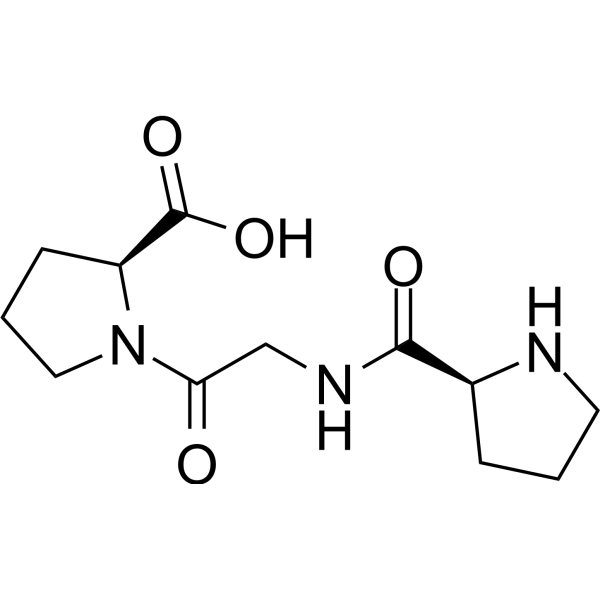
7561-51-5
Chemical Structure
H-Pro-Gly-Pro-OH
Synonym(s): Pro-Gly-Pro
- CAS No.: 7561-51-5
- Formula:C12H19N3O4
- Molecular Weight:269.30
InChIKey: BRPMXFSTKXXNHF-IUCAKERBSA-N
SMILES: O=C([C@@H]1CCCN1)NCC(N2[C@@H](CCC2)C(O)=O)=O
Biological Activity: H-Pro-Gly-Pro-OH is a collagen-derived matrikine that has classically been described as a neutrophil chemoattractant. H-Pro-Gly-Pro-OH is perfectly positioned to focus neutrophils on the site required and direct a localized repair response. H-Pro-Gly-Pro-OH activates the transcription of neurotrophins and their receptor genes after cerebral ischemia[1][2].
| Cat. No. | Product Name | Purity | Description | Pricing | |||||||||||||||||||
|---|---|---|---|---|---|---|---|---|---|---|---|---|---|---|---|---|---|---|---|---|---|---|---|
|
|
H-Pro-Gly-Pro-OH | 99.14% | H-Pro-Gly-Pro-OH is a collagen-derived matrikine that has classically been described as a neutrophil chemoattractant. H-Pro-Gly-Pro-OH is perfectly positioned to focus neutrophils on the site required and direct a localized repair response. H-Pro-Gly-Pro-OH activates the transcription of neurotrophins and their receptor genes after cerebral ischemia. | ||||||||||||||||||||
|
loading...
/
|
|||||||||||||||||||||||
Structural Analogs
-
Similarity Score 0.82
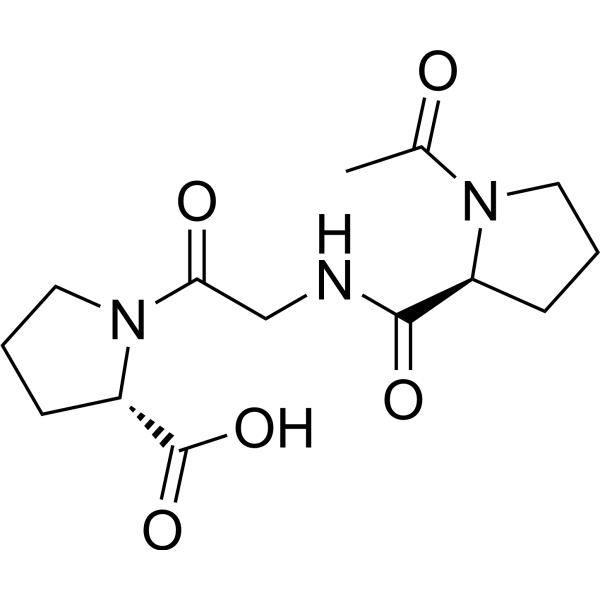 HY-P4846Ac-Pro-Gly-Pro-OH
-
Similarity Score 0.78
 HY-P4495H-Pro-Pro-Pro-OH
-
Similarity Score 0.77
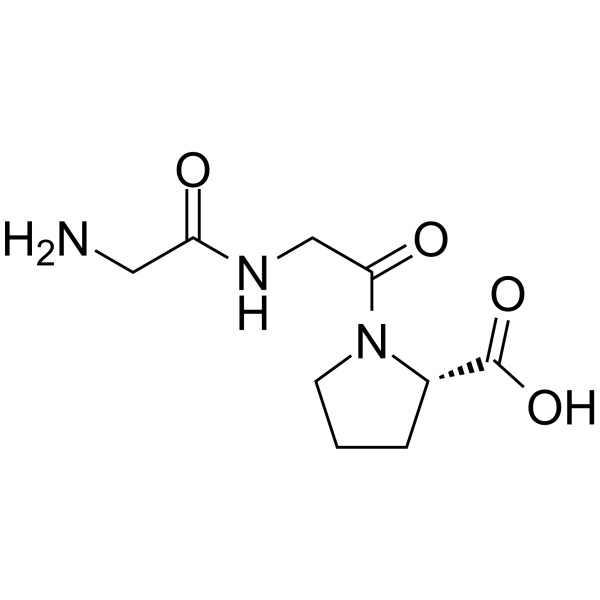 HY-111922H-Gly-Gly-Pro-OH
-
Similarity Score 0.75
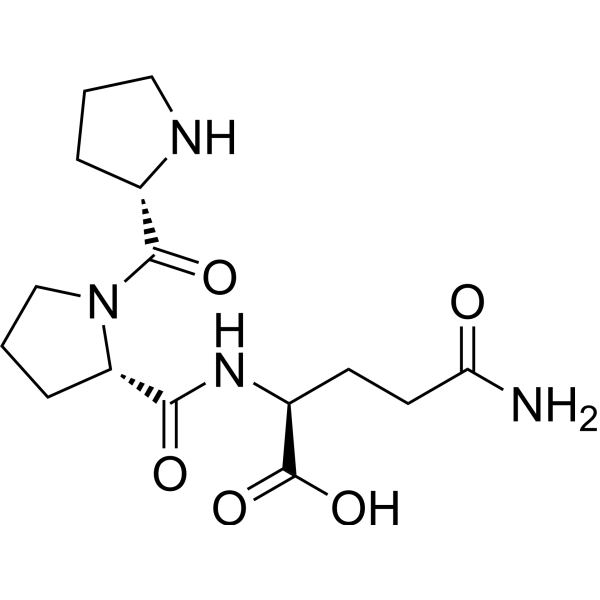 HY-P4488H-Pro-Pro-Gln-OH
-
Similarity Score 0.74
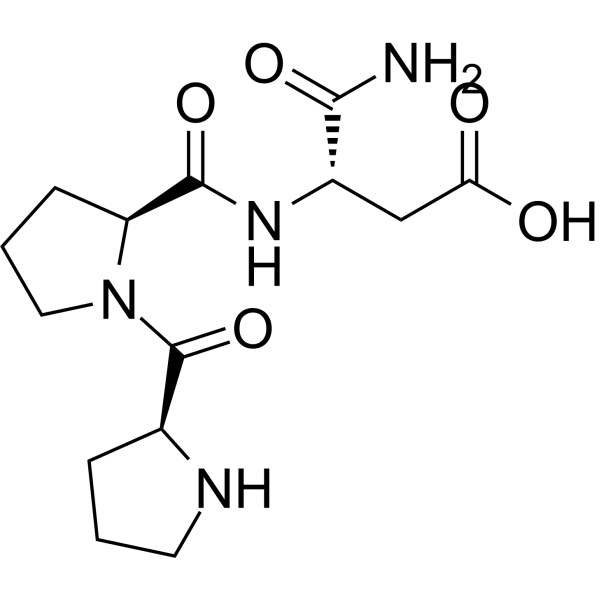 HY-P4487H-Pro-Pro-Asp-NH2
-
Similarity Score 0.74
 HY-P4365D-Pro-Pro-Glu
-
Similarity Score 0.73
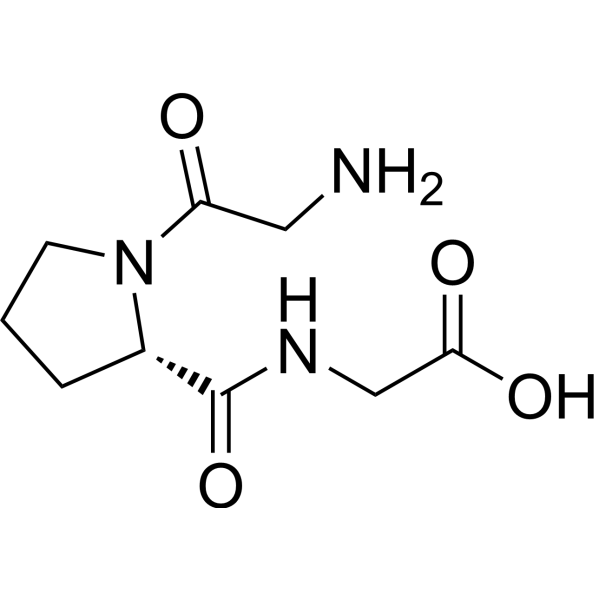 HY-P4294H-Gly-Pro-Gly-OH
-
Similarity Score 0.73
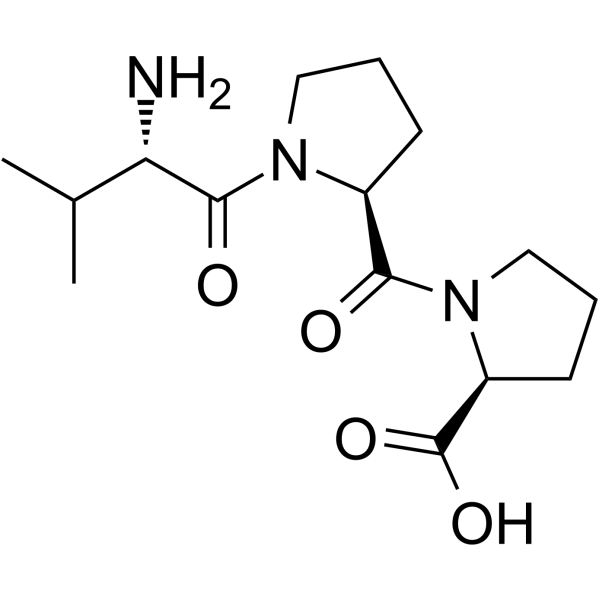 HY-114161H-Val-Pro-Pro-OH
-
Similarity Score 0.73
 HY-P4260LPP Tripeptide
-

Explore the MedChemAI to find more analogs


References
- [1]. Patel DF, et al. The multifaceted roles of the matrikine Pro-Gly-Pro in pulmonary health and disease. Eur Respir Rev. 2018 Jun 27;27(148):180017. [Content Brief]
- [2]. Dmitrieva VG, et al. Semax and Pro-Gly-Pro activate the transcription of neurotrophins and their receptor genes after cerebral ischemia. Cell Mol Neurobiol. 2010 Jan;30(1):71-9. [Content Brief]



