



JMV 2959
Based on 3 publication(s) in Google Scholar
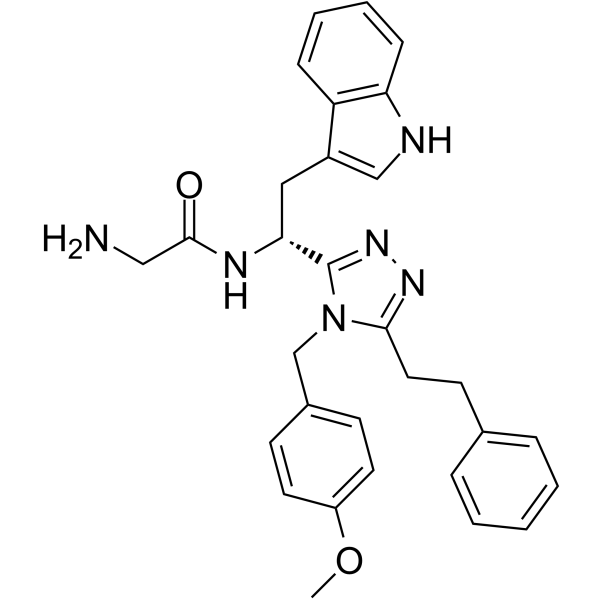
JMV 2959 is a growth hormone secretagogue receptor type 1a (GHS-R1a) antagonist with an IC50 of 32 nM.
For research use only. We do not sell to patients.
- Purity : 98.69%
- CAS No.: 925238-89-7
- Formula: C30H32N6O2
- Molecular Weight:508.61
-
Storage:Powder -20°C, 3 years , 4°C, 2 years ; In solvent -80°C, 6 months , -20°C, 1 month

To place orders, for customer services and technical support, please contact: MedChemExpress USA
Tel: 609-228-6898 E-mail: [email protected] [email protected]


-
 Biological Activity
-
Chemical Information
-
Solvent & Solubility
- Protocols
- Purity & Documentation
- References
-
 Help & FAQs


-
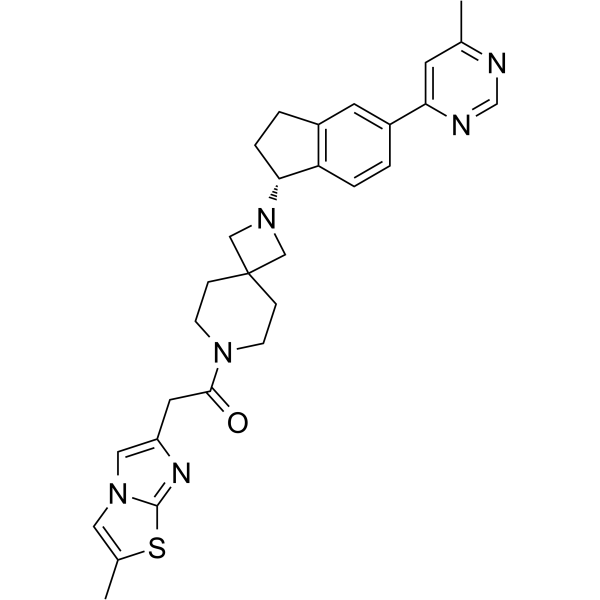
HY-12584
PF-5190457GHSR Inverse Agonist -
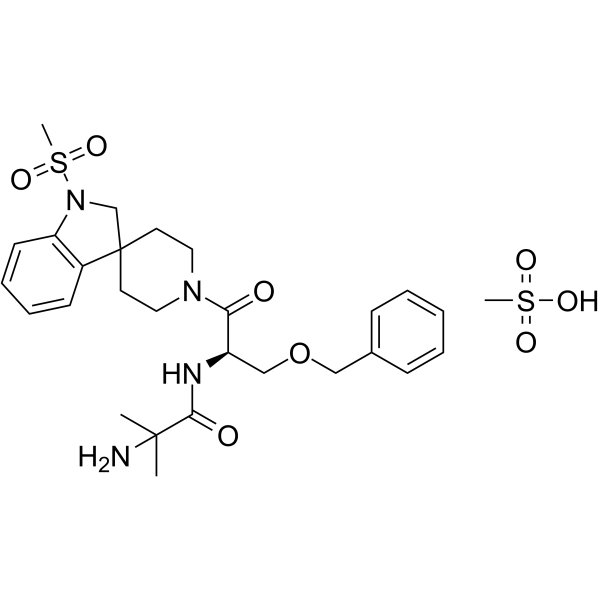
HY-50844
Ibutamoren MesylateGHSR Agonist -
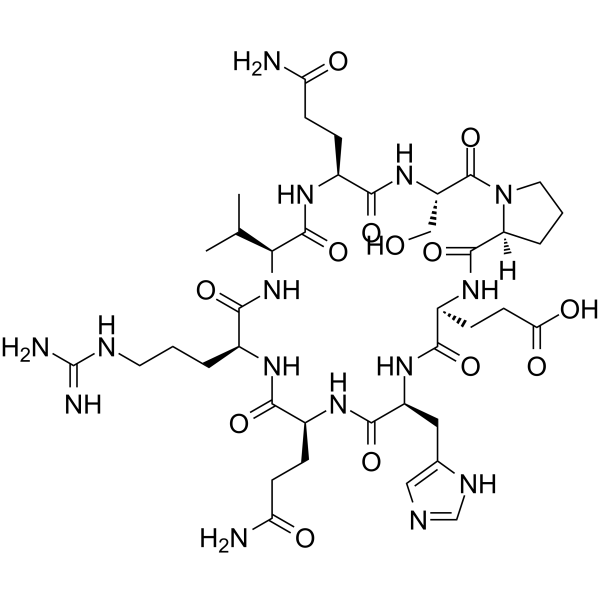
HY-P0231
AZP-531Auxin Releases Peptide Analog -
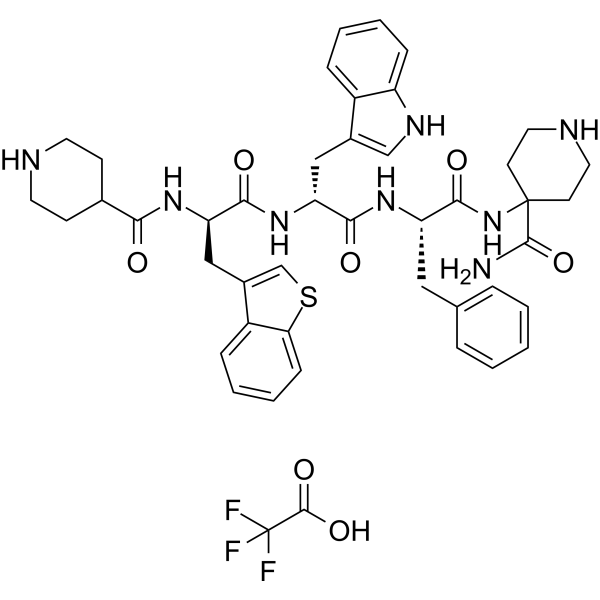
HY-19884B
Relamorelin TFAGHSR Agonist -
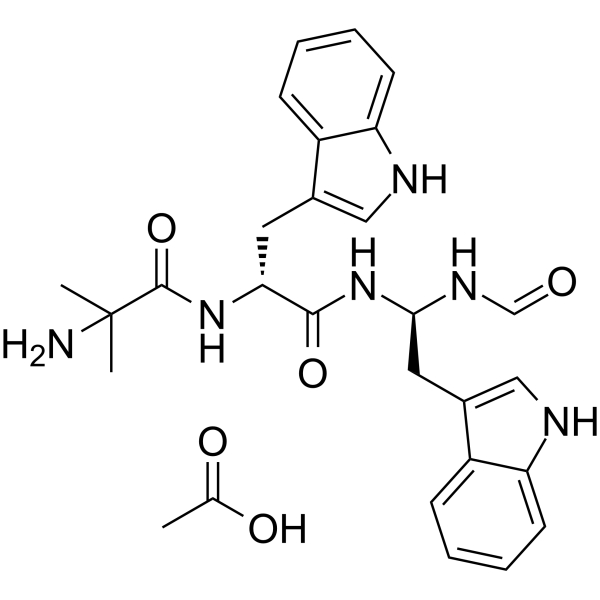
HY-14820A
Macimorelin acetateGHSR Agonist -
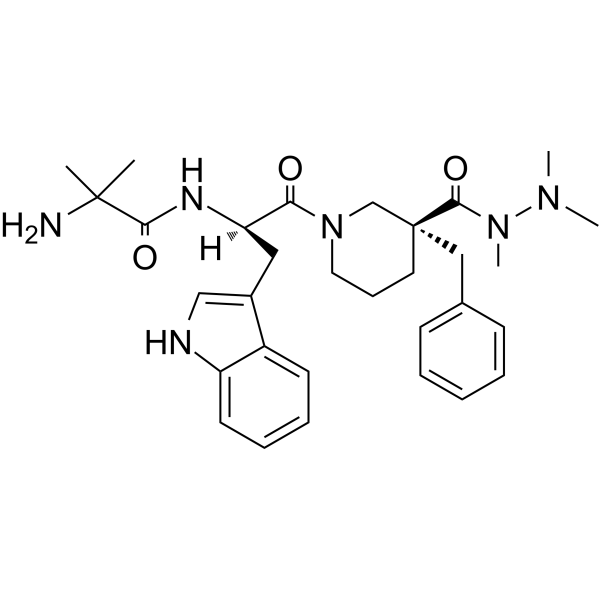
HY-14734
AnamorelinGhrelin Receptor Agonist -
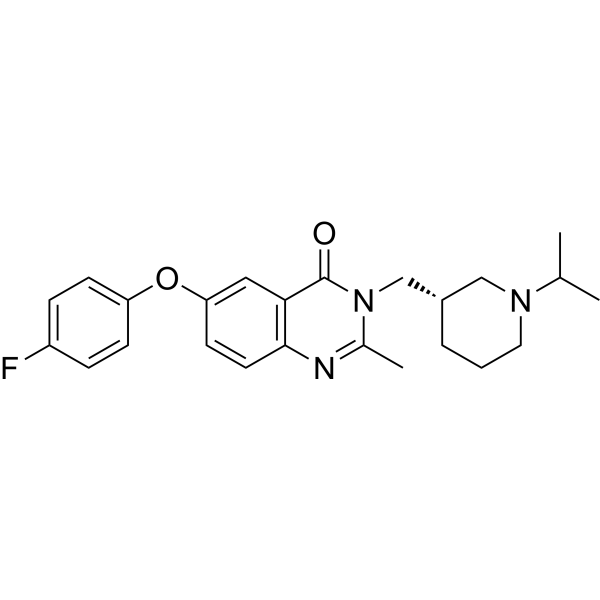
HY-13964
YIL781GHSR Antagonist -
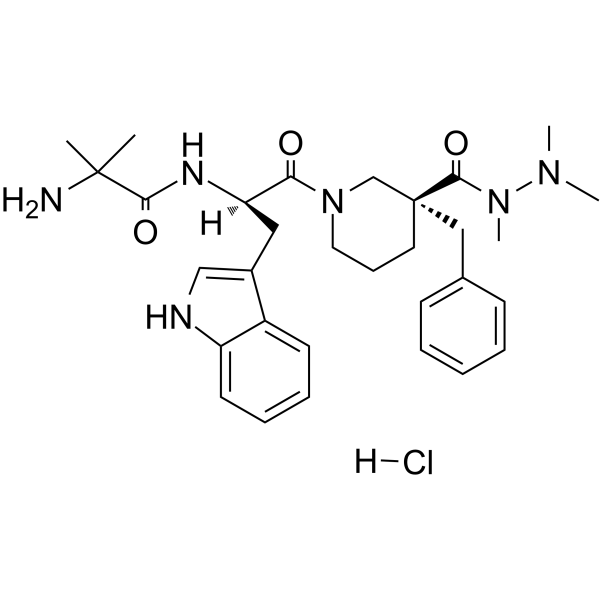
HY-14734A
Anamorelin hydrochlorideGhrelin Receptor Agonist -
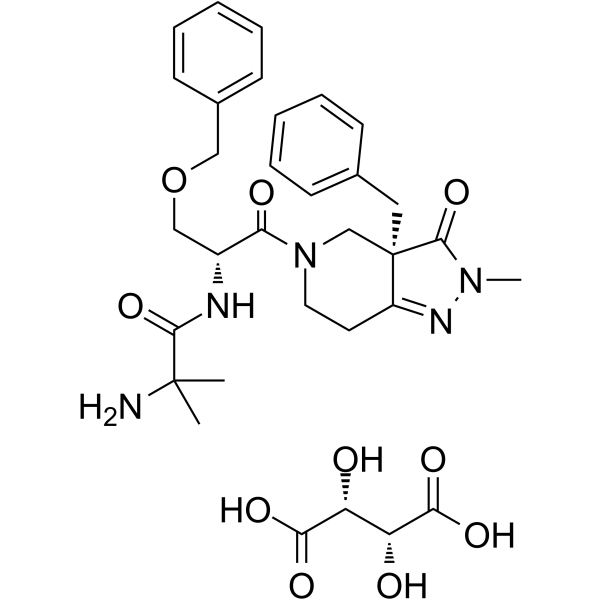
HY-15243
Capromorelin TartrateGHSR Agonist -
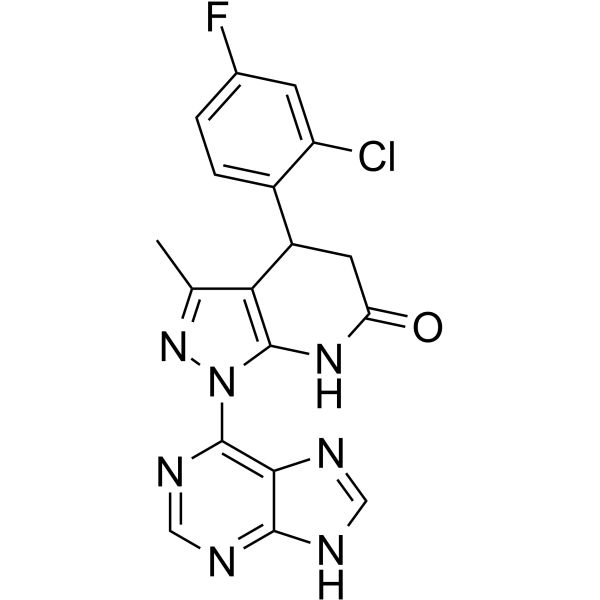
HY-108699
TM-N1324GPR39 Agonist -
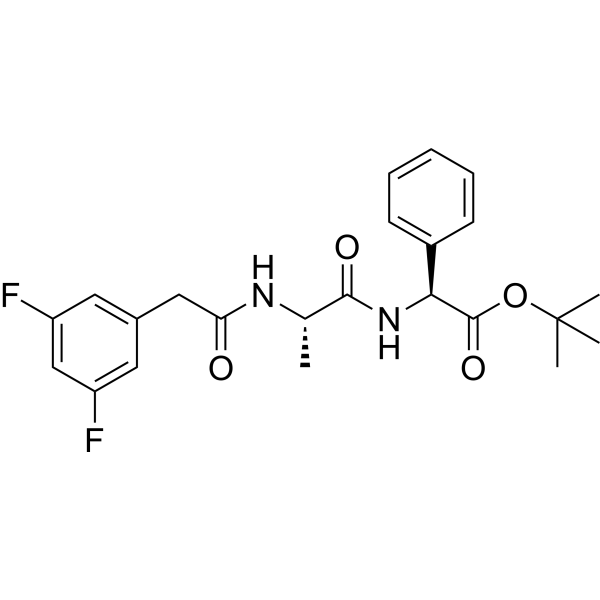
HY-13027
DAPTγ-secretase Inhibitor -
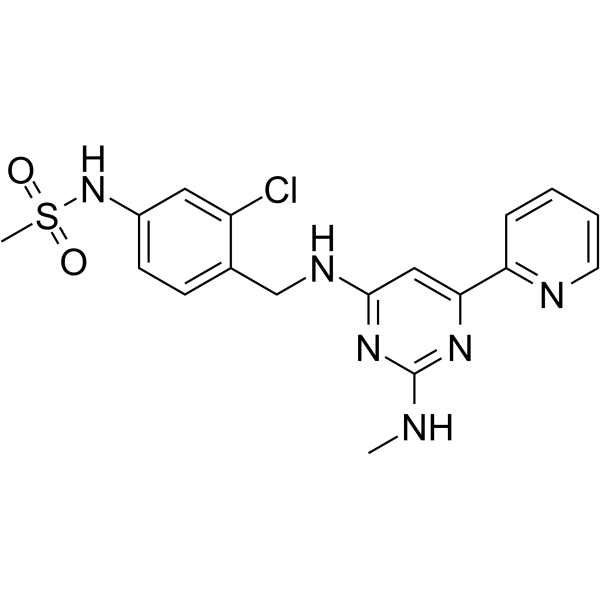
HY-103007
TC-G-1008GPR39 Agonist
Publications Citing Use of MedChemExpress (MCE) JMV 2959
More

Biological Activity
Description
IC50 & Target
IC50: 32 nM (GHS-R1a)
Cellular Effect
|
Cell Line

|
Type | Value | Description | References |
|---|---|---|---|---|
| LLC-PK1 | IC50 |
32 nM
Compound: 1, JMV 2959
|
Displacement of 125I-[His9]-ghrelin from human GHSR1a expressed in LLC-PK1 cells by competitive binding assay
Displacement of 125I-[His9]-ghrelin from human GHSR1a expressed in LLC-PK1 cells by competitive binding assay
|
[PMID: 25435152] |
In Vitro
JMV 2959 is a growth hormone secretagogue receptor type 1a (GHS-R1a) antagonist with an IC50 of 32 nM. JMV 2959 does not induce any intracellular calcium mobilization by itself[1].
MedChemExpress (MCE) has not independently confirmed the accuracy of these methods. They are for reference only.
In Vivo
MedChemExpress (MCE) has not independently confirmed the accuracy of these methods. They are for reference only.


Chemical Information
-
CAS No. 925238-89-7
-
Appearance Solid
-
Molecular Weight 508.61
-
Formula C30H32N6O2
-
Color White to off-white
-
SMILES
O=C(N[C@@H](C1=NN=C(CCC2=CC=CC=C2)N1CC3=CC=C(OC)C=C3)CC4=CNC5=C4C=CC=C5)CN
-
Shipping
Room temperature in continental US; may vary elsewhere.
-
Storage
Powder -20°C 3 years 4°C 2 years In solvent -80°C 6 months -20°C 1 month


Publications (3)
-
Journal Impact Factor
-
Most Recent
-
Nat Commun
2025 Mar 15;16(1):2568. PMID: 40089486 -
Peptides
Liver-expressed antimicrobial peptide 2 functions independently of growth hormone secretagogue receptor in calorie-restricted mice. [Abstract]2022 May:151:170763. PMID: 35151767 -


Solvent & Solubility
In Vitro:
DMSO : 25 mg/mL (49.15 mM; ultrasonic and warming and heat to 60°C; Hygroscopic DMSO has a significant impact on the solubility of product, please use newly opened DMSO)
H2O : < 0.1 mg/mL (insoluble)
Please refer to the solubility information to select the appropriate solvent. Once prepared, please aliquot and store the solution to prevent product inactivation from repeated freeze-thaw cycles.
Storage method and period of stock solution: -80°C, 6 months; -20°C, 1 month. When stored at -80°C, please use it within 6 months. When stored at -20°C, please use it within 1 month.
Please refer to the solubility information to select the appropriate solvent. Once prepared, please aliquot and store the solution to prevent product inactivation from repeated freeze-thaw cycles.
Storage method and period of stock solution: -80°C, 6 months; -20°C, 1 month. When stored at -80°C, please use it within 6 months. When stored at -20°C, please use it within 1 month.
Concentration (start) × Volume (start) = Concentration (final) × Volume (final)
In Vivo:
Select the appropriate dissolution method based on your experimental animal and administration route.
- For the following dissolution methods, please ensure to first prepare a clear stock solution using an In Vitro approach and then sequentially add co-solvents:
- To ensure reliable experimental results, the clarified stock solution can be appropriately stored based on storage conditions. As for the working solution for In Vivo experiments, it is recommended to prepare freshly and use it on the same day.
- The percentages shown for the solvents indicate their volumetric ratio in the final prepared solution. If precipitation or phase separation occurs during preparation, heat and/or sonication can be used to aid dissolution.
Add each solvent one by one: 10% DMSO 90% (20% SBE-β-CD in Saline)
Solubility: ≥ 5 mg/mL (9.83 mM); Clear solution
This protocol yields a clear solution of ≥ 5 mg/mL (saturation unknown).
Taking 1 mL working solution as an example, add 100 μL DMSO stock solution (50.0 mg/mL) to 900 μL 20% SBE-β-CD in Saline, and mix evenly.
Preparation of 20% SBE-β-CD in Saline (4°C, storage for one week): 2 g SBE-β-CD powder is dissolved in 10 mL Saline, completely dissolve until clear.
Add each solvent one by one: 10% DMSO 40% PEG300 5% Tween-80 45% Saline
Solubility: ≥ 2.08 mg/mL (4.09 mM); Clear solution
This protocol yields a clear solution of ≥ 2.08 mg/mL (saturation unknown).
Taking 1 mL working solution as an example, add 100 μL DMSO stock solution (20.8 mg/mL) to 400 μL PEG300, and mix evenly; then add 50 μL Tween-80 and mix evenly; then add 450 μL Saline to adjust the volume to 1 mL.
Preparation of Saline: Dissolve 0.9 g sodium chloride in ddH₂O and dilute to 100 mL to obtain a clear Saline solution.
In Vivo Dissolution Calculator
Please enter the basic information of animal experiments:
-
-
-
-
Recommended: Prepare an additional quantity of animals to account for potential losses during experiments.
Please enter your animal formula composition:
-
%DMSO +
Recommended: Keep the proportion of DMSO in working solution below 2% if your animal is weak.
-
%+
-
+%Tween-80 + +
-
%Saline +
The co-solvents required include: DMSO, . All of co-solvents are available by MedChemExpress (MCE). , Tween 80. All of co-solvents are available by MedChemExpress (MCE).
Working solution concentration: 0.22 mg/mL
Method for preparing stock solution: mg drug dissolved in μL DMSO. Stock solution concentration: mg/mL.
1. Take μL DMSO stock solution;
2. Add μL .
μL , mix evenly;
3. Then add μL Tween 80, mix evenly;
4. Then add μL
Please ensure that the stock solution in the first step is dissolved to a clear state, and add co-solvents in sequence. You can use ultrasonic heating (ultrasonic cleaner, recommended frequency 20-40 kHz), vortexing, etc. to assist dissolution.


Purity & Documentation
-
Data Sheet (283 KB)
-
SDS (251 KB)
- English - EN (251 KB)
- Français - FR (251 KB)
- Deutsch - DE (251 KB)
- Norwegian - NO (251 KB)
- Español - ES (251 KB)
- Swedish - SV (251 KB)
- Italian - IT (251 KB)
- Korean - KR (251 KB)
- Portuguese - PT (251 KB)
-
Handling Instructions (2659 KB)
References
[1]. Moulin A, et al. The 1,2,4-triazole as a scaffold for the design of ghrelin receptor ligands: development of JMV 2959, a potent antagonist. Amino Acids. 2013 Feb;44(2):301-14. [Content Brief]
[2]. Engel JA, et al. Blockade of growth hormone secretagogue receptor 1A signaling by JMV 2959 attenuates the NMDAR antagonist, phencyclidine-induced impairments in prepulse inhibition. Psychopharmacology (Berl). 2015 Dec;232(23):4285-92. [Content Brief]
[3]. Clifford PS, et al. Attenuation of cocaine-induced locomotor sensitization in rats sustaining genetic or pharmacologic antagonism of ghrelin receptors. Addict Biol. 2012 Nov;17(6):956-63. [Content Brief]


Complete Stock Solution Preparation Table
Please refer to the solubility information to select the appropriate solvent. Once prepared, please aliquot and store the solution to prevent product inactivation from repeated freeze-thaw cycles.
Storage method and period of stock solution: -80°C, 6 months; -20°C, 1 month. When stored at -80°C, please use it within 6 months. When stored at -20°C, please use it within 1 month.
| Optional Solvent | Concentration Solvent Mass | 1 mg | 5 mg | 10 mg | 25 mg |
|---|---|---|---|---|---|
| DMSO | 1 mM | 1.9661 mL | 9.8307 mL | 19.6614 mL | 49.1536 mL |
| 5 mM | 0.3932 mL | 1.9661 mL | 3.9323 mL | 9.8307 mL | |
| 10 mM | 0.1966 mL | 0.9831 mL | 1.9661 mL | 4.9154 mL | |
| 15 mM | 0.1311 mL | 0.6554 mL | 1.3108 mL | 3.2769 mL | |
| 20 mM | 0.0983 mL | 0.4915 mL | 0.9831 mL | 2.4577 mL | |
| 25 mM | 0.0786 mL | 0.3932 mL | 0.7865 mL | 1.9661 mL | |
| 30 mM | 0.0655 mL | 0.3277 mL | 0.6554 mL | 1.6385 mL | |
| 40 mM | 0.0492 mL | 0.2458 mL | 0.4915 mL | 1.2288 mL |


JMV 2959 Related Classifications
HY-U00433 Related Classifications
 Powered by Bioz