



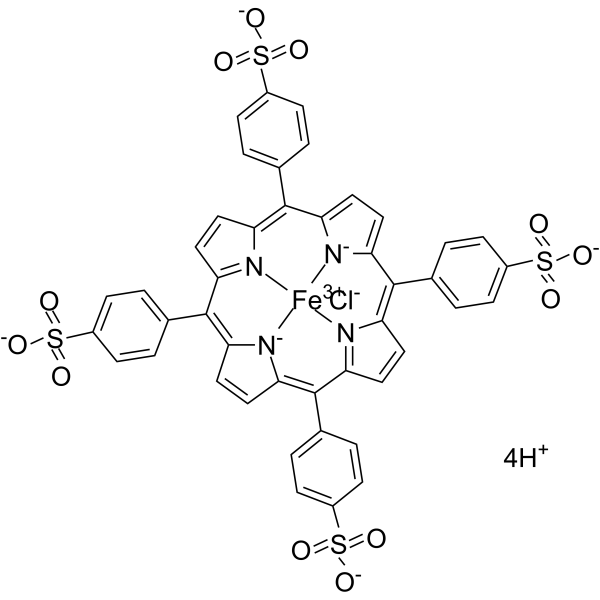
FeTPPS
Based on 1 publication(s) in Google Scholar
FeTPPS, a 5,10,15,20-tetrakis (4-sulfonatophenyl) porphyrin iron III chloride peroxynitrite decomposition catalyst, possesses evident neuroprotective effects in a experimental model of spinal cord damage. FeTPPS acts as a peroxynitrite scavenger and anti-nitrating agent in vivo. FeTPPS reduces nitric oxide (NO) production and apoptosis process.
For research use only. We do not sell to patients.
- Purity : 99.9%
- CAS No.: 90384-82-0
- Formula: C44H28ClFeN4O12S4
- Molecular Weight:1024.27
-
Storage:Powder -20°C, 3 years ; In solvent -80°C, 6 months , -20°C, 1 month

To place orders, for customer services and technical support, please contact: MedChemExpress USA
Tel: 609-228-6898 E-mail: [email protected] [email protected]


-
 Biological Activity
-
Chemical Information
-
Solvent & Solubility
- Protocols
- Purity & Documentation
- References
-
 Help & FAQs


-
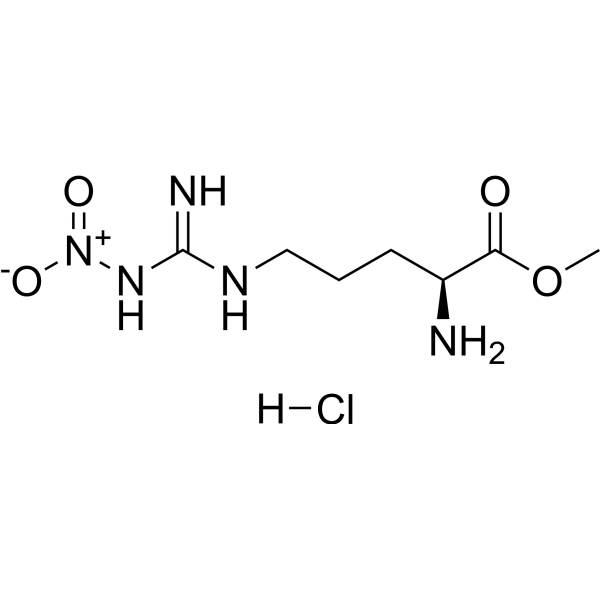
HY-18729A
L-NAME hydrochlorideNO Synthase Inhibitor -
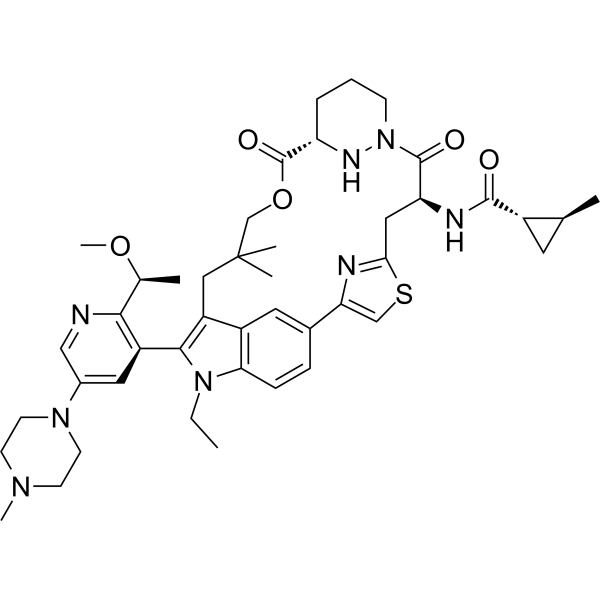
HY-148439
DaraxonrasibRAS(ON) Inhibitor -
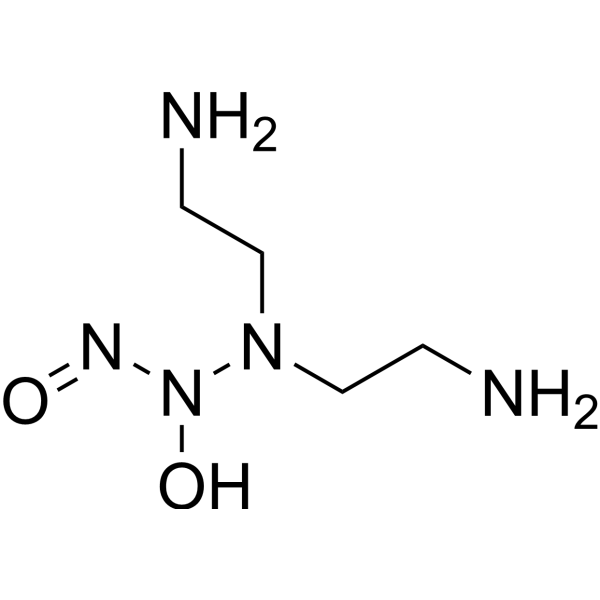
HY-136278
DETA NONOateNO Donor -
HY-K0010
Protease Inhibitor Cocktail (EDTA-Free, 100× in DMSO) -
HY-18731
1400W DihydrochlorideNO Synthase Inhibitor -
HY-120380
FeTMPyPPARP Inhibitor -
HY-D1148
HKGreen-4IPeroxynitrite Indicator -
HY-D0187
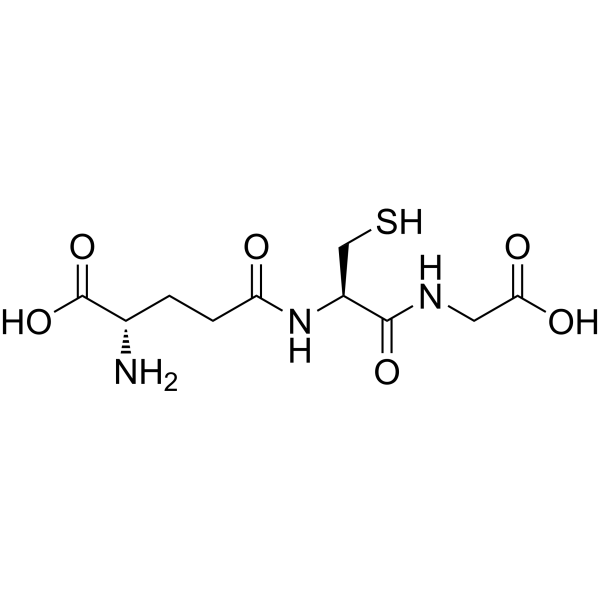
L-Glutathione reducedAntioxidant -

HY-D0187R
L-Glutathione reduced (Standard)Antioxidant -
HY-18732A
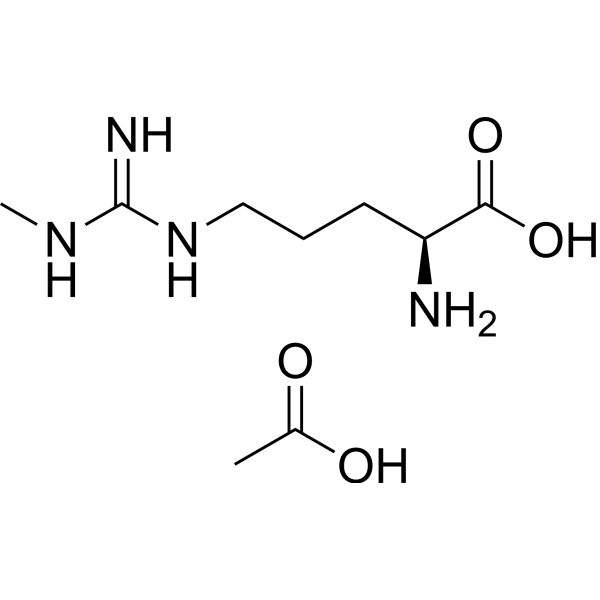
L-NMMA acetateEndogenous Metabolite -
HY-134216
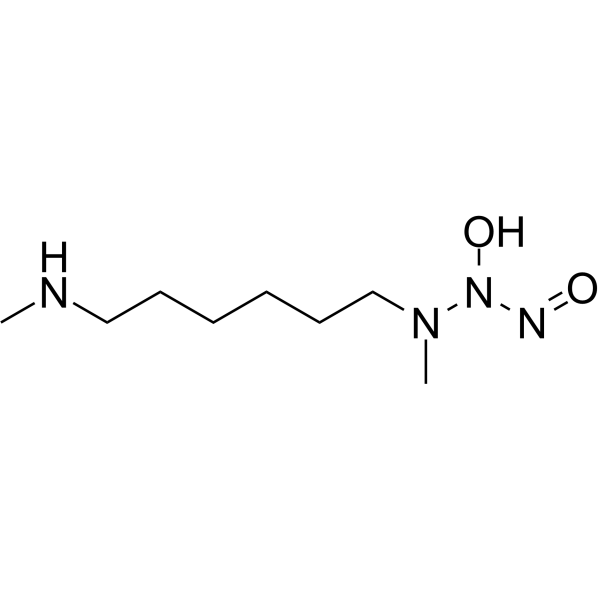
MAHMA NONOateNO Donor -

HY-120990
Piloty's acidBiochemical Reagent
Publications Citing Use of MedChemExpress (MCE) FeTPPS
More

Biological Activity
Description
In Vitro
FeTPPS acts as an effective pro-oxidant towards appreciable substrates in vitro in the presence of oxidant. FeTPPS protects cells against oxidative damage induced by H2O2, generated by Glucose (G)-glucose oxidase (GO) system[2].
MedChemExpress (MCE) has not independently confirmed the accuracy of these methods. They are for reference only.
-
Cell Line:Human hepatocellular carcinoma (HepG2)
-
Concentration:5, 10, 15, 20, 25 μM
-
Incubation Time:Treated 12 h before being exposed to H2O2
-
Result:Could protect cells against oxidative damage induced by H2O2.


Chemical Information
-
CAS No. 90384-82-0
-
Appearance Solid
-
Molecular Weight 1024.27
-
Formula C44H28ClFeN4O12S4
-
Color Brown to black
-
SMILES
O=S([O-])(C1=CC=C(C(C(C=C2)=[N]3C2=C(C4=CC=C5C(C6=CC=C(S(=O)([O-])=O)C=C6)=C7C=C8)C9=CC=C(S(=O)([O-])=O)C=C9)=C%10C=CC%11=C(C%12=CC=C(S(=O)([O-])=O)C=C%12)C8=[N]7[Fe+3]3([Cl-])([N-]45)[N-]%10%11)C=C1)=O.[4H+]
-
Shipping
Room temperature in continental US; may vary elsewhere.
-
Storage
Powder -20°C 3 years In solvent -80°C 6 months -20°C 1 month


Publications (1)
-
Journal Impact Factor
-
Most Recent


Solvent & Solubility
In Vitro:
H2O : 5 mg/mL (4.88 mM; Need ultrasonic and warming)
Please refer to the solubility information to select the appropriate solvent. Once prepared, please aliquot and store the solution to prevent product inactivation from repeated freeze-thaw cycles.
Storage method and period of stock solution: -80°C, 6 months; -20°C, 1 month. When stored at -80°C, please use it within 6 months. When stored at -20°C, please use it within 1 month.
Please refer to the solubility information to select the appropriate solvent. Once prepared, please aliquot and store the solution to prevent product inactivation from repeated freeze-thaw cycles.
Storage method and period of stock solution: -80°C, 6 months; -20°C, 1 month. When stored at -80°C, please use it within 6 months. When stored at -20°C, please use it within 1 month.
Concentration (start) × Volume (start) = Concentration (final) × Volume (final)


Purity & Documentation
-
Data Sheet (282 KB)
-
SDS (251 KB)
- English - EN (251 KB)
- Français - FR (251 KB)
- Deutsch - DE (251 KB)
- Norwegian - NO (251 KB)
- Español - ES (251 KB)
- Swedish - SV (251 KB)
- Italian - IT (251 KB)
- Korean - KR (251 KB)
- Portuguese - PT (251 KB)
-
Handling Instructions (2659 KB)
References
[1]. Giuseppe Bruschetta, et al. FeTPPS Reduces Secondary Damage and Improves Neurobehavioral Functions after Traumatic Brain Injury.Front Neurosci. 2017 Feb 7;11:6. [Content Brief]
[2]. Pengfei Zhang, et al. Study on the detoxification mechanisms to 5,10,15,20-tetrakis (4-sulfonatophenyl) porphyrinato iron(III) chloride (FeTPPS), an efficient pro-oxidant of heme water-soluble analogue. J Inorg Biochem. 2018 Dec;189:40-52. [Content Brief]


Complete Stock Solution Preparation Table
Please refer to the solubility information to select the appropriate solvent. Once prepared, please aliquot and store the solution to prevent product inactivation from repeated freeze-thaw cycles.
Storage method and period of stock solution: -80°C, 6 months; -20°C, 1 month. When stored at -80°C, please use it within 6 months. When stored at -20°C, please use it within 1 month.
| Optional Solvent | Concentration Solvent Mass | 1 mg | 5 mg | 10 mg | 25 mg |
|---|---|---|---|---|---|
| H2O | 1 mM | 0.9763 mL | 4.8815 mL | 9.7631 mL | 24.4076 mL |


FeTPPS Related Classifications
HY-131697 Related Classifications
 Powered by Bioz