



CVN293

Based on 1 Customer Validation
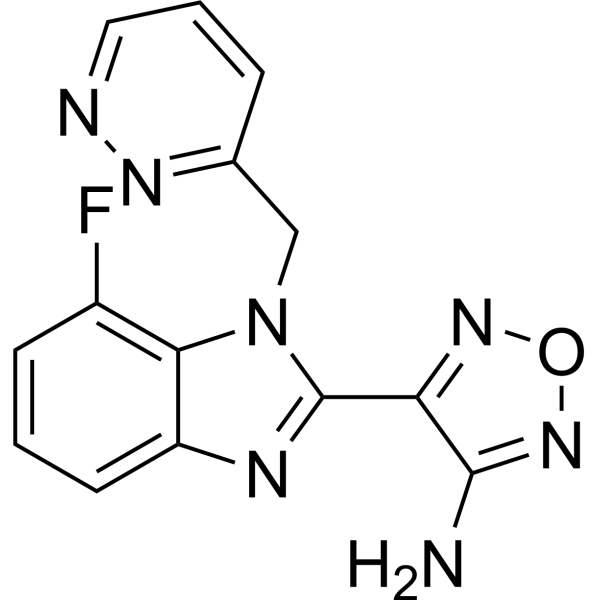
CVN293 is a selective and brain permeable potassium ion (K+) channel KCNK13 inhibtor with IC50s of 41 nM and 28 nM for hKCNK13 and mKCNK13, respectively. CVN293 potently inhibits the NLRP3-inflammasome mediated production of the proinflammatory cytokine IL-1β in microglia.
商品は「研究用試薬」です。人や動物の医療用・臨床診断用・食品用の製品ではありません。
研究用途以外に使用した場合、当社は一切の責任を負いかねます。
- 純度 : 99.91%
- CAS 番号: 2815296-08-1
- 分子式: C14H10FN7O
- 分子量:311.27
-
保管条件:Powder -20°C, 3 years ; In solvent -80°C, 6 months , -20°C, 1 month

To place orders, for customer services and technical support, please contact: MedChemExpress USA
Tel: 609-228-6898 E-mail: [email protected] [email protected]


-
 生物活性
生物活性
-
化学情報
-
溶剤 & 溶解度
- プロトコル
- 純度とドキュメンテーション
- 参考文献
-
 Help & FAQs


-
HY-B0401
TolbutamideKATP Inhibitor -
HY-B1109
N-AcetylprocainamidePotassium Channel Inhibitor -

HY-B1109R
N-Acetylprocainamide (Standard)Potassium Channel Inhibitor -
HY-D0143
QuinineAlkaloid -
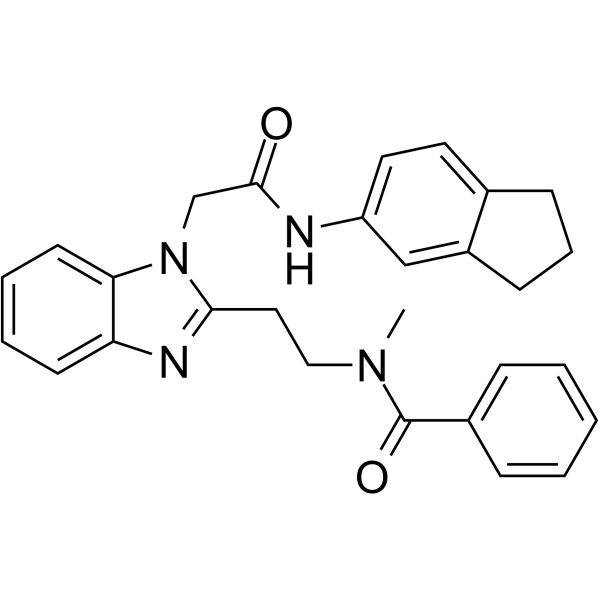
HY-136555
GSK717NOD2 Inhibitor -

HY-B0401R
Tolbutamide (Standard)KATP Inhibitor -
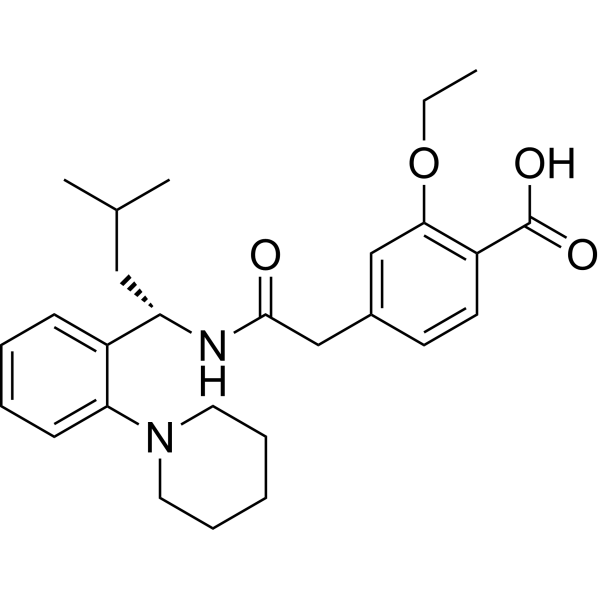
HY-15209
RepaglinideInsulin Secretagogue -
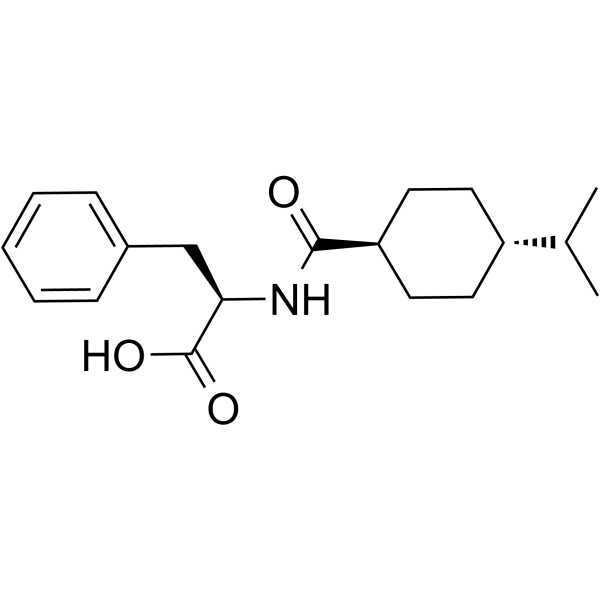
HY-B0422
NateglinideK+ Channel Inhibitor -
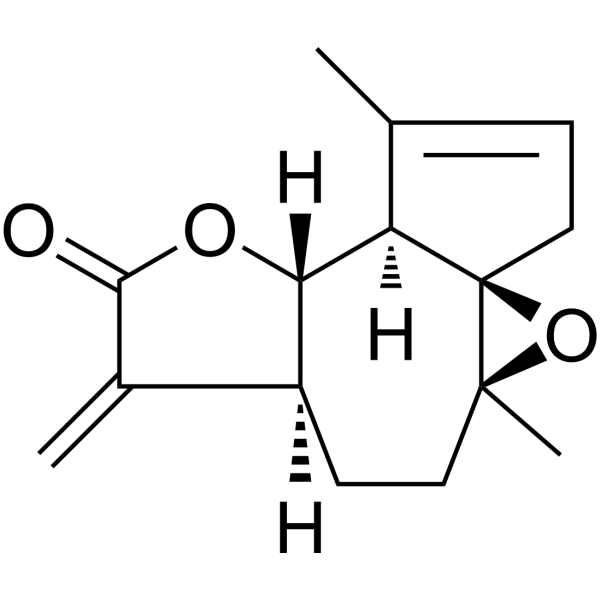
HY-16059
ArglabinNLRP3 Inflammasome Inhibitor -
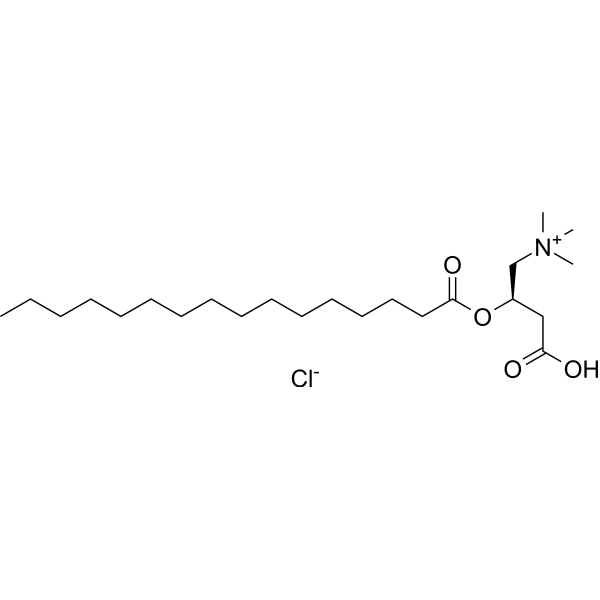
HY-113147A
L-Palmitoylcarnitine chlorideKir6.2 Inhibitor -
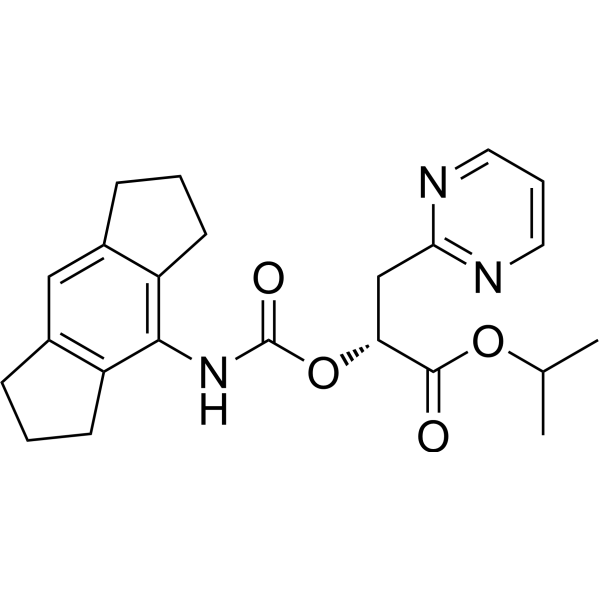
HY-156438
RuvonoflastNLRP3 Inhibitor -
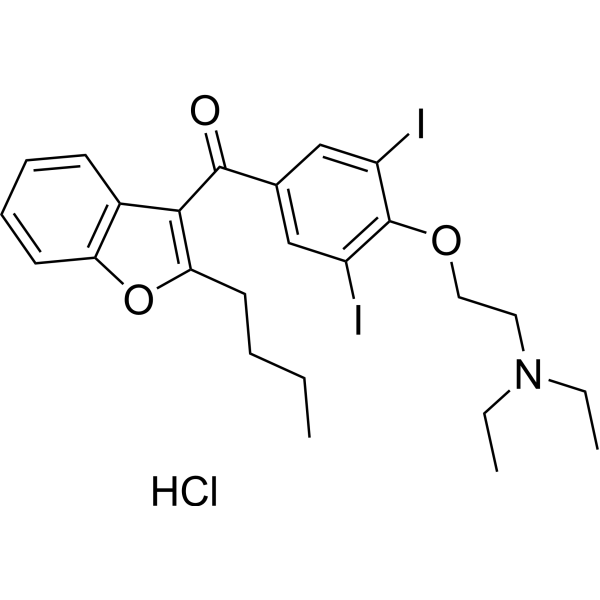
HY-14188
Amiodarone hydrochlorideAntiarrhythmic Agent


生物活性
製品説明
IC50 & Target
[1]|
hKCNK13 41 nM (IC50) |
mKCNK13 28 nM (IC50) |
hKCNK6 >30000 nM (IC50) |
hKCNK2 >30000 nM (IC50) |
体外実験
CVN293 (0.05, 0.5, 5 μM) demonstrates a concentration-dependent inhibition of the NLRP3-inflammasome mediated production of IL-1β from LPS-primed murine microglia[1].
MedChemExpress (MCE) has not independently confirmed the accuracy of these methods. They are for reference only. Further protocols information, click here.
体内実験
| IV (0.5 mg/kg; rat) | PO (3 mg/kg; rat) | IV (1 mg/kg; dog) | PO (10 mg/kg; dog) | IV (1 mg/kg; cynomolgus monkey) | PO (3 mg/kg; cynomolgus monkey) | |
| Tmax (h) | 1.0 | 1.25 | 1.0 | |||
| Cmax (ng/mL) | 468 | 241 | 165 | |||
| AUC0-∞ (ng•h/mL) | 222 | 1236 | 438 | 630 | 782 | 546 |
| t1/2 (h) | 1.0 | 2.0 | 0.5 | 2.6 | 1.1 | 1.9 |
| CLp (mL/min/kg) | 35 | 38 | 22 | |||
| Vss (L/kg) | 1.85 | 1.42 | 1.45 | |||
| F (%) | 87 | 41 | 24 |
MedChemExpress (MCE) has not independently confirmed the accuracy of these methods. They are for reference only.


化学情報
-
CAS 番号 2815296-08-1
-
性状 Solid
-
分子量 311.27
-
分子式 C14H10FN7O
-
Color White to light yellow
-
SMILES
NC1=NON=C1C2=NC3=CC=CC(F)=C3N2CC4=NN=CC=C4
-
輸送条件
Room temperature in continental US; may vary elsewhere.
-
保管条件
Powder -20°C 3 years In solvent -80°C 6 months -20°C 1 month


溶剤 & 溶解度
体外:
DMSO : 5 mg/mL (16.06 mM; ultrasonic and warming and heat to 60°C; Hygroscopic DMSO has a significant impact on the solubility of product, please use newly opened DMSO)
Please refer to the solubility information to select the appropriate solvent. Once prepared, please aliquot and store the solution to prevent product inactivation from repeated freeze-thaw cycles.
Storage method and period of stock solution: -80°C, 6 months; -20°C, 1 month. When stored at -80°C, please use it within 6 months. When stored at -20°C, please use it within 1 month.
Please refer to the solubility information to select the appropriate solvent. Once prepared, please aliquot and store the solution to prevent product inactivation from repeated freeze-thaw cycles.
Storage method and period of stock solution: -80°C, 6 months; -20°C, 1 month. When stored at -80°C, please use it within 6 months. When stored at -20°C, please use it within 1 month.
濃度 (開始) × 体積 (開始) = 濃度 (終了) × 体積 (終了)

プロトコル
-
Phagocytosis Functional Assay
A phagocytosis functional assay measures the ability of phagocytic cells, such as neutrophils, macrophages, monocytes, or microglia/macrophages, to bind and internalize particulate targets including bacteria, yeast particles, beads, or myelin particles. Fluorescent flow-cytometry assays detect target uptake as fluorescence associated with gated phagocytes, while pH-sensitive dyes such as pHrodo increase signal in acidic phagosomal compartments and therefore preferentially report internalized particles rather than particles remaining outside the cell. Microscopy or high-content imaging can be used to confirm intracellular localization and, in some protocols, to follow uptake kinetics.
-
Research Protocol for Inflammation-related Diseases
The NLRP3 inflammasome is a cytosolic innate immune signaling platform that integrates priming signals and danger-signal activation to promote caspase-1 activation, maturation of IL-1β and IL-18, and gasdermin D-mediated pyroptotic cell death. The core experimental logic is to determine whether inflammatory disease phenotypes are driven by increased NLRP3 expression, ASC-containing inflammasome assembly, caspase-1 cleavage, GSDMD cleavage, and extracellular release of IL-1β/IL-18 rather than by nonspecific cell injury alone. The pathway is strongly linked to inflammation-related disease phenotypes because monosodium urate crystals activate NALP3/NLRP3 inflammasome signaling in gout-like crystal inflammation, cholesterol crystals activate NLRP3 inflammasomes in atherogenesis models, and DSS-induced intestinal inflammation has been reported to involve NLRP3 inflammasome activity. However, experimental colitis studies also show context-dependent protective effects of NLRP3 inflammasome co
-
Pyroptosis Solutions
Pyroptosis is a lytic inflammatory cell-death pathway executed by gasdermin pores, most classically through inflammasome-mediated activation of caspase-1, cleavage of gasdermin D, membrane pore formation, LDH release, and secretion of IL-1β and IL-18. The canonical pathway is commonly modeled by priming cells with an inflammatory signal such as LPS to induce pro-IL-1β and inflammasome components, followed by an activation signal such as ATP or nigericin to activate NLRP3, ASC speck formation, caspase-1 cleavage, GSDMD cleavage, cytokine release, and pyroptotic membrane rupture. The non-canonical pathway is triggered when cytosolic LPS activates mouse caspase-11 or human caspase-4/5, leading to GSDMD cleavage and pyroptosis, and this can secondarily activate NLRP3-dependent IL-1β release. Pyroptosis is linked to inflammatory injury, infection, cancer, liver disease, ocular disease, placental inflammation, and other disease phenotypes, but unresolved questions include which gasdermin fam


純度とドキュメンテーション
-
データシート (282 KB)
-
SDS (251 KB)
- English - EN (251 KB)
- Français - FR (251 KB)
- Deutsch - DE (251 KB)
- Norwegian - NO (251 KB)
- Español - ES (251 KB)
- Swedish - SV (251 KB)
- Italian - IT (251 KB)
- Korean - KR (251 KB)
- Portuguese - PT (251 KB)
-
取扱説明書 (2659 KB)
参考文献


Complete Stock Solution Preparation Table
Please refer to the solubility information to select the appropriate solvent. Once prepared, please aliquot and store the solution to prevent product inactivation from repeated freeze-thaw cycles.
Storage method and period of stock solution: -80°C, 6 months; -20°C, 1 month. When stored at -80°C, please use it within 6 months. When stored at -20°C, please use it within 1 month.
| Optional Solvent | Concentration Solvent Mass | 1 mg | 5 mg | 10 mg | 25 mg |
|---|---|---|---|---|---|
| DMSO | 1 mM | 3.2126 mL | 16.0632 mL | 32.1265 mL | 80.3161 mL |
| 5 mM | 0.6425 mL | 3.2126 mL | 6.4253 mL | 16.0632 mL | |
| 10 mM | 0.3213 mL | 1.6063 mL | 3.2126 mL | 8.0316 mL | |
| 15 mM | 0.2142 mL | 1.0709 mL | 2.1418 mL | 5.3544 mL |


CVN293 関連分類
HY-158155 関連分類
 Powered by Bioz