



Cyanine3 hydrazide dichloride
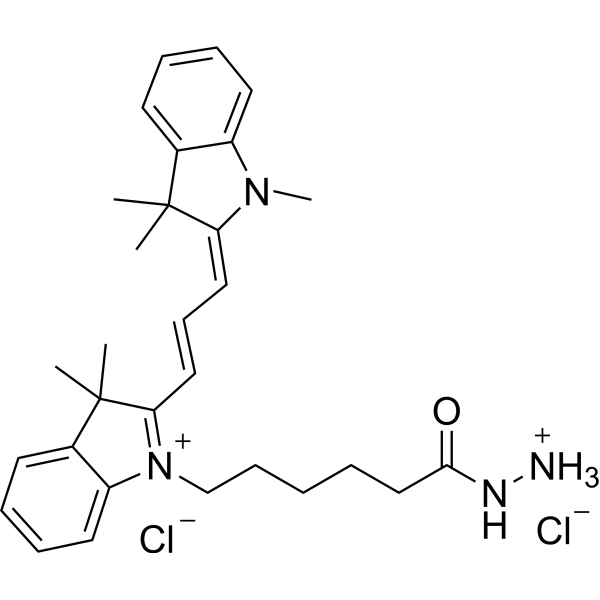
Cyanine3 hydrazide dichloride is a carbonyl reactive dye. Cyanine3 hydrazide dichloride allows the labelling of various carbonyl-containing molecules such as antibodies and other glycoproteins after oxidation by periodate, proteins or reducing sugars after oxidative stress or deamination.
Nur für Forschungszwecke. Wir verkaufen nicht an Patienten.
- CAS. Nr.: 2695564-68-0
- Formel: C30H40Cl2N4O
- Molecular Weight:543.57
-
Speicherung:
Please store the product under the recommended conditions in the Certificate of Analysis.

To place orders, for customer services and technical support, please contact: MedChemExpress USA
Tel: 609-228-6898 E-mail: [email protected] [email protected]


-
 Biologische Aktivität
-
Chemical Information
- Protokoll
- Reinheit & Dokumentation
- Verweise
-
 Help & FAQs


-
HY-D1069
DBCO-Cy3Orange Fluorescent Dye -
HY-137100
Cy 5 hydrazideFluorescent Dye -
HY-D1871
Cy3 maleimide chlorideFluorochrome Dye -
HY-D1880
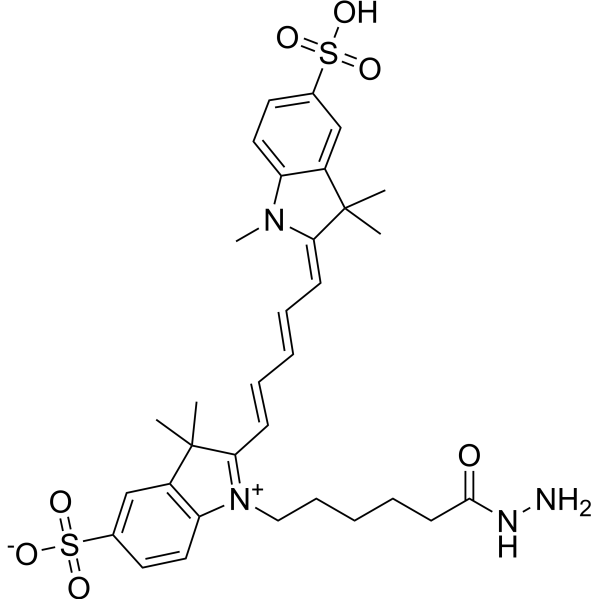
Sulfo-Cy5 hydrazideFluorescent Dye -
HY-D1622
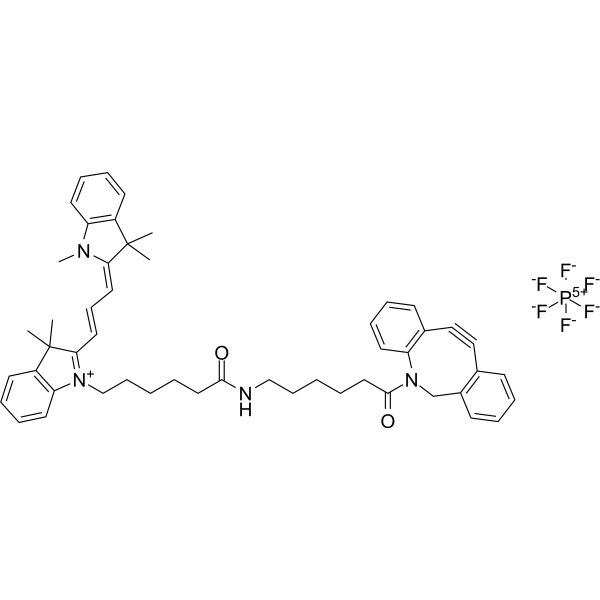
Cyanine3 DBCO hexafluorophosphateAzide Reactive Probe -
HY-D1861
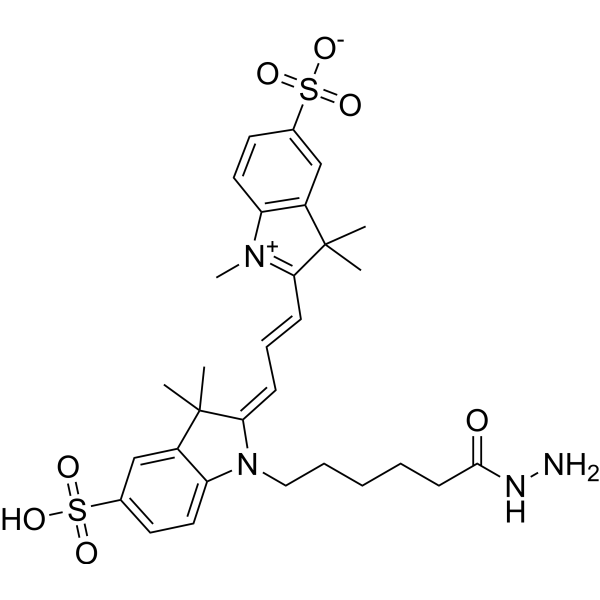
Sulfo-Cy3 hydrazideFluorochrome Dye -
HY-141032
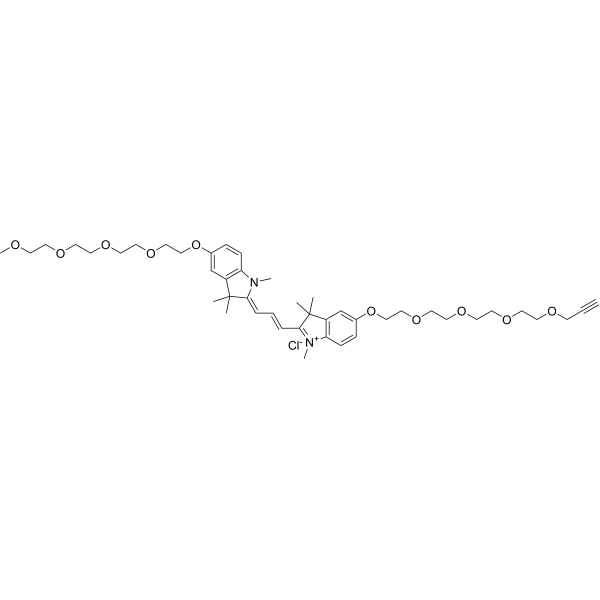
N-methyl-N'-methyl-O-(m-PEG4)-O'-(propargyl-PEG4)-Cy3PROTAC linker


Biologische Aktivität
Beschreibung
Emission (Em)
570
Excitation (Ex)
550


Chemical Information
-
CAS. Nr. 2695564-68-0
-
Molecular Weight 543.57
-
Formel C30H40Cl2N4O
-
SMILES
CN1C2=CC=CC=C2C(C)(/C1=C\C=C\C3=[N+](C4=CC=CC=C4C3(C)C)CCCCCC(N[NH3+])=O)C.[Cl-].[Cl-]
-
Versand
Room temperature in continental US; may vary elsewhere.
-
Speicherung
Please store the product under the recommended conditions in the Certificate of Analysis.

Protokoll
-
ROS/oxidative-stress fluorescent staining
ROS/oxidative-stress fluorescent staining uses cell-permeant fluorogenic probes that become fluorescent after oxidation inside cells or tissues; commonly used examples include DCFH-DA/DCFDA for broad cellular oxidant detection, DHE for superoxide-related signal detection, MitoSOX for mitochondrial superoxide-related signal detection, and CellROX probes for oxidative-stress-associated fluorescence readouts. The assay detects probe oxidation rather than a single ROS species unless the probe and analysis method have been chemically validated for that species. DCFH-DA enters cells, is deacetylated by intracellular esterases to DCFH, and produces fluorescent DCF after oxidation, so the readout is used as an operational measure of total cellular oxidative stress rather than a species-specific ROS measurement. DHE and MitoSOX can report superoxide-related oxidation, but red fluorescence alone can include non-specific ethidium-like oxidation products; HPLC or optimized spectral approaches are


Reinheit & Dokumentation
Verweise

Calculators
Konzentration (Stammlösung) × Volumen (Stammlösung) = Konzentration (Ziellösung) × Volumen (Ziellösung)


Cyanine3 hydrazide dichloride Related Classifications
HY-D1619 Related Classifications
 Powered by Bioz