



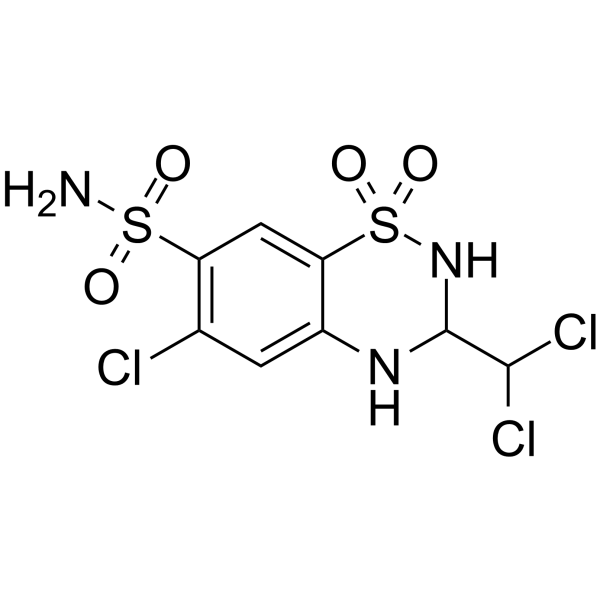
Trichlormethiazide
Based on 2 publication(s) in Google Scholar
Trichlormethiazide is an orally active thiazide diuretic, with antihypertensive effect. Trichlormethiazide increases urine volume (UV), Na and K excretion and tends to improve the depressed creatinine clearance (CCRE) in acute renal failure rats model.
Nur für Forschungszwecke. Wir verkaufen nicht an Patienten.
- Reinheit : 98.54%
- CAS. Nr.: 133-67-5
- Formel: C8H8Cl3N3O4S2
- Molecular Weight:380.66
-
Speicherung:
4°C, protect from light
* In solvent : -80°C, 6 months; -20°C, 1 month (protect from light)

To place orders, for customer services and technical support, please contact: MedChemExpress USA
Tel: 609-228-6898 E-mail: [email protected] [email protected]


-
 Biologische Aktivität
-
Chemical Information
-
Lösungsmittel & Löslichkeit
- Protokoll
- Reinheit & Dokumentation
- Verweise
-
 Help & FAQs


-
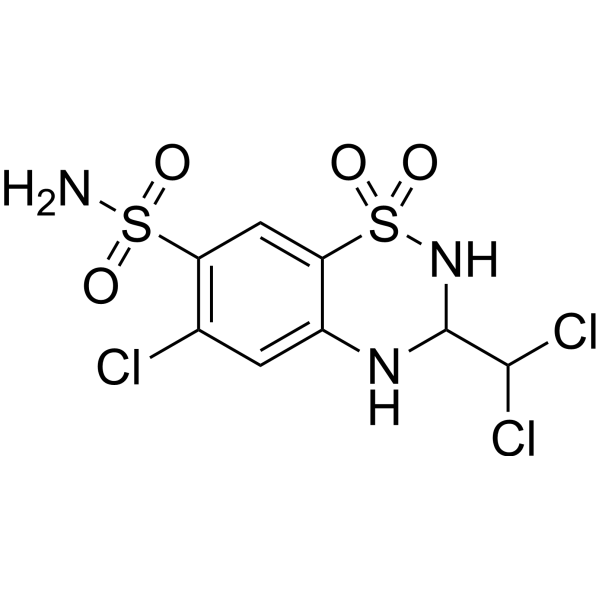
HY-B0235R
Trichlormethiazide (Standard)Diuretic -
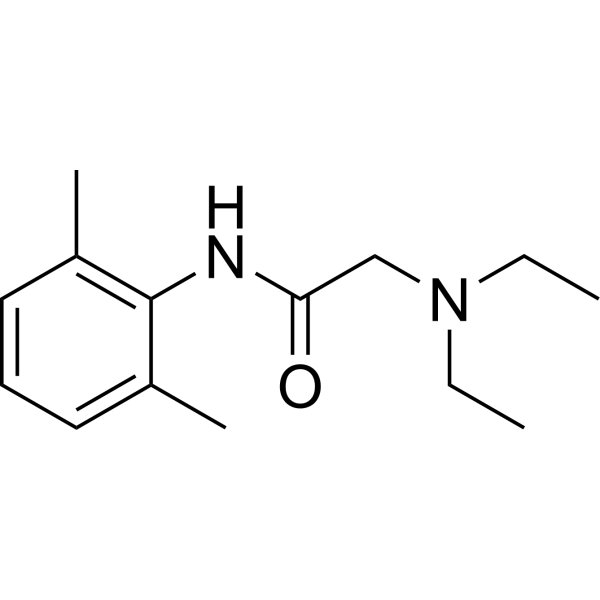
HY-B0185
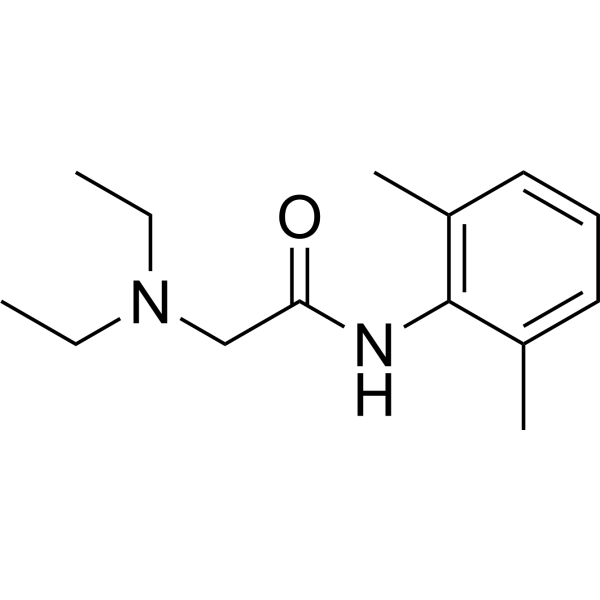
LidocaineNa+ Channel Blocker -
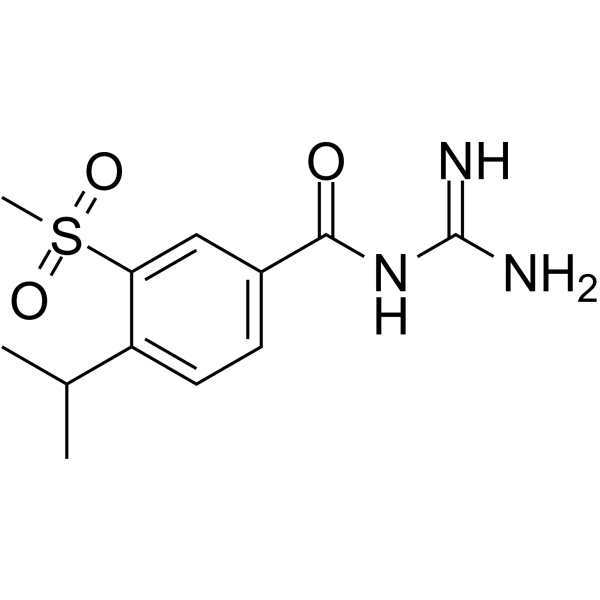
HY-19693
CariporideNa+/H+ Exchange Inhibitor -
HY-B0661A
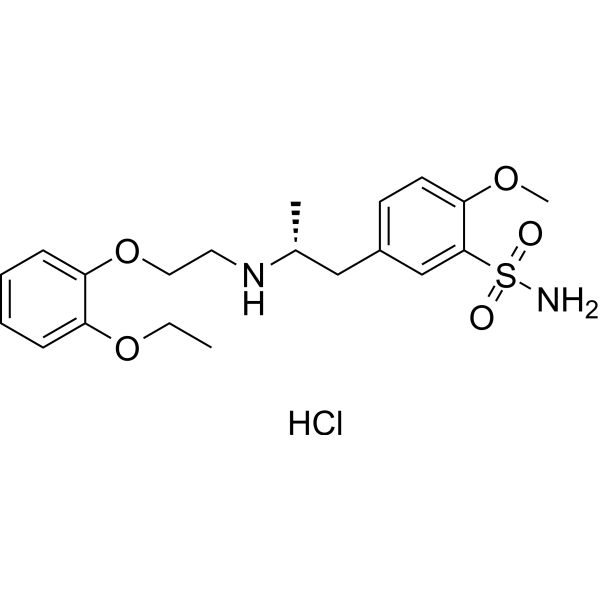
Tamsulosin hydrochlorideα1-Adrenergic Receptor Antagonist -
HY-B0185R
Lidocaine (Standard) -
HY-B0137
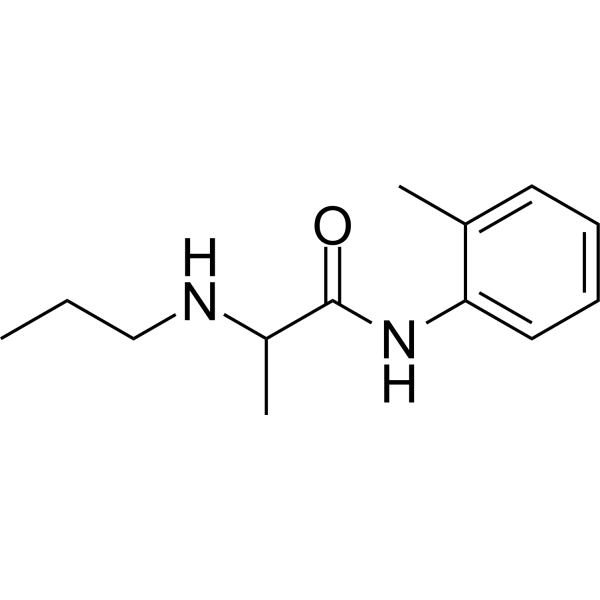
PrilocaineNa, K-ATPase Inhibitor -
HY-A0079
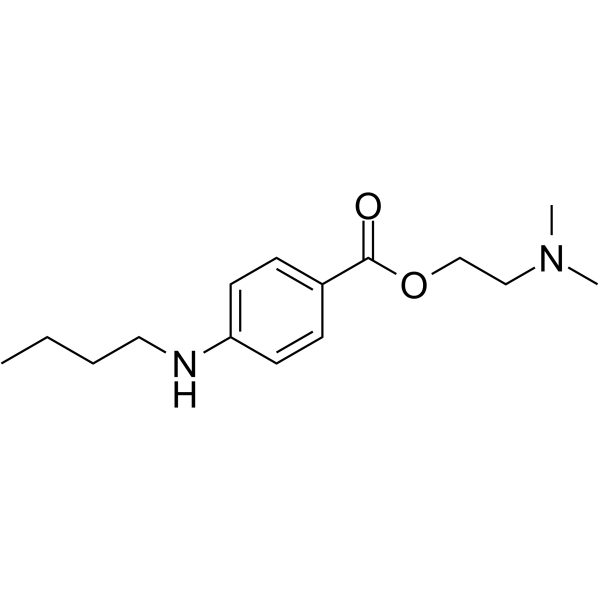
TetracaineSodium Channel Inhibitor -

HY-B0137R
Prilocaine (Standard)Na, K-ATPase Inhibitor -
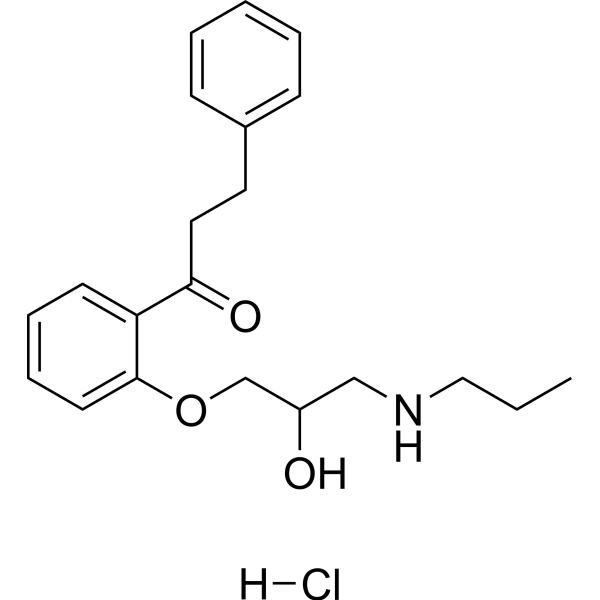
HY-B0432A
Propafenone hydrochlorideSodium Channel Inhibitor -
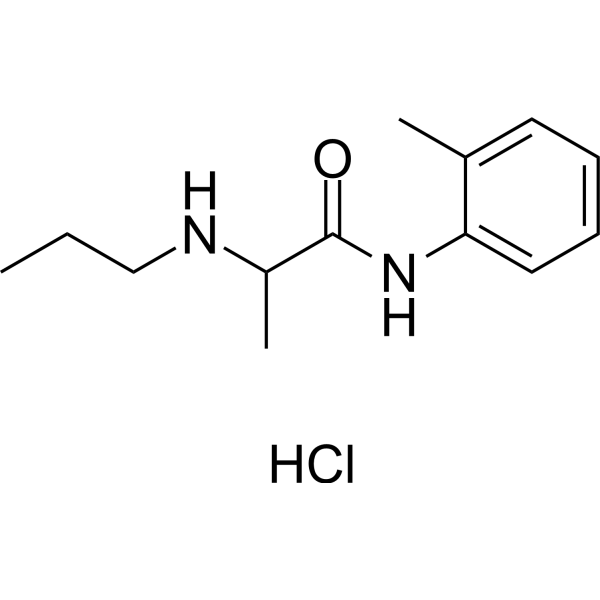
HY-B0137A
Prilocaine hydrochlorideNa, K-ATPase Inhibitor -

HY-B0661AR
Tamsulosin hydrochloride (Standard)α1-Adrenergic Receptor Antagonist -
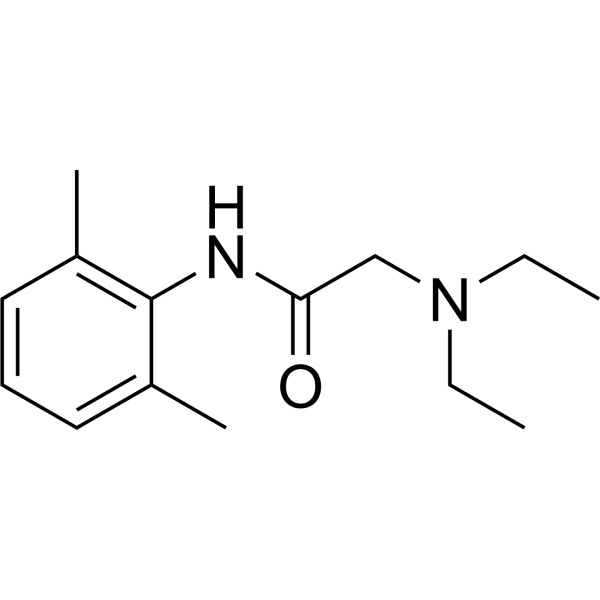
HY-B0185G
Lidocaine (GMP)Na+ Channel Blocker
Publications Citing Use of MedChemExpress (MCE) Trichlormethiazide
More

Biologische Aktivität
Beschreibung
In Vivo
Trichlormethiazide (10 mg/kg, i.v.; daily for 5 days) significantly reduces mean arterial pressure (MAP) within 24 h in high salt intake (HS) rats receiving angiotensin II, but does not affect MAP in any other group[2].
MedChemExpress (MCE) has not independently confirmed the accuracy of these methods. They are for reference only.
-
Animal Model:Male Wistar rats, weighing 170-300 g[1]
-
Dosage:1 mg/kg
-
Administration:Oral administration, once
-
Result:Significantly increased potassium excretion in normal rats. Significantly increased urinary volume, sodium and potassium excretion in cisplatin-induced ARF (acute renal failures) rats.
-
Animal Model:Male Sprague-Dawley rats (350-450 g)[2]
-
Dosage:10 mg/kg
-
Administration:Intravenous injection, daily, for 15 days
-
Result:Produced a significant fall in MAP in rats on combined angiotensin II and high salt intake.


Chemical Information
-
CAS. Nr. 133-67-5
-
Appearance Solid
-
Molecular Weight 380.66
-
Formel C8H8Cl3N3O4S2
-
Color White to off-white
-
SMILES
O=S(C1=C(Cl)C=C(C2=C1)NC(C(Cl)Cl)NS2(=O)=O)(N)=O
-
Versand
Room temperature in continental US; may vary elsewhere.
-
Speicherung
4°C, protect from light
* In solvent : -80°C, 6 months; -20°C, 1 month (protect from light)


Publications (2)
-
Journal Impact Factor
-
Most Recent
-
ACS Environ Au
Machine Learning-Assisted Recognition of Environmental Sulfur-Containing Chemicals in Nontargeted Mass Spectrometry Analysis of Inadequate Mass Resolution. [Abstract]2025 Aug 5;5(6):573-582. PMID: 41277996 -
Anal Chem
Exposome-Scale Investigation of Cl-/Br-Containing Chemicals Using High-Resolution Mass Spectrometry, Multistage Machine Learning, and Cloud Computing. [Abstract]2025 Jun 3;97(21):11099-11109. PMID: 40401576


Lösungsmittel & Löslichkeit
In Vitro:
DMSO : 150 mg/mL (394.05 mM; Need ultrasonic; Hygroscopic DMSO has a significant impact on the solubility of product, please use newly opened DMSO)
Please refer to the solubility information to select the appropriate solvent. Once prepared, please aliquot and store the solution to prevent product inactivation from repeated freeze-thaw cycles.
Storage method and period of stock solution: -80°C, 6 months; -20°C, 1 month (protect from light). When stored at -80°C, please use it within 6 months. When stored at -20°C, please use it within 1 month.
Please refer to the solubility information to select the appropriate solvent. Once prepared, please aliquot and store the solution to prevent product inactivation from repeated freeze-thaw cycles.
Storage method and period of stock solution: -80°C, 6 months; -20°C, 1 month (protect from light). When stored at -80°C, please use it within 6 months. When stored at -20°C, please use it within 1 month.
Konzentration (Stammlösung) × Volumen (Stammlösung) = Konzentration (Ziellösung) × Volumen (Ziellösung)
In Vivo:
Select the appropriate dissolution method based on your experimental animal and administration route.
- For the following dissolution methods, please ensure to first prepare a clear stock solution using an In Vitro approach and then sequentially add co-solvents:
- To ensure reliable experimental results, the clarified stock solution can be appropriately stored based on storage conditions. As for the working solution for In Vivo experiments, it is recommended to prepare freshly and use it on the same day.
- The percentages shown for the solvents indicate their volumetric ratio in the final prepared solution. If precipitation or phase separation occurs during preparation, heat and/or sonication can be used to aid dissolution.
Add each solvent one by one: 10% DMSO 40% PEG300 5% Tween-80 45% Saline
Solubility: ≥ 2.5 mg/mL (6.57 mM); Clear solution
This protocol yields a clear solution of ≥ 2.5 mg/mL (saturation unknown).
Taking 1 mL working solution as an example, add 100 μL DMSO stock solution (25.0 mg/mL) to 400 μL PEG300, and mix evenly; then add 50 μL Tween-80 and mix evenly; then add 450 μL Saline to adjust the volume to 1 mL.
Preparation of Saline: Dissolve 0.9 g sodium chloride in ddH₂O and dilute to 100 mL to obtain a clear Saline solution.
Add each solvent one by one: 10% DMSO 90% (20% SBE-β-CD in Saline)
Solubility: ≥ 2.5 mg/mL (6.57 mM); Clear solution
This protocol yields a clear solution of ≥ 2.5 mg/mL (saturation unknown).
Taking 1 mL working solution as an example, add 100 μL DMSO stock solution (25.0 mg/mL) to 900 μL 20% SBE-β-CD in Saline, and mix evenly.
Preparation of 20% SBE-β-CD in Saline (4°C, storage for one week): 2 g SBE-β-CD powder is dissolved in 10 mL Saline, completely dissolve until clear.
In Vivo Dissolution Calculator
Please enter the basic information of animal experiments:
-
-
-
-
Recommended: Prepare an additional quantity of animals to account for potential losses during experiments.
Please enter your animal formula composition:
-
%DMSO +
Recommended: Keep the proportion of DMSO in working solution below 2% if your animal is weak.
-
%+
-
+%Tween-80 + +
-
%Saline +
The co-solvents required include: DMSO, . All of co-solvents are available by MedChemExpress (MCE). , Tween 80. All of co-solvents are available by MedChemExpress (MCE).
Working solution concentration: 0.22 mg/mL
Method for preparing stock solution: mg drug dissolved in μL DMSO. Stock solution concentration: mg/mL. * In solvent : -80°C, 6 months; -20°C, 1 month (protect from light)
1. Take μL DMSO stock solution;
2. Add μL .
μL , mix evenly;
3. Then add μL Tween 80, mix evenly;
4. Then add μL
Please ensure that the stock solution in the first step is dissolved to a clear state, and add co-solvents in sequence. You can use ultrasonic heating (ultrasonic cleaner, recommended frequency 20-40 kHz), vortexing, etc. to assist dissolution.


Reinheit & Dokumentation
-
Data Sheet (278 KB)
-
SDS (419 KB)
- English - EN (419 KB)
- Français - FR (419 KB)
- Deutsch - DE (419 KB)
- Norwegian - NO (419 KB)
- Español - ES (419 KB)
- Swedish - SV (419 KB)
- Italian - IT (419 KB)
- Korean - KR (419 KB)
- Portuguese - PT (419 KB)
-
Handling Instructions (2659 KB)
Verweise
[1]. K Yao, et al. Diuretic effects of KW-3902, a novel adenosine A1-receptor antagonist, in various models of acute renal failure in rats. Jpn J Pharmacol. 1994 Apr;64(4):281-8. [Content Brief]
[2]. J R Ballew, et al. Characterization of the antihypertensive effect of a thiazide diuretic in angiotensin II-induced hypertension. J Hypertens. 2001 Sep;19(9):1601-6. [Content Brief]


Complete Stock Solution Preparation Table
Please refer to the solubility information to select the appropriate solvent. Once prepared, please aliquot and store the solution to prevent product inactivation from repeated freeze-thaw cycles.
Storage method and period of stock solution: -80°C, 6 months; -20°C, 1 month (protect from light). When stored at -80°C, please use it within 6 months. When stored at -20°C, please use it within 1 month.
| Optional Solvent | Concentration Solvent Mass | 1 mg | 5 mg | 10 mg | 25 mg |
|---|---|---|---|---|---|
| DMSO | 1 mM | 2.6270 mL | 13.1351 mL | 26.2702 mL | 65.6754 mL |
| 5 mM | 0.5254 mL | 2.6270 mL | 5.2540 mL | 13.1351 mL | |
| 10 mM | 0.2627 mL | 1.3135 mL | 2.6270 mL | 6.5675 mL | |
| 15 mM | 0.1751 mL | 0.8757 mL | 1.7513 mL | 4.3784 mL | |
| 20 mM | 0.1314 mL | 0.6568 mL | 1.3135 mL | 3.2838 mL | |
| 25 mM | 0.1051 mL | 0.5254 mL | 1.0508 mL | 2.6270 mL | |
| 30 mM | 0.0876 mL | 0.4378 mL | 0.8757 mL | 2.1892 mL | |
| 40 mM | 0.0657 mL | 0.3284 mL | 0.6568 mL | 1.6419 mL | |
| 50 mM | 0.0525 mL | 0.2627 mL | 0.5254 mL | 1.3135 mL | |
| 60 mM | 0.0438 mL | 0.2189 mL | 0.4378 mL | 1.0946 mL | |
| 80 mM | 0.0328 mL | 0.1642 mL | 0.3284 mL | 0.8209 mL | |
| 100 mM | 0.0263 mL | 0.1314 mL | 0.2627 mL | 0.6568 mL |


Trichlormethiazide Related Classifications
HY-B0235 Related Classifications
 Powered by Bioz