



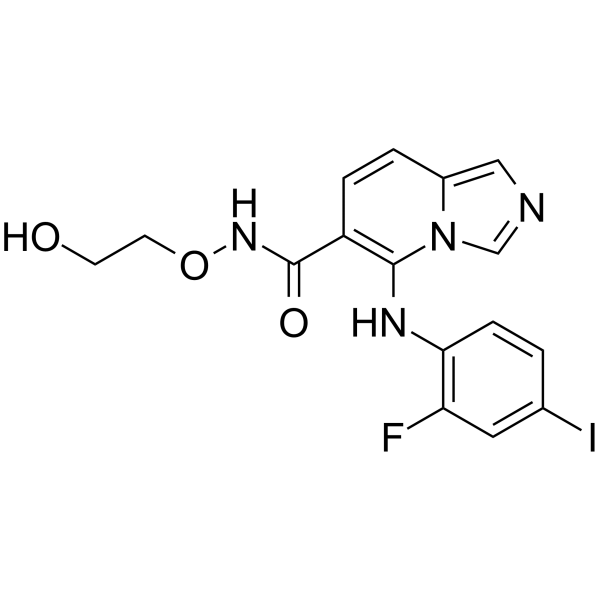
GDC-0623
Based on 11 publication(s) in Google Scholar
GDC-0623 (RG 7421) is a potent, ATP-uncompetitive inhibitor of MEK1 (Ki=0.13 nM, +ATP), and displays 6-fold weaker potency against HCT116 (KRAS (G13D), EC50=42 nM) versus A375 (BRAFV600E, EC50=7 nM).
For research use only. We do not sell to patients.
- Purity : 98.74%
- CAS No.: 1168091-68-6
- Formula: C16H14FIN4O3
- Molecular Weight:456.21
-
Storage:Powder -20°C, 3 years , 4°C, 2 years ; In solvent -80°C, 2 years , -20°C, 1 year

To place orders, for customer services and technical support, please contact: MedChemExpress USA
Tel: 609-228-6898 E-mail: [email protected] [email protected]


-
 Biological Activity
-
Chemical Information
-
Solvent & Solubility
- Protocol
- Purity & Documentation
- References
-
 Help & FAQs


-
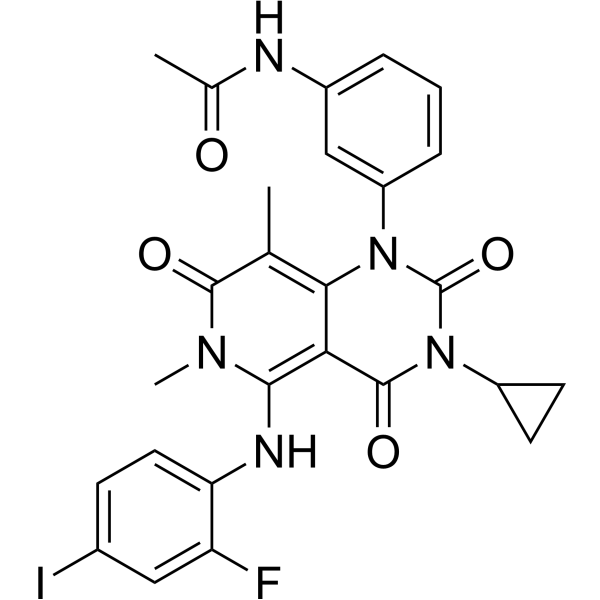
HY-10999
TrametinibMEK Inhibitor -
![5-((4-Bromo-2-fluorophenyl)amino)-4-fluoro-N-(2-hydroxyethoxy)-1-methyl-1H-benzo[d]imidazole-6-carboxamide](https://file.medchemexpress.com/product_pic/hy-15202.gif)
HY-15202
5-((4-Bromo-2-fluorophenyl)amino)-4-fluoro-N-(2-hydroxyethoxy)-1-methyl-1H-benzo[d]imidazole-6-carboxamideMEK1/2 Inhibitor -
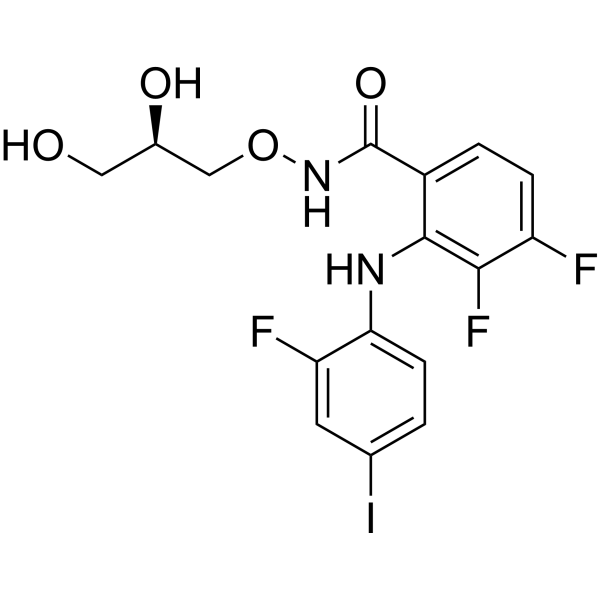
HY-10254
MirdametinibMEK Inhibitor -
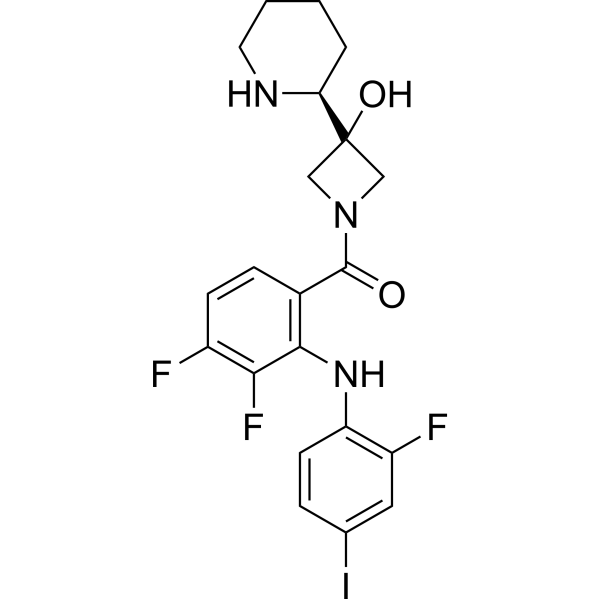
HY-13064
CobimetinibMEK1 Inhibitor -
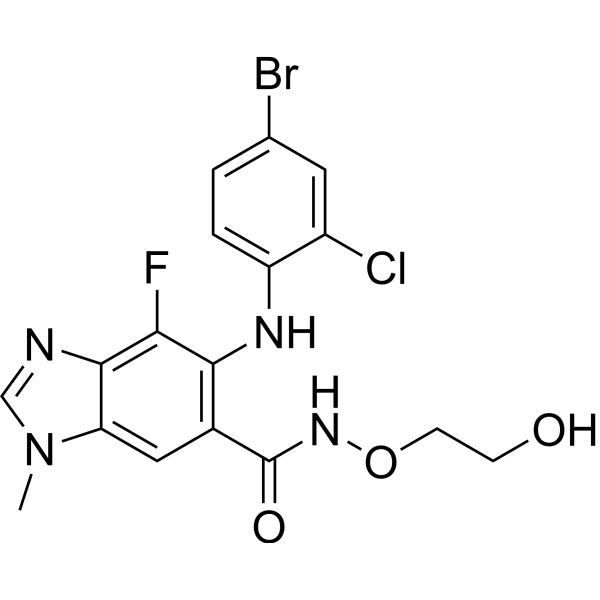
HY-50706
SelumetinibMEK1/2 Inhibitor -
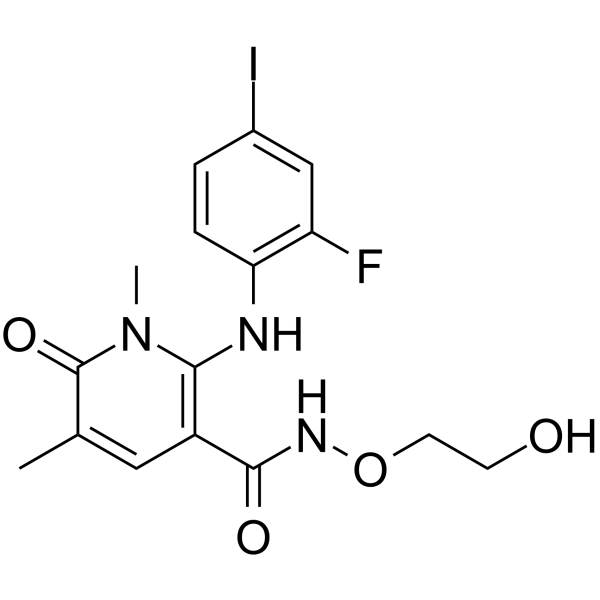
HY-12058
AZD8330MEK Inhibitor -
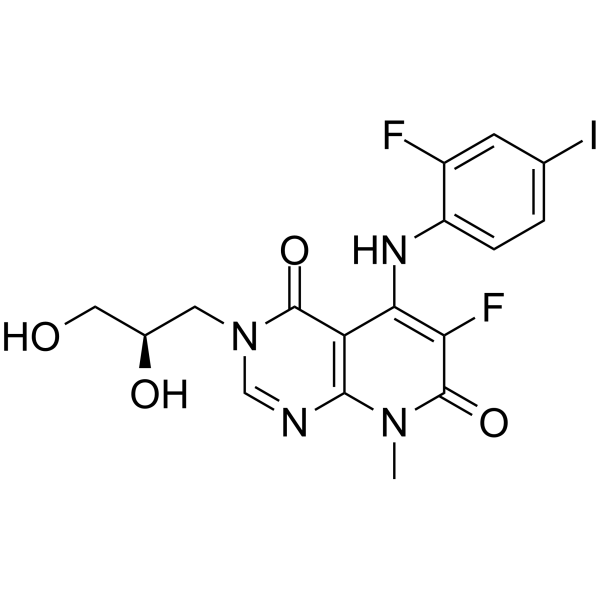
HY-13449
TAK-733MEK Inhibitor -
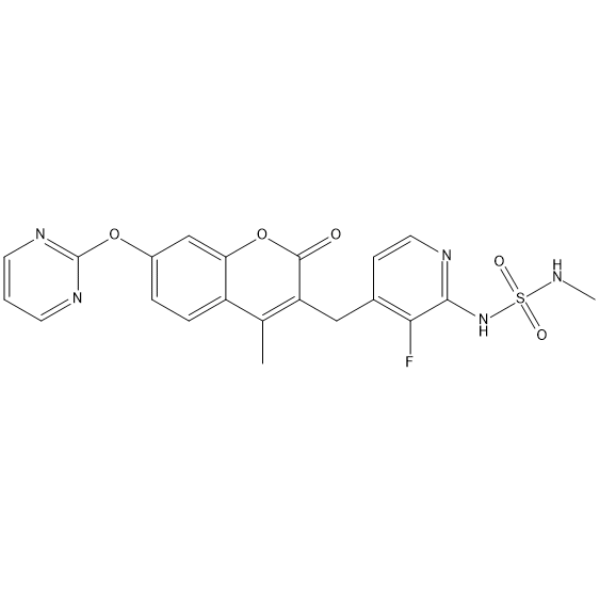
HY-18652
AvutometinibMEK/RAF Inhibitor -
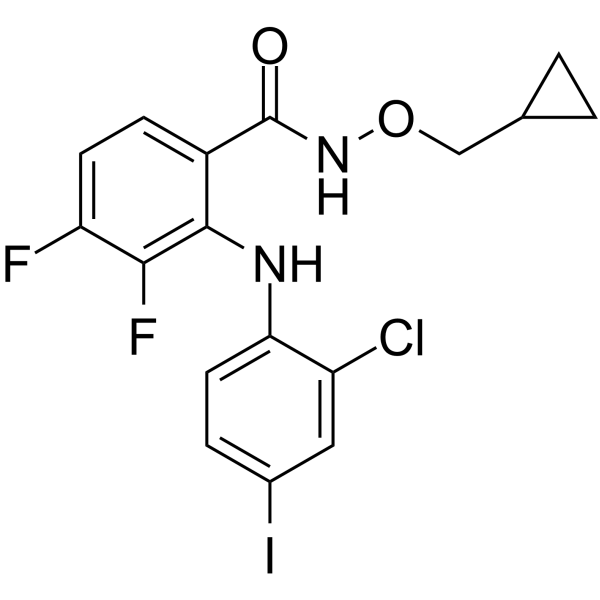
HY-50295
CI-1040MEK Inhibitor -
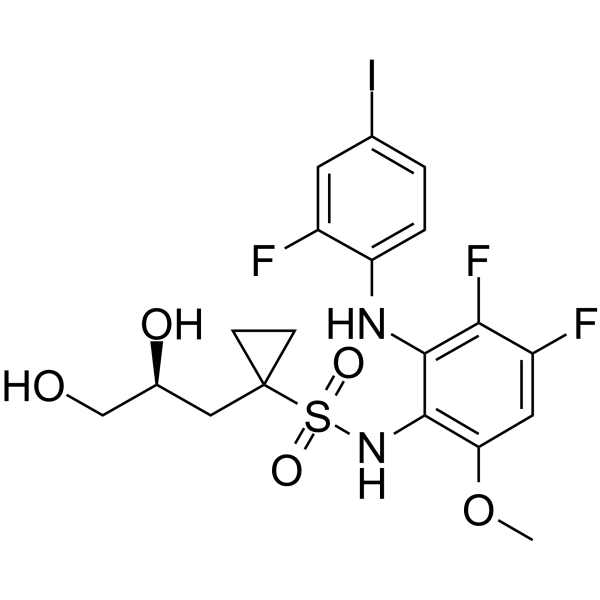
HY-14691
RefametinibMEK1/MEK2 Inhibitor -
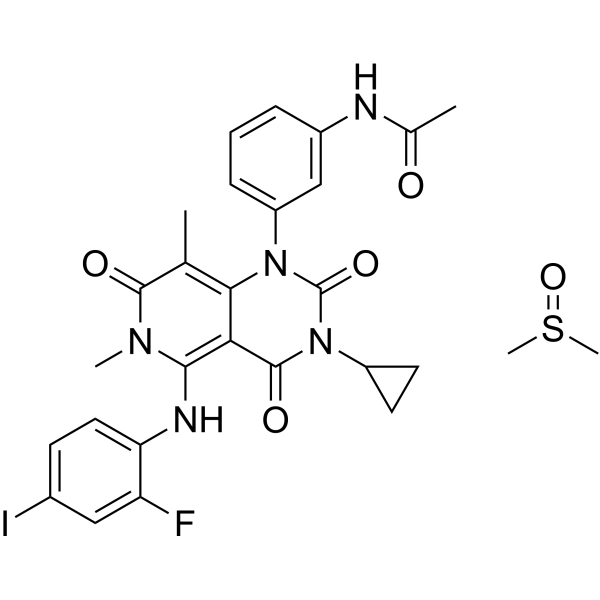
HY-10999A
Trametinib (DMSO solvate)MEK Inhibitor -
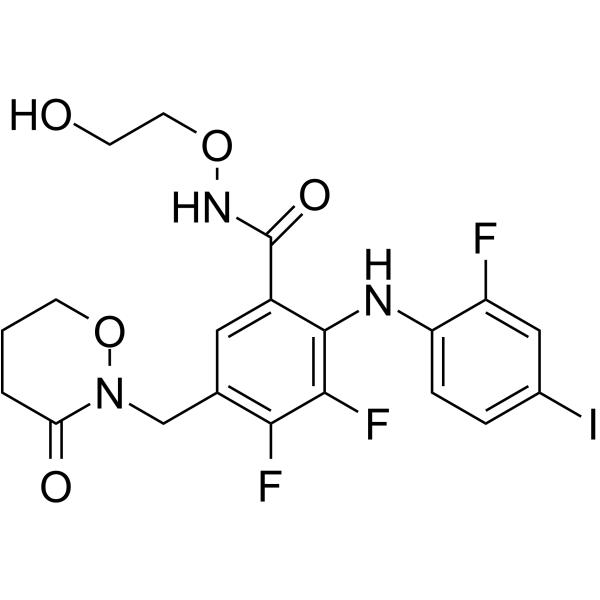
HY-14719
RO4987655MEK Inhibitor
Publications Citing Use of MedChemExpress (MCE) GDC-0623
More- Nat Chem Biol. 2026 May 12:10.1038/s41589-026-02212-2. [Abstract]
- Sci Transl Med. 2018 Jul 18;10(450):eaaq1093. [Abstract]
- J Immunother Cancer. 2025 Dec 1;13(12):e012800. [Abstract]
- Sci Data. 2024 Sep 19;11(1):1024. [Abstract]
- Sci Signal. 2018 Oct 30;11(554):eaar6795. [Abstract]
- Cancers (Basel). 2019 Feb 1;11(2):164. [Abstract]
- bioRxiv. 2024 September 19.
- ACS Comb Sci. 2019 Dec 9;21(12):805-816. [Abstract]
- Patent. US20170326205A1.
- Patent. US9724393B2.
- Patent. US20170020964A1.
All MEK Isoforms
More

Biological Activity
Description
IC50 & Target
[1]|
MEK1 0.13 nM (Ki, +ATP) |
Cellular Effect
|
Cell Line

|
Type | Value | Description | References |
|---|---|---|---|---|
| A-375 | EC50 |
0.004 μM
Compound: G-868, ADS110526, G-049868, GDC-0623
|
Antiproliferative activity against human A375 cells assessed as inhibition of cell proliferation after 72 hrs
Antiproliferative activity against human A375 cells assessed as inhibition of cell proliferation after 72 hrs
|
[PMID: 25193232] |
| HCT-116 | EC50 |
0.051 μM
Compound: G-868, ADS110526, G-049868, GDC-0623
|
Antiproliferative activity against human HCT116 cells assessed as inhibition of cell proliferation after 72 hrs
Antiproliferative activity against human HCT116 cells assessed as inhibition of cell proliferation after 72 hrs
|
[PMID: 25193232] |
In Vitro
GDC-0623 (RG 7421) and G-573 are able to prevent MEK phosphorylation by CRAF in vitro, and able to block MEK phosphorylation by BRAF(V600E)[1]. GDC-0623 (RG 7421) is potent, ATP-uncompetitive inhibitors of MEK1 but shows distinct shifts in cellular activity compared with the other two inhibitors, only 6-fold half-maximum effective concentration (EC50) decreases[2].
MedChemExpress (MCE) has not independently confirmed the accuracy of these methods. They are for reference only.
In Vivo
MedChemExpress (MCE) has not independently confirmed the accuracy of these methods. They are for reference only.
Clinical Trial
| NCT Number | Sponsor | Condition | Start Date |
Phase
|
|---|---|---|---|---|
| NCT01329991 | Plexxikon| | 2011-05 | PHASE1 |


Chemical Information
-
CAS No. 1168091-68-6
-
Appearance Solid
-
Molecular Weight 456.21
-
Formula C16H14FIN4O3
-
Color Light yellow to gray
-
SMILES
FC(C=C(I)C=C1)=C1NC2=C(C(NOCCO)=O)C=CC3=CN=CN23
-
Synonyms
RG 7421; MEK inhibitor 1
-
Shipping
Room temperature in continental US; may vary elsewhere.
-
Storage
Powder -20°C 3 years 4°C 2 years In solvent -80°C 2 years -20°C 1 year


Publications (11)
-
Journal Impact Factor
-
Most Recent
-
Nat Chem Biol
2026 May 12:10.1038/s41589-026-02212-2. PMID: 42120500 -
Sci Transl Med
PP2A inhibition is a druggable MEK inhibitor resistance mechanism in KRAS-mutant lung cancer cells. [Abstract]2018 Jul 18;10(450):eaaq1093. PMID: 30021885 -
J Immunother Cancer
Tempered signal strength via low-dose MEK inhibition optimizes therapeutic performance of engineered T cells. [Abstract]2025 Dec 1;13(12):e012800. PMID: 41330614 -
Sci Data
High-throughput drug screening identifies novel therapeutics for Low Grade Serous Ovarian Carcinoma. [Abstract]2024 Sep 19;11(1):1024. PMID: 39300112 -
Sci Signal
2018 Oct 30;11(554):eaar6795. PMID: 30377225 -
Cancers (Basel)
MEK Inhibition Induces Canonical WNT Signaling through YAP in KRAS Mutated HCT-15 Cells, and a Cancer Preventive FOXO3/FOXM1 Ratio in Combination with TNKS Inhibition. [Abstract]2019 Feb 1;11(2):164. PMID: 30717152 -
-
ACS Comb Sci
Benzimidazolyl-pyrazolo[3,4- b]pyridinones, Selective Inhibitors of MOLT-4 Leukemia Cell Growth and Sea Urchin Embryo Spiculogenesis: Target Quest. [Abstract]2019 Dec 9;21(12):805-816. PMID: 31689077 -
-
-


Solvent & Solubility
In Vitro:
DMSO : 50 mg/mL (109.60 mM; Need ultrasonic; Hygroscopic DMSO has a significant impact on the solubility of product, please use newly opened DMSO)
Please refer to the solubility information to select the appropriate solvent. Once prepared, please aliquot and store the solution to prevent product inactivation from repeated freeze-thaw cycles.
Storage method and period of stock solution: -80°C, 2 years; -20°C, 1 year. When stored at -80°C, please use it within 2 years. When stored at -20°C, please use it within 1 year.
Please refer to the solubility information to select the appropriate solvent. Once prepared, please aliquot and store the solution to prevent product inactivation from repeated freeze-thaw cycles.
Storage method and period of stock solution: -80°C, 2 years; -20°C, 1 year. When stored at -80°C, please use it within 2 years. When stored at -20°C, please use it within 1 year.
Concentration (start) × Volume (start) = Concentration (final) × Volume (final)
In Vivo:
Select the appropriate dissolution method based on your experimental animal and administration route.
- For the following dissolution methods, please ensure to first prepare a clear stock solution using an In Vitro approach and then sequentially add co-solvents:
- To ensure reliable experimental results, the clarified stock solution can be appropriately stored based on storage conditions. As for the working solution for In Vivo experiments, it is recommended to prepare freshly and use it on the same day.
- The percentages shown for the solvents indicate their volumetric ratio in the final prepared solution. If precipitation or phase separation occurs during preparation, heat and/or sonication can be used to aid dissolution.
Add each solvent one by one: 10% DMSO 40% PEG300 5% Tween-80 45% Saline
Solubility: ≥ 2.5 mg/mL (5.48 mM); Clear solution
This protocol yields a clear solution of ≥ 2.5 mg/mL (saturation unknown).
Taking 1 mL working solution as an example, add 100 μL DMSO stock solution (25.0 mg/mL) to 400 μL PEG300, and mix evenly; then add 50 μL Tween-80 and mix evenly; then add 450 μL Saline to adjust the volume to 1 mL.
Preparation of Saline: Dissolve 0.9 g sodium chloride in ddH₂O and dilute to 100 mL to obtain a clear Saline solution.
Add each solvent one by one: 10% DMSO 90% (20% SBE-β-CD in Saline)
Solubility: ≥ 2.5 mg/mL (5.48 mM); Clear solution
This protocol yields a clear solution of ≥ 2.5 mg/mL (saturation unknown).
Taking 1 mL working solution as an example, add 100 μL DMSO stock solution (25.0 mg/mL) to 900 μL 20% SBE-β-CD in Saline, and mix evenly.
Preparation of 20% SBE-β-CD in Saline (4°C, storage for one week): 2 g SBE-β-CD powder is dissolved in 10 mL Saline, completely dissolve until clear.
In Vivo Dissolution Calculator
Please enter the basic information of animal experiments:
-
-
-
-
Recommended: Prepare an additional quantity of animals to account for potential losses during experiments.
Please enter your animal formula composition:
-
%DMSO +
Recommended: Keep the proportion of DMSO in working solution below 2% if your animal is weak.
-
%+
-
+%Tween-80 + +
-
%Saline +
The co-solvents required include: DMSO, . All of co-solvents are available by MedChemExpress (MCE). , Tween 80. All of co-solvents are available by MedChemExpress (MCE).
Working solution concentration: 0.22 mg/mL
Method for preparing stock solution: mg drug dissolved in μL DMSO. Stock solution concentration: mg/mL.
1. Take μL DMSO stock solution;
2. Add μL .
μL , mix evenly;
3. Then add μL Tween 80, mix evenly;
4. Then add μL
Please ensure that the stock solution in the first step is dissolved to a clear state, and add co-solvents in sequence. You can use ultrasonic heating (ultrasonic cleaner, recommended frequency 20-40 kHz), vortexing, etc. to assist dissolution.

Protocol
Cell Assay[1]
Flag-MEK1 mutants, S212P and S212A, are generated using the QuickChange site directed mutagenesis kit. Mammalian expression vectors for N-terminal Flag tagged MEK-1 are expressed in HCT116 cells. 1.8×10⁶ HCT116 cells are plated in 10 cm plate and transfected on the following day with 17 μg of expression constructs using lipofectamine 2000. After 48 hours cells are treated with inhibitors for the indicated times, harvested and lysed in 100 μL cell extraction buffer. Cell lysates from each sample are analyzed by SDS-PAGE. Membranes are incubated with phospho-MEK S221, phospho-ERK1/2 and MEK1 primary antibodies and immunoreactive proteins are analyzed by SuperSignal West Pico Chemiluminescent Substrate.
MedChemExpress (MCE) has not independently confirmed the accuracy of these methods. They are for reference only.
Animal Administration[1]
Colo205 xenografts are established by inoculating 5×10⁶ cells resuspended in Hank's Balanced Salt Solution (HBSS) subcutaneously (s.c.) in the rear right flank of 6-8 week old female nude (nu/nu) mice. NCI-H2122 xenografts are established by inoculating 1×10⁷ cells resuspended in Hank's Balanced Salt Solution (HBSS) plus matrigel (growth factor reduced) s.c. in the rear right flank of 6-8 week old female nu/nu mice. Both A375 and MiaPaca-2 xenografts are initiated by transplanting 1 mm3 tumor fragments from their respective passaged tumors s.c. into the flank of athymic nu/nu mice. When tumors reached appr 200 mm3, mice are randomized and treated with daily (QD) oral gavage (PO) with either vehicle [methylcellulose 0.1% tween 80 0.1% (MCT)], GDC-0973 (at 10 mg/kg), GDC-0623 (RG 7421) (40 mg/kg), or G-573 (100 mg/kg). All doses of MEK inhibitors represented maximal tolerated doses (MTDs), resulting in no more than 15-20% body weight loss. Tumor volumes are determined using digital calipers using the formula (L×W×W)/2. Tumor growth inhibition (%TGI) iscalculated as the percentage of the area under the fitted curve (AUC) for the respective dose group per day in relation to the vehicle. Animal weights are recorded twice per week and mice are removed from study if body weights dropped ≥20%. Partial responses (PRs) are defined as any tumor demonstrating a ≥ 50% decrease in tumor volume, whereas complete responses (CRs) are defined as any tumor demonstrating 100% reduction in tumor volume at any point during the study.
MedChemExpress (MCE) has not independently confirmed the accuracy of these methods. They are for reference only.


Purity & Documentation
-
Data Sheet (279 KB)
-
SDS (396 KB)
- English - EN (396 KB)
- Français - FR (396 KB)
- Deutsch - DE (396 KB)
- Norwegian - NO (396 KB)
- Español - ES (396 KB)
- Swedish - SV (396 KB)
- Italian - IT (396 KB)
- Korean - KR (396 KB)
- Portuguese - PT (396 KB)
-
Handling Instructions (2659 KB)
References
[1]. Hatzivassiliou G, et al. Mechanism of MEK inhibition determines efficacy in mutant KRAS- versus BRAF-driven cancers. Nature. 2013 Sep 12;501(7466):232-6. [Content Brief]
[2]. Takahashi RH, et al. Elucidating the Mechanisms of Formation for Two Unusual Cytochrome P450-Mediated Fused Ring Metabolites of GDC-0623, a MAPK/ERK Kinase Inhibitor. Drug Metab Dispos. 2015 Dec;43(12):1929-1933. [Content Brief]


Complete Stock Solution Preparation Table
Please refer to the solubility information to select the appropriate solvent. Once prepared, please aliquot and store the solution to prevent product inactivation from repeated freeze-thaw cycles.
Storage method and period of stock solution: -80°C, 2 years; -20°C, 1 year. When stored at -80°C, please use it within 2 years. When stored at -20°C, please use it within 1 year.
| Optional Solvent | Concentration Solvent Mass | 1 mg | 5 mg | 10 mg | 25 mg |
|---|---|---|---|---|---|
| DMSO | 1 mM | 2.1920 mL | 10.9599 mL | 21.9197 mL | 54.7993 mL |
| 5 mM | 0.4384 mL | 2.1920 mL | 4.3839 mL | 10.9599 mL | |
| 10 mM | 0.2192 mL | 1.0960 mL | 2.1920 mL | 5.4799 mL | |
| 15 mM | 0.1461 mL | 0.7307 mL | 1.4613 mL | 3.6533 mL | |
| 20 mM | 0.1096 mL | 0.5480 mL | 1.0960 mL | 2.7400 mL | |
| 25 mM | 0.0877 mL | 0.4384 mL | 0.8768 mL | 2.1920 mL | |
| 30 mM | 0.0731 mL | 0.3653 mL | 0.7307 mL | 1.8266 mL | |
| 40 mM | 0.0548 mL | 0.2740 mL | 0.5480 mL | 1.3700 mL | |
| 50 mM | 0.0438 mL | 0.2192 mL | 0.4384 mL | 1.0960 mL | |
| 60 mM | 0.0365 mL | 0.1827 mL | 0.3653 mL | 0.9133 mL | |
| 80 mM | 0.0274 mL | 0.1370 mL | 0.2740 mL | 0.6850 mL | |
| 100 mM | 0.0219 mL | 0.1096 mL | 0.2192 mL | 0.5480 mL |


GDC-0623 Related Classifications
HY-15610 Related Classifications
 Powered by Bioz