



BMS 299897

Based on 1 Customer Validation
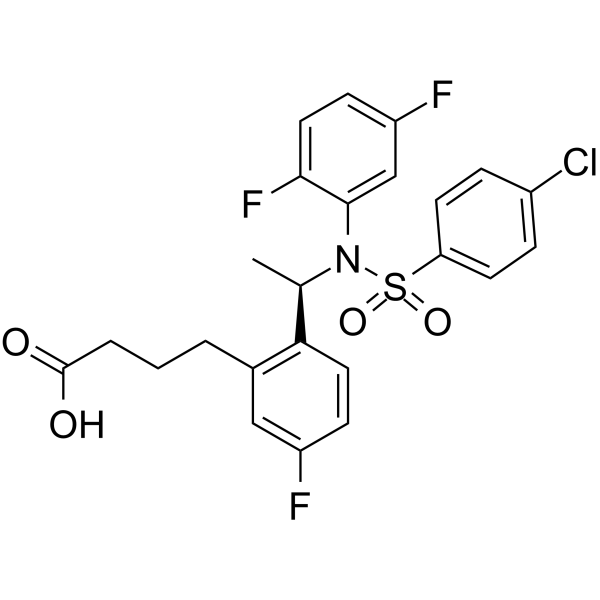
BMS 299897 is a sulfonamide γ-secretase inhibitor with an IC50 of 7 nM for Aβ production inhibition in HEK293 cells stably overexpressing amyloid precursor protein (APP).
For research use only. We do not sell to patients.
- Purity : 99.64%
- CAS No.: 290315-45-6
- Formula: C24H21ClF3NO4S
- Molecular Weight:511.94
-
Storage:Powder -20°C, 3 years , 4°C, 2 years ; In solvent -80°C, 2 years , -20°C, 1 year

To place orders, for customer services and technical support, please contact: MedChemExpress USA
Tel: 609-228-6898 E-mail: [email protected] [email protected]


-
 Biological Activity
-
Chemical Information
-
Solvent & Solubility
- Protocols
- Purity & Documentation
- References
-
 Help & FAQs


-
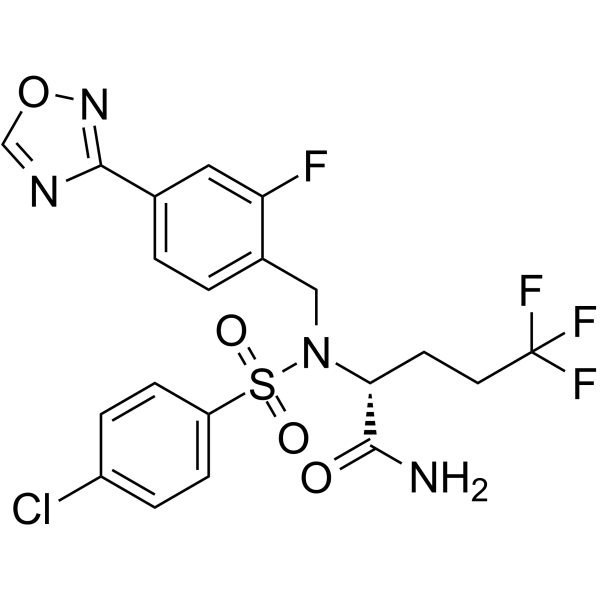
HY-50845
Avagacestatγ-secretase Inhibitor -
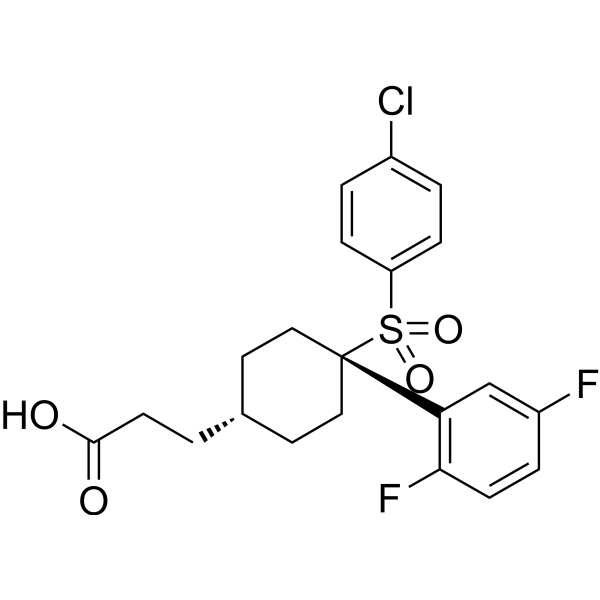
HY-10974
MK-0752 -
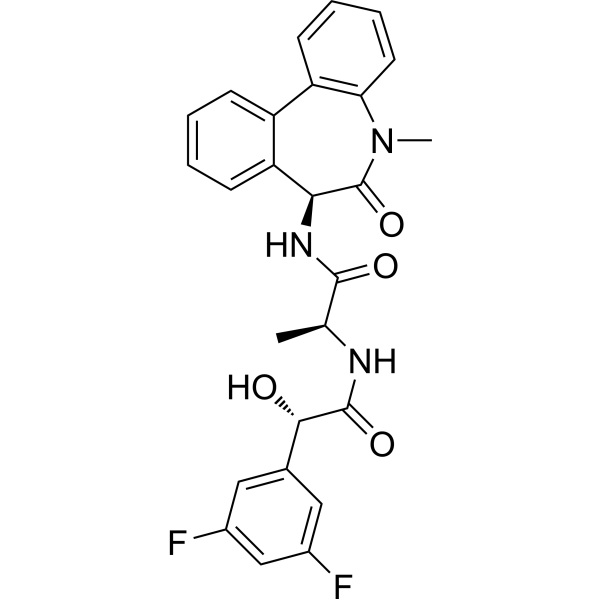
HY-50752
LY-411575γ-secretase Inhibitor -
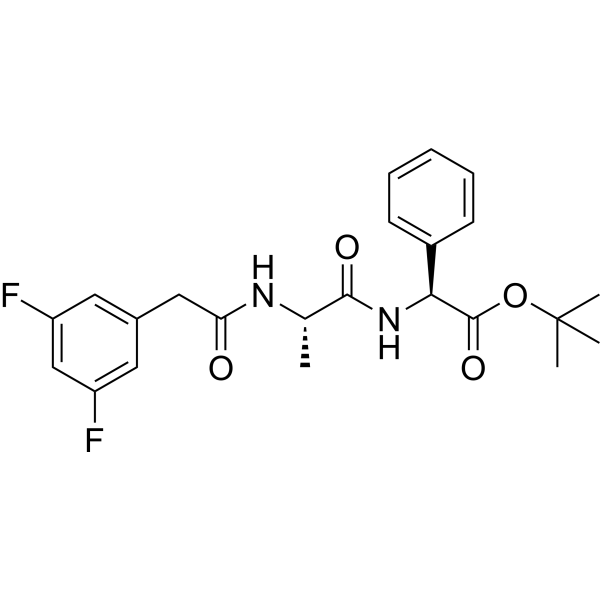
HY-13027
DAPTγ-secretase Inhibitor -
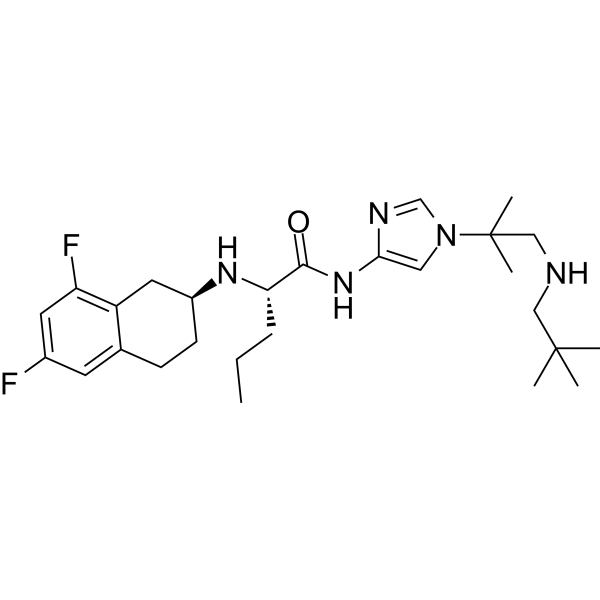
HY-15185
Nirogacestatγ-Secretase Inhibitor -
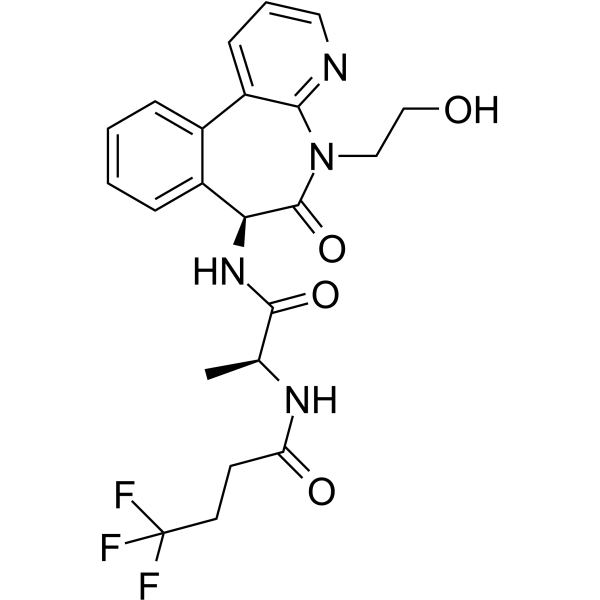
HY-12449
CrenigacestatNotch/γ-secretase Inhibitor -
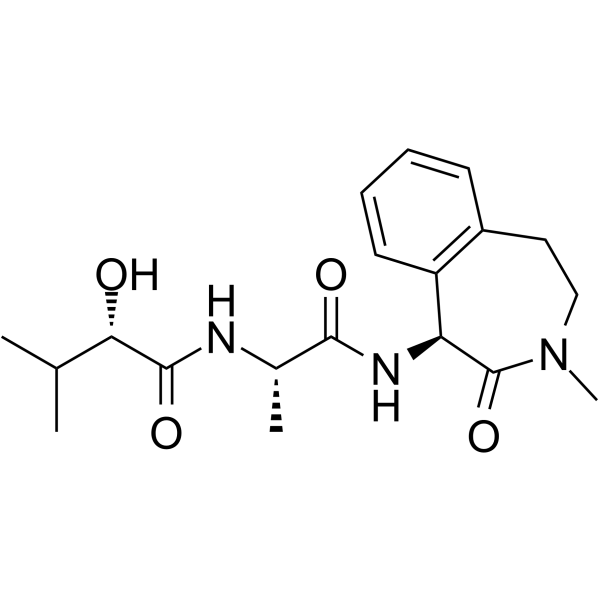
HY-10009
Semagacestatγ-secretase Inhibitor -
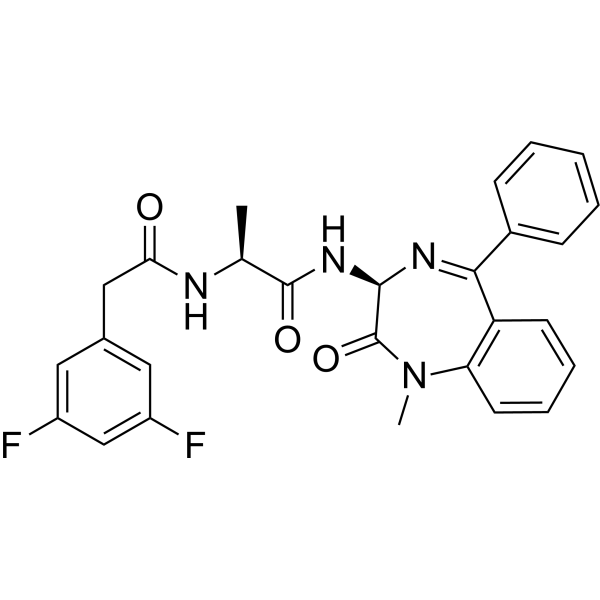
HY-14176
Compound Eγ-secretase Inhibitor -
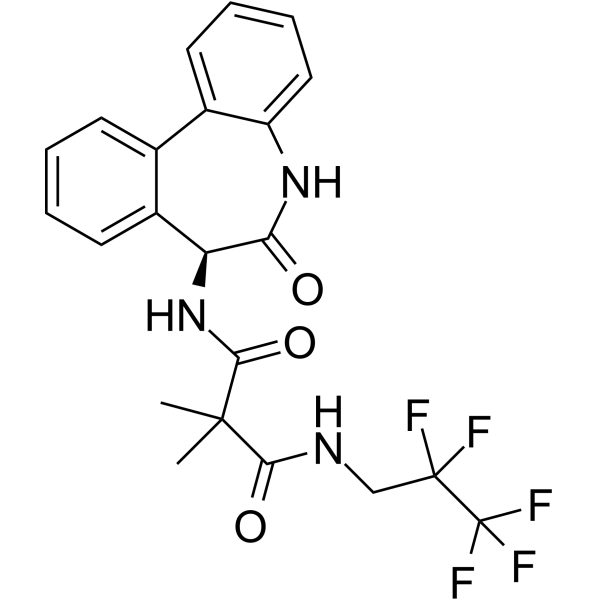
HY-11102
RO4929097γ-secretase Inhibitor -
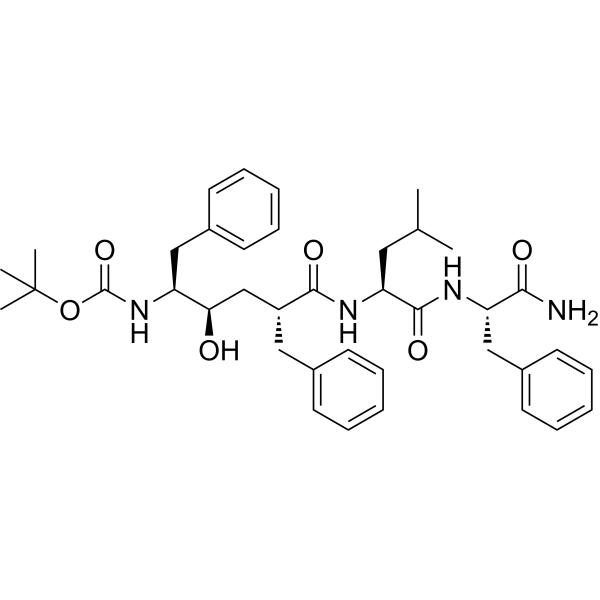
HY-19369
L-685458γ-Secretase Inhibitor -
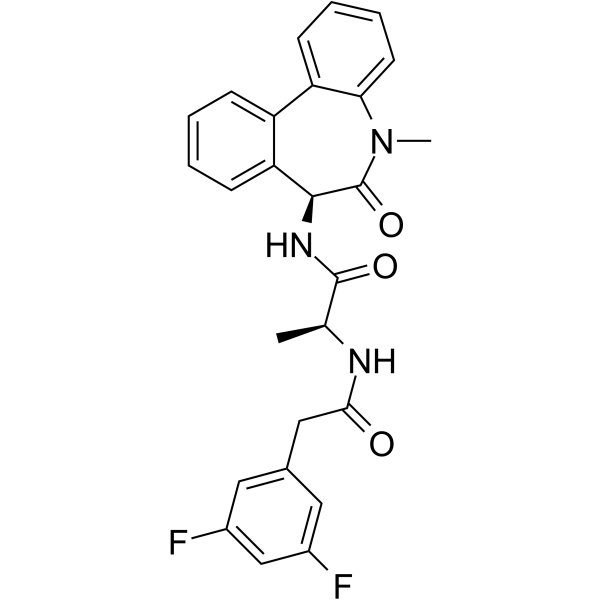
HY-13526
YO-01027γ-secretase Inhibitor -
HY-14175
Begacestatγ-secretase Inhibitor


Biological Activity
Description
IC50 & Target
IC50: 7 nM (Aβ, in HEK293 cells)[1]
Cellular Effect
|
Cell Line

|
Type | Value | Description | References |
|---|---|---|---|---|
| CHO | EC50 |
7 nM
Compound: BMS-299897
|
Inhibition of gamma-secretase expressed in CHO cells expressing wild type human recombinant APP assessed as amyloid beta40 aggregation
Inhibition of gamma-secretase expressed in CHO cells expressing wild type human recombinant APP assessed as amyloid beta40 aggregation
|
[PMID: 18556202] |
| H4 | IC50 |
0.0071 μM
Compound: 4, BMS-299897
|
Effect on gamma-secretase activity in human H4 cells expressing APP695 assessed as reduction of Amyloid beta42 formation LPECL assay
Effect on gamma-secretase activity in human H4 cells expressing APP695 assessed as reduction of Amyloid beta42 formation LPECL assay
|
[PMID: 17035010] |
| HEK293 | IC50 |
28700 nM
Compound: BMS-299897
|
Displacement of [3H]L685458 from human SPP expressed in HEK293 cells
Displacement of [3H]L685458 from human SPP expressed in HEK293 cells
|
[PMID: 17932033] |
| HEK293 | IC50 |
7.1 nM
Compound: 37, BMS-299897
|
Inhibition of human gamma secretase-mediated amyloid precursor protein-C-terminal fragment cleavage expressed in HEK293 cells
Inhibition of human gamma secretase-mediated amyloid precursor protein-C-terminal fragment cleavage expressed in HEK293 cells
|
[PMID: 19694467] |
| THP-1 | IC50 |
12 nM
Compound: BMS-299897
|
Displacement of [3H]IN973 from gamma-secretase in human THP1 cells
Displacement of [3H]IN973 from gamma-secretase in human THP1 cells
|
[PMID: 17932033] |
| THP-1 | IC50 |
25600 nM
Compound: BMS-299897
|
Displacement of [3H]L685458 from gamma-secretase in human THP1 cells
Displacement of [3H]L685458 from gamma-secretase in human THP1 cells
|
[PMID: 17932033] |
In Vitro
BMS-299897 reduces the levels of each of the Aβ peptides. At 1 μM, BMS-299897 decreases these peptides to levels ranging from 20 to 50% of the vehicle control. BMS-299897 treatment reduces the portion of QD-BDNF signals moving in the retrograde direction (p=0.0198) with a concomitant increase in the portion of signals moving in the anterograde direction (p=0.0147)[2].
MedChemExpress (MCE) has not independently confirmed the accuracy of these methods. They are for reference only.
In Vivo
MedChemExpress (MCE) has not independently confirmed the accuracy of these methods. They are for reference only.


Chemical Information
-
CAS No. 290315-45-6
-
Appearance Solid
-
Molecular Weight 511.94
-
Formula C24H21ClF3NO4S
-
Color White to off-white
-
SMILES
FC1=CC=C(F)C(N([C@@H](C2=C(CCCC(O)=O)C=C(F)C=C2)C)S(C3=CC=C(Cl)C=C3)(=O)=O)=C1
-
Shipping
Room temperature in continental US; may vary elsewhere.
-
Storage
Powder -20°C 3 years 4°C 2 years In solvent -80°C 2 years -20°C 1 year


Solvent & Solubility
In Vitro:
DMSO : ≥ 30 mg/mL (58.60 mM; Hygroscopic DMSO has a significant impact on the solubility of product, please use newly opened DMSO)
* "≥" means soluble, but saturation unknown.
Please refer to the solubility information to select the appropriate solvent. Once prepared, please aliquot and store the solution to prevent product inactivation from repeated freeze-thaw cycles.
Storage method and period of stock solution: -80°C, 2 years; -20°C, 1 year. When stored at -80°C, please use it within 2 years. When stored at -20°C, please use it within 1 year.
Please refer to the solubility information to select the appropriate solvent. Once prepared, please aliquot and store the solution to prevent product inactivation from repeated freeze-thaw cycles.
Storage method and period of stock solution: -80°C, 2 years; -20°C, 1 year. When stored at -80°C, please use it within 2 years. When stored at -20°C, please use it within 1 year.
Concentration (start) × Volume (start) = Concentration (final) × Volume (final)
In Vivo:
Select the appropriate dissolution method based on your experimental animal and administration route.
- For the following dissolution methods, please ensure to first prepare a clear stock solution using an In Vitro approach and then sequentially add co-solvents:
- To ensure reliable experimental results, the clarified stock solution can be appropriately stored based on storage conditions. As for the working solution for In Vivo experiments, it is recommended to prepare freshly and use it on the same day.
- The percentages shown for the solvents indicate their volumetric ratio in the final prepared solution. If precipitation or phase separation occurs during preparation, heat and/or sonication can be used to aid dissolution.
Add each solvent one by one: 10% DMSO 40% PEG300 5% Tween-80 45% Saline
Solubility: ≥ 2.5 mg/mL (4.88 mM); Clear solution
This protocol yields a clear solution of ≥ 2.5 mg/mL (saturation unknown).
Taking 1 mL working solution as an example, add 100 μL DMSO stock solution (25.0 mg/mL) to 400 μL PEG300, and mix evenly; then add 50 μL Tween-80 and mix evenly; then add 450 μL Saline to adjust the volume to 1 mL.
Preparation of Saline: Dissolve 0.9 g sodium chloride in ddH₂O and dilute to 100 mL to obtain a clear Saline solution.
In Vivo Dissolution Calculator
Please enter the basic information of animal experiments:
-
-
-
-
Recommended: Prepare an additional quantity of animals to account for potential losses during experiments.
Please enter your animal formula composition:
-
%DMSO +
Recommended: Keep the proportion of DMSO in working solution below 2% if your animal is weak.
-
%+
-
+%Tween-80 + +
-
%Saline +
The co-solvents required include: DMSO, . All of co-solvents are available by MedChemExpress (MCE). , Tween 80. All of co-solvents are available by MedChemExpress (MCE).
Working solution concentration: 0.22 mg/mL
Method for preparing stock solution: mg drug dissolved in μL DMSO. Stock solution concentration: mg/mL.
1. Take μL DMSO stock solution;
2. Add μL .
μL , mix evenly;
3. Then add μL Tween 80, mix evenly;
4. Then add μL
Please ensure that the stock solution in the first step is dissolved to a clear state, and add co-solvents in sequence. You can use ultrasonic heating (ultrasonic cleaner, recommended frequency 20-40 kHz), vortexing, etc. to assist dissolution.


Purity & Documentation
-
Data Sheet (280 KB)
-
SDS (393 KB)
- English - EN (393 KB)
- Français - FR (393 KB)
- Deutsch - DE (393 KB)
- Norwegian - NO (393 KB)
- Español - ES (393 KB)
- Swedish - SV (393 KB)
- Italian - IT (393 KB)
- Korean - KR (393 KB)
- Portuguese - PT (393 KB)
-
Handling Instructions (2659 KB)
References
[1]. Meunier J, et al. The γ-secretase inhibitor 2-[(1R)-1-[(4-chlorophenyl)sulfonyl](2,5-difluorophenyl) amino]ethyl-5-fluorobenzenebutanoic acid (BMS-299897) alleviates Aβ1-42 seeding and short-term memory deficits in the Aβ25-35 mouse model of Alzheimer's d [Content Brief]
[2]. Weissmiller AM, et al. A γ-secretase inhibitor, but not a γ-secretase modulator, induced defects in BDNF axonal trafficking and signaling: evidence for a role for APP. PLoS One. 2015 Feb 24;10(2):e0118379. [Content Brief]


Complete Stock Solution Preparation Table
Please refer to the solubility information to select the appropriate solvent. Once prepared, please aliquot and store the solution to prevent product inactivation from repeated freeze-thaw cycles.
Storage method and period of stock solution: -80°C, 2 years; -20°C, 1 year. When stored at -80°C, please use it within 2 years. When stored at -20°C, please use it within 1 year.
| Optional Solvent | Concentration Solvent Mass | 1 mg | 5 mg | 10 mg | 25 mg |
|---|---|---|---|---|---|
| DMSO | 1 mM | 1.9534 mL | 9.7668 mL | 19.5335 mL | 48.8338 mL |
| 5 mM | 0.3907 mL | 1.9534 mL | 3.9067 mL | 9.7668 mL | |
| 10 mM | 0.1953 mL | 0.9767 mL | 1.9534 mL | 4.8834 mL | |
| 15 mM | 0.1302 mL | 0.6511 mL | 1.3022 mL | 3.2556 mL | |
| 20 mM | 0.0977 mL | 0.4883 mL | 0.9767 mL | 2.4417 mL | |
| 25 mM | 0.0781 mL | 0.3907 mL | 0.7813 mL | 1.9534 mL | |
| 30 mM | 0.0651 mL | 0.3256 mL | 0.6511 mL | 1.6278 mL | |
| 40 mM | 0.0488 mL | 0.2442 mL | 0.4883 mL | 1.2208 mL | |
| 50 mM | 0.0391 mL | 0.1953 mL | 0.3907 mL | 0.9767 mL |


BMS 299897 Related Classifications
HY-50883 Related Classifications
 Powered by Bioz