



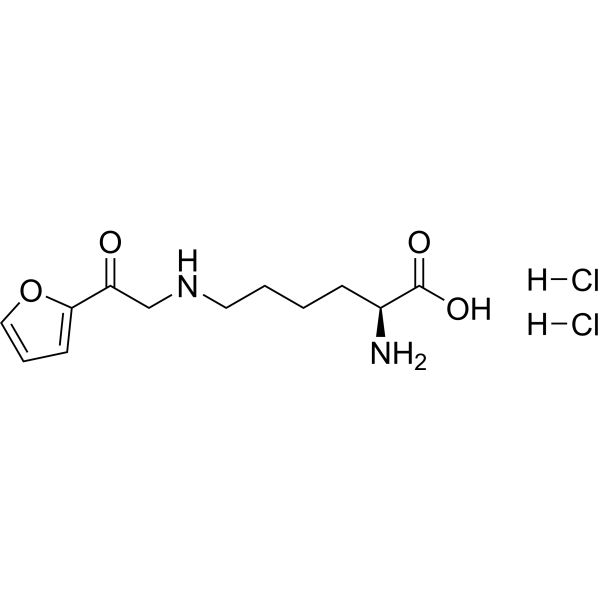
Furosine dihydrochloride
Based on 1 publication(s) in Google Scholar
Furosine dihydrochloride, an amino acid derivative, is an important chemical marker of early-stage Maillard reactions. Furosine dihydrochloride is closely related to a variety of diseases such as diabetes.
For research use only. We do not sell to patients.
- Purity : 98.89%
- CAS No.: 157974-36-2
- Formula: C12H20Cl2N2O4
- Molecular Weight:327.20
-
Storage:
4°C, sealed storage, away from moisture
* In solvent : -80°C, 6 months; -20°C, 1 month (sealed storage, away from moisture)

To place orders, for customer services and technical support, please contact: MedChemExpress USA
Tel: 609-228-6898 E-mail: [email protected] [email protected]


-
 Biological Activity
-
Chemical Information
-
Solvent & Solubility
- Protocols
- Purity & Documentation
- References
-
 Help & FAQs


-
HY-W040047
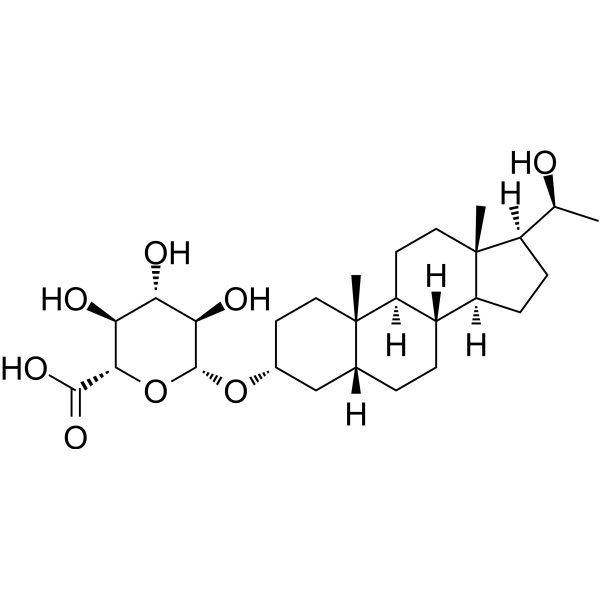
Pregnanediol 3-glucuronideProgesterone Metabolite -
HY-111614
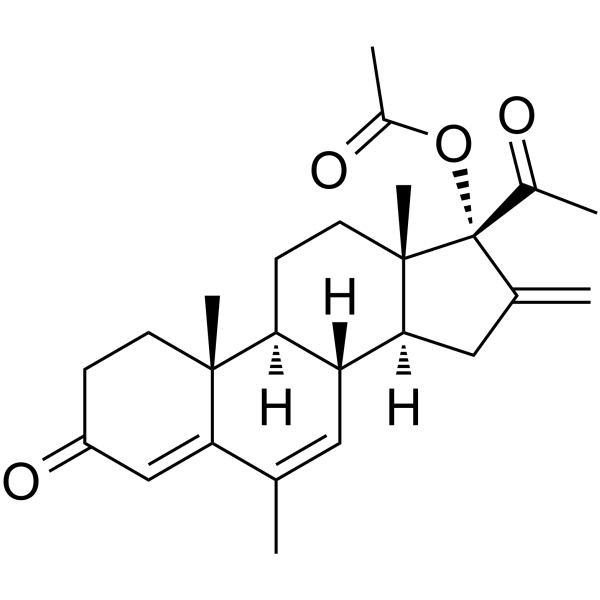
Melengestrol acetateContraceptive Agent -
HY-W141919
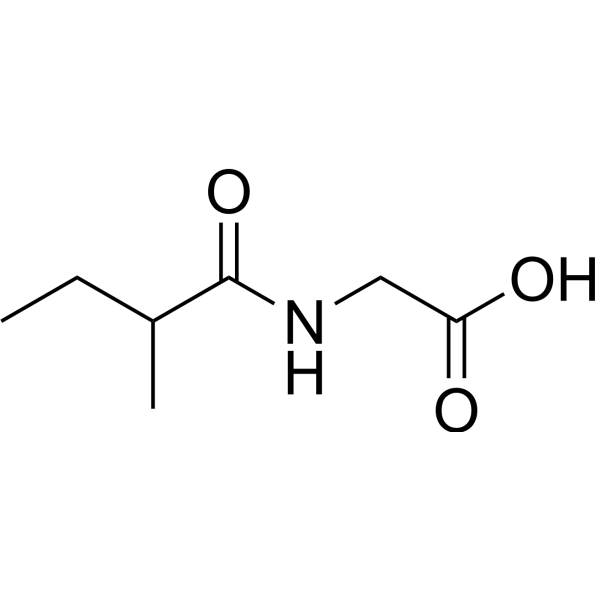
N-(2-Methylbutyryl)glycineAmino Acid Derivative -
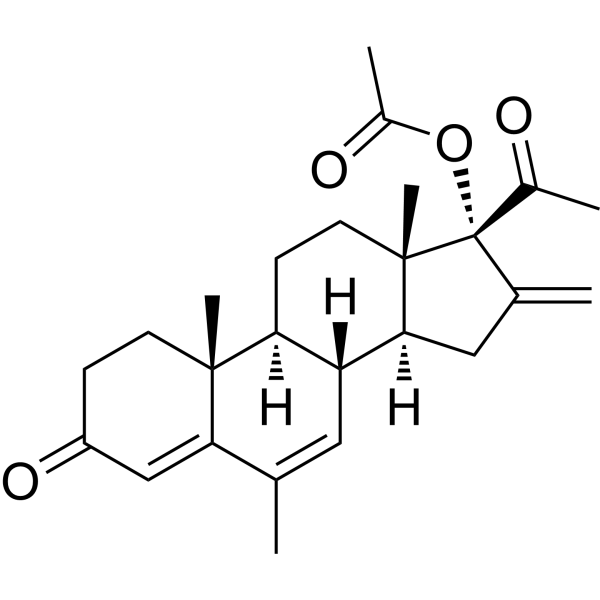
HY-111614R
Melengestrol acetate (Standard) -

HY-W587861
5β-DihydroprogesteroneTocolytic Agent -
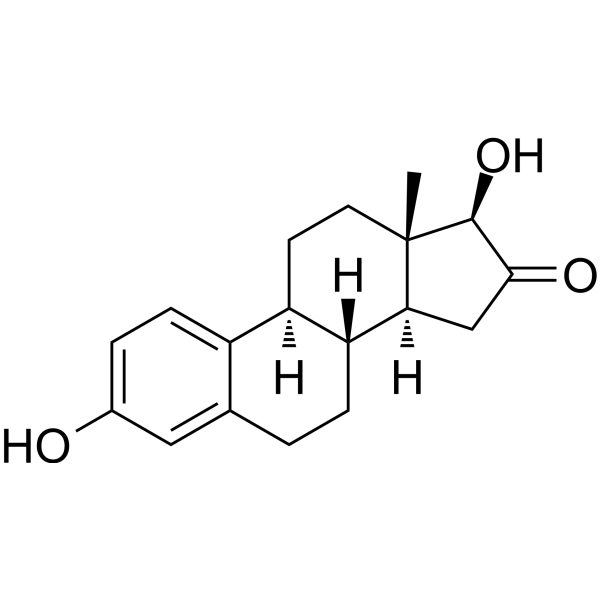
HY-W587691
16-KetoestradiolEndogenous Metabolite -

HY-123457
PF-1163AAntifungal Agent/C-4 Sterol Methyl Oxidase Inhibitor -
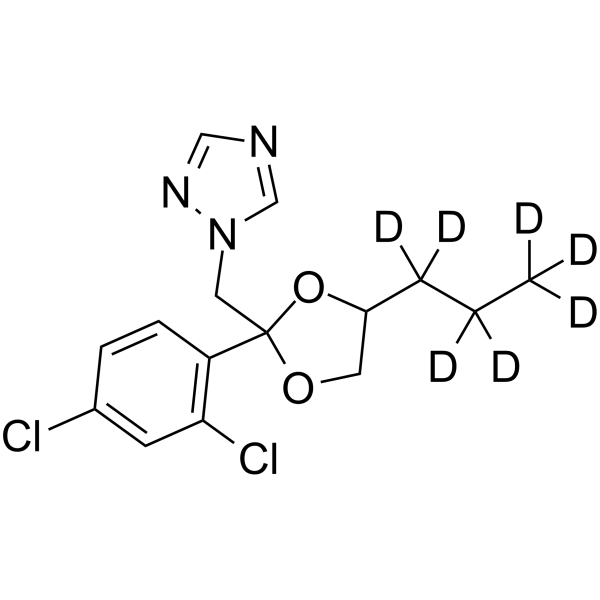
HY-B0847S
Propiconazole-d7Stable Isotope -
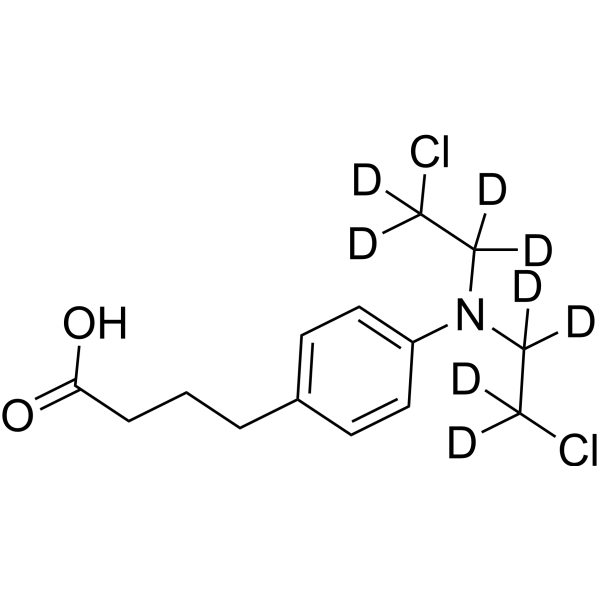
HY-13593S
Chlorambucil-d8Stable Isotope
Publications Citing Use of MedChemExpress (MCE) Furosine dihydrochloride
More

Biological Activity
Description
In Vitro
Furosine could degrade slowly to form many different advanced glycation end products (AGEs). Partial AGEs have been proven to be closely related to a variety of diseases, such as diabetes, and a high amount of AGEs in human bodies is considered harmful[1].
MedChemExpress (MCE) has not independently confirmed the accuracy of these methods. They are for reference only. Further protocols information, click here.


Chemical Information
-
CAS No. 157974-36-2
-
Appearance Solid
-
Molecular Weight 327.20
-
Formula C12H20Cl2N2O4
-
Color Light yellow to brown
-
SMILES
N[C@@H](CCCCNCC(C1=CC=CO1)=O)C(O)=O.[H]Cl.[H]Cl
-
Shipping
Room temperature in continental US; may vary elsewhere.
-
Storage
4°C, sealed storage, away from moisture
* In solvent : -80°C, 6 months; -20°C, 1 month (sealed storage, away from moisture)


Publications (1)
-
Journal Impact Factor
-
Most Recent


Solvent & Solubility
In Vitro:
H2O : 12.5 mg/mL (38.20 mM; Need ultrasonic)
DMSO : 4 mg/mL (12.22 mM; Need ultrasonic; Hygroscopic DMSO has a significant impact on the solubility of product, please use newly opened DMSO)
Please refer to the solubility information to select the appropriate solvent. Once prepared, please aliquot and store the solution to prevent product inactivation from repeated freeze-thaw cycles.
Storage method and period of stock solution: -80°C, 6 months; -20°C, 1 month (sealed storage, away from moisture). When stored at -80°C, please use it within 6 months. When stored at -20°C, please use it within 1 month.
* Note: If you choose water as the stock solution, please dilute it to the working solution, then filter and sterilize it with a 0.22 μm filter before use.
Please refer to the solubility information to select the appropriate solvent. Once prepared, please aliquot and store the solution to prevent product inactivation from repeated freeze-thaw cycles.
Storage method and period of stock solution: -80°C, 6 months; -20°C, 1 month (sealed storage, away from moisture). When stored at -80°C, please use it within 6 months. When stored at -20°C, please use it within 1 month.
* Note: If you choose water as the stock solution, please dilute it to the working solution, then filter and sterilize it with a 0.22 μm filter before use.
Concentration (start) × Volume (start) = Concentration (final) × Volume (final)

Protocols
-
Research Protocol for Metabolic Diseases
AMP-activated protein kinase, AMPK, is a conserved cellular energy sensor that responds to reduced cellular energy status and coordinates metabolism by increasing ATP-generating catabolic pathways while suppressing ATP-consuming anabolic processes. In metabolic disease research, the AMPK pathway is experimentally relevant because it regulates hepatic lipid synthesis, fatty acid oxidation, glucose production, skeletal-muscle glucose disposal, mTORC1-linked biosynthesis, autophagy, mitochondrial homeostasis, and whole-body energy balance. The central pathway logic is that energy stress, metformin, exercise-like stimulation, or direct AMPK activators increase AMPKα Thr172 phosphorylation and downstream substrate phosphorylation, including ACC and RAPTOR. Phosphorylation of ACC suppresses lipogenesis and supports fatty acid oxidation, whereas phosphorylation of RAPTOR suppresses mTORC1 signaling and links cellular energy status to growth and protein synthesis control. The pathway is linked


Purity & Documentation
-
Data Sheet (269 KB)
-
SDS (252 KB)
- English - EN (252 KB)
- Français - FR (252 KB)
- Deutsch - DE (252 KB)
- Norwegian - NO (252 KB)
- Español - ES (252 KB)
- Swedish - SV (252 KB)
- Italian - IT (252 KB)
- Korean - KR (252 KB)
- Portuguese - PT (252 KB)
-
Handling Instructions (2659 KB)
References
[1]. Li Y, et, al. Qualitative and quantitative analysis of furosine in fresh and processed ginsengs. J Ginseng Res. 2018 Jan;42(1):21-26. [Content Brief]
[2]. Poojary MM, et, al. Liquid chromatography quadrupole-Orbitrap mass spectrometry for the simultaneous analysis of advanced glycation end products and protein-derived cross-links in food and biological matrices. J Chromatogr A. 2020 Mar 29;1615:460767. [Content Brief]


Complete Stock Solution Preparation Table
Please refer to the solubility information to select the appropriate solvent. Once prepared, please aliquot and store the solution to prevent product inactivation from repeated freeze-thaw cycles.
Storage method and period of stock solution: -80°C, 6 months; -20°C, 1 month (sealed storage, away from moisture). When stored at -80°C, please use it within 6 months. When stored at -20°C, please use it within 1 month.
| Optional Solvent | Concentration Solvent Mass | 1 mg | 5 mg | 10 mg | 25 mg |
|---|---|---|---|---|---|
| DMSO / H2O | 1 mM | 3.0562 mL | 15.2812 mL | 30.5623 mL | 76.4059 mL |
| 5 mM | 0.6112 mL | 3.0562 mL | 6.1125 mL | 15.2812 mL | |
| 10 mM | 0.3056 mL | 1.5281 mL | 3.0562 mL | 7.6406 mL | |
| H2O | 15 mM | 0.2037 mL | 1.0187 mL | 2.0375 mL | 5.0937 mL |
| 20 mM | 0.1528 mL | 0.7641 mL | 1.5281 mL | 3.8203 mL | |
| 25 mM | 0.1222 mL | 0.6112 mL | 1.2225 mL | 3.0562 mL | |
| 30 mM | 0.1019 mL | 0.5094 mL | 1.0187 mL | 2.5469 mL |
* Note: If you choose water as the stock solution, please dilute it to the working solution, then filter and sterilize it with a 0.22 μm filter before use.


Furosine dihydrochloride Related Classifications
HY-139078 Related Classifications
 Powered by Bioz