



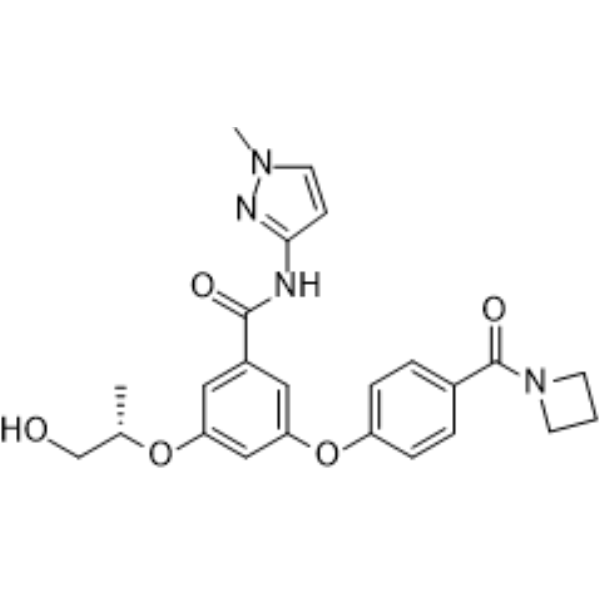
AZD1092
AZD1092 is an orally active glucokinase (GK) activator with an EC50 value of 0.03 μM. AZD1092 can be used for the research of Type 2 Diabetes (T2D).
Para uso exclusivo en investigación. No vendemos a pacientes.
- No. CAS: 871656-65-4
- Fòrmula: C24H26N4O5
- Peso molecular:450.49
-
Almacenamiento:
Please store the product under the recommended conditions in the Certificate of Analysis.

To place orders, for customer services and technical support, please contact: MedChemExpress USA
Tel: 609-228-6898 E-mail: [email protected] [email protected]


-
 Actividad biológica
-
Chemical Information
- Protocolo
- Pureza y Documentación
- Referencias
-
 Help & FAQs




Actividad biológica
Descripciòn
IC50 & Target
EC50: 0.03 μM (glucokinase)[1]
In Vitro
AZD1092 has activity for glucokinase with an EC50 value of 0.03 μM[1].
MedChemExpress (MCE) has not independently confirmed the accuracy of these methods. They are for reference only. Further protocols information, click here.
In Vivo
MedChemExpress (MCE) has not independently confirmed the accuracy of these methods. They are for reference only.
-
Animal Model:Female Zucker rats[1]
-
Dosage:1, 3, 10 mg/kg
-
Administration:Oral
-
Result:Exhibited dose dependent reduction of glucose excursion in oral glucose tolerance tests in high fat fed female Zucker rats and glucose lowering efficacy in free feeding glucose profiles in male Zucker rats.


Chemical Information
-
No. CAS 871656-65-4
-
Peso molecular 450.49
-
Fòrmula C24H26N4O5
-
SMILES
O=C(C1=CC(O[C@H](CO)C)=CC(OC2=CC=C(C=C2)C(N3CCC3)=O)=C1)NC4=NN(C=C4)C
-
Envío
Room temperature in continental US; may vary elsewhere.
-
Almacenamiento
Please store the product under the recommended conditions in the Certificate of Analysis.

Protocolo
-
Research Protocol for Metabolic Diseases
AMP-activated protein kinase, AMPK, is a conserved cellular energy sensor that responds to reduced cellular energy status and coordinates metabolism by increasing ATP-generating catabolic pathways while suppressing ATP-consuming anabolic processes. In metabolic disease research, the AMPK pathway is experimentally relevant because it regulates hepatic lipid synthesis, fatty acid oxidation, glucose production, skeletal-muscle glucose disposal, mTORC1-linked biosynthesis, autophagy, mitochondrial homeostasis, and whole-body energy balance. The central pathway logic is that energy stress, metformin, exercise-like stimulation, or direct AMPK activators increase AMPKα Thr172 phosphorylation and downstream substrate phosphorylation, including ACC and RAPTOR. Phosphorylation of ACC suppresses lipogenesis and supports fatty acid oxidation, whereas phosphorylation of RAPTOR suppresses mTORC1 signaling and links cellular energy status to growth and protein synthesis control. The pathway is linked


Pureza y Documentación
Referencias

Calculators
Concentration (start) × Volume (start) = Concentration (final) × Volume (final)


AZD1092 Related Classifications
HY-121070 Related Classifications
 Powered by Bioz