



Montmorillonite

Based on 1 Customer Validation
Montmorillonite is a calcium-based 2:1 layered silicate clay mineral with excellent adsorption capacity, which can adsorb and immobilize a variety of substances, such as organic compounds, metal ions, and bacteria. Montmorillonite can serve as a nanoparticle carrier for research on functional nanocomposites for multiple scenarios, such as biomedical applications and food additives. Montmorillonite is also applicable to research related to wastewater treatment.
Para uso exclusivo en investigación. No vendemos a pacientes.
- No. CAS: 1318-93-0
- Fòrmula: Al2O9Si3
-
Almacenamiento:Powder -20°C, 3 years , 4°C, 2 years ; In solvent -80°C, 6 months , -20°C, 1 month


To place orders, for customer services and technical support, please contact: MedChemExpress USA
Tel: 609-228-6898 E-mail: [email protected] [email protected]


-
 Actividad biológica
-
Chemical Information
- Pureza y Documentación
- Referencias
-
 Help & FAQs


-

HY-Y1939A
Metaphosphoric acid, 33.5-36.5%Precipitant -
HY-B2227
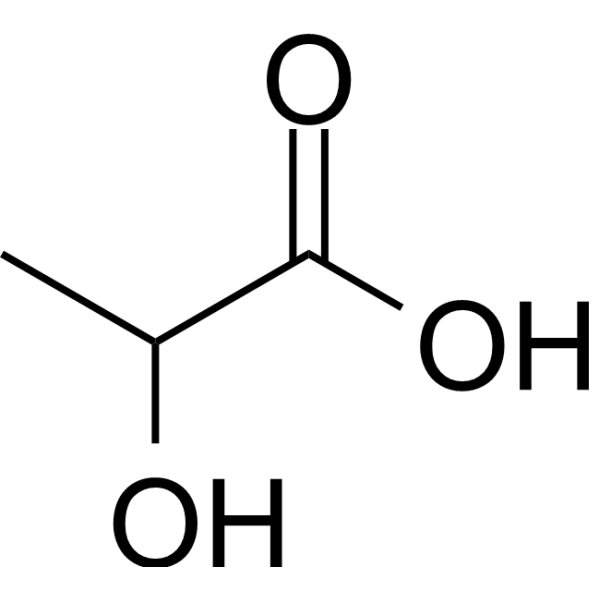
Lactic acidGlycolysis Production -
HY-B1008
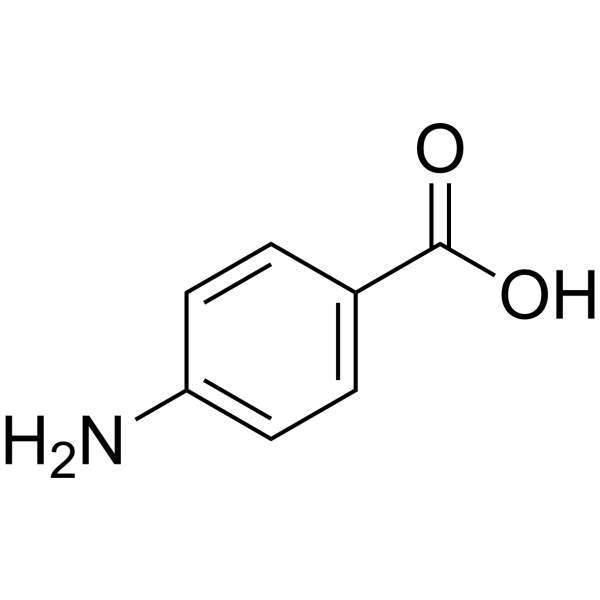
4-Aminobenzoic acidFolate Synthesis Intermediate -
HY-B2136
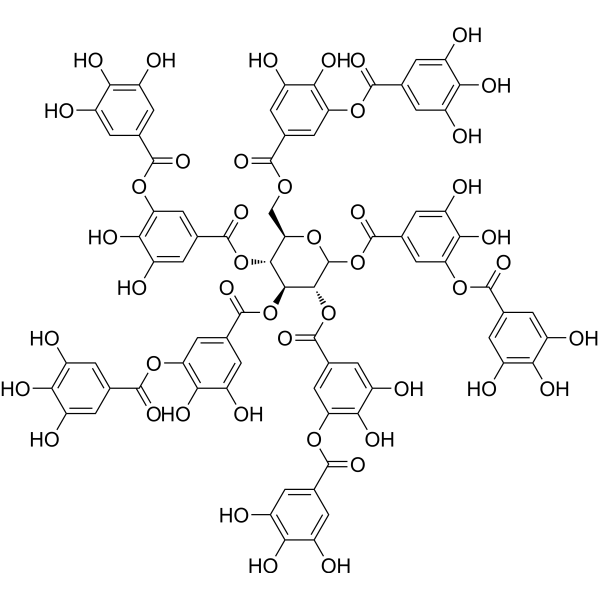
Tannic acidhERG Channel Blocker -

HY-B2227R
Lactic acid (Standard)Analytical Standard -
HY-W015591
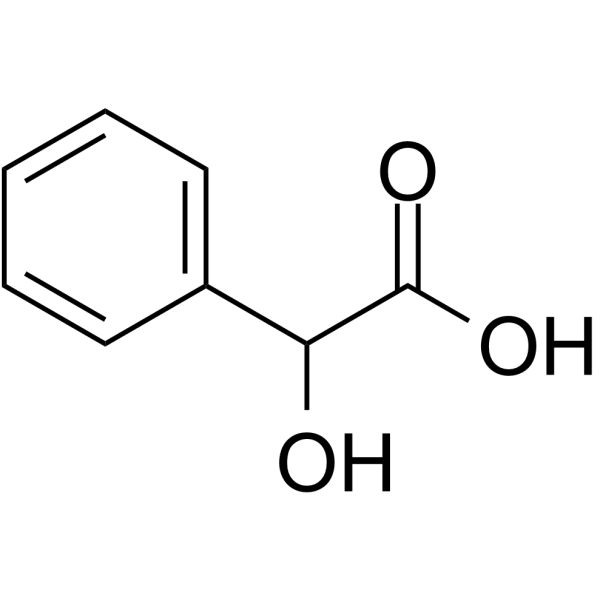
Mandelic acidAntimicrobial -
HY-N1428A
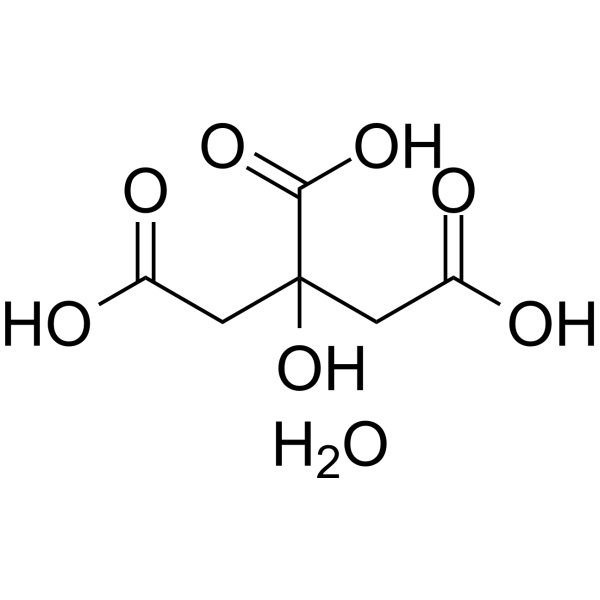
Citric acid monohydrateOrganic Acid -

HY-B1008R
4-Aminobenzoic acid (Standard)Folate Synthesis Intermediate -

HY-W015591R
Mandelic acid (Standard)Antimicrobial


Actividad biológica
Descripciòn
In Vitro
Montmorillonite (0-10 wt%; mixed for 1 h at 70 °C, dried for 12 h at 45 °C) improves the barrier properties, optical properties, thermal properties and mechanical properties of starch-sodium alginate composite films, and reduces their water content and degradation rate[1].
Montmorillonite (6 wt%; mixed for 45 min, dried at 45 °C for 12 h) successfully forms stable blends with starch, sodium alginate and star anise oil for the preparation of composite films[1].
Montmorillonite itself exhibits antifungal activity against Candida albicans ATCC 101231, and silver-loaded montmorillonite inhibits the proliferation of this strain more potently via sustained release of silver ions[2].
MedChemExpress (MCE) has not independently confirmed the accuracy of these methods. They are for reference only. .
Ensayo clínico
| NCT Number | Sponsor | Condition | Start Date |
Phase

|
|---|---|---|---|---|
| NCT01329991 | Plexxikon| | 2011-05 | PHASE1 |


Chemical Information
-
No. CAS 1318-93-0
-
Appearance Solid
-
Fòrmula Al2O9Si3
-
Color Off-white to gray
-
SMILES
[Montmorillonite]
-
Envío
Room temperature in continental US; may vary elsewhere.
-
Almacenamiento
Powder -20°C 3 years 4°C 2 years In solvent -80°C 6 months -20°C 1 month


Pureza y Documentación
-
Ficha de datos (265 KB)
-
SDS (394 KB)
- English - EN (394 KB)
- Français - FR (394 KB)
- Deutsch - DE (394 KB)
- Norwegian - NO (394 KB)
- Español - ES (394 KB)
- Swedish - SV (394 KB)
- Italian - IT (394 KB)
- Korean - KR (394 KB)
- Portuguese - PT (394 KB)
-
Instrucciones de manejo (2659 KB)
Referencias
[1]. Zhang M, et al. Development and characterization of starch‑sodium alginate-montmorillonite biodegradable antibacterial films. International journal of biological macromolecules. 2023 Apr 01;233:123462. [Content Brief]
[2]. Hossain SI, et al. A Review on Montmorillonite-Based Nanoantimicrobials: State of the Art. Nanomaterials (Basel, Switzerland). 2023 Feb 24;13(5):848. [Content Brief]

Calculators
Concentration (start) × Volume (start) = Concentration (final) × Volume (final)


Montmorillonite Related Classifications
HY-B2143 Related Classifications
 Powered by Bioz
Keywords
- Montmorillonite
- 1318-93-0
- Biochemical Assay Reagents
- Bacterial
- Candida albicans ATCC 101231
- human fibroblast cell lines
- polycaprolactone composites
- insulin-PLGA composites
- human embryonic kidney HEK-293 cells
- RAW264.7 monocyte/macrophage-like cells
- Salmonella choleraesuis
- Escherichia coli K88
- Escherichia coli
- starch-sodium alginate composite films
- Inhibitor
- inhibitor
- inhibit