



Gigantol isomer-1
Based on 1 publication(s) in Google Scholar
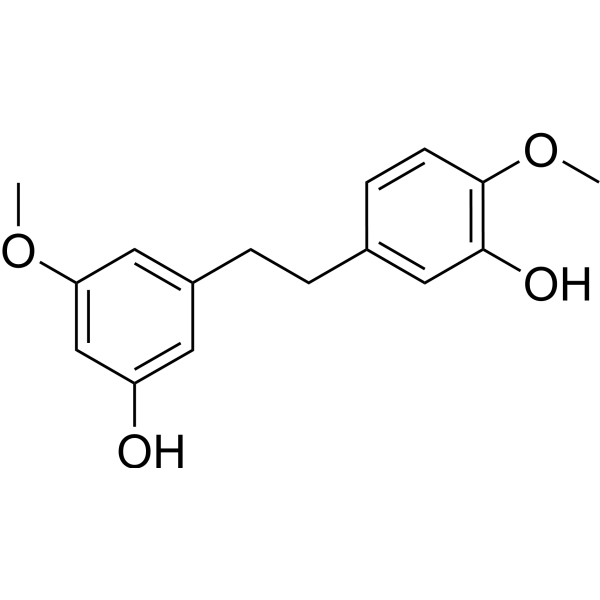
Gigantol isomer-1 is a bibenzyl compound derived from Dendrobium nobile. Gigantol isomer-1 shows promising therapeutic potential against cancer cells. Gigantol isomer-1 is a novel inhibitor of the Wnt/β-catenin pathway.
For research use only. We do not sell to patients.
- Purity: 99.82%
- CAS No.: 67884-30-4
- Formula: C16H18O4
- Molecular Weight:274.32
-
Storage:Powder -20°C, 3 years , 4°C, 2 years ; In solvent -80°C, 6 months , -20°C, 1 month

To place orders, for customer services and technical support, please contact: MedChemExpress USA
Tel: 609-228-6898 E-mail: [email protected] [email protected]


-
 Biological Activity
-
Chemical Information
-
Solvent & Solubility
- Protocol
- Purity & Documentation
- References
-
 Help & FAQs


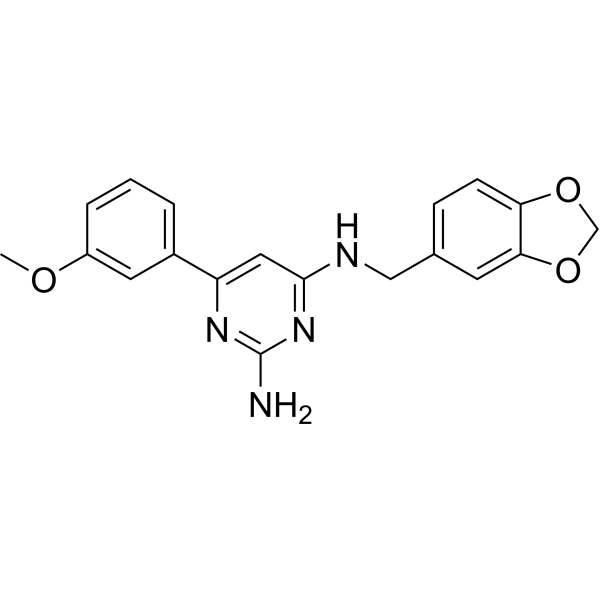
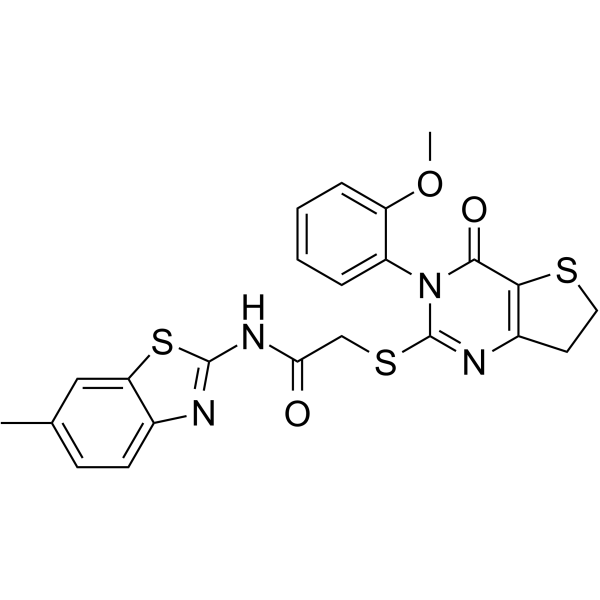
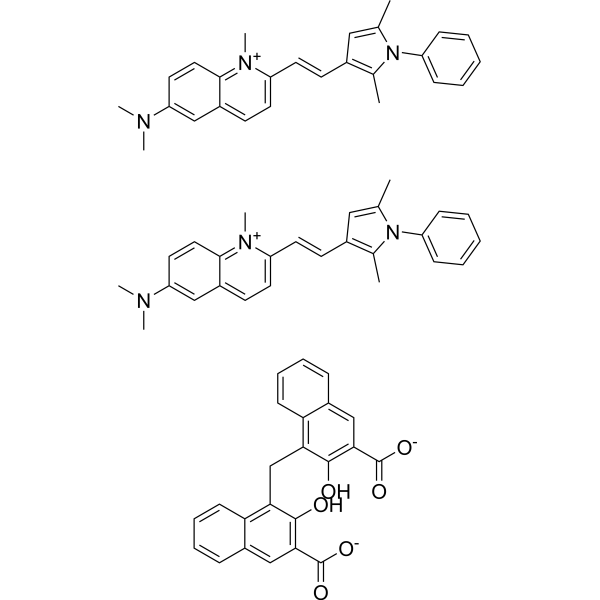
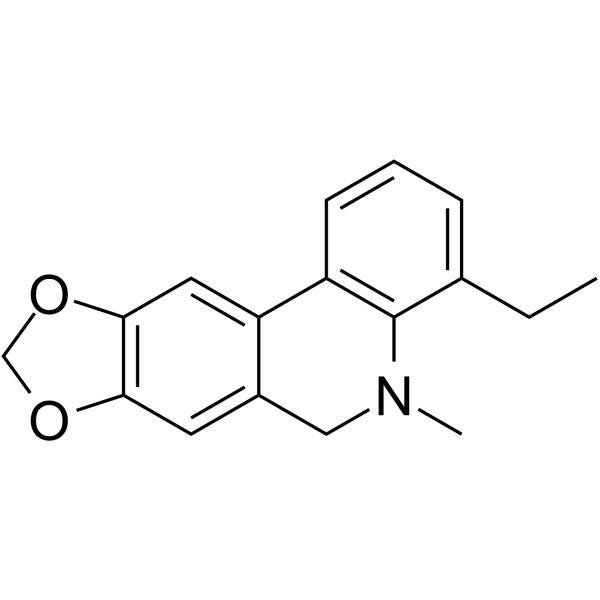
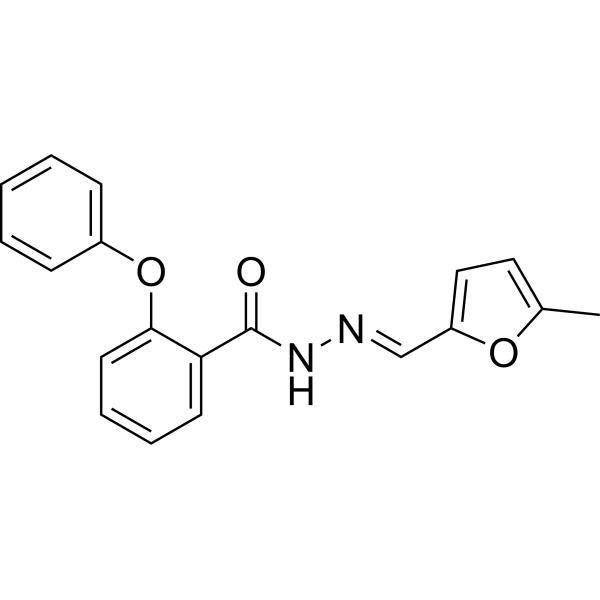
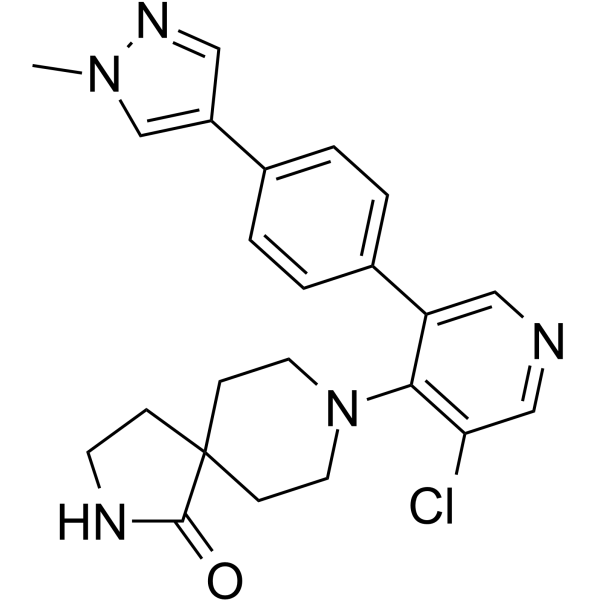
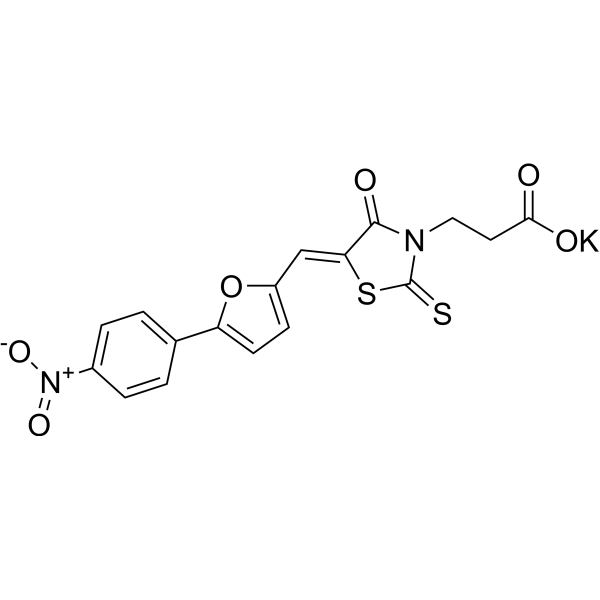

Publications Citing Use of MedChemExpress (MCE) Gigantol isomer-1
More

Biological Activity
Description
IC50 & Target
Wnt[1]
Cellular Effect
|
Cell Line

|
Type | Value | Description | References |
|---|---|---|---|---|
| HCCLM3 | IC50 |
>100 μM
Compound: 26
|
Antiproliferative activity against human HCCLM3 cells assessed as inhibition of cell growth measured after 48 hrs by MTT assay
Antiproliferative activity against human HCCLM3 cells assessed as inhibition of cell growth measured after 48 hrs by MTT assay
|
[PMID: 34931827] |
| HepG2 | IC50 |
>100 μM
Compound: 26
|
Antiproliferative activity against human HepG2 cells assessed as inhibition of cell growth measured after 48 hrs by MTT assay
Antiproliferative activity against human HepG2 cells assessed as inhibition of cell growth measured after 48 hrs by MTT assay
|
[PMID: 34931827] |
In Vitro
Gigantol isomer-1 decreases the level of phosphorylated LRP6 and cytosolic β-catenin in HEK293 cells. In breast cancer MDA-MB-231 and MDA-MB-468 cells, treatment with Gigantol isomer-1 reduces the level of phosphorylated LRP6[1]. Gigantol isomer-1 significantly inhibits the proliferation and induces apoptosis of the HepG2 cells. Gigantol isomer-1 at concentrations of 1, 40 and 150 μM markedly decreases the cell viability by 11.7, 30.0 and 56.4% at 24 h and 21.1, 66.8 and 85.5% at 48 h, respectively. The IC50 value is 9.30 μM[2].
MedChemExpress (MCE) has not independently confirmed the accuracy of these methods. They are for reference only.
In Vivo
MedChemExpress (MCE) has not independently confirmed the accuracy of these methods. They are for reference only.


Chemical Information
-
CAS No. 67884-30-4
-
Appearance Solid
-
Molecular Weight 274.32
-
Formula C16H18O4
-
Color White to off-white
-
SMILES
COC1=CC(O)=CC(CCC2=CC(O)=C(OC)C=C2)=C1
-
Structure Classification
-
Initial Source
-
Shipping
Room temperature in continental US; may vary elsewhere.
-
Storage
Powder -20°C 3 years 4°C 2 years In solvent -80°C 6 months -20°C 1 month


Publications (1)
-
Journal Impact Factor
-
Most Recent
-
Onco Targets Ther
Gigantol Attenuates the Metastasis of Human Bladder Cancer Cells, Possibly Through Wnt/EMT Signaling. [Abstract]2020 Nov 4:13:11337-11346. PMID: 33177841


Solvent & Solubility
In Vitro:
DMSO : 100 mg/mL (364.54 mM; Need ultrasonic; Hygroscopic DMSO has a significant impact on the solubility of product, please use newly opened DMSO)
Ethanol : 50 mg/mL (182.27 mM; Need ultrasonic)
Please refer to the solubility information to select the appropriate solvent. Once prepared, please aliquot and store the solution to prevent product inactivation from repeated freeze-thaw cycles.
Storage method and period of stock solution: -80°C, 6 months; -20°C, 1 month. When stored at -80°C, please use it within 6 months. When stored at -20°C, please use it within 1 month.
Please refer to the solubility information to select the appropriate solvent. Once prepared, please aliquot and store the solution to prevent product inactivation from repeated freeze-thaw cycles.
Storage method and period of stock solution: -80°C, 6 months; -20°C, 1 month. When stored at -80°C, please use it within 6 months. When stored at -20°C, please use it within 1 month.
Concentration (start) × Volume (start) = Concentration (final) × Volume (final)
In Vivo:
Select the appropriate dissolution method based on your experimental animal and administration route.
- For the following dissolution methods, please ensure to first prepare a clear stock solution using an In Vitro approach and then sequentially add co-solvents:
- To ensure reliable experimental results, the clarified stock solution can be appropriately stored based on storage conditions. As for the working solution for In Vivo experiments, it is recommended to prepare freshly and use it on the same day.
- The percentages shown for the solvents indicate their volumetric ratio in the final prepared solution. If precipitation or phase separation occurs during preparation, heat and/or sonication can be used to aid dissolution.
Add each solvent one by one: 10% DMSO 40% PEG300 5% Tween-80 45% Saline
Solubility: ≥ 2.5 mg/mL (9.11 mM); Clear solution
This protocol yields a clear solution of ≥ 2.5 mg/mL (saturation unknown).
Taking 1 mL working solution as an example, add 100 μL DMSO stock solution (25.0 mg/mL) to 400 μL PEG300, and mix evenly; then add 50 μL Tween-80 and mix evenly; then add 450 μL Saline to adjust the volume to 1 mL.
Preparation of Saline: Dissolve 0.9 g sodium chloride in ddH₂O and dilute to 100 mL to obtain a clear Saline solution.
Add each solvent one by one: 10% DMSO 90% (20% SBE-β-CD in Saline)
Solubility: ≥ 2.5 mg/mL (9.11 mM); Clear solution
This protocol yields a clear solution of ≥ 2.5 mg/mL (saturation unknown).
Taking 1 mL working solution as an example, add 100 μL DMSO stock solution (25.0 mg/mL) to 900 μL 20% SBE-β-CD in Saline, and mix evenly.
Preparation of 20% SBE-β-CD in Saline (4°C, storage for one week): 2 g SBE-β-CD powder is dissolved in 10 mL Saline, completely dissolve until clear.
Add each solvent one by one: 10% EtOH 40% PEG300 5% Tween-80 45% Saline
Solubility: ≥ 2.5 mg/mL (9.11 mM); Clear solution
This protocol yields a clear solution of ≥ 2.5 mg/mL (saturation unknown).
Taking 1 mL working solution as an example, add 100 μL EtOH stock solution (25.0 mg/mL) to 400 μL PEG300, and mix evenly; then add 50 μL Tween-80 and mix evenly; then add 450 μL Saline to adjust the volume to 1 mL.
Preparation of Saline: Dissolve 0.9 g sodium chloride in ddH₂O and dilute to 100 mL to obtain a clear Saline solution.
Add each solvent one by one: 10% EtOH 90% (20% SBE-β-CD in Saline)
Solubility: ≥ 2.5 mg/mL (9.11 mM); Clear solution
This protocol yields a clear solution of ≥ 2.5 mg/mL (saturation unknown).
Taking 1 mL working solution as an example, add 100 μL EtOH stock solution (25.0 mg/mL) to 900 μL 20% SBE-β-CD in Saline, and mix evenly.
Preparation of 20% SBE-β-CD in Saline (4°C, storage for one week): 2 g SBE-β-CD powder is dissolved in 10 mL Saline, completely dissolve until clear.
Add each solvent one by one: 10% EtOH 90% Corn Oil
Solubility: ≥ 2.5 mg/mL (9.11 mM); Clear solution
This protocol yields a clear solution of ≥ 2.5 mg/mL (saturation unknown). If the continuous dosing period exceeds half a month, please choose this protocol carefully.
Taking 1 mL working solution as an example, add 100 μL EtOH stock solution (25.0 mg/mL) to 900 μL Corn oil, and mix evenly.
In Vivo Dissolution Calculator
Please enter the basic information of animal experiments:
-
-
-
-
Recommended: Prepare an additional quantity of animals to account for potential losses during experiments.
Please enter your animal formula composition:
-
%DMSO +
Recommended: Keep the proportion of DMSO in working solution below 2% if your animal is weak.
-
%+
-
+%Tween-80 + +
-
%Saline +
The co-solvents required include: DMSO, . All of co-solvents are available by MedChemExpress (MCE). , Tween 80. All of co-solvents are available by MedChemExpress (MCE).
Working solution concentration: 0.22 mg/mL
Method for preparing stock solution: mg drug dissolved in μL DMSO. Stock solution concentration: mg/mL.
1. Take μL DMSO stock solution;
2. Add μL .
μL , mix evenly;
3. Then add μL Tween 80, mix evenly;
4. Then add μL
Please ensure that the stock solution in the first step is dissolved to a clear state, and add co-solvents in sequence. You can use ultrasonic heating (ultrasonic cleaner, recommended frequency 20-40 kHz), vortexing, etc. to assist dissolution.

Protocol
Cell Assay[2]
HepG2 cells are treated with a series of concentrations of Gigantol (1, 10, 40, 80 and 150 µM) for different time intervals (12, 24 and 48 h). The cytotoxicity is measured using MTT assays[2].
MedChemExpress (MCE) has not independently confirmed the accuracy of these methods. They are for reference only.
Animal Administration[3]
Rats[3]
The anti-inflammatory activity is determined by carrageenan-induced edema test in the hind paws of rats. Sprague-Dawley rats are fasted for 15 h before the experiment with free access to water. One hundred microlitres of 1% carrageenan (10 mg/mL, Type IV, lambda) suspension is prepared 30 min before each experiment and injected into the plantar side of right hindpaw of the rats. The CH2Cl2-MeOH Scaphyglottis livida and Maxillaria densa extracts (150-600 mg/kg), as well as compound LDD and gigantol (25-100 mg/kg), are orally administered. The extracts, LDD and gigantol are administered 1 h before the carrageenan treatment[3].
Mice[3]
Mice receive an oral administration of vehicle (0.2% Tween-80) or increasing doses of Scaphyglottis livida and Maxillaria densa extracts (150–600 mg/kg) or LDD and gigantol (25-100 mg/kg) 30 min before the thermal noxious stimuli in the hot-plate test. Morphine (1.5-6 mg/kg, p.o.) is used as positive control. Mice are observed before and at 30, 60, 90 and 120 min after drugs administration[3].
MedChemExpress (MCE) has not independently confirmed the accuracy of these methods. They are for reference only.


Purity & Documentation
-
Data Sheet (286 KB)
-
SDS (393 KB)
- English - EN (393 KB)
- Français - FR (393 KB)
- Deutsch - DE (393 KB)
- Norwegian - NO (393 KB)
- Español - ES (393 KB)
- Swedish - SV (393 KB)
- Italian - IT (393 KB)
- Korean - KR (393 KB)
- Portuguese - PT (393 KB)
-
Handling Instructions (2659 KB)
References
[1]. Yu S, et al. Gigantol inhibits Wnt/β-catenin signaling and exhibits anticancer activity in breast cancer cells. BMC Complement Altern Med. 2018 Feb 14;18(1):59. [Content Brief]
[2]. Chen H, et al. Gigantol attenuates the proliferation of human liver cancer HepG2 cells through the PI3K/Akt/NF-κB signaling pathway. Oncol Rep. 2017 Feb;37(2):865-870. [Content Brief]
[3]. Déciga-Campos M, et al. Antinociceptive and anti-inflammatory effects of compounds isolated from Scaphyglottis livida and Maxillaria densa. J Ethnopharmacol. 2007 Nov 1;114(2):161-8. [Content Brief]


Complete Stock Solution Preparation Table
Please refer to the solubility information to select the appropriate solvent. Once prepared, please aliquot and store the solution to prevent product inactivation from repeated freeze-thaw cycles.
Storage method and period of stock solution: -80°C, 6 months; -20°C, 1 month. When stored at -80°C, please use it within 6 months. When stored at -20°C, please use it within 1 month.
| Optional Solvent | Concentration Solvent Mass | 1 mg | 5 mg | 10 mg | 25 mg |
|---|---|---|---|---|---|
| Ethanol / DMSO | 1 mM | 3.6454 mL | 18.2269 mL | 36.4538 mL | 91.1344 mL |
| 5 mM | 0.7291 mL | 3.6454 mL | 7.2908 mL | 18.2269 mL | |
| 10 mM | 0.3645 mL | 1.8227 mL | 3.6454 mL | 9.1134 mL | |
| 15 mM | 0.2430 mL | 1.2151 mL | 2.4303 mL | 6.0756 mL | |
| 20 mM | 0.1823 mL | 0.9113 mL | 1.8227 mL | 4.5567 mL | |
| 25 mM | 0.1458 mL | 0.7291 mL | 1.4582 mL | 3.6454 mL | |
| 30 mM | 0.1215 mL | 0.6076 mL | 1.2151 mL | 3.0378 mL | |
| 40 mM | 0.0911 mL | 0.4557 mL | 0.9113 mL | 2.2784 mL | |
| 50 mM | 0.0729 mL | 0.3645 mL | 0.7291 mL | 1.8227 mL | |
| 60 mM | 0.0608 mL | 0.3038 mL | 0.6076 mL | 1.5189 mL | |
| 80 mM | 0.0456 mL | 0.2278 mL | 0.4557 mL | 1.1392 mL | |
| 100 mM | 0.0365 mL | 0.1823 mL | 0.3645 mL | 0.9113 mL |


Gigantol isomer-1 Related Classifications
HY-N2523 Related Classifications
 Powered by Bioz