



Gitoxin

Based on 1 Customer Validation
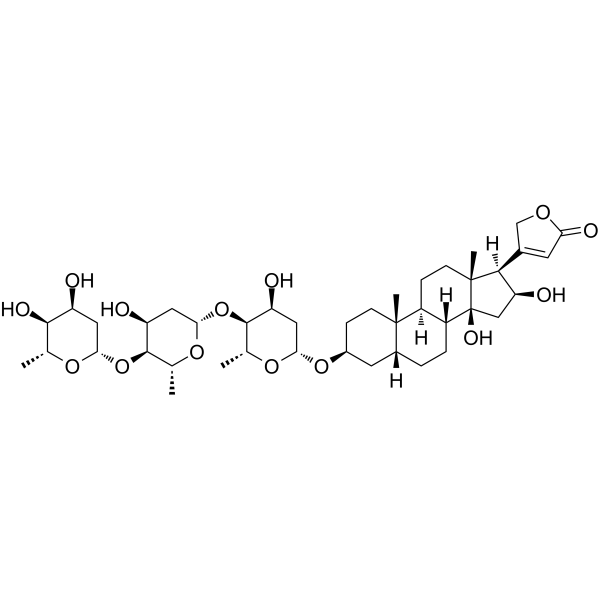
Gitoxin is a degradation metabolite of Digitoxin (HY-B1357) and a non-competitive Na+/K+-ATPase inhibitor, with an IC50 of 1.18e-6 M against the porcine high-affinity subtype and an IC50 of 2.85e-5 M against the porcine low-affinity subtype. Gitoxin regulates atrial contractility and rhythmicity. Gitoxin is applicable to research related to congestive heart failure.
For research use only. We do not sell to patients.
- Purity : 95.0%
- CAS No.: 4562-36-1
- Formula: C41H64O14
- Molecular Weight:780.94
-
Storage:Powder -20°C, 3 years , 4°C, 2 years ; In solvent -80°C, 6 months , -20°C, 1 month

To place orders, for customer services and technical support, please contact: MedChemExpress USA
Tel: 609-228-6898 E-mail: [email protected] [email protected]


-
 Biological Activity
-
Chemical Information
-
Solvent & Solubility
- Protocols
- Purity & Documentation
- References
-
 Help & FAQs


-
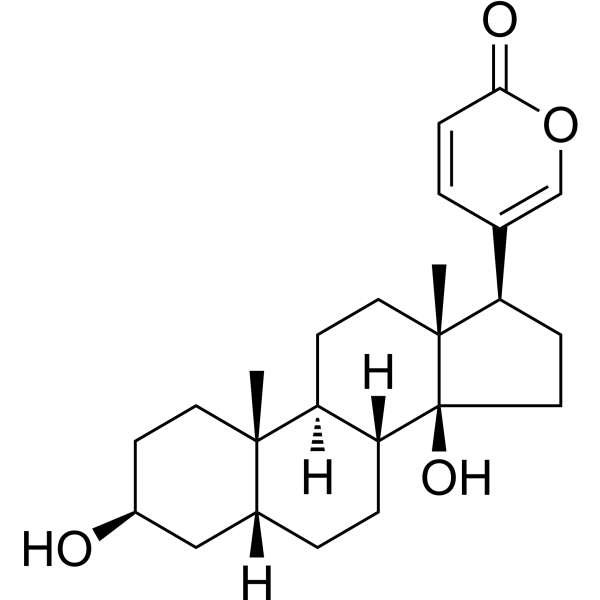
HY-N0877
BufalinNa+/K+ ATPase Inhibitor -
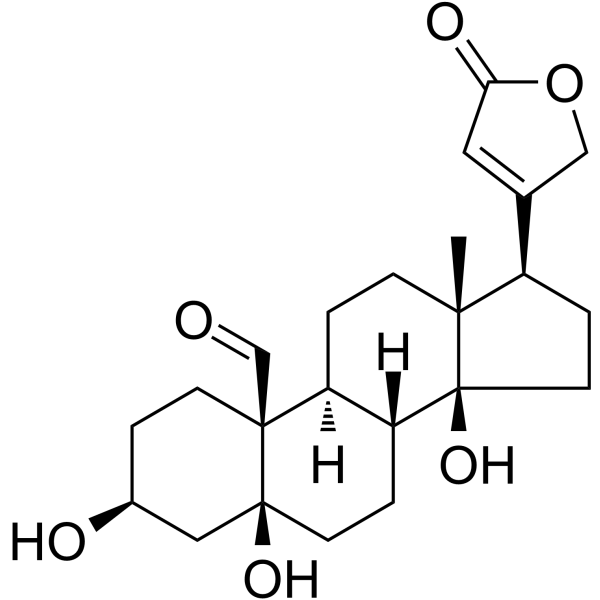
HY-114252
StrophanthidinCardiac Glycoside -
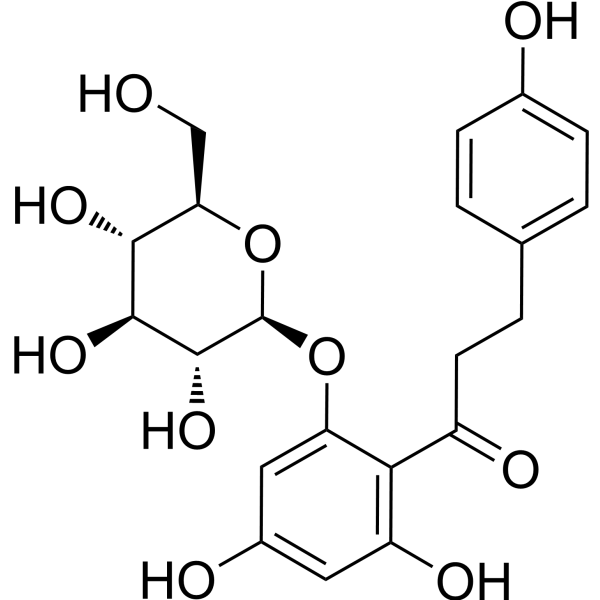
HY-N0143
PhlorizinSGLT Inhibitor -
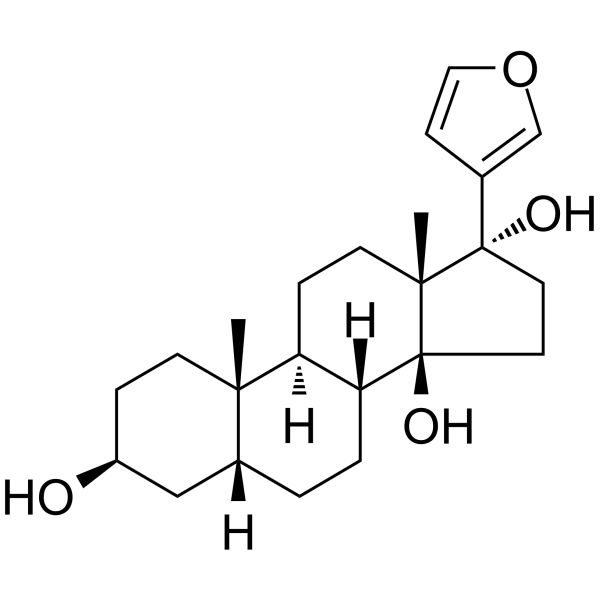
HY-12283
RostafuroxinATP1A1 Antognist -
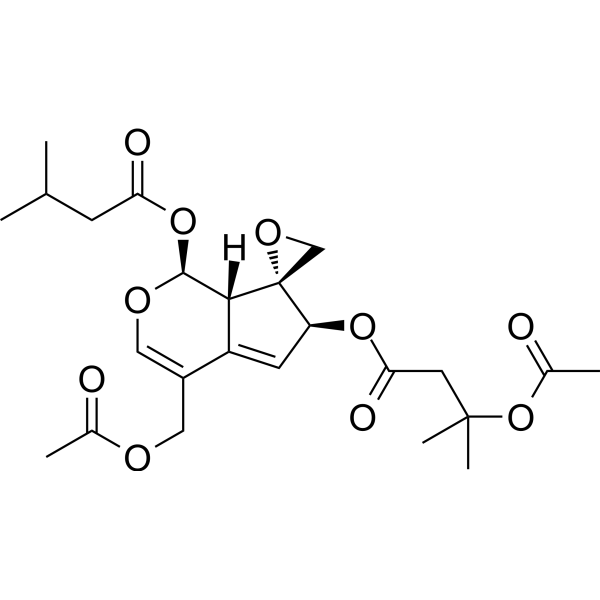
HY-N2070
AcevaltrateNa+/K+ ATPase Inhibitor -

HY-136933R
Gitoxin (Standard)Reference Standard -
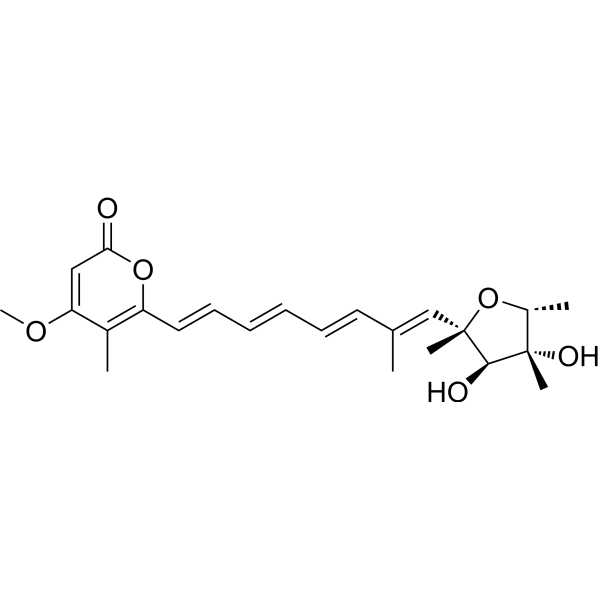
HY-N6745
CitreoviridinApoptosis Inducer -
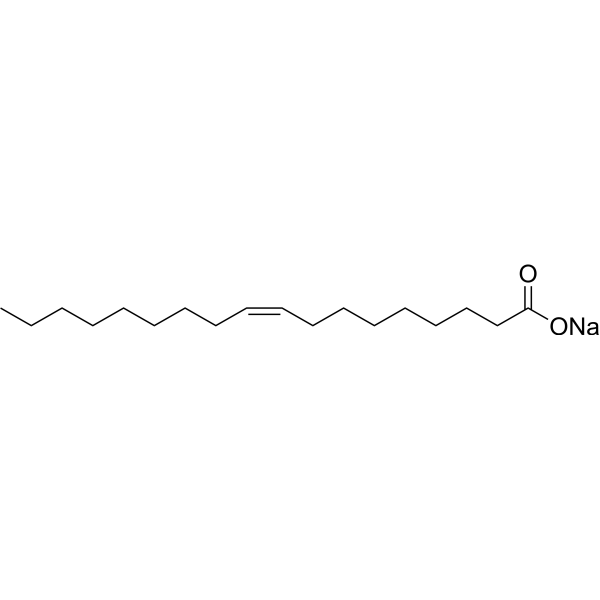
HY-N1446B
Oleic acid sodiumNa+/K+ ATPase Activator -
HY-N6574
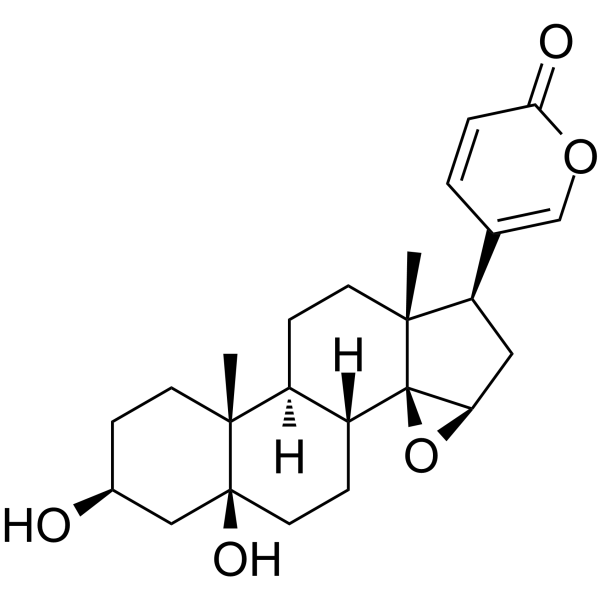
MarinobufogeninNa+/K+ ATPase Inhibitor -
HY-B1357
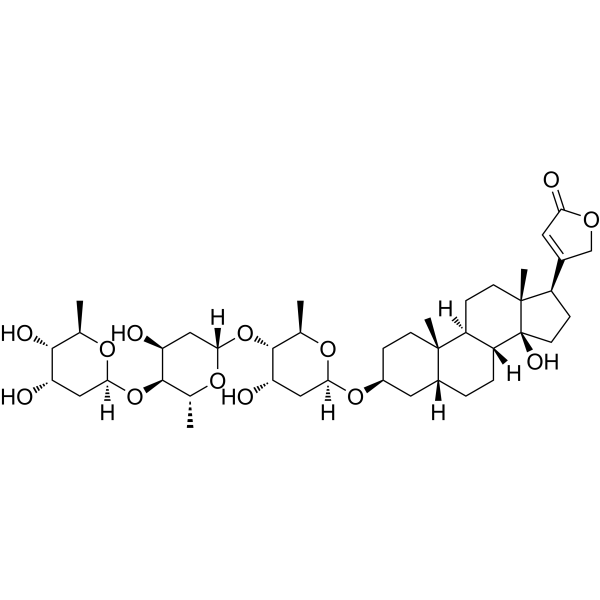
DigitoxinAnti-cancer Agent -

HY-114252R
Strophanthidin (Standard)Cardiac Glycoside -

HY-N0877R
Bufalin (Standard)Na+/K+ ATPase Inhibitor


Biological Activity
Description
Cellular Effect
|
Cell Line

|
Type | Value | Description | References |
|---|---|---|---|---|
| MCF7 | IC50 |
251.9 nM
Compound: 5
|
Cytotoxicity against human MCF7 cells after 48 hrs by SRB assay
Cytotoxicity against human MCF7 cells after 48 hrs by SRB assay
|
[PMID: 16309315] |
| TK-10 | IC50 |
131.2 nM
Compound: 5
|
Cytotoxicity against human TK10 cells after 48 hrs by SRB assay
Cytotoxicity against human TK10 cells after 48 hrs by SRB assay
|
[PMID: 16309315] |
| UACC-62 | IC50 |
369.4 nM
Compound: 5
|
Cytotoxicity against human UACC62 cells after 48 hrs by SRB assay
Cytotoxicity against human UACC62 cells after 48 hrs by SRB assay
|
[PMID: 16309315] |
In Vitro
Gitoxin (60 min after a 10 min pre-incubation) exerts a biphasic inhibitory effect on erythrocyte membrane Na+/K+-ATPase, with stronger inhibitory potency against the high-affinity subtype (IC50 = 2.98 × 10⁻⁷ M), and it exhibits positive cooperative binding with this enzyme[1].
Gitoxin (60 min after 10 min pre-incubation) exerts biphasic inhibition on Na+/K+-ATPase from porcine cerebral cortex, with stronger inhibitory potency against the high-affinity isoform (IC50 = 1.18 × 10⁻⁶ M), and it exhibits positive cooperative binding with this enzyme[1].
MedChemExpress (MCE) has not independently confirmed the accuracy of these methods. They are for reference only. Further protocols information, click here.


Chemical Information
-
CAS No. 4562-36-1
-
Appearance Solid
-
Molecular Weight 780.94
-
Formula C41H64O14
-
Color White to off-white
-
SMILES
O[C@@]([C@@]([C@@]1([H])C(CO2)=CC2=O)(CC3)C)(C[C@@H]1O)[C@@](CC[C@]4([H])C[C@H]5O[C@H](O[C@@H]6C)C[C@@H]([C@@H]6O[C@H](O[C@@H]7C)C[C@@H]([C@@H]7O[C@H](O[C@@H]8C)C[C@@H]([C@@H]8O)O)O)O)([H])[C@@]3([H])[C@]4(CC5)C
-
Structure Classification
-
Initial Source
-
Shipping
Room temperature in continental US; may vary elsewhere.
-
Storage
Powder -20°C 3 years 4°C 2 years In solvent -80°C 6 months -20°C 1 month


Solvent & Solubility
In Vitro:
DMF : 3.73 mg/mL (4.78 mM; ultrasonic and warming and heat to 60°C)
Please refer to the solubility information to select the appropriate solvent. Once prepared, please aliquot and store the solution to prevent product inactivation from repeated freeze-thaw cycles.
Storage method and period of stock solution: -80°C, 6 months; -20°C, 1 month. When stored at -80°C, please use it within 6 months. When stored at -20°C, please use it within 1 month.
Please refer to the solubility information to select the appropriate solvent. Once prepared, please aliquot and store the solution to prevent product inactivation from repeated freeze-thaw cycles.
Storage method and period of stock solution: -80°C, 6 months; -20°C, 1 month. When stored at -80°C, please use it within 6 months. When stored at -20°C, please use it within 1 month.
Concentration (start) × Volume (start) = Concentration (final) × Volume (final)

Protocols
-
Cell Cytotoxicity Assay
Cytotoxicity assays are usually based on the assessment of cell membrane damage, which can also be indirectly detected by measuring cell viability. Detection methods include MTT assay, CKK-8 assay, LDH assay and ATP assay, etc.
-
Research Protocol for Cardiovascular Diseases
Cardiovascular disease can be modeled as maladaptive cardiac remodeling, where ischemic injury or pressure overload activates inflammatory signaling, fibroblast activation, extracellular-matrix deposition, cardiomyocyte hypertrophy, vascular remodeling, and progressive ventricular dysfunction. The TGF-β/SMAD axis is a central profibrotic pathway after myocardial injury and pressure overload, while innate immune and cytokine pathways regulate leukocyte recruitment, scar formation, and adverse remodeling. Key unresolved questions include which inflammatory signals are reparative versus harmful, when fibrosis is protective versus maladaptive, and whether pathway inhibition improves function without weakening necessary infarct healing or compensatory remodeling.


Purity & Documentation
-
Data Sheet (272 KB)
-
SDS (481 KB)
- English - EN (481 KB)
- Français - FR (481 KB)
- Deutsch - DE (481 KB)
- Norwegian - NO (481 KB)
- Español - ES (481 KB)
- Swedish - SV (481 KB)
- Italian - IT (481 KB)
- Korean - KR (481 KB)
- Portuguese - PT (481 KB)
-
Handling Instructions (2659 KB)
References
[1]. Danijela Krstić, et al. Effects of digoxin and gitoxin on the enzymatic activity and kinetic parameters of Na+/K+-ATPase. J Enzyme Inhib Med Chem. 2004 Oct;19(5):409-15. [Content Brief]
[2]. Haustein KO. Comparison of therapeutic and toxic actions of ouabain, gitoxin and 16-epi-gitoxin on isolated atria at different extracellular potassium concentrations. Eur J Pharmacol. 1973 Feb;21(2):195-202. [Content Brief]


Complete Stock Solution Preparation Table
Please refer to the solubility information to select the appropriate solvent. Once prepared, please aliquot and store the solution to prevent product inactivation from repeated freeze-thaw cycles.
Storage method and period of stock solution: -80°C, 6 months; -20°C, 1 month. When stored at -80°C, please use it within 6 months. When stored at -20°C, please use it within 1 month.
| Optional Solvent | Concentration Solvent Mass | 1 mg | 5 mg | 10 mg | 25 mg |
|---|---|---|---|---|---|
| DMF | 1 mM | 1.2805 mL | 6.4025 mL | 12.8051 mL | 32.0127 mL |


Gitoxin Related Classifications
HY-136933 Related Classifications
 Powered by Bioz