



Graphislactone A
Graphislactone A is an antioxidant, which is found in Cephalosporium IFB-E001 and M. olivacea. Graphislactone A inhibits acetylcholinesterase (AChE) with an IC50 value of 27 μM. Graphislactone A is promising for research of oxidative damage-initiated diseases.
For research use only. We do not sell to patients.
- CAS No.: 52179-44-9
- Formula: C16H14O6
- Molecular Weight:302.28
-
Storage:
Please store the product under the recommended conditions in the Certificate of Analysis.


To place orders, for customer services and technical support, please contact: MedChemExpress USA
Tel: 609-228-6898 E-mail: [email protected] [email protected]


-
 Biological Activity
-
Chemical Information
- Protocols
- Purity & Documentation
- References
-
 Help & FAQs


-
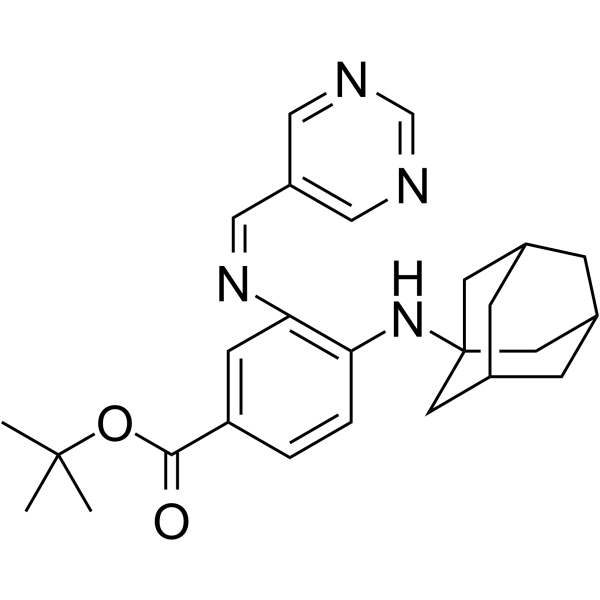
HY-135430
SRS16-86Ferroptosis Inhibitor -
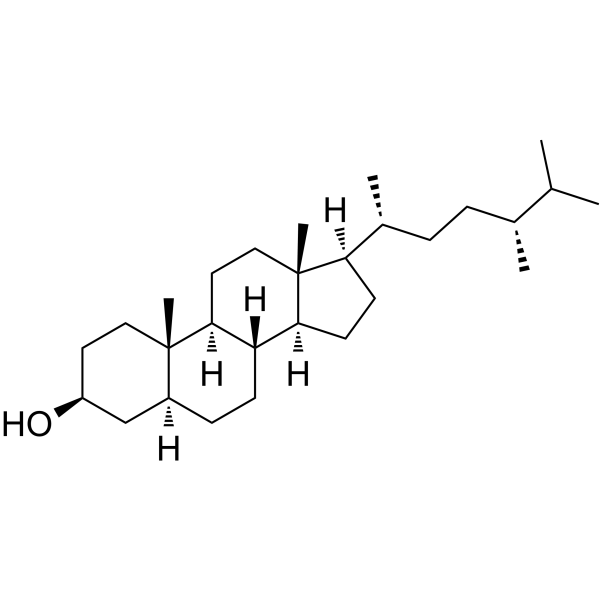
HY-113288
CampestanolPhytosterol -

HY-I0959R
5-Chlorouracil (Standard)Biochemical Reagent -
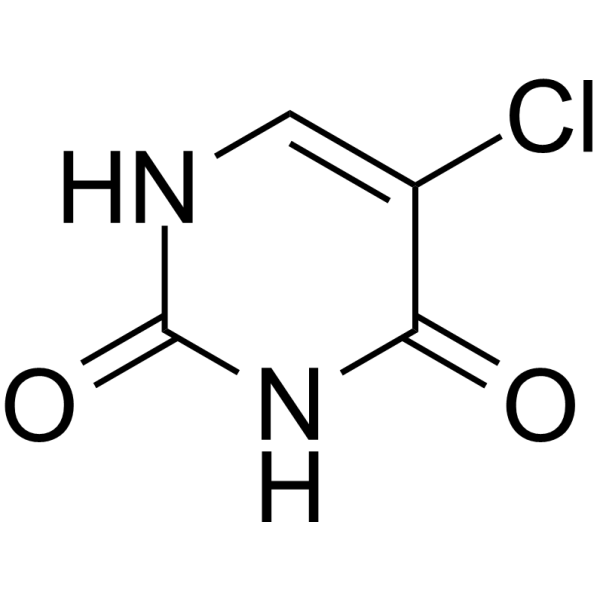
HY-I0959
5-ChlorouracilBiochemical Reagent -
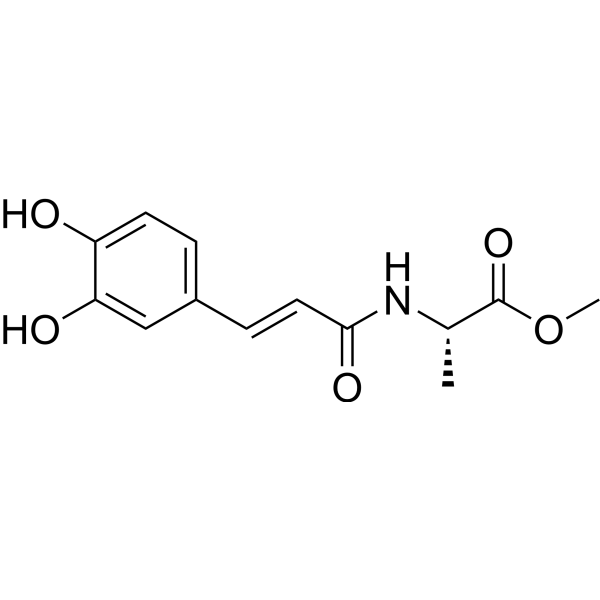
HY-120651
LDL-IN-2Antioxidant Agent -
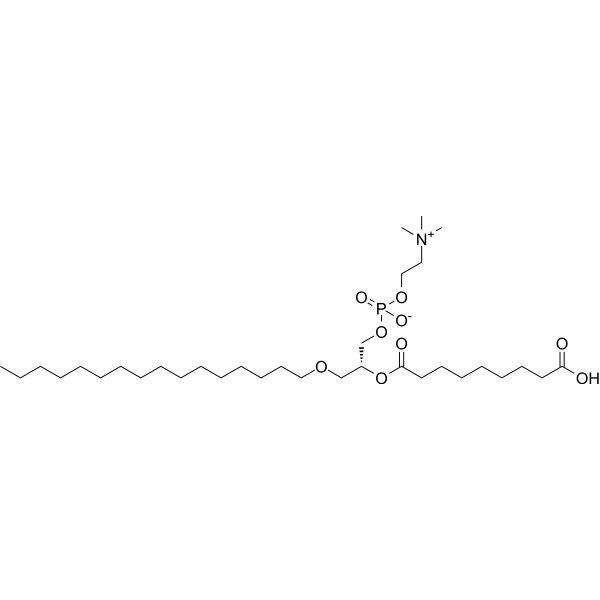
HY-W127460
Azelaoyl PAFBiochemical Assay Reagent -
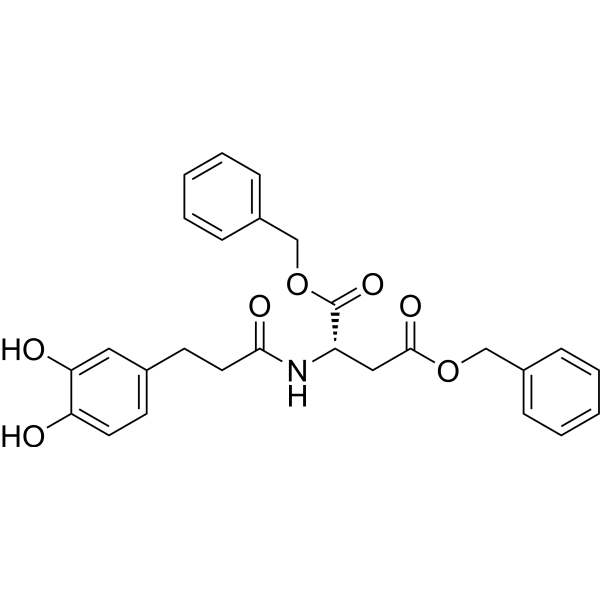
HY-119265
LDL-IN-4LDL Oxidation Inhibitor -
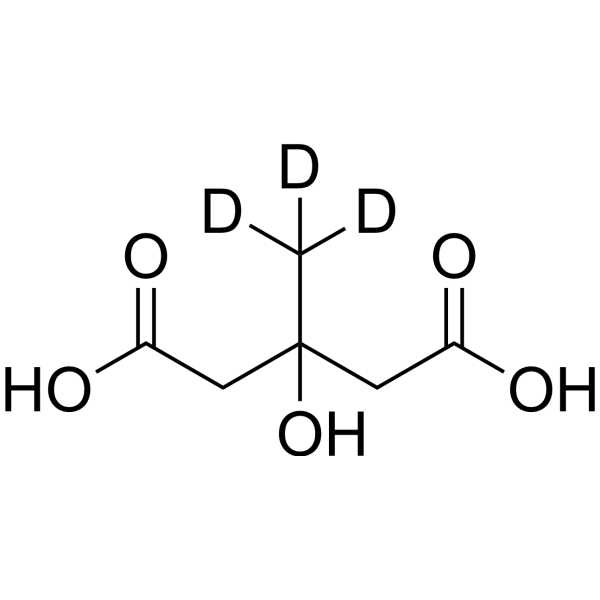
HY-B1189S
Meglutol-d3Stable Isotope -
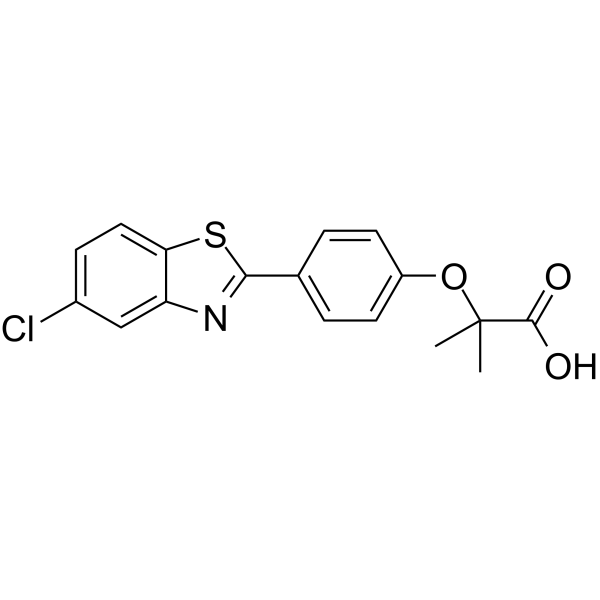
HY-117761
MHY908PPARα/γ dual agonist


Biological Activity
Description
Cellular Effect
|
Cell Line

|
Type | Value | Description | References |
|---|---|---|---|---|
| A2780 | IC50 |
>10 μM
Compound: 10
|
Cytotoxicity against human A2780 cells by MTT assay
Cytotoxicity against human A2780 cells by MTT assay
|
[PMID: 27441892] |
| BGC-823 | IC50 |
>10 μM
Compound: 10
|
Cytotoxicity against human BGC823 cells by MTT assay
Cytotoxicity against human BGC823 cells by MTT assay
|
[PMID: 27441892] |
| HCT-116 | IC50 |
>10 μM
Compound: 10
|
Cytotoxicity against human HCT116 cells by MTT assay
Cytotoxicity against human HCT116 cells by MTT assay
|
[PMID: 27441892] |
| HepG2 | IC50 |
>10 μM
Compound: 10
|
Cytotoxicity against human HepG2 cells by MTT assay
Cytotoxicity against human HepG2 cells by MTT assay
|
[PMID: 27441892] |
| NCI-H1650 | IC50 |
>10 μM
Compound: 10
|
Cytotoxicity against human NCI-H1650 cells by MTT assay
Cytotoxicity against human NCI-H1650 cells by MTT assay
|
[PMID: 27441892] |


Chemical Information
-
CAS No. 52179-44-9
-
Molecular Weight 302.28
-
Formula C16H14O6
-
SMILES
O=C1OC2=C(C(OC)=CC(C)=C2C3=CC(OC)=CC(O)=C13)O
-
Structure Classification
-
Initial Source
Pilgerodendron uviferum
-
Shipping
Room temperature in continental US; may vary elsewhere.
-
Storage
Please store the product under the recommended conditions in the Certificate of Analysis.

Protocols
-
Cell Cytotoxicity Assay
Cytotoxicity assays are usually based on the assessment of cell membrane damage, which can also be indirectly detected by measuring cell viability. Detection methods include MTT assay, CKK-8 assay, LDH assay and ATP assay, etc.
-
ROS/oxidative-stress fluorescent staining
ROS/oxidative-stress fluorescent staining uses cell-permeant fluorogenic probes that become fluorescent after oxidation inside cells or tissues; commonly used examples include DCFH-DA/DCFDA for broad cellular oxidant detection, DHE for superoxide-related signal detection, MitoSOX for mitochondrial superoxide-related signal detection, and CellROX probes for oxidative-stress-associated fluorescence readouts. The assay detects probe oxidation rather than a single ROS species unless the probe and analysis method have been chemically validated for that species. DCFH-DA enters cells, is deacetylated by intracellular esterases to DCFH, and produces fluorescent DCF after oxidation, so the readout is used as an operational measure of total cellular oxidative stress rather than a species-specific ROS measurement. DHE and MitoSOX can report superoxide-related oxidation, but red fluorescence alone can include non-specific ethidium-like oxidation products; HPLC or optimized spectral approaches are


Purity & Documentation
References
[1]. Song YC, et al. Characterization of graphislactone A as the antioxidant and free radical-scavenging substance from the culture of Cephalosporium sp. IFB-E001, an endophytic fungus in Trachelospermum jasminoides. Biol Pharm Bull. 2005 Mar;28(3):506-9. [Content Brief]
[2]. Hormazabal E, et al. Metabolites from Microsphaeropsis olivacea, an endophytic fungus of Pilgerodendron uviferum. Z Naturforsch C J Biosci. 2005 Jan-Feb;60(1-2):11-21. [Content Brief]

Calculators
Concentration (start) × Volume (start) = Concentration (final) × Volume (final)


Graphislactone A Related Classifications
HY-122985 Related Classifications
 Powered by Bioz