



AM6545

Based on 1 Customer Validation
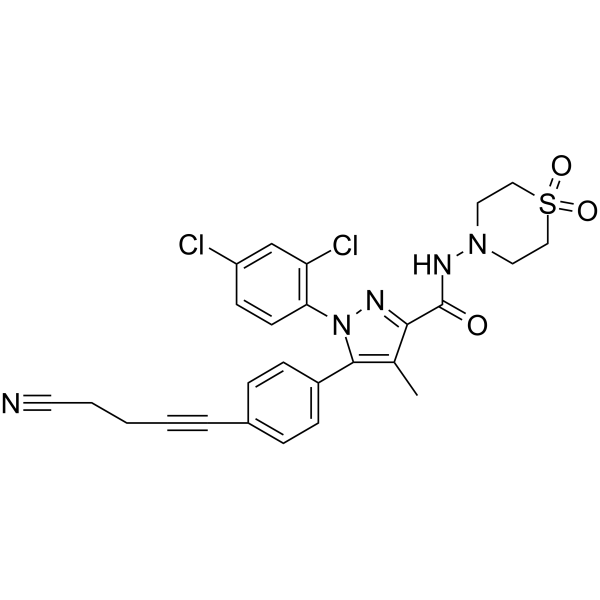
AM6545 is a highly selective, brain-free (peripherally active) CB1 receptor antagonist (Ki=1.7 nM). AM6545 inhibits endocannabinoid signaling by competitively antagonizing CB1 receptors, inhibiting CB1-mediated appetite stimulation and inflammatory responses without affecting cAMP levels. AM6545 significantly reduces food intake and body weight in mice, while improving metabolic syndrome-related renal impairment (such as proteinuria, fibrosis) and insulin resistance. AM6545 can be used in the study of obesity and its complications.
For research use only. We do not sell to patients.
- Purity : 99.32%
- CAS No.: 1245626-05-4
- Formula: C26H23Cl2N5O3S
- Molecular Weight:556.46
-
Storage:Powder -20°C, 3 years , 4°C, 2 years ; In solvent -80°C, 6 months , -20°C, 1 month

To place orders, for customer services and technical support, please contact: MedChemExpress USA
Tel: 609-228-6898 E-mail: [email protected] [email protected]


-
 Biological Activity
-
Chemical Information
-
Solvent & Solubility
- Protocols
- Purity & Documentation
- References
-
 Help & FAQs


-
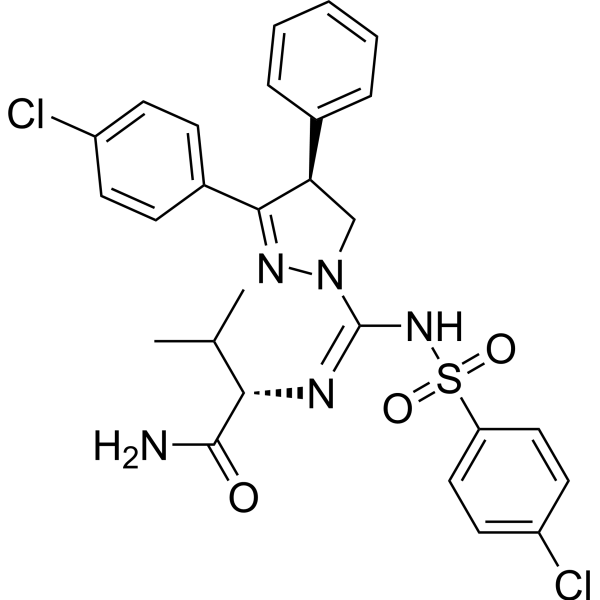
HY-18697
JD-5037CB1 Receptor Antagonist -
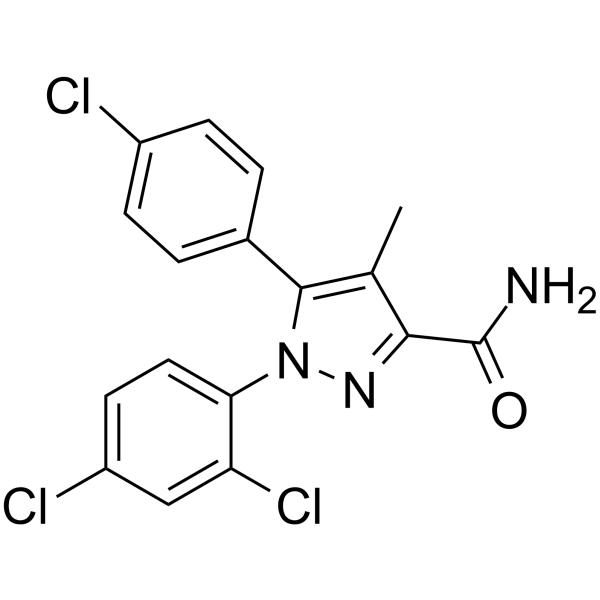
HY-116649
CB1 antagonist 2CB1R Antagonist -
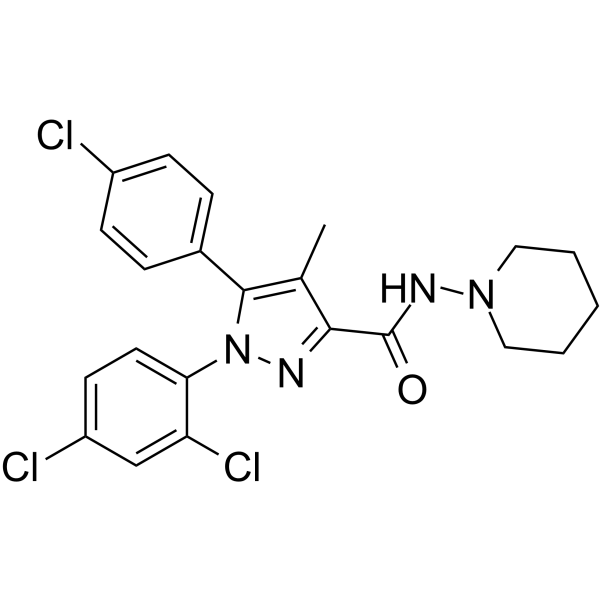
HY-14136
Rimonabant -
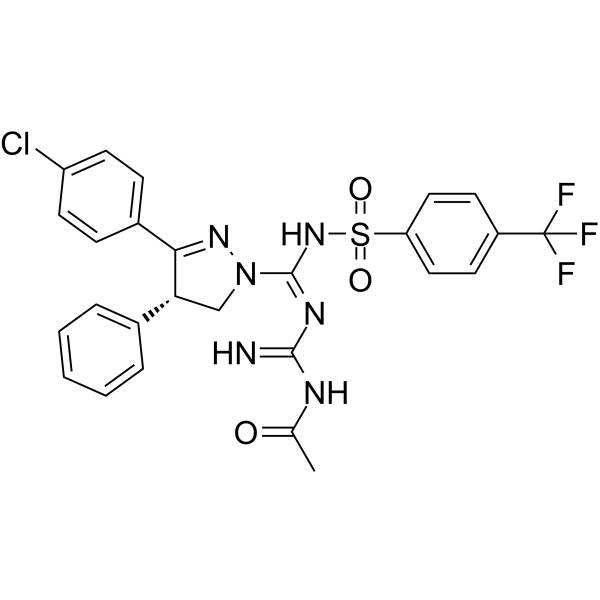
HY-153800
MonlunabantCB1 Antagonist -
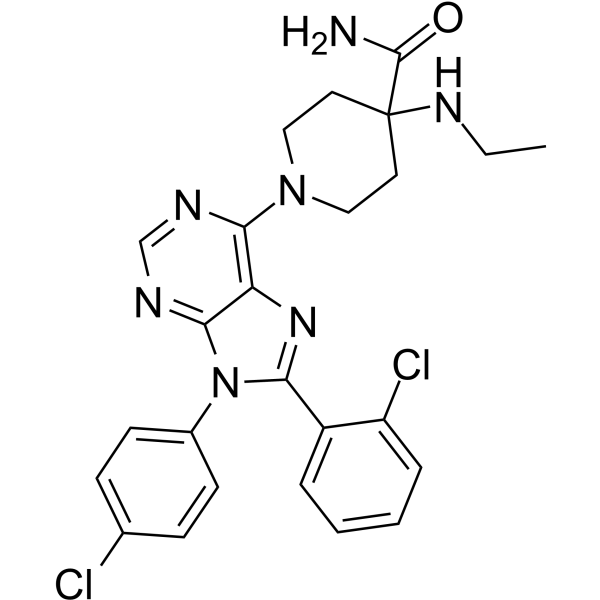
HY-10871
OtenabantCannabinoid Receptor Antagonist -
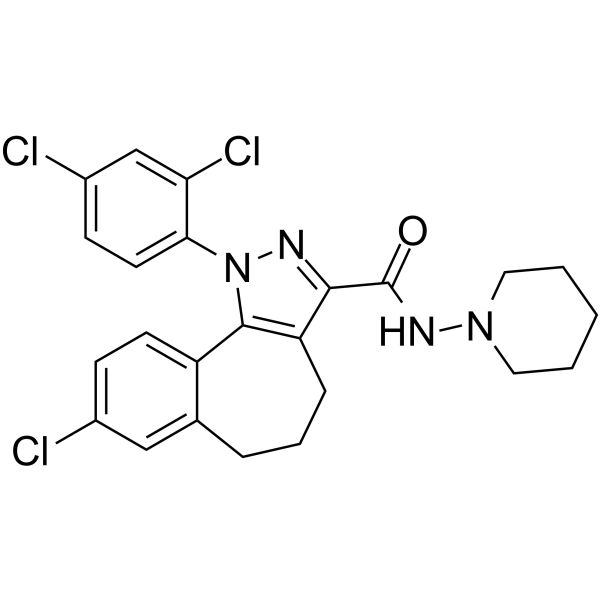
HY-117139
NESS 0327Cannabinoid Antagonist -
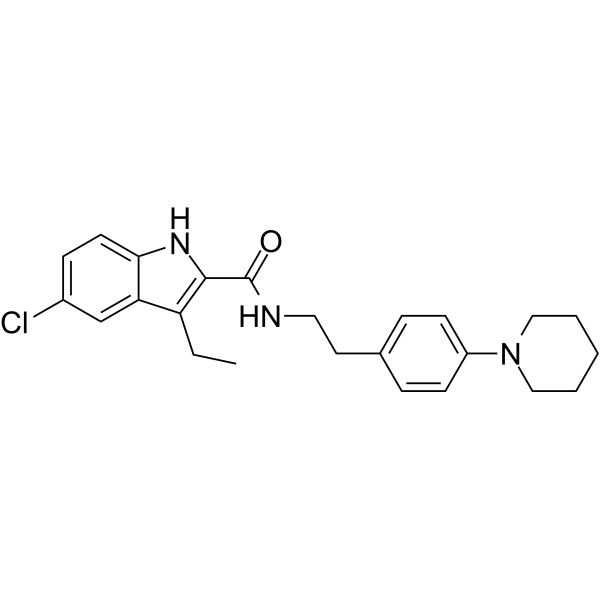
HY-13288
Org 27569Cannabinoid Receptor Modulator -
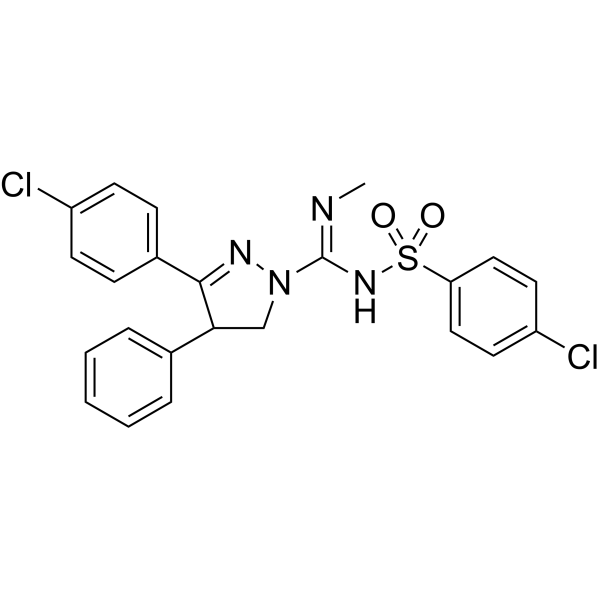
HY-14791A
(±)-IbipinabantCannabinoid Receptor Antagonist -
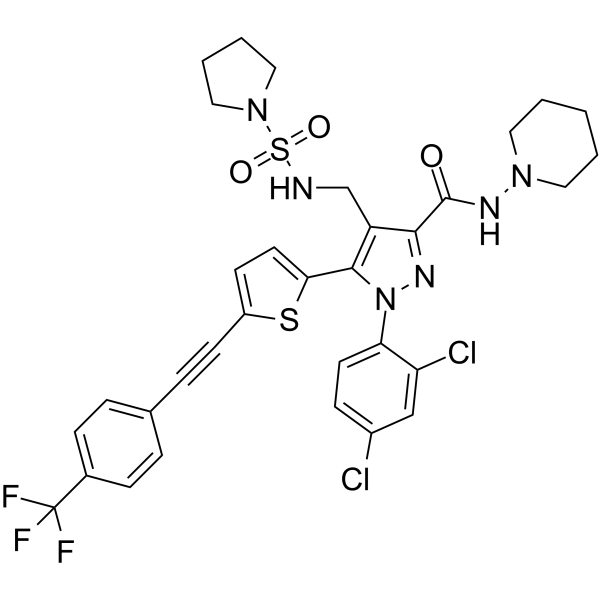
HY-12790
BPRCB1184CB1 Antagonist -
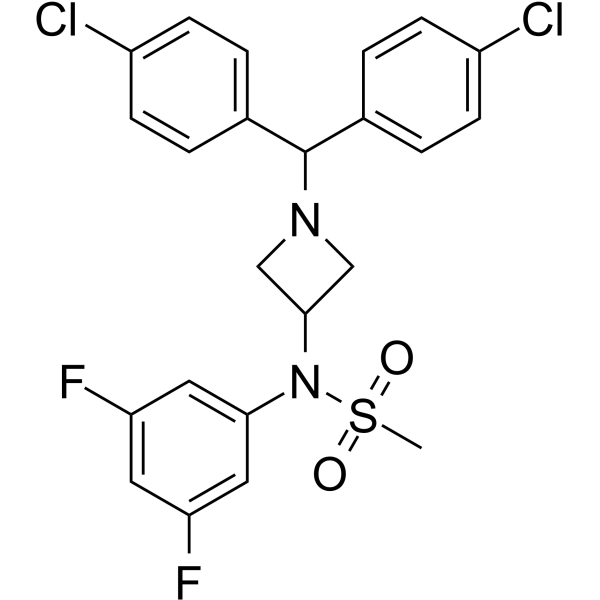
HY-14788
DrinabantCB1 Antagonist -
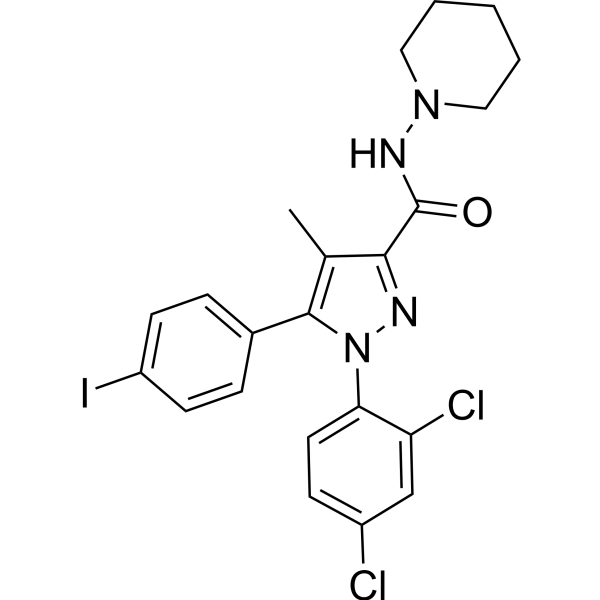
HY-15443
AM251CB1 Receptor Antagonist -
HY-14167
GW842166XCannabinoid Receptor Agonist


Biological Activity
Description
In Vitro
AM6545 (3 μM; cAMP assay) does not affect forskolin (HY-15371)-induced cAMP levels in HEK293 cells, exhibiting neutral antagonist properties[1].
MedChemExpress (MCE) has not independently confirmed the accuracy of these methods. They are for reference only.
-
Cell Line:HEK293 (hCB1/hCB2-transfected)
-
Concentration:1.7 nM (CB1 binding), 3 mM (cAMP assay)
-
Incubation Time:
-
Result:Showed high CB1 affinity (Ki=1.7 nM) and no effect on forskolin-stimulated cAMP accumulation in hCB1-expressing cells, acting as a neutral antagonist.
In Vivo
AM6545 (10 mg/kg; ip; single dose) treatment of C57BL/6 J mice specifically induces PKA signaling activation in adipose tissue and upregulated Akt-mTOR and ERK phosphorylation levels[2].
AM6545 (10 mg/kg; i.p.; once daily; 4 weeks) significantly improves renal function, inhibited proteinuria, uric acid excretion and renal fibrosis in a rat model of metabolic syndrome[3].
MedChemExpress (MCE) has not independently confirmed the accuracy of these methods. They are for reference only.
-
Animal Model:Sprague Dawley rats (male, 250-275 g; normal/high-fat diet models)[1]
-
Dosage:5 mg/kg, 10 mg/kg, 20 mg/kg (4% DMSO, 1% Tween 80 in saline)
-
Administration:Intraperitoneal injection, daily for 7 days or single dose.
-
Result:Reduced food intake (30% inhibition at 3 h) and body weight gain (days 4-7) at 10 mg/kg dose, without inducing conditioned taste avoidance or gaping.
-
Animal Model:Metabolic syndrome rats (male, Wistar; high-fructose/high-salt diet-induced)[3]
-
Dosage:10 mg/kg (0.5% carboxymethylcellulose)
-
Administration:Intraperitoneal injection, daily for 4 weeks
-
Result:Reduced proteinuria (50%) and urinary uric acid (attenuated 10-fold increase), alleviated glomerular hypertrophy, tubular injury, and collagen deposition, and suppressed renal TGFβ1 expression.
-
Animal Model:C57BL/6 mice (male, 18.5-21.0 g; normal diet)[2]
-
Dosage:10 mg/kg (4% DMSO, 10% Tween 80, 80-95% saline)
-
Administration:Intraperitoneal injection, single.
-
Result:Significantly modified p-PKA substrates in adipose and liver tissue, but the responsive substrates are tissue-specific and remain to be determined
Upregulated ERK1 phosphorylation at Thr202 in WAT, liver, TA.
Upregulated p-Akt(Ser473) and p-mTOR(Ser2448) in liver.


Chemical Information
-
CAS No. 1245626-05-4
-
Appearance Solid
-
Molecular Weight 556.46
-
Formula C26H23Cl2N5O3S
-
Color White to off-white
-
SMILES
CC1=C(C2=CC=C(C#CCCC#N)C=C2)N(C3=C(C=C(Cl)C=C3)Cl)N=C1C(NN4CCS(CC4)(=O)=O)=O
-
Shipping
Room temperature in continental US; may vary elsewhere.
-
Storage
Powder -20°C 3 years 4°C 2 years In solvent -80°C 6 months -20°C 1 month


Solvent & Solubility
In Vitro:
DMSO : ≥ 100 mg/mL (179.71 mM; Hygroscopic DMSO has a significant impact on the solubility of product, please use newly opened DMSO)
* "≥" means soluble, but saturation unknown.
Please refer to the solubility information to select the appropriate solvent. Once prepared, please aliquot and store the solution to prevent product inactivation from repeated freeze-thaw cycles.
Storage method and period of stock solution: -80°C, 6 months; -20°C, 1 month. When stored at -80°C, please use it within 6 months. When stored at -20°C, please use it within 1 month.
Please refer to the solubility information to select the appropriate solvent. Once prepared, please aliquot and store the solution to prevent product inactivation from repeated freeze-thaw cycles.
Storage method and period of stock solution: -80°C, 6 months; -20°C, 1 month. When stored at -80°C, please use it within 6 months. When stored at -20°C, please use it within 1 month.
Concentration (start) × Volume (start) = Concentration (final) × Volume (final)
In Vivo:
Select the appropriate dissolution method based on your experimental animal and administration route.
- For the following dissolution methods, please ensure to first prepare a clear stock solution using an In Vitro approach and then sequentially add co-solvents:
- To ensure reliable experimental results, the clarified stock solution can be appropriately stored based on storage conditions. As for the working solution for In Vivo experiments, it is recommended to prepare freshly and use it on the same day.
- The percentages shown for the solvents indicate their volumetric ratio in the final prepared solution. If precipitation or phase separation occurs during preparation, heat and/or sonication can be used to aid dissolution.
Add each solvent one by one: 10% DMSO 40% PEG300 5% Tween-80 45% Saline
Solubility: ≥ 2.5 mg/mL (4.49 mM); Clear solution
This protocol yields a clear solution of ≥ 2.5 mg/mL (saturation unknown).
Taking 1 mL working solution as an example, add 100 μL DMSO stock solution (25.0 mg/mL) to 400 μL PEG300, and mix evenly; then add 50 μL Tween-80 and mix evenly; then add 450 μL Saline to adjust the volume to 1 mL.
Preparation of Saline: Dissolve 0.9 g sodium chloride in ddH₂O and dilute to 100 mL to obtain a clear Saline solution.
In Vivo Dissolution Calculator
Please enter the basic information of animal experiments:
-
-
-
-
Recommended: Prepare an additional quantity of animals to account for potential losses during experiments.
Please enter your animal formula composition:
-
%DMSO +
Recommended: Keep the proportion of DMSO in working solution below 2% if your animal is weak.
-
%+
-
+%Tween-80 + +
-
%Saline +
The co-solvents required include: DMSO, . All of co-solvents are available by MedChemExpress (MCE). , Tween 80. All of co-solvents are available by MedChemExpress (MCE).
Working solution concentration: 0.22 mg/mL
Method for preparing stock solution: mg drug dissolved in μL DMSO. Stock solution concentration: mg/mL.
1. Take μL DMSO stock solution;
2. Add μL .
μL , mix evenly;
3. Then add μL Tween 80, mix evenly;
4. Then add μL
Please ensure that the stock solution in the first step is dissolved to a clear state, and add co-solvents in sequence. You can use ultrasonic heating (ultrasonic cleaner, recommended frequency 20-40 kHz), vortexing, etc. to assist dissolution.


Purity & Documentation
-
Data Sheet (278 KB)
-
SDS (392 KB)
- English - EN (392 KB)
- Français - FR (392 KB)
- Deutsch - DE (392 KB)
- Norwegian - NO (392 KB)
- Español - ES (392 KB)
- Swedish - SV (392 KB)
- Italian - IT (392 KB)
- Korean - KR (392 KB)
- Portuguese - PT (392 KB)
-
Handling Instructions (2659 KB)
References
[1]. N L Cluny, et al. A novel peripherally restricted cannabinoid receptor antagonist, AM6545, reduces food intake and body weight, but does not cause malaise, in rodents. Br J Pharmacol. 2010 Oct;161(3):629-42. [Content Brief]
[2]. Dalle S, Schouten M, Deboutte J, de Lange E, Ramaekers M, Koppo K. The molecular signature of the peripheral cannabinoid receptor 1 antagonist AM6545 in adipose, liver and muscle tissue. Toxicol Appl Pharmacol. 2024 Oct;491:117081. [Content Brief]
[3]. Eid BG, Neamatallah T, Hanafy A, El-Bassossy HM, Binmahfouz L, Aldawsari HM, Hasan A, El-Aziz GA, Vemuri K, Makriyannis A. Interference with TGFβ1-Mediated Inflammation and Fibrosis Underlies Reno-Protective Effects of the CB1 Receptor Neutral Antagonists AM6545 and AM4113 in a Rat Model of Metabolic Syndrome. Molecules. 2021 Feb 6;26(4):866. doi: 10.3390/molecules26040866. Erratum in: Molecules. 2024 Feb 19;29(4):902. [Content Brief]


Complete Stock Solution Preparation Table
Please refer to the solubility information to select the appropriate solvent. Once prepared, please aliquot and store the solution to prevent product inactivation from repeated freeze-thaw cycles.
Storage method and period of stock solution: -80°C, 6 months; -20°C, 1 month. When stored at -80°C, please use it within 6 months. When stored at -20°C, please use it within 1 month.
| Optional Solvent | Concentration Solvent Mass | 1 mg | 5 mg | 10 mg | 25 mg |
|---|---|---|---|---|---|
| DMSO | 1 mM | 1.7971 mL | 8.9854 mL | 17.9707 mL | 44.9269 mL |
| 5 mM | 0.3594 mL | 1.7971 mL | 3.5941 mL | 8.9854 mL | |
| 10 mM | 0.1797 mL | 0.8985 mL | 1.7971 mL | 4.4927 mL | |
| 15 mM | 0.1198 mL | 0.5990 mL | 1.1980 mL | 2.9951 mL | |
| 20 mM | 0.0899 mL | 0.4493 mL | 0.8985 mL | 2.2463 mL | |
| 25 mM | 0.0719 mL | 0.3594 mL | 0.7188 mL | 1.7971 mL | |
| 30 mM | 0.0599 mL | 0.2995 mL | 0.5990 mL | 1.4976 mL | |
| 40 mM | 0.0449 mL | 0.2246 mL | 0.4493 mL | 1.1232 mL | |
| 50 mM | 0.0359 mL | 0.1797 mL | 0.3594 mL | 0.8985 mL | |
| 60 mM | 0.0300 mL | 0.1498 mL | 0.2995 mL | 0.7488 mL | |
| 80 mM | 0.0225 mL | 0.1123 mL | 0.2246 mL | 0.5616 mL | |
| 100 mM | 0.0180 mL | 0.0899 mL | 0.1797 mL | 0.4493 mL |


AM6545 Related Classifications
HY-110206 Related Classifications
 Powered by Bioz