



JNJ-28312141
JNJ-28312141 is an inhibitor for colony-stimulating factor-1 receptor (CSF-1R or FMS), with an IC50 of 0.69 nM. JNJ-28312141 inhibits proliferation of BDBM, MV-4-11, M-o7e, TF-1 with an IC50s of 2.6, 21, 41 and 150 nM, respectively. JNJ-28312141 exhibits anti-inflammatory activity in mouse arthritis model.
For research use only. We do not sell to patients.
- CAS No.: 885692-52-4
- Formula: C26H32N6O2
- Molecular Weight:460.57
-
Storage:
Please store the product under the recommended conditions in the Certificate of Analysis.


To place orders, for customer services and technical support, please contact: MedChemExpress USA
Tel: 609-228-6898 E-mail: [email protected] [email protected]


-
 Biological Activity
-
Chemical Information
- Protocols
- Purity & Documentation
- References
-
 Help & FAQs


-
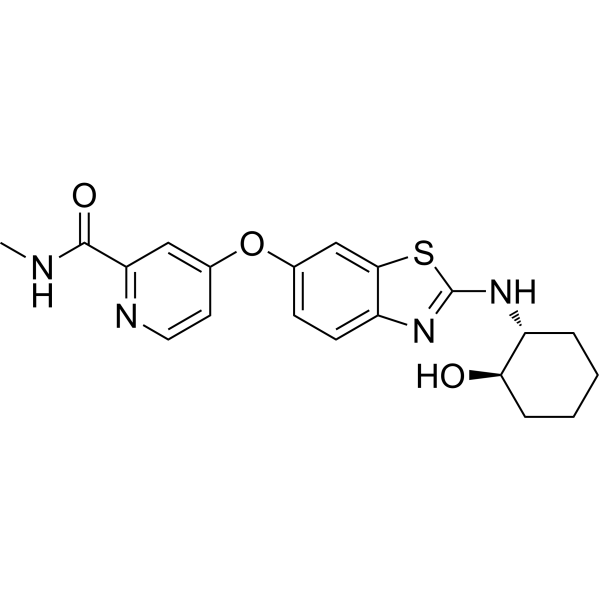
HY-12768
SotuletinibCSF-1R Inhibitor -
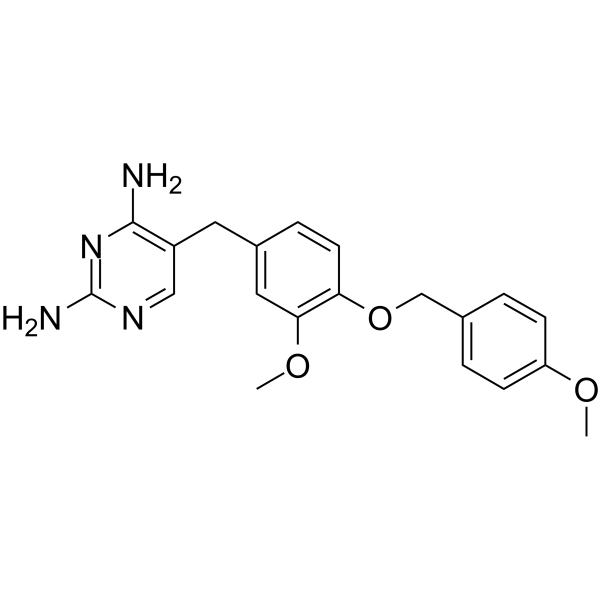
HY-10917
GW2580c-Fms Inhibitor -
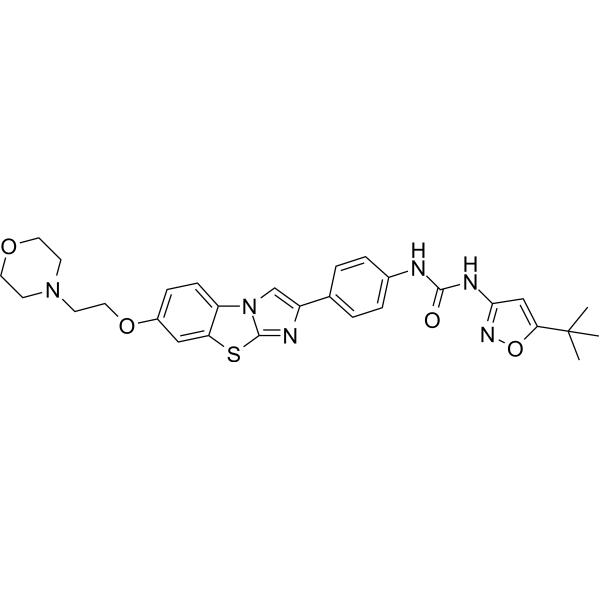
HY-13001
QuizartinibFLT3 Inhibitor -

HY-10917R
GW2580 (Standard)c-Fms Inhibitor -
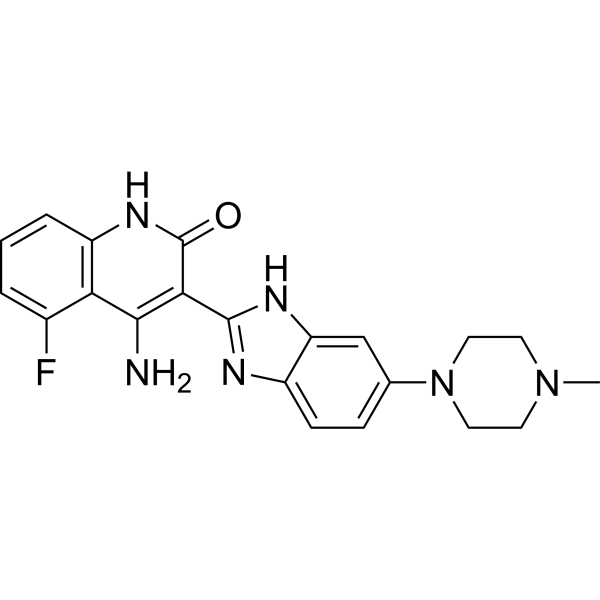
HY-50905
DovitinibMultiple RTK Inhibitor -
HY-110026
GTP-14564ITD-FLT3 Inhibitor -
HY-10204
OSI-930c-Kit and KDR Inhibitor -
HY-136256
Vimseltinibc-FMS(CSF-IR)/c-Kitdual Inhibitor -
HY-10408
Ki20227CSF1R Inhibitor -
HY-111787
Elzovantinibc-Met/HGFR Inhibitor -

HY-13001R
Quizartinib (Standard)FLT3 Inhibitor -

HY-10204R
OSI-930 (Standard)Reference Standard


Biological Activity
Description
IC50 & Target
IC50: 0.69 nM (CSF-1R or FMS)
Cellular Effect
|
Cell Line

|
Type | Value | Description | References |
|---|---|---|---|---|
| HEK293 | IC50 |
2600 nM
Compound: 23, JNJ-28312141
|
Inhibition of AXL overexpressed in human HEK cells assessed as inhibition of GAS6-induced autophosphorylation by immunoblot assay
Inhibition of AXL overexpressed in human HEK cells assessed as inhibition of GAS6-induced autophosphorylation by immunoblot assay
|
[PMID: 22039836] |
| Jurkat | IC50 |
3900 nM
Compound: 23, JNJ-28312141
|
Inhibition of LCK in human Jurkat cells assessed as inhibition of PMA and antiCD3-induced IL2 secretion after 24 hrs by ELISA
Inhibition of LCK in human Jurkat cells assessed as inhibition of PMA and antiCD3-induced IL2 secretion after 24 hrs by ELISA
|
[PMID: 22039836] |
| MV4-11 | IC50 |
21 nM
Compound: 23, JNJ-28312141
|
Inhibition of FLT3 in human MV411 cells assessed as inhibition of cell proliferation after 72 hrs by CellTiter-Glo assay
Inhibition of FLT3 in human MV411 cells assessed as inhibition of cell proliferation after 72 hrs by CellTiter-Glo assay
|
[PMID: 22039836] |
| Osteoclast | IC50 |
1.7 nM
Compound: JNJ-28312141
|
Inhibition of RANKL-induced human osteoclast precursor cells differentiation in presence of human CSF1 and measured by tartrate-resistant acid phosphatase activity assay
Inhibition of RANKL-induced human osteoclast precursor cells differentiation in presence of human CSF1 and measured by tartrate-resistant acid phosphatase activity assay
|
[PMID: 35961460] |
| Osteoclast | IC50 |
1.7 nM
Compound: JNJ-28312141
|
Inhibition of RANKL-induced human osteoclast precursor cells differentiation in presence of human M-CSF and measured by tartrate-resistant acid phosphatase activity assay
Inhibition of RANKL-induced human osteoclast precursor cells differentiation in presence of human M-CSF and measured by tartrate-resistant acid phosphatase activity assay
|
[PMID: 35961461] |
| TF-1 | IC50 |
150 nM
Compound: 23, JNJ-28312141
|
Inhibition of TRKA in human TF1 cells assessed as inhibition of NGF-induced cell proliferation after 72 hrs by CellTiter-Glo assay
Inhibition of TRKA in human TF1 cells assessed as inhibition of NGF-induced cell proliferation after 72 hrs by CellTiter-Glo assay
|
[PMID: 22039836] |


Chemical Information
-
CAS No. 885692-52-4
-
Molecular Weight 460.57
-
Formula C26H32N6O2
-
SMILES
O=C(C1=NC(C#N)=CN1)NC2=C(C3=CCCCC3)C=C(C4CCN(C(CN(C)C)=O)CC4)C=C2
-
Shipping
Room temperature in continental US; may vary elsewhere.
-
Storage
Please store the product under the recommended conditions in the Certificate of Analysis.

Protocols
-
Collagen-Induced Arthritis
Collagen-induced arthritis (CIA) is an autoimmune murine model of rheumatoid arthritis in which immunization with type II collagen (CII) emulsified in an adjuvant induces a T cell- and autoantibody-driven inflammatory arthritis characterized by synovial hyperplasia, immune cell infiltration, and joint destruction. The model typically relies on genetically susceptible mouse strains (e. g. , DBA/1) and reproduces key features of human rheumatoid arthritis, including anti-collagen immune responses and progressive joint inflammation. Disease onset generally occurs within ~3-4 weeks after immunization, depending on antigen/adjuvant combinations and protocol variation. The immunopathology is driven by adaptive immune activation against CII, leading to systemic and local joint inflammation mediated by pro-inflammatory cytokines and effector immune cells, making CIA a standard preclinical platform for evaluating immunomodulatory and anti-arthritic interventions.
-
Cotton Pellet Granuloma
Cotton pellet granuloma is a classical in vivo chronic inflammation model used to evaluate the anti-inflammatory potential of test substances by measuring their ability to inhibit granuloma tissue formation around an implanted foreign body (cotton pellet) in rodents. The method is based on the biological response to a sterile implanted material, which induces proliferative phase inflammation characterized by fibroblast proliferation and collagen-rich granuloma formation, and the final readout reflects the extent of chronic inflammatory tissue growth surrounding the pellet. In multiple preclinical pharmacological evaluations, inhibition of cotton pellet-induced granuloma formation has been used as an indicator of anti-inflammatory activity in both synthetic and natural product screening contexts.
-
Carrageenan-Induced Paw Edema
Carrageenan-induced paw edema is an acute inflammation model in which intraplantar injection of carrageenan induces localized inflammatory swelling characterized by vascular permeability, leukocyte infiltration, and production of inflammatory mediators such as prostaglandins and cytokines, making it widely used to evaluate anti-inflammatory agents in vivo. The resulting paw volume or thickness increase is quantified over time as a direct readout of inflammatory intensity and drug efficacy, typically reflecting cyclooxygenase-mediated prostaglandin-driven edema formation and immune cell recruitment in peripheral tissue[20].
-
Research Protocol for Inflammation-related Diseases
The NLRP3 inflammasome is a cytosolic innate immune signaling platform that integrates priming signals and danger-signal activation to promote caspase-1 activation, maturation of IL-1β and IL-18, and gasdermin D-mediated pyroptotic cell death. The core experimental logic is to determine whether inflammatory disease phenotypes are driven by increased NLRP3 expression, ASC-containing inflammasome assembly, caspase-1 cleavage, GSDMD cleavage, and extracellular release of IL-1β/IL-18 rather than by nonspecific cell injury alone. The pathway is strongly linked to inflammation-related disease phenotypes because monosodium urate crystals activate NALP3/NLRP3 inflammasome signaling in gout-like crystal inflammation, cholesterol crystals activate NLRP3 inflammasomes in atherogenesis models, and DSS-induced intestinal inflammation has been reported to involve NLRP3 inflammasome activity. However, experimental colitis studies also show context-dependent protective effects of NLRP3 inflammasome co
-
Cell Viability Determination by MTT Colorimetric Assay
The following protocol uses the MTT colorimetric assay as a classic literature-established method for assessing cell viability/metabolic activity in cultured mammalian cells. MTT[3-(4,5-dimethylthiazol-2-yl)-2,5-diphenyltetrazolium bromide] is reduced by metabolically active cells to a colored formazan product; the amount of formazan is quantified spectrophotometrically and provides an indirect measure of metabolically active viable cells. Importantly, MTT reduction reflects cellular oxidoreductase/metabolic activity rather than an absolute direct count of living cells, so changes in cellular metabolism can alter the signal independently of cell number.


Purity & Documentation
References
[1]. Illig CR, et al., Optimization of a potent class of arylamide colony-stimulating factor-1 receptor inhibitors leading to anti-inflammatory clinical candidate 4-cyano-N-[2-(1-cyclohexen-1-yl)-4-[1-[(dimethylamino)acetyl]-4-piperidinyl]phenyl]-1H-imidazole-2-carboxamide (JNJ-28312141). J Med Chem. 2011 Nov 24;54(22):7860-83. [Content Brief]

Calculators
Concentration (start) × Volume (start) = Concentration (final) × Volume (final)


JNJ-28312141 Related Classifications
HY-13496 Related Classifications
 Powered by Bioz