



ピメリン酸
Based on 2 publication(s) in Google Scholar
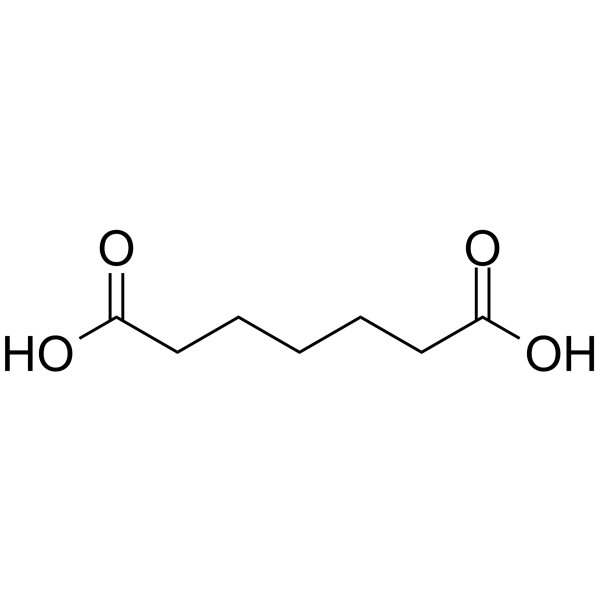
Pimelic acid (Heptanedioic acid; 1,5-Pentanedicarboxylic acid) is a seven-carbon α,ω-dicarboxylic acid and a downstream product of fatty acid synthesis. Pimelic acid is a key precursor in biotin biosynthesis. Pimelic acid can be converted to pimelic acid-CoA by the BioW enzyme, thereby bypassing exogenous biotin requirements to support growth in various biotinytrophic bacteria and fungi, and reversing antibiotic-induced inhibition of biotin synthesis. Furthermore, Pimelic acid has been proposed as a highly specific biomarker for oxygen-induced retinopathy in mice. Pimelic acid can be used to study retinopathy of preterm infants, oxygen-induced retinopathy, and microbial biotin metabolism.
商品は「研究用試薬」です。人や動物の医療用・臨床診断用・食品用の製品ではありません。
研究用途以外に使用した場合、当社は一切の責任を負いかねます。
- 純度: 98.0%
- CAS 番号: 111-16-0
- 分子式: C7H12O4
- 分子量:160.17
-
保管条件:
Store at room temperature 3 years.
In solvent -80°C, 2 years , -20°C, 1 year

To place orders, for customer services and technical support, please contact: MedChemExpress USA
Tel: 609-228-6898 E-mail: [email protected] [email protected]


-
 生物活性
生物活性
-
化学情報
-
溶剤 & 溶解度
- 純度とドキュメンテーション
- 参考文献
-
 Help & FAQs


-
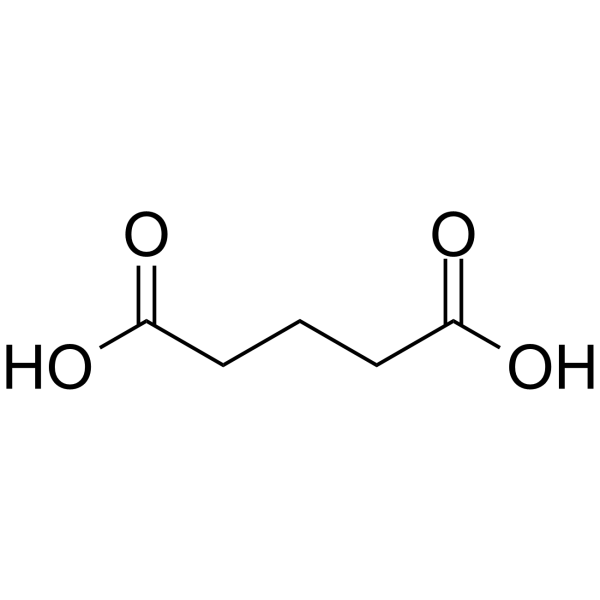
HY-W008820
Glutaric acid
-
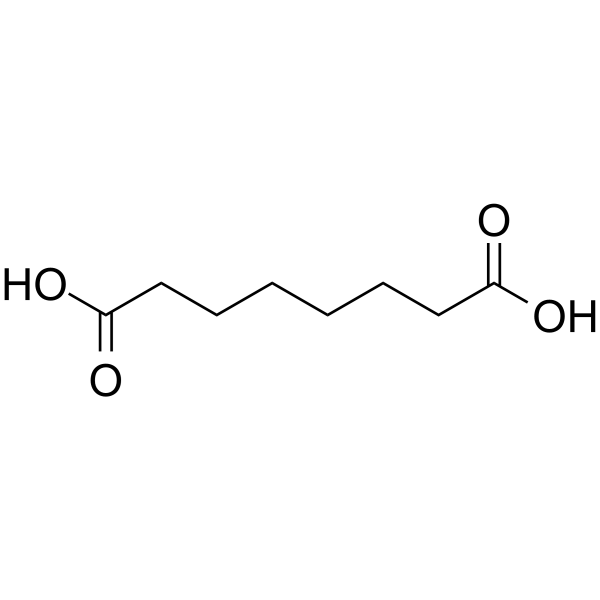
HY-W015300
Suberic acid
-
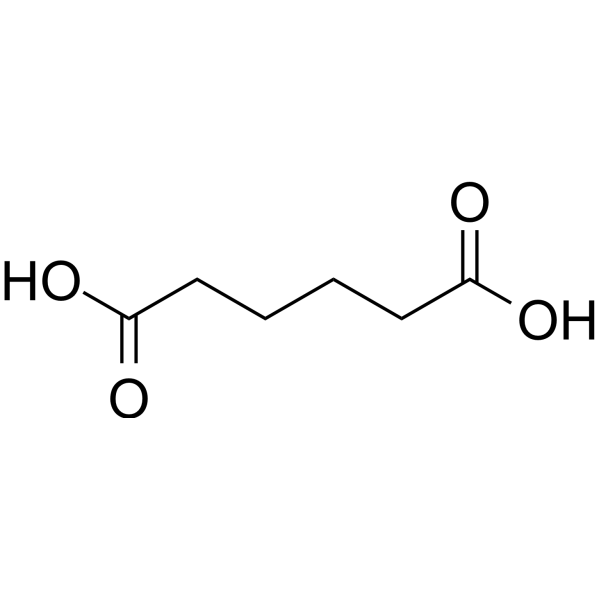
HY-W017522
Adipic acid
-
HY-W014787
Decanedioic acid
-
HY-B0704
Azelaic acid
-
HY-W015309
Decanoic acid
-

HY-W008820R
Glutaric acid (Standard)
-
HY-18569
3-Indoleacetic acid
-
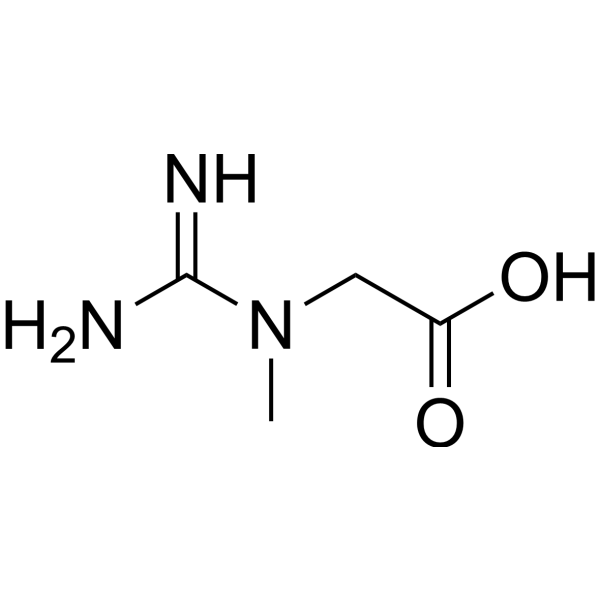
HY-W010388
Creatine
-
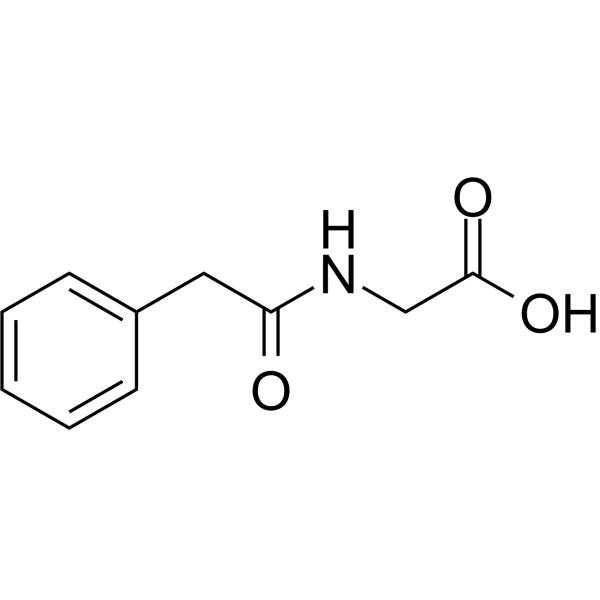
HY-W015061
Phenylacetylglycine
-
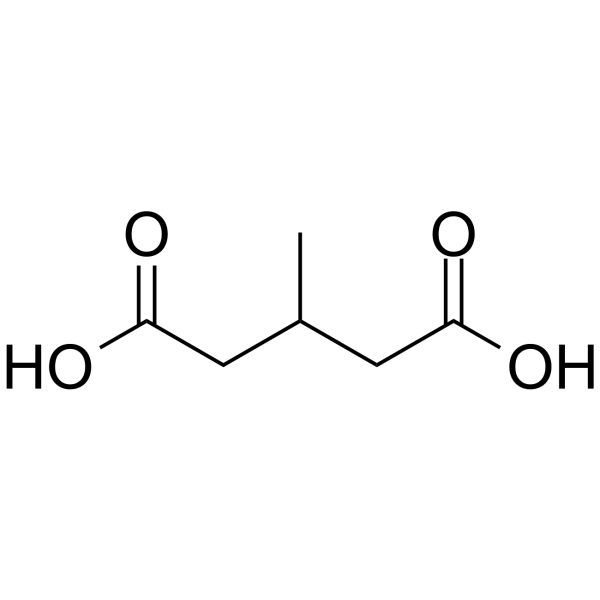
HY-113410
3-Methylglutaric acid
-
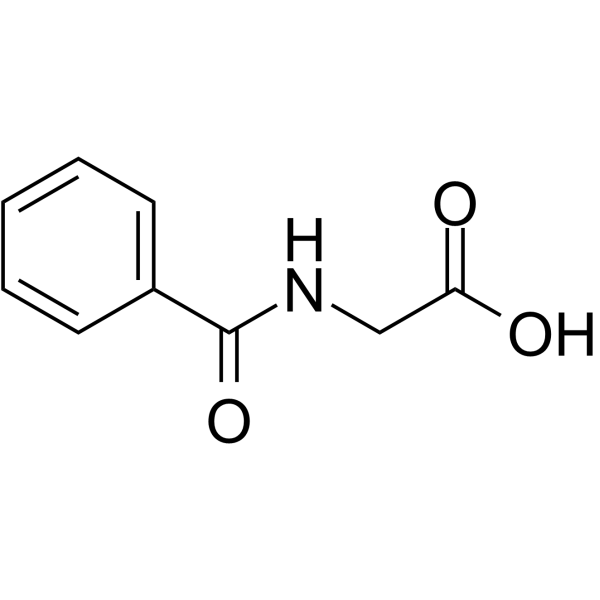
HY-W016562
Hippuric acid
MedChemExpress(MCE)の使用を引用している文献 Pimelic acid
MoreEndogenous Metabolite アイソフォーム固有の製品をすべて表示
MorePROTAC Linkers アイソフォーム固有の製品をすべて表示
More

生物活性
|
Microbial Metabolite |
Human Endogenous Metabolite |
Pimelic acid serves as a precursor for preparing β-form nucleating agents of polypropylene (PP): Salts such as sodium pimelate and calcium pimelate, which form via the reaction of pimelic acid with sodium hydroxide, calcium hydroxide or calcium stearate, are high-efficiency β-PP nucleating agents. They induce PP to form hexagonal crystals (β-PP)[3].
Dosage reference of Pimelic acid as a nucleating agent[3]:
2% aqueous solution of Pimelic acid, 1% alcoholic solution; matching reaction reagents include 10% aqueous sodium hydroxide solution and 2% alcoholic suspension of calcium stearate.
Pimelic acid can be used in research on polymer crystallization modification: as a chemical reagent, it is employed to investigate the crystal form regulation mechanism of PP, providing support for the development of high-performance PP materials[3].
Note[3]: The doping amount of the nucleating agent (reaction product of Pimelic acid) in PP resin is fixed at 1wt%; Pimelic acid alone shows no nucleating activity when doped at a concentration of 1wt%.
MedChemExpress (MCE) has not independently confirmed the accuracy of these methods. They are for reference only.


化学情報
-
CAS 番号 111-16-0
-
性状 Solid
-
分子量 160.17
-
分子式 C7H12O4
-
Color White to light brown
-
SMILES
O=C(O)CCCCCC(O)=O
-
別名
Pimelic acid; Heptanedioic acid; 1,5-Pentanedicarboxylic acid; 1,7-Heptanedioic acid
-
Structure Classification
-
Initial Source
-
輸送条件
Room temperature in continental US; may vary elsewhere.
-
保管条件
Store at room temperature 3 years
In solvent -80°C 2 years -20°C 1 year


Publications (2)
-
Journal Impact Factor
-
Most Recent
-
Microbiome
Species-specific enhancement of enterohemorrhagic E. coli pathogenesis mediated by microbiome metabolites. [Abstract]2019 Mar 20;7(1):43. PMID: 30890187 -


溶剤 & 溶解度
H2O : 100 mg/mL (624.34 mM; Need ultrasonic)
DMSO : 100 mg/mL (624.34 mM; Need ultrasonic; Hygroscopic DMSO has a significant impact on the solubility of product, please use newly opened DMSO)
Please refer to the solubility information to select the appropriate solvent. Once prepared, please aliquot and store the solution to prevent product inactivation from repeated freeze-thaw cycles.
Storage method and period of stock solution: -80°C, 2 years; -20°C, 1 year. When stored at -80°C, please use it within 2 years. When stored at -20°C, please use it within 1 year.
* Note: If you choose water as the stock solution, please dilute it to the working solution, then filter and sterilize it with a 0.22 μm filter before use.
Please refer to the solubility information to select the appropriate solvent. Once prepared, please aliquot and store the solution to prevent product inactivation from repeated freeze-thaw cycles.
Storage method and period of stock solution: -80°C, 2 years; -20°C, 1 year. When stored at -80°C, please use it within 2 years. When stored at -20°C, please use it within 1 year.
* Note: If you choose water as the stock solution, please dilute it to the working solution, then filter and sterilize it with a 0.22 μm filter before use.
濃度 (開始) × 体積 (開始) = 濃度 (終了) × 体積 (終了)
Select the appropriate dissolution method based on your experimental animal and administration route.
- For the following dissolution methods, please ensure to first prepare a clear stock solution using an In Vitro approach and then sequentially add co-solvents:
- To ensure reliable experimental results, the clarified stock solution can be appropriately stored based on storage conditions. As for the working solution for In Vivo experiments, it is recommended to prepare freshly and use it on the same day.
- The percentages shown for the solvents indicate their volumetric ratio in the final prepared solution. If precipitation or phase separation occurs during preparation, heat and/or sonication can be used to aid dissolution.
Add each solvent one by one: 10% DMSO 40% PEG300 5% Tween-80 45% Saline
Solubility: ≥ 2.75 mg/mL (17.17 mM); Clear solution
This protocol yields a clear solution of ≥ 2.75 mg/mL (saturation unknown).
Taking 1 mL working solution as an example, add 100 μL DMSO stock solution (27.5 mg/mL) to 400 μL PEG300, and mix evenly; then add 50 μL Tween-80 and mix evenly; then add 450 μL Saline to adjust the volume to 1 mL.
Preparation of Saline: Dissolve 0.9 g sodium chloride in ddH₂O and dilute to 100 mL to obtain a clear Saline solution.
Please enter the basic information of animal experiments:
-
-
-
-
Recommended: Prepare an additional quantity of animals to account for potential losses during experiments.
Working solution concentration: 0.22 mg/mL
This product has good water solubility, please refer to the measured solubility data in water/PBS/Saline for details.


純度とドキュメンテーション
-
データシート (271 KB)
-
SDS (393 KB)
- English - EN (393 KB)
- Français - FR (393 KB)
- Deutsch - DE (393 KB)
- Norwegian - NO (393 KB)
- Español - ES (393 KB)
- Swedish - SV (393 KB)
- Italian - IT (393 KB)
- Korean - KR (393 KB)
- Portuguese - PT (393 KB)
-
取扱説明書 (2659 KB)
参考文献
[2]. Manandhar M, et al. Pimelic acid, the first precursor of the Bacillus subtilis biotin synthesis pathway, exists as the free acid and is assembled by fatty acid synthesis. Mol Microbiol. 2017;104(4):595-607. [Content Brief]
[3]. Yang Y, et al. Metabolic correlations between kidney and eye in a mouse model of oxygen-induced retinopathy and retinopathy of prematurity. BMJ Open Ophthalmol. 2025;10(1):e001955. Published 2025 May 1. [Content Brief]


Complete Stock Solution Preparation Table
Please refer to the solubility information to select the appropriate solvent. Once prepared, please aliquot and store the solution to prevent product inactivation from repeated freeze-thaw cycles.
Storage method and period of stock solution: -80°C, 2 years; -20°C, 1 year. When stored at -80°C, please use it within 2 years. When stored at -20°C, please use it within 1 year.
| Optional Solvent | Concentration Solvent Mass | 1 mg | 5 mg | 10 mg | 25 mg |
|---|---|---|---|---|---|
| H2O / DMSO | 1 mM | 6.2434 mL | 31.2168 mL | 62.4337 mL | 156.0842 mL |
| 5 mM | 1.2487 mL | 6.2434 mL | 12.4867 mL | 31.2168 mL | |
| 10 mM | 0.6243 mL | 3.1217 mL | 6.2434 mL | 15.6084 mL | |
| 15 mM | 0.4162 mL | 2.0811 mL | 4.1622 mL | 10.4056 mL | |
| 20 mM | 0.3122 mL | 1.5608 mL | 3.1217 mL | 7.8042 mL | |
| 25 mM | 0.2497 mL | 1.2487 mL | 2.4973 mL | 6.2434 mL | |
| 30 mM | 0.2081 mL | 1.0406 mL | 2.0811 mL | 5.2028 mL | |
| 40 mM | 0.1561 mL | 0.7804 mL | 1.5608 mL | 3.9021 mL | |
| 50 mM | 0.1249 mL | 0.6243 mL | 1.2487 mL | 3.1217 mL | |
| 60 mM | 0.1041 mL | 0.5203 mL | 1.0406 mL | 2.6014 mL | |
| 80 mM | 0.0780 mL | 0.3902 mL | 0.7804 mL | 1.9511 mL | |
| 100 mM | 0.0624 mL | 0.3122 mL | 0.6243 mL | 1.5608 mL |
* Note: If you choose water as the stock solution, please dilute it to the working solution, then filter and sterilize it with a 0.22 μm filter before use.


Pimelic acid 関連分類
HY-Y1139 関連分類
 Powered by Bioz
- Pimelic acid
- 111-16-0
- Heptanedioic acid
- 1,5-Pentanedicarboxylic acid
- 1,7-Heptanedioic acid
- Endogenous Metabolite
- PROTAC Linkers
- biotin-requiring bacteria
- lipid metabolism
- fatty acid synthesis pathway
- biotin synthesis pathway
- Escherichia coli ΔbioC ΔbioH biotin auxotrophs
- oxygen-induced retinopathy
- Bacillus subtilis
- TCA cycle
- bioW-disrupted Bacillus subtilis strains
- fungi
- Inhibitor
- inhibitor
- inhibit