



RPR107393 free base
RPR107393 free base is an orally active potent selective squalene synthase (SQS) inhibitor. RPR107393 free base inhibits rat liver microsomal squalene synthase with an IC50 value of 0.8 nM. RPR107393 free base reduces triglyceride biosynthesis by suppressing fatty acid biosynthesis via an increase in intracellular farnesol and its derivatives. RPR107393 free base reduces plasma cholesterol in rats and marmosets. RPR107393 free base can be used for metabolic disease research, such as hypercholesterolemia, hypertriglyceridemia and atherosclerosis[1][2].
商品は「研究用試薬」です。人や動物の医療用・臨床診断用・食品用の製品ではありません。
研究用途以外に使用した場合、当社は一切の責任を負いかねます。
- CAS 番号: 197576-78-6
- 分子式: C22H22N2O
- 分子量:330.42
-
保管条件:
Please store the product under the recommended conditions in the Certificate of Analysis.

To place orders, for customer services and technical support, please contact: MedChemExpress USA
Tel: 609-228-6898 E-mail: [email protected] [email protected]


-
 生物活性
生物活性
-
化学情報
- プロトコル
- 純度とドキュメンテーション
- 参考文献
-
 Help & FAQs


-
HY-10502
TipifarnibFTase Inhibitor -
HY-16273A
L-778123 hydrochlorideFarnesyl Transferase Inhibitor -
HY-16111
BMS-214662Farnesyl Transferase Inhibitor -
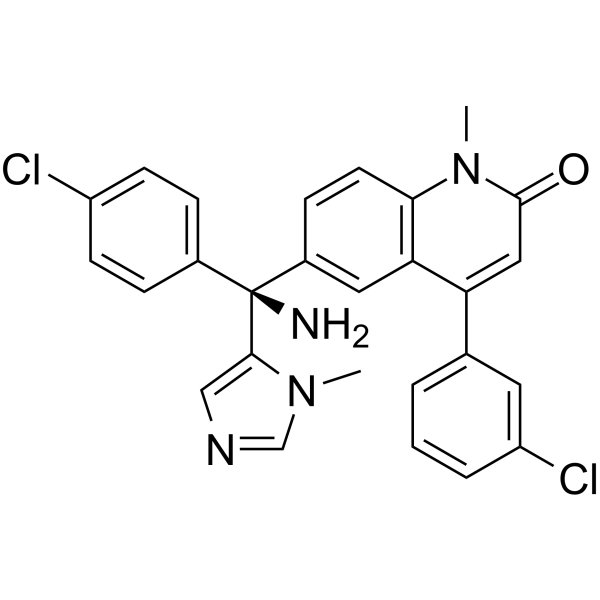
HY-10502A
Tipifarnib (S enantiomer) -

HY-10502R
Tipifarnib (Standard)Reference Standard -
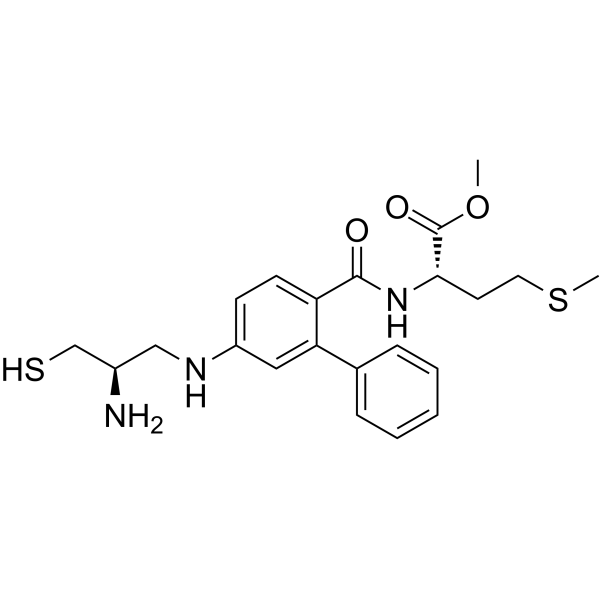
HY-15872
FTI-277Farnesyl Transferase Inhibitor -
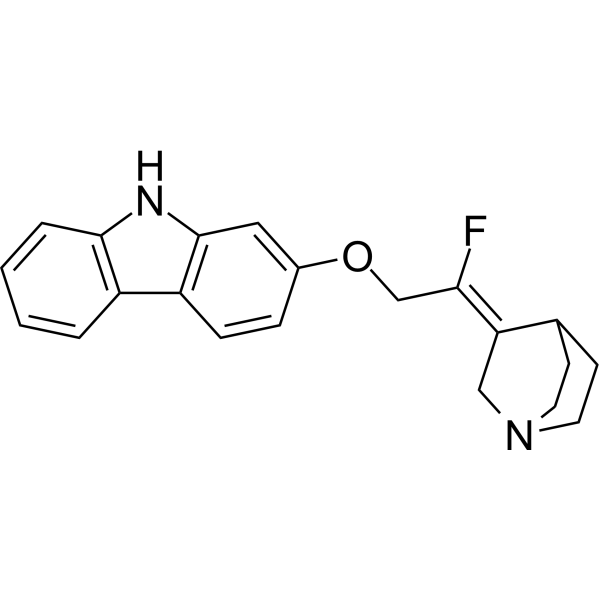
HY-100313
YM-53601 free baseSqualene Synthetase Inhibitor -
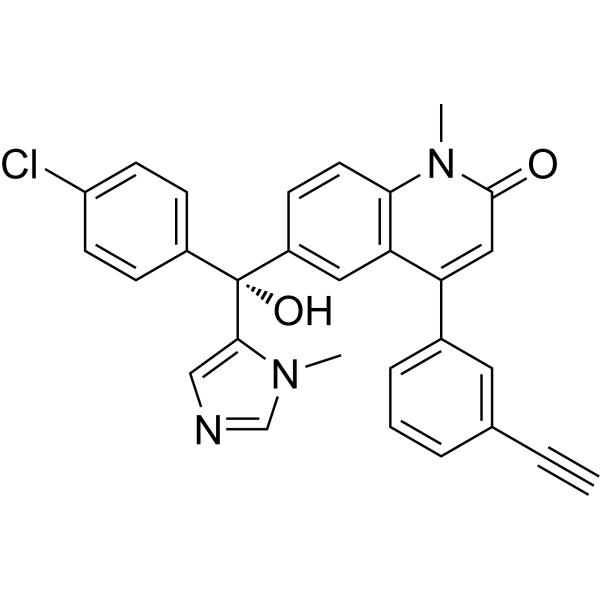
HY-16373
CP-609754Farnesyltransferase Inhibitor -
HY-128350
FGTI-2734Farnesyl/Geranylgeranyl Transferase Inhibitor -
HY-U00327
Prenyl-IN-1 -
HY-15873
FTI 276 -
HY-U00401
(Rac)-CP-609754


生物活性
製品説明
IC50 & Target
IC50: 0.8±0.2 nM (rat liver microsomal squalene synthase)[1]
体外実験
RPR107393 free base (10 min) is a potent inhibitor of rat liver microsomal squalene synthase, with IC50 values of 0.6 to 0.9 nM, and is inactive (3 % inhibition at 1 mM) against HMG-CoA reductase from rat liver microsomes[1].
RPR107393 free base (6 h) concentration-dependently inhibits cholesterol biosynthesis (IC50 = 880 nM) and triglyceride biosynthesis (IC50 = 410 nM) in rat hepatocytes[2].
RPR107393 free base (10 μM, 2-24 h) decreases the incorporation of [1-14C]acetic acid into lipids in rat hepatocytes in a time-dependent manner, with maximal inhibition of cholesterol and triglyceride biosynthesis occurring at 2 h and 24 h, respectively[2].
RPR107393 free base (1 μM, 4 h) inhibits cholesterol and triglyceride biosynthesis by 82.4 % and 70.0 % in rat hepatocytes, respectively, with the latter effect potentiated by MVL supplementation, suggesting a mechanism involving increased FPP derivatives[2].
RPR107393 free base (1-10 μM, 4 h) increases carnitine-dependent mitochondrial β-oxidation (by 26.5 % at 1 μM and 39.5 % at 10 μM), it reduces overall triglyceride biosynthesis through a β-oxidation-independent pathway[2].
RPR107393 free base (10 μM, 4 h) suppresses triglyceride biosynthesis in rat hepatocytes, reducing fatty acid and triglyceride synthesis by 67.7 % and 68.5 %, respectively, through inhibiting fatty acid synthesis rather than later metabolic stages[2].
MedChemExpress (MCE) has not independently confirmed the accuracy of these methods. They are for reference only.
体内実験
RPR107393 free base (20 mg/kg, p.o., b.i.d. or q.d. for 7 days) selectively lowers LDL cholesterol while maintaining a favorable HDL profile in marmosets[1].
MedChemExpress (MCE) has not independently confirmed the accuracy of these methods. They are for reference only.
-
Animal Model:Sprague-Dawley rats (130-150 g)[1]
-
Dosage:10 and 25 mg/kg
-
Administration:p.o., sigle dose
-
Result:Reduced cholesterol biosynthesis by 92 % at 10 mg/kg, with an approximate ED50 value of 5 mg/kg.
Reduced cholesterol biosynthesis by 74 % after 6 h, and the time for 50 % inhibition was ~7 hr at 10 mg/kg.
Inhibited hepatic cholesterol biosynthesis with an inhibition of 82 % at 25 mg/kg after 10 h, but the effect was no longer apparent at 21 h.
Inhibited cholesterol biosynthesis associated with an accumulation of radiolabeled diacid products in the liver.
-
Animal Model:Sprague-Dawley rats (130-150 g)[1]
-
Dosage:30 mg/kg
-
Administration:p.o., b.i.d. for 2-4 days
-
Result:Lowered serum cholesterol by 35 % after 2 days and by nearly 50 % after 3 days.
The reduction in cholesterol was greater in the very low-density lipoprotein (VLDL) and low-density lipoprotein (LDL) fractions (66-88 %) than in the high-density lipoprotein (HDL) fraction (maximum, 35 %).
Reduced serum triglycerides by up to 70 %.
Induced hepatic microsomal HMG-CoA reductase activity by 12 to 34-fold.
-
Animal Model:Sprague-Dawley rats (130-150 g) given a chow diet or the same diet supplemented with 2 % cholestyramine (HY-104081)[1]
-
Dosage:30 mg/kg
-
Administration:p.o., q.d. for 7 days
-
Result:The R and S enantiomers reduced serum cholesterol by 9 % and 24 %, and triglycerides by 46 % and 57 %, respectively.
Coadministration with 2 % cholestyramine in the diet reduced serum cholesterol by 49 %.
The R enantiomer administered alone did not lower serum LDL cholesterol, whereas coadministration with cholestyramine resulted in a 30 % reduction.
The reductions in LDL cholesterol with the S enantiomer in the absence and the presence of cholestyramine were 33 % and 61 %, respectively.
The reduction was greater in the VLDL and LDL fractions than in the HDL fraction.
-
Animal Model:Male common marmosets (Callithrix jacchus)[1]
-
Dosage:20 mg/kg
-
Administration:p.o., b.i.d. for 7 days
-
Result:Reduced plasma cholesterol by 50 %.
The reduction in plasma cholesterol was selectively in the LDL fraction (≤50 %), whereas cholesterol in the HDL fraction was unchanged.
Produced a greater reduction in plasma cholesterol than Lovastatin (HY-N0504) or Pravastatin (HY-B0165) (which produced ≤31 % reduction at 50 mg/kg, b.i.d.).
-
Animal Model:Male common marmosets (Callithrix jacchus)[1]
-
Dosage:20 mg/kg
-
Administration:p.o. q.d. for 7 days
-
Result:Both enantiomers reduced total plasma cholesterol by approximately 27 %.
The R and S enantiomers reduced LDL cholesterol by 50 % and 43 %, respectively.
Showed no significant changed in HDL cholesterol levels.


化学情報
-
CAS 番号 197576-78-6
-
分子量 330.42
-
分子式 C22H22N2O
-
SMILES
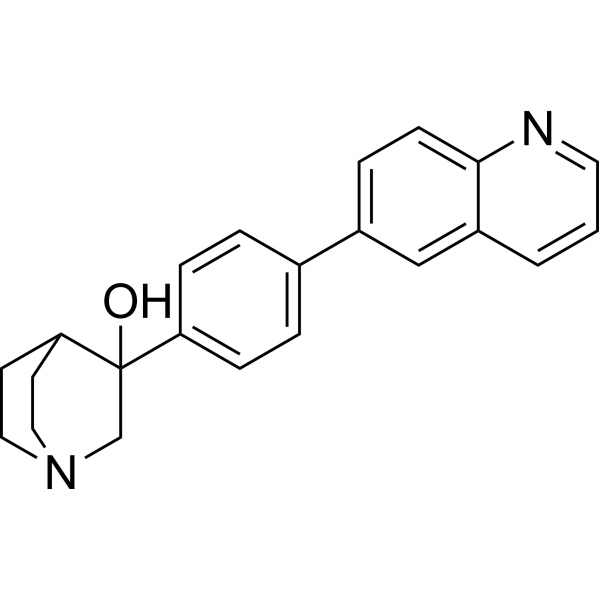
OC1(C2=CC=C(C3=CC=C4N=CC=CC4=C3)C=C2)CN5CCC1CC5
-
輸送条件
Room temperature in continental US; may vary elsewhere.
-
保管条件
Please store the product under the recommended conditions in the Certificate of Analysis.


純度とドキュメンテーション
参考文献
[1]. Amin D, et al. RPR107393, a potent squalene synthase inhibitor and orally effective Cholesterol-lowering agent: comparison with inhibitors of HMG-CoA reductase. J Pharmacol Exp Ther. 1997 May;281(2):746-52. [Content Brief]
[2]. Hiyoshi H, et al. Squalene synthase inhibitors suppress triglyceride biosynthesis through the farnesol pathway in rat hepatocytes. J Lipid Res. 2003 Jan;44(1):128-35. [Content Brief]

Calculators
濃度 (開始) × 体積 (開始) = 濃度 (終了) × 体積 (終了)


RPR107393 free base 関連分類
HY-100299 関連分類
 Powered by Bioz