



CCR9
CCR9 (C-C chemokine receptor type 9) is a G protein-coupled receptor that mediates the migration and localization of lymphocytes, particularly thymocytes, to the small intestine[1][2]. Mechanistically, CCR9 interacts with its ligand, chemokine ligand 25 (CCL25), to direct effector and regulatory T-cell trafficking, which is critical for maintaining intestinal immune homeostasis[2]. In disease models, CCR9 deficiency or blockade in TNFΔARE mice exacerbates Crohn's-like ileitis due to reduced recruitment of CD4+/CD25+/FOXP3+ and CD8+/CD103+ T regulatory cells, indicating its essential role in controlling intestinal inflammation[2]. Compared with related chemokine receptor isoforms such as CCR2A and CCR2B, CCR9 exhibits tissue-specific expression and a unique gut-homing function, distinguishing it from receptors primarily involved in systemic monocyte recruitment[3][4]. Pharmacologically, selective small-molecule CCR9 antagonists such as vercirnon and CCX507 bind intracellular allosteric sites, preventing G-protein coupling, and have been explored for treating inflammatory bowel disease, although high doses are required to achieve effective receptor blockade[5][6]. CCR9 inhibitors in combination with integrin α4β7 blockade show synergistic protective effects in colitis models, highlighting potential combinatorial therapeutic strategies[5][7].
参考文献:
- [1]. Kalindjian SB, et al. A New Series of Orally Bioavailable Chemokine Receptor 9 (CCR9) Antagonists; Possible Agents for the Treatment of Inflammatory Bowel Disease. J Med Chem. 2016 Apr 14;59(7):3098-111. [Content Brief]
- [2]. Tan J, et al. Small molecule inhibition of chemokine receptor 'CCR9' combined with anti-α4β7 blocking antibody confers synergistic protection against piroxicam-accelerated colitis in mice: 1771. Am J Gastroenterol. 2014;109:S523-S524.
- [3]. CCR9 (chemokine (C-C motif) receptor 9). Atlas Genet Cytogenet Oncol Haematol. 2009.
- [4]. Oswald C, et al. Intracellular allosteric antagonism of the CCR9 receptor. Nature. 2016 Dec 15;540(7633):462-465. [Content Brief]
- [5]. Cho ML, et al. Expression of CCR2A, an isoform of MCP-1 receptor, is increased by MCP-1, CD40 ligand and TGF-beta in fibroblast like synoviocytes of patients with RA. Exp Mol Med. 2007 Aug 31;39(4):499-507. [Content Brief]
- [6]. Wermers JD, et al. The chemokine receptor CCR9 is required for the T-cell-mediated regulation of chronic ileitis in mice. Gastroenterology. 2011 May;140(5):1526-35.e3. [Content Brief]
- [7]. Tanaka S, et al. Differential expression of the isoforms for the monocyte chemoattractant protein-1 receptor, CCR2, in monocytes. Biochem Biophys Res Commun. 2002 Jan 11;290(1):73-80. [Content Brief]
-
CCR9 関連製品 (4)
関連製品 (4)

-
組換えタンパク質 (2)
-
Vercirnon
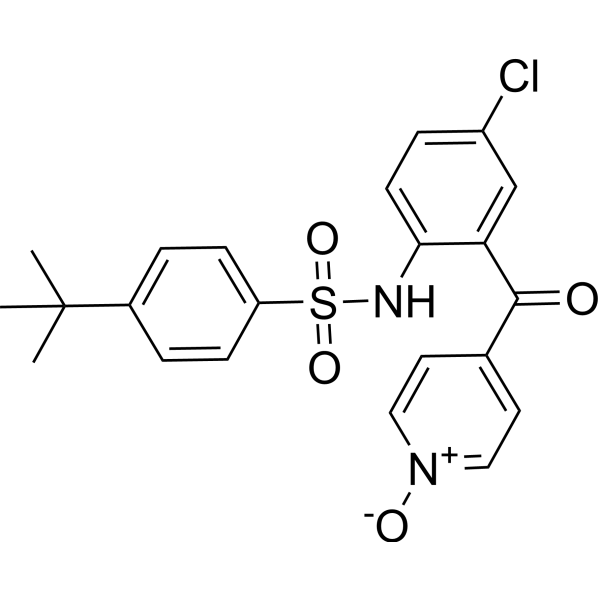 0 Images別名: GSK-1605786; CCX282-B; Traficet-ENVercirnon (GSK1605786A) is an orally bioavailable, selective, and potent antagonist of CCR9. Vercirnon inhibits CCR9-mediated Ca2+ mobilization and chemotaxis on Molt-4 cells with IC50 values of 5.4 and 3.4 nM, respectively. Vercirnon is selective for CCR9 over CCR1-12 and CX3CR1-7 (IC50s>10 μM for all). Vercirnon is an equipotent inhibitor of CCL25-directed chemotaxis of both splice forms of CCR9 (CCR9A and CCR9B) with IC50 values of 2.8 and 2.6 nM, respectively.
-
Vercirnon sodium
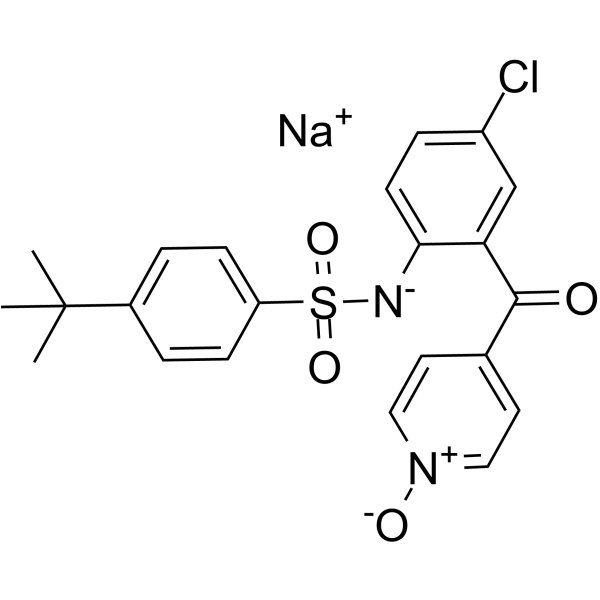 0 Images別名: GSK-1605786 sodium; CCX282-B sodium; Traficet-EN sodiumVercirnon (GSK1605786A) sodium is an orally bioavailable, selective, and potent antagonist of CCR9. Vercirnon sodium inhibits CCR9-mediated Ca2+ mobilization and chemotaxis on Molt-4 cells with IC50 values of 5.4 and 3.4 nM, respectively. Vercirnon sodium is selective for CCR9 over CCR1-12 and CX3CR1-7 (IC50s>10 μM for all). Vercirnon sodium is an equipotent inhibitor of CCL25-directed chemotaxis of both splice forms of CCR9 (CCR9A and CCR9B) with IC50 values of 2.8 and 2.6 nM, respectively.
-
CCR9 ligand-Linker Conjugate 1
 0 Images製品番号: HY-181288CAS 番号: 2906191-39-5
-
PROTAC CCR9 Degrader 1
 0 Images製品番号: HY-181287PROTAC CCR9 Degrader 1 is a PROTAC-based degrader targeting CCR9. PROTAC CCR9 Degrader 1 induces ubiquitination, proteasomal degradation of CCR9 and reduces intracellular CCR9 levels by recruiting the VHL E3 ligase. PROTAC CCR9 Degrader 1 has a Ki value of 78.0 nM against human CCR9. PROTAC CCR9 Degrader 1 modulates GPCR activity by binding to the intracellular allosteric binding site of CCR9. PROTAC CCR9 Degrader 1 can be used in research related to Crohn's disease.




