



Brilliant green
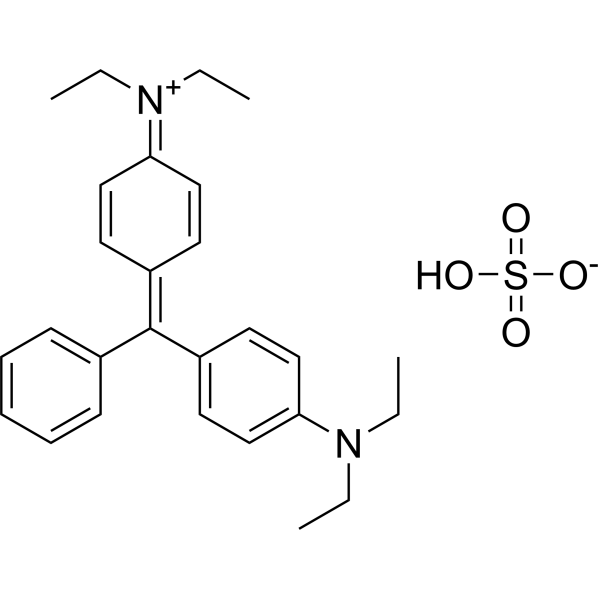
Brilliant green is a diaminotriphenylmethane compound and cationic dye that serves as a biological stain. Brilliant green exhibits strong antibacterial activity, with significant inhibitory effects on Gram-positive bacteria. The detection wavelength of Brilliant green is λmax = 625 nm.
商品は「研究用試薬」です。人や動物の医療用・臨床診断用・食品用の製品ではありません。
研究用途以外に使用した場合、当社は一切の責任を負いかねます。
- CAS 番号: 633-03-4
- 分子式: C27H34N2O4S
- 分子量:482.63
-
保管条件:
Please store the product under the recommended conditions in the Certificate of Analysis.

To place orders, for customer services and technical support, please contact: MedChemExpress USA
Tel: 609-228-6898 E-mail: [email protected] [email protected]


-
 生物活性
生物活性
-
化学情報
- プロトコル
- 純度とドキュメンテーション
- 参考文献
-
 Help & FAQs


-
HY-D0213
Sudan Black BFat-soluble Diazo Dye -
HY-N1442
Acid orange 7Azo Dye -
HY-B0324A
Crystal VioletFluorochrome -
HY-D0236
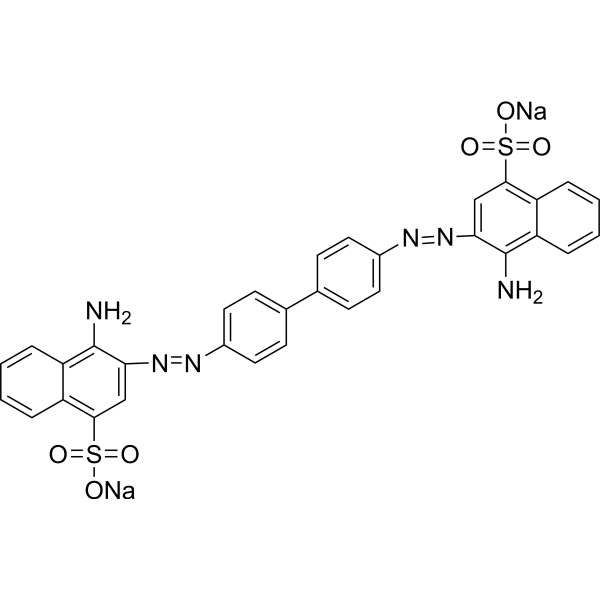
Congo RedAzo Dye -
HY-D0914
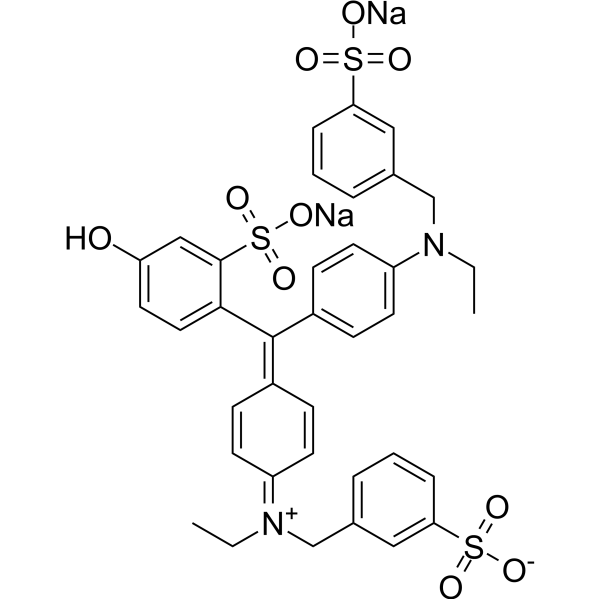
Fast Green FCFSea Green Triarylmethane Food Dye -
HY-D0932
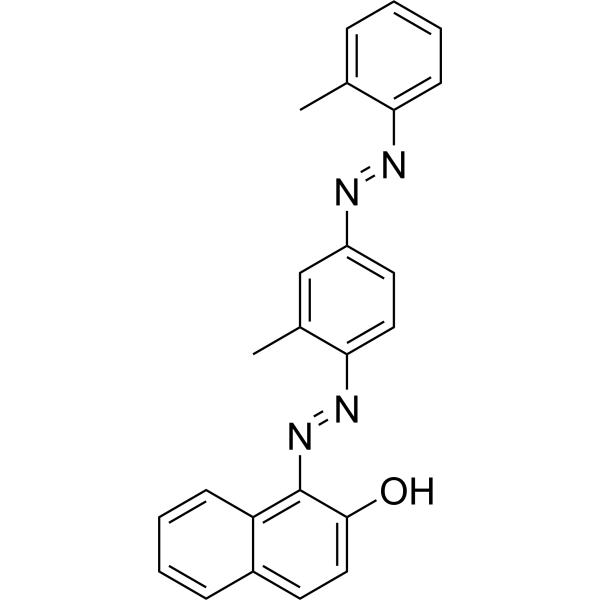
Sudan IVDisazo Dye -

HY-N1442R
Acid orange 7 (Standard)Azo Dye -

HY-DY2001
Crystal Violet (solution)Fluorochrome -
HY-W040226
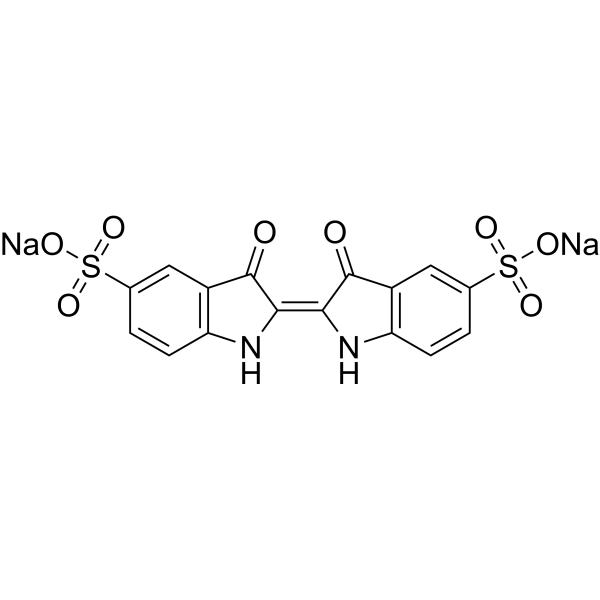
Indigo carmine -

HY-D0932R
Sudan IV (Standard)Standard of Sudan IV -
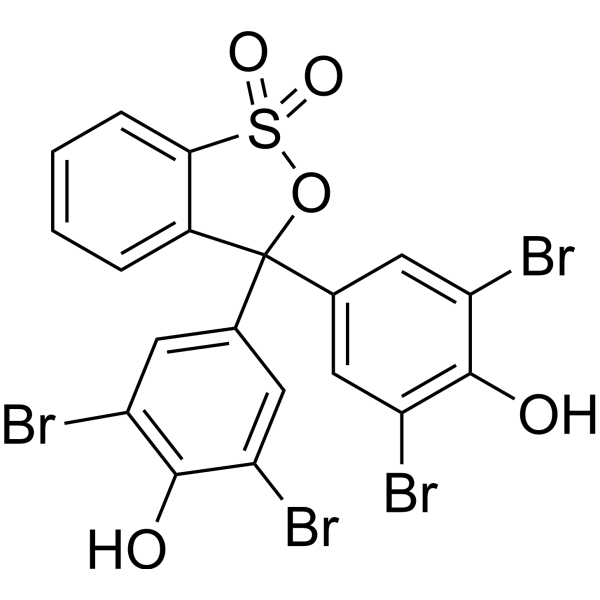
HY-B1571
Bromophenol bluepH Indicator -
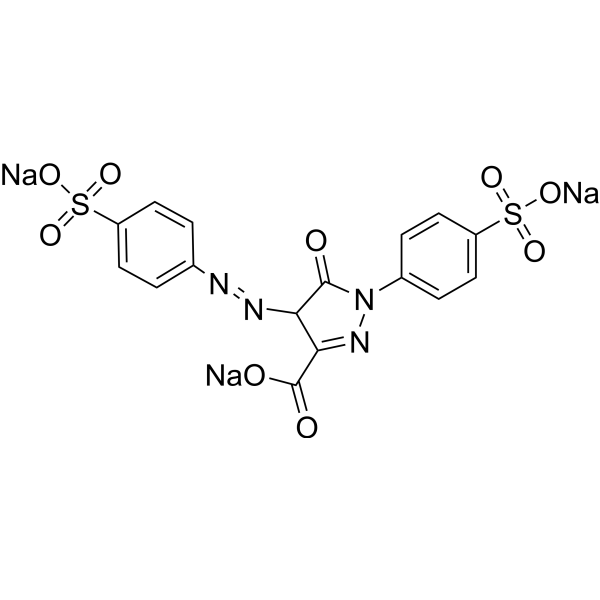
HY-D0257
TartrazineAzo Dye


生物活性
製品説明
体外実験
Guidelines (The recommended experimental protocol below is for guidance only and should be adjusted according to your specific requirements)
1. Stock Solution Preparation
1.1 Solvent: Water or 60% ethanol. Aqueous solutions are unstable and require fresh preparation.
1.2 Concentration recommendation: It is generally recommended to prepare a high-concentration stock solution of 1-10 mM.
2. Working Solution Preparation
2.1 Diluent: Double-distilled water.
2.2 Working concentrations: 1% (based on 60% ethanol), 0.5% ethanol solution, 1:2000 (aqueous solution), 1:1000 (aqueous solution).
2.3 Notes: Adjust the working solution concentration as needed; prepare fresh before use.
3. Staining Procedures
3.1 Sample type description
3.1.1 Bacterial samples: Suitable for Gram-positive bacteria, with weak efficacy against *Escherichia coli* and Mycobacterium tuberculosis.
3.1.2 Skin/mucosa: 1% ethanol solution is used for skin disinfection; 0.5% solution is used for mucosa.
3.1.3 Adsorption experiment samples: Add 25 mg of PANI/Ag nanocomposite to 20 mL of BG solution (initial concentration 40-61.2 mg/L), shake at 30 °C and 120 rpm, and reach adsorption equilibrium within 120 min.
3.2 Incubation conditions
3.2.1 Antibacterial experiment: Apply to skin, mucosa or wounds at room temperature or body temperature; use warm aqueous solution for wet compresses.
3.2.2 Adsorption experiment: Shake at 30 °C and 120 rpm in the dark, with a contact time of 120 min.
3.3 Washing steps
3.3.1 Skin staining can be removed by vigorous wiping with alcohol or hydrogen peroxide.
4. Control Setup
4.2 Adsorption experiment controls: Comparison of adsorption efficiency under conditions of different initial concentrations (40-61.2 mg/L), different nanocomposite dosages (0.01-0.03 g), different temperatures (25-40 °C) and different pH values (2-12).
5. Detection and Analysis
5.1 Instrument type: Spectrophotometer.
5.2 Excitation/emission wavelength: 625 nm (detection wavelength).
5.3 Result analysis
5.3.1 Absorbance change: The absorbance at 625 nm decreases with the extension of adsorption time; the removal rate reaches 89.8% at an initial concentration of 40 mg/L and 75% at 61.2 mg/L; approximately 90% is removed within 120 min.
5.3.2 Antibacterial activity: The minimum inhibitory dilution against streptococci and pneumococci is 1:200,000, with weak efficacy against *Escherichia coli* and Mycobacterium tuberculosis.
5.3.3 Color change: Green dye. Adsorption is the lowest at pH 2; the removal rate increases from 61% to 85% at pH 4-12, reaching the maximum at pH 12; the pKa values are 4.93 and 2.26.
MedChemExpress (MCE) has not independently confirmed the accuracy of these methods. They are for reference only.


化学情報
-
CAS 番号 633-03-4
-
分子量 482.63
-
分子式 C27H34N2O4S
-
SMILES
CC/[N+](CC)=C1C=C/C(C=C/1)=C(C2=CC=C(N(CC)CC)C=C2)/C3=CC=CC=C3.O=S(O)([O-])=O
-
輸送条件
Room temperature in continental US; may vary elsewhere.
-
保管条件
Please store the product under the recommended conditions in the Certificate of Analysis.


純度とドキュメンテーション
参考文献

Calculators
濃度 (開始) × 体積 (開始) = 濃度 (終了) × 体積 (終了)


Brilliant green 関連分類
HY-D0008 関連分類
 Powered by Bioz