



Rotigotine Hydrochloride
Based on 3 publication(s) in Google Scholar
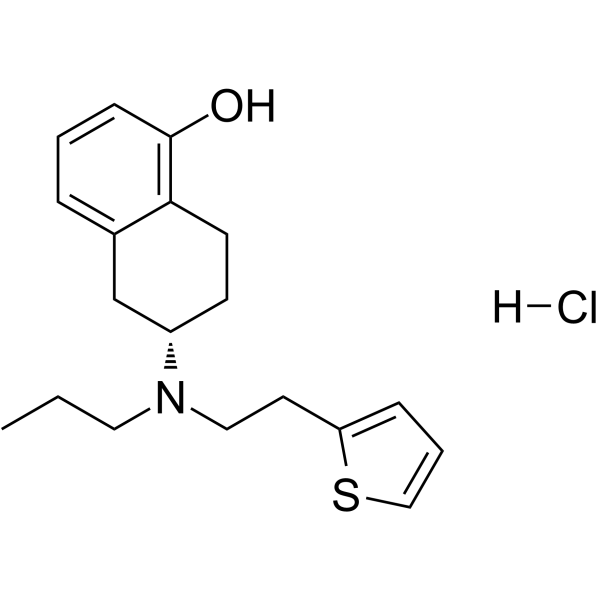
Rotigotine Hydrochloride (N-0923 Hydrochloride) is a full agonist of dopamine receptor, a partial agonist of the 5-HT1A receptor, and an antagonist of the α2B-adrenergic receptor, with Ki of 0.71 nM, 4-15 nM, and 83 nM for the dopamine D3 receptor and D2, D5, D4 receptors, and dopamine D1 receptor.
For research use only. We do not sell to patients.
- Purity: 99.45%
- CAS No.: 125572-93-2
- Formula: C19H26ClNOS
- Molecular Weight:351.93
-
Storage:
4°C, sealed storage, away from moisture
* In solvent : -80°C, 6 months; -20°C, 1 month (sealed storage, away from moisture)

To place orders, for customer services and technical support, please contact: MedChemExpress USA
Tel: 609-228-6898 E-mail: [email protected] [email protected]


-
 Biological Activity
-
Chemical Information
-
Solvent & Solubility
- Protocol
- Purity & Documentation
- References
-
 Help & FAQs


-
HY-17355
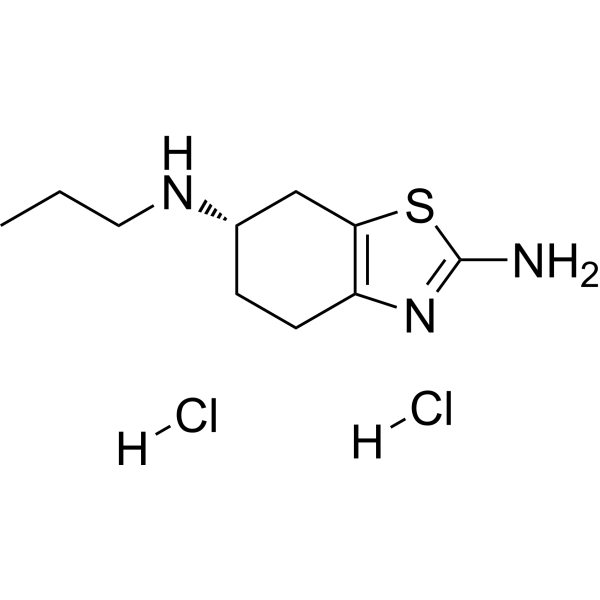
Pramipexole dihydrochloride
-
HY-B0623A
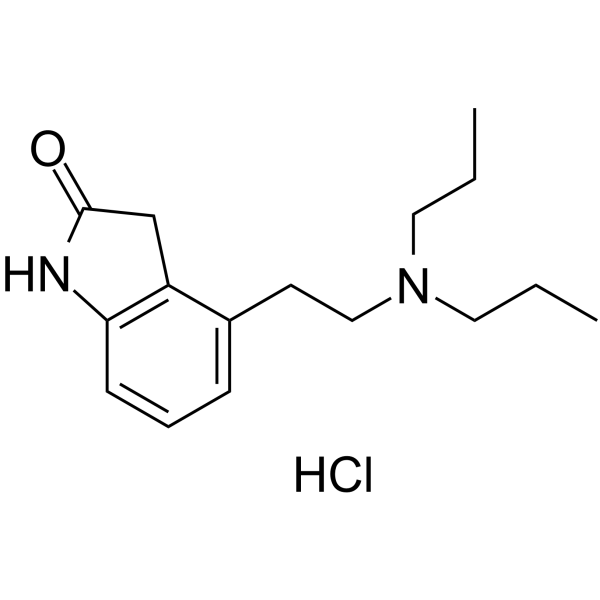
Ropinirole hydrochloride
-
HY-12705A
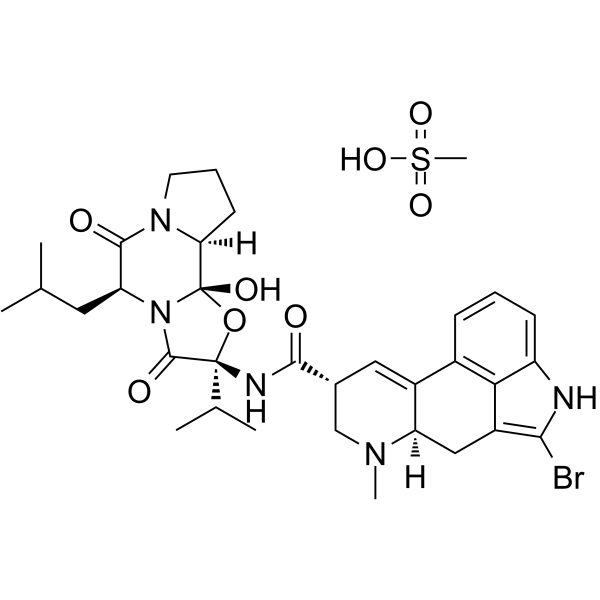
Bromocriptine mesylate
-
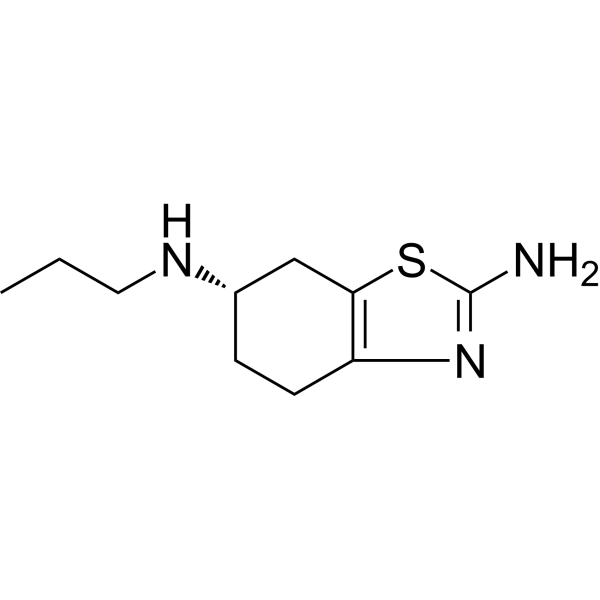
HY-B0410
Pramipexole
-
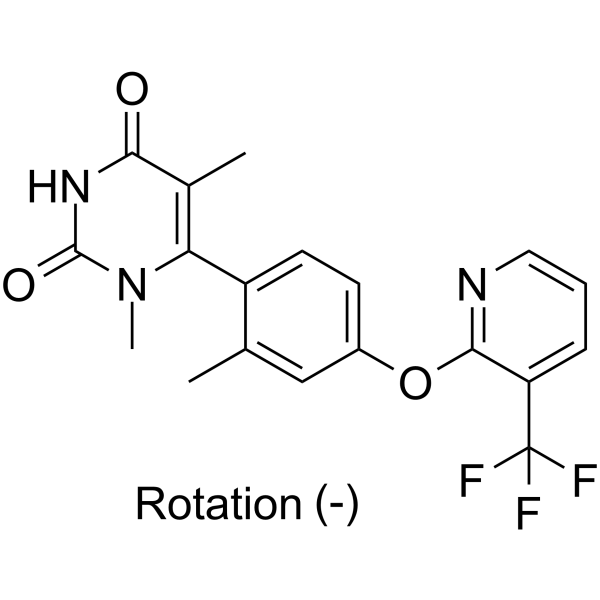
HY-119486
Tavapadon
-
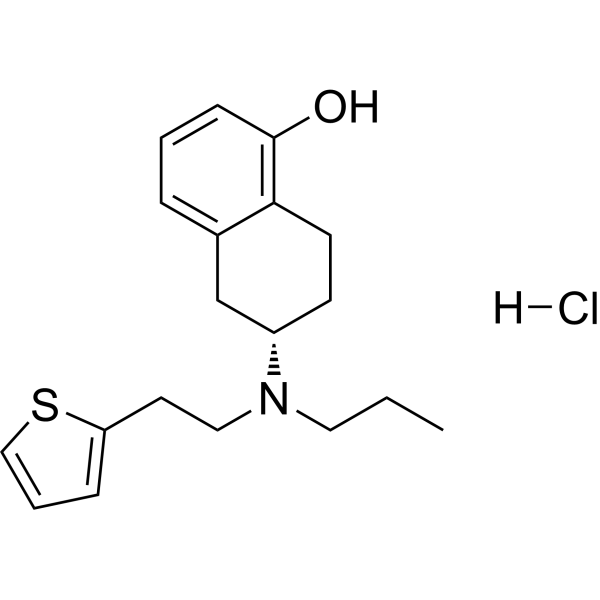
HY-A0007R
Rotigotine Hydrochloride (Standard)
-
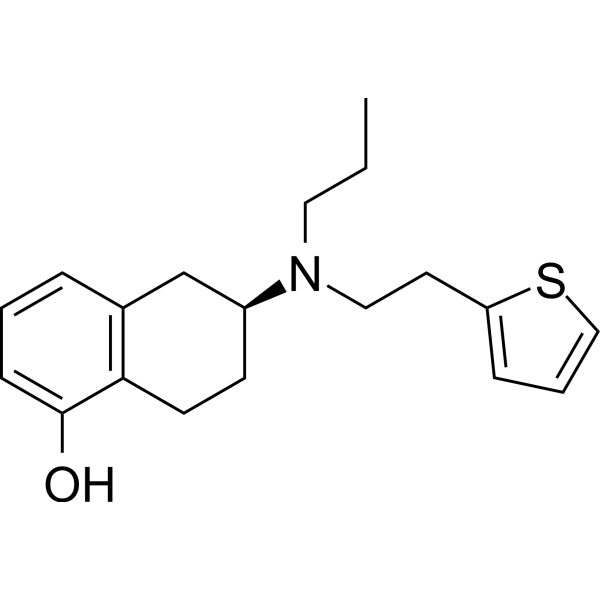
HY-75502
Rotigotine
-
HY-17366
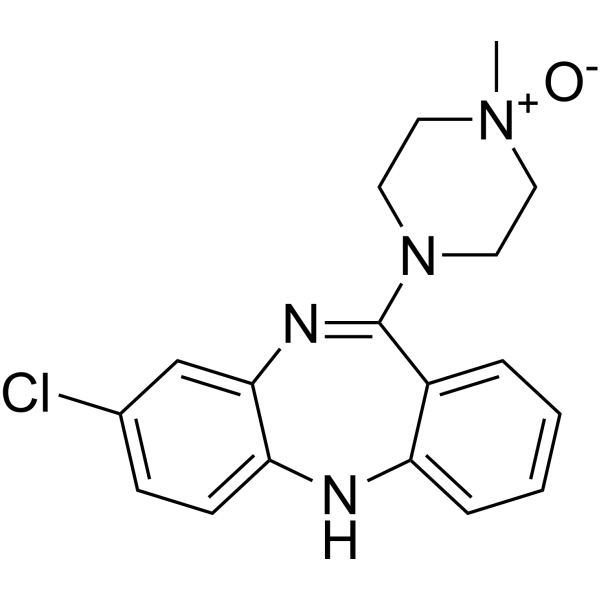
Clozapine N-oxide
-
HY-14763
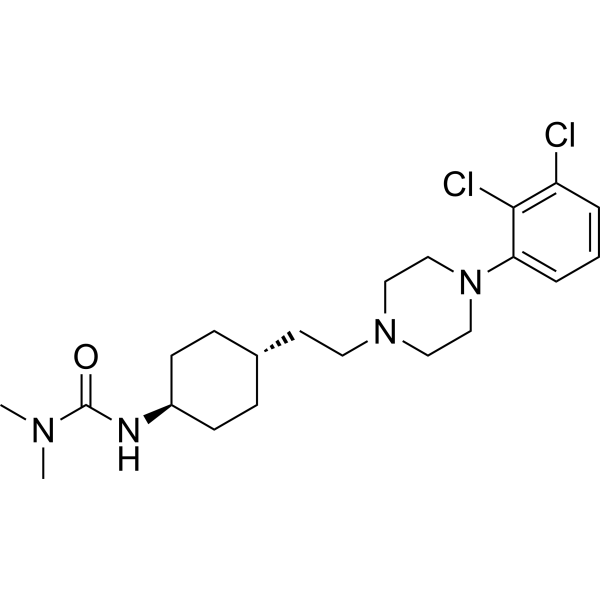
Cariprazine
-

HY-17366R
Clozapine N-oxide (Standard)
-
HY-B0735A
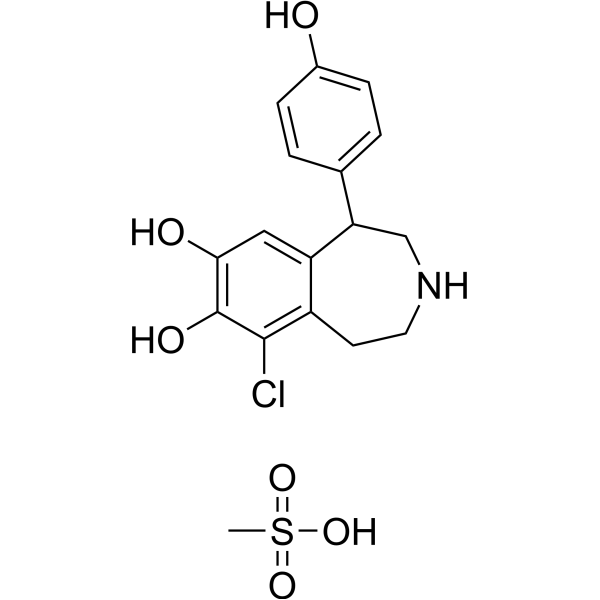
Fenoldopam mesylate
-
HY-A0008
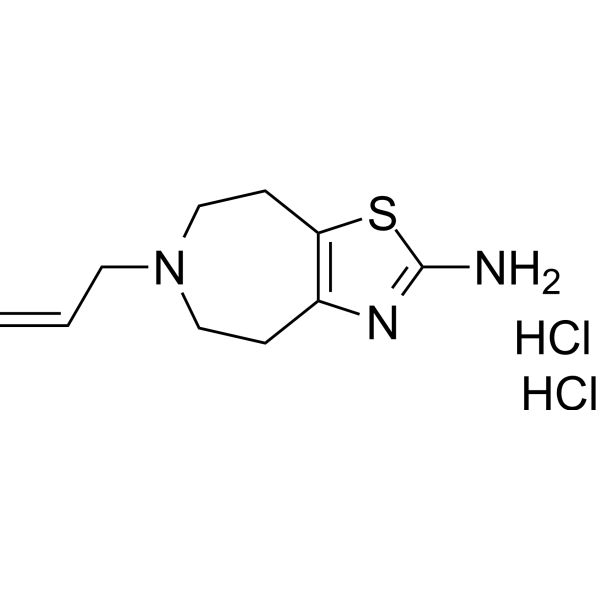
Talipexole dihydrochloride
Publications Citing Use of MedChemExpress (MCE) Rotigotine Hydrochloride
MoreAll Dopamine Receptor Isoforms
MoreAll Adrenergic Receptor Isoforms
MoreAll 5-HT Receptor Isoforms
More

Biological Activity
|
5-HT1A Receptor |
D3 Receptor 0.71 nM (Ki) |
D2 Receptor 4-15 nM (Ki) |
D5 Receptor 4-15 nM (Ki) |
D4 Receptor 4-15 nM (Ki) |
D1 Receptor 83 nM (Ki) |
α1A 176 nM (Ki) |
α1B 273 nM (Ki) |
α2A 338 nM (Ki) |
α2B 27 nM (Ki) |
5-HT1A Receptor 30 nM (Ki) |
5-HT7 Receptor 86 nM (Ki) |
Rotigotine (N-0923) has a 10-fold selectivity for D3 (pKi 9.2) receptors compared with D2, D4 and D5 (pKi 8.5-8.0) and a 100-fold selectivity compared with D1 receptors (pKi 7.2). In functional studies, Rotigotine (N-0923) behaves as full agonist at all dopamine receptors but notably the potency for stimulation of D1 receptors is similar to that for D2 and D3 receptors (pEC50 respectively: 9.0, 9.4-8.6, 9.7)[1]. Rotigotine (N-0923) (10 μM) decreases the number of THir neurons by 40% in primary mesencephalic cell culture. Rotigotine (0.01 μM) slightly protects dopaminergic neurons against MPP+ toxicity, significantly protects dopaminergic neurons against rotenone-induced cell death, and significantly inhibits ROS production by rotenone[4].
MedChemExpress (MCE) has not independently confirmed the accuracy of these methods. They are for reference only.
MedChemExpress (MCE) has not independently confirmed the accuracy of these methods. They are for reference only.


Chemical Information
-
CAS No. 125572-93-2
-
Appearance Solid
-
Molecular Weight 351.93
-
Formula C19H26ClNOS
-
Color White to off-white
-
SMILES
OC1=C2CC[C@@H](CC2=CC=C1)N(CCC3=CC=CS3)CCC.[H]Cl
-
Synonyms
N-0923 Hydrochloride
-
Shipping
Room temperature in continental US; may vary elsewhere.
-
Storage
4°C, sealed storage, away from moisture
* In solvent : -80°C, 6 months; -20°C, 1 month (sealed storage, away from moisture)


Publications (3)
-
Journal Impact Factor
-
Most Recent
-
Acta Pharmacol Sin
Dysfunction of subthalamic dopaminergic circuitry contributes to anxiety- and depression-like behaviors in 6-OHDA lesion-induced hemiparkinsonian mice. [Abstract]2025 May 6. PMID: 40329003 -
Clin Chem
Discovering Cross-Reactivity in Urine Drug Screening Immunoassays through Large-Scale Analysis of Electronic Health Records. [Abstract]2019 Dec;65(12):1522-1531. PMID: 31578215 -
bioRxiv
2025 Aug 12:2025.08.08.668522. PMID: 40832361


Solvent & Solubility
DMSO : ≥ 50 mg/mL (142.07 mM; Hygroscopic DMSO has a significant impact on the solubility of product, please use newly opened DMSO)
H2O : 4.76 mg/mL (13.53 mM; ultrasonic and warming and heat to 60°C)
* "≥" means soluble, but saturation unknown.
Please refer to the solubility information to select the appropriate solvent. Once prepared, please aliquot and store the solution to prevent product inactivation from repeated freeze-thaw cycles.
Storage method and period of stock solution: -80°C, 6 months; -20°C, 1 month (sealed storage, away from moisture). When stored at -80°C, please use it within 6 months. When stored at -20°C, please use it within 1 month.
* Note: If you choose water as the stock solution, please dilute it to the working solution, then filter and sterilize it with a 0.22 μm filter before use.
Please refer to the solubility information to select the appropriate solvent. Once prepared, please aliquot and store the solution to prevent product inactivation from repeated freeze-thaw cycles.
Storage method and period of stock solution: -80°C, 6 months; -20°C, 1 month (sealed storage, away from moisture). When stored at -80°C, please use it within 6 months. When stored at -20°C, please use it within 1 month.
* Note: If you choose water as the stock solution, please dilute it to the working solution, then filter and sterilize it with a 0.22 μm filter before use.
Concentration (start) × Volume (start) = Concentration (final) × Volume (final)
Select the appropriate dissolution method based on your experimental animal and administration route.
- For the following dissolution methods, please ensure to first prepare a clear stock solution using an In Vitro approach and then sequentially add co-solvents:
- To ensure reliable experimental results, the clarified stock solution can be appropriately stored based on storage conditions. As for the working solution for In Vivo experiments, it is recommended to prepare freshly and use it on the same day.
- The percentages shown for the solvents indicate their volumetric ratio in the final prepared solution. If precipitation or phase separation occurs during preparation, heat and/or sonication can be used to aid dissolution.
Add each solvent one by one: 10% DMSO 40% PEG300 5% Tween-80 45% Saline
Solubility: ≥ 2.5 mg/mL (7.10 mM); Clear solution
This protocol yields a clear solution of ≥ 2.5 mg/mL (saturation unknown).
Taking 1 mL working solution as an example, add 100 μL DMSO stock solution (25.0 mg/mL) to 400 μL PEG300, and mix evenly; then add 50 μL Tween-80 and mix evenly; then add 450 μL Saline to adjust the volume to 1 mL.
Preparation of Saline: Dissolve 0.9 g sodium chloride in ddH₂O and dilute to 100 mL to obtain a clear Saline solution.
Add each solvent one by one: 10% DMSO 90% (20% SBE-β-CD in Saline)
Solubility: ≥ 2.5 mg/mL (7.10 mM); Clear solution
This protocol yields a clear solution of ≥ 2.5 mg/mL (saturation unknown).
Taking 1 mL working solution as an example, add 100 μL DMSO stock solution (25.0 mg/mL) to 900 μL 20% SBE-β-CD in Saline, and mix evenly.
Preparation of 20% SBE-β-CD in Saline (4°C, storage for one week): 2 g SBE-β-CD powder is dissolved in 10 mL Saline, completely dissolve until clear.
Please enter the basic information of animal experiments:
-
-
-
-
Recommended: Prepare an additional quantity of animals to account for potential losses during experiments.
Please enter your animal formula composition:
-
%DMSO +
Recommended: Keep the proportion of DMSO in working solution below 2% if your animal is weak.
-
%+
-
+%Tween-80 + +
-
%Saline +
The co-solvents required include: DMSO, . All of co-solvents are available by MedChemExpress (MCE). , Tween 80. All of co-solvents are available by MedChemExpress (MCE).
Working solution concentration: 0.22 mg/mL
Method for preparing stock solution: mg drug dissolved in μL DMSO. Stock solution concentration: mg/mL. * In solvent : -80°C, 6 months; -20°C, 1 month (sealed storage, away from moisture)
1. Take μL DMSO stock solution;
2. Add μL .
μL , mix evenly;
3. Then add μL Tween 80, mix evenly;
4. Then add μL
Please ensure that the stock solution in the first step is dissolved to a clear state, and add co-solvents in sequence. You can use ultrasonic heating (ultrasonic cleaner, recommended frequency 20-40 kHz), vortexing, etc. to assist dissolution.

Protocol
Binding assays are performed in 96-well polypropylene tubes in a final volume of 2 mL for D1 and D4 membranes and 1 mL for D2, D3 and D5 membranes containing: 50 μL radioligand, 10 μL drug/buffer/non-specific binding, buffer (final concentration 50 mM Tris-HCl pH 7.4, MgCl2 2 mM) and membranes (5 μg protein for D2 and D3 and 25 μg protein for D1 and D5). Following 120 min of incubation at 25°C, bound radioligand is determined by rapid vacuum filtration through A/C glass fibre filters presoaked in 0.1% polyethylenimine. The filters are washed four times with 2 mL ice-cold ishing buffer (Tris-HCl 50 mM, pH 7.4 at 4°C) and retained radioactivity is determined by liquid scintillation counting.
MedChemExpress (MCE) has not independently confirmed the accuracy of these methods. They are for reference only.
Primed rats: Two weeks after the 6-OHDA lesions, rats are primed with apomorphine (0.5 mg/kg s.c.). Rats showing less than 150 contralateral rotations during the 1 h testing period are excluded from the study. Three days after priming, rats are divided into different experimental groups and treated with different doses of the dopamine receptor agonists (Rotigotine or pramipexole) alone or in combination with dopamine D1 (SCH 39166) or D2 (eticlopride) receptor antagonists as reported: saline+Rotigotine (0.035 mg/kg s.c., n=9; 0.1 mg/kg s.c., n=9; 0.35 mg/kg s.c., n=8); SCH 39166 (0.1 mg/kg s.c.)+Rotigotine (0.035 mg/kg s.c., n=5; 0.1 mg/kg s.c., n=7; 0.35 mg/kg s.c., n=5); eticlopride (0.1 mg/kg s.c.) + Rotigotine (0.1 mg/kg s.c., n=5; 0.35 mg/kg s.c., n=5); Saline+pramipexole (0.035 mg/kg s.c., n=5; 0.1 mg/kg s.c., n=12; 0.35 mg/kg s.c., n=7); SCH 39166 (0.1 mg/kg s.c.)+pramipexole (0.035 mg/kg s.c., n=5; 0.1 mg/kg s.c., n=6; 0.35 mg/kg s.c., n=6); eticlopride (0.1 mg/kg s.c.)+pramipexole (0.1 mg/kg s.c., n=7; 0.35 mg/kg s.c., n=5).
MedChemExpress (MCE) has not independently confirmed the accuracy of these methods. They are for reference only.


Purity & Documentation
-
Data Sheet (280 KB)
-
SDS (393 KB)
- English - EN (393 KB)
- Français - FR (393 KB)
- Deutsch - DE (393 KB)
- Norwegian - NO (393 KB)
- Español - ES (393 KB)
- Swedish - SV (393 KB)
- Italian - IT (393 KB)
- Korean - KR (393 KB)
- Portuguese - PT (393 KB)
-
Handling Instructions (2659 KB)
References
[1]. Wood M, et al. Rotigotine is a potent agonist at dopamine D1 receptors as well as at dopamine D2 and D3 receptors. Br J Pharmacol. 2015 Feb;172(4):1124-35. [Content Brief]
[2]. Scheller D, et al. The in vitro receptor profile of rotigotine: a new agent for the treatment of Parkinson's disease. Naunyn Schmiedebergs Arch Pharmacol. 2009 Jan;379(1):73-86. [Content Brief]
[3]. Fenu S, et al. In vivo dopamine agonist properties of rotigotine: Role of D1 and D2 receptors. Eur J Pharmacol. 2016 Oct 5;788:183-91. [Content Brief]
[4]. Radad K, et al. Neuroprotective effect of rotigotine against complex I inhibitors, MPP? and rotenone, in primary mesencephalic cell culture. Folia Neuropathol. 2014;52(2):179-86. [Content Brief]


Complete Stock Solution Preparation Table
Please refer to the solubility information to select the appropriate solvent. Once prepared, please aliquot and store the solution to prevent product inactivation from repeated freeze-thaw cycles.
Storage method and period of stock solution: -80°C, 6 months; -20°C, 1 month (sealed storage, away from moisture). When stored at -80°C, please use it within 6 months. When stored at -20°C, please use it within 1 month.
| Optional Solvent | Concentration Solvent Mass | 1 mg | 5 mg | 10 mg | 25 mg |
|---|---|---|---|---|---|
| H2O / DMSO | 1 mM | 2.8415 mL | 14.2074 mL | 28.4147 mL | 71.0369 mL |
| 5 mM | 0.5683 mL | 2.8415 mL | 5.6829 mL | 14.2074 mL | |
| 10 mM | 0.2841 mL | 1.4207 mL | 2.8415 mL | 7.1037 mL | |
| DMSO | 15 mM | 0.1894 mL | 0.9472 mL | 1.8943 mL | 4.7358 mL |
| 20 mM | 0.1421 mL | 0.7104 mL | 1.4207 mL | 3.5518 mL | |
| 25 mM | 0.1137 mL | 0.5683 mL | 1.1366 mL | 2.8415 mL | |
| 30 mM | 0.0947 mL | 0.4736 mL | 0.9472 mL | 2.3679 mL | |
| 40 mM | 0.0710 mL | 0.3552 mL | 0.7104 mL | 1.7759 mL | |
| 50 mM | 0.0568 mL | 0.2841 mL | 0.5683 mL | 1.4207 mL | |
| 60 mM | 0.0474 mL | 0.2368 mL | 0.4736 mL | 1.1839 mL | |
| 80 mM | 0.0355 mL | 0.1776 mL | 0.3552 mL | 0.8880 mL | |
| 100 mM | 0.0284 mL | 0.1421 mL | 0.2841 mL | 0.7104 mL |
* Note: If you choose water as the stock solution, please dilute it to the working solution, then filter and sterilize it with a 0.22 μm filter before use.


Rotigotine Hydrochloride Related Classifications
HY-A0007 Related Classifications
 Powered by Bioz