



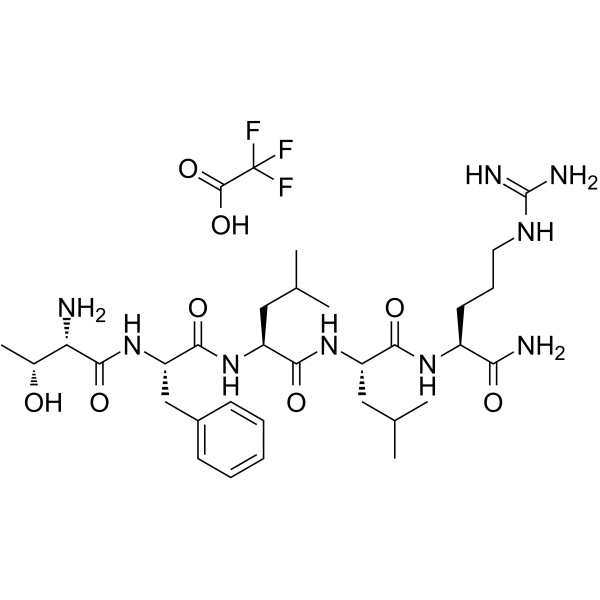
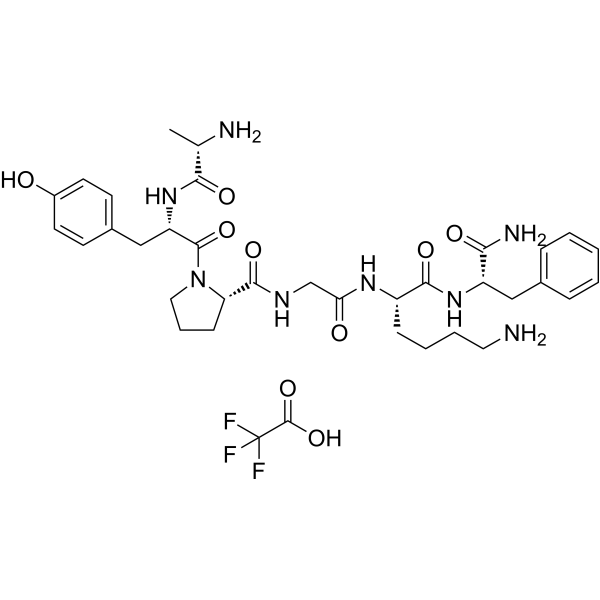
TFLLR-NH2TFA
Based on 3 publication(s) in Google Scholar
TFLLR-NH2 (TFA) is a selective PAR1 agonist with an EC50 of 1.9 μM.
For research use only. We do not sell to patients.
- Purity : 99.62%
- CAS No.: 1313730-19-6
- Formula: C33H54F3N9O8
- Molecular Weight:761.83
-
Storage:
Sealed storage, away from moisture.
Powder -80°C, 2 years , -20°C, 1 year* In solvent : -80°C, 6 months; -20°C, 1 month (sealed storage, away from moisture)

To place orders, for customer services and technical support, please contact: MedChemExpress USA
Tel: 609-228-6898 E-mail: [email protected] [email protected]


-
 Biological Activity
-
Chemical Information
-
Solvent & Solubility
- Purity & Documentation
- References
-
 Help & FAQs


-
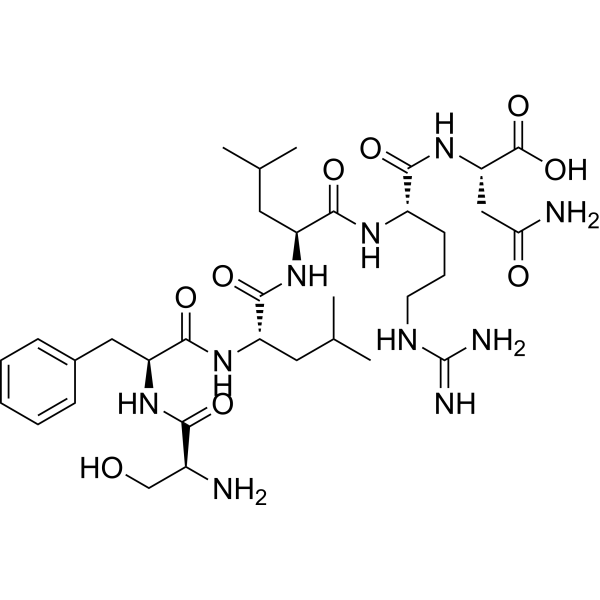
HY-P0078
TRAP-6PAR1 Agonist -
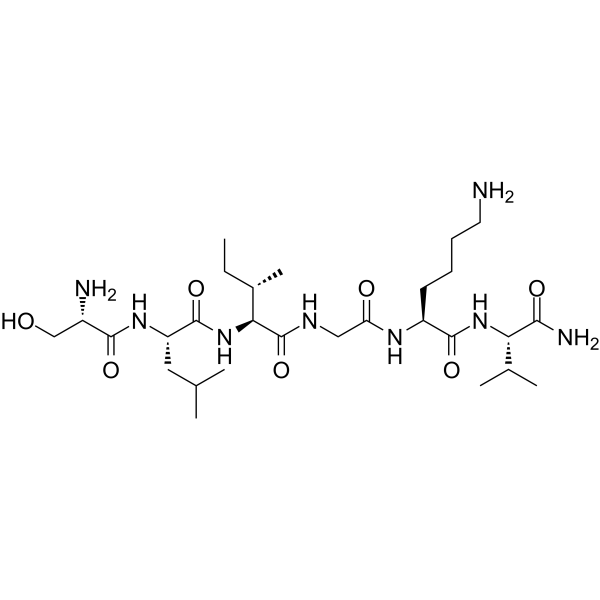
HY-P0283
Protease-Activated Receptor-2, amidePAR2 Activator -
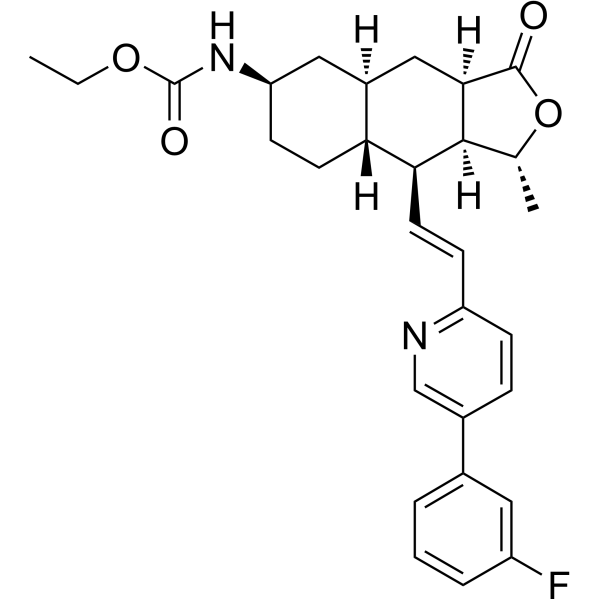
HY-10119
VorapaxarPAR-1 Antagonist -
HY-P1314
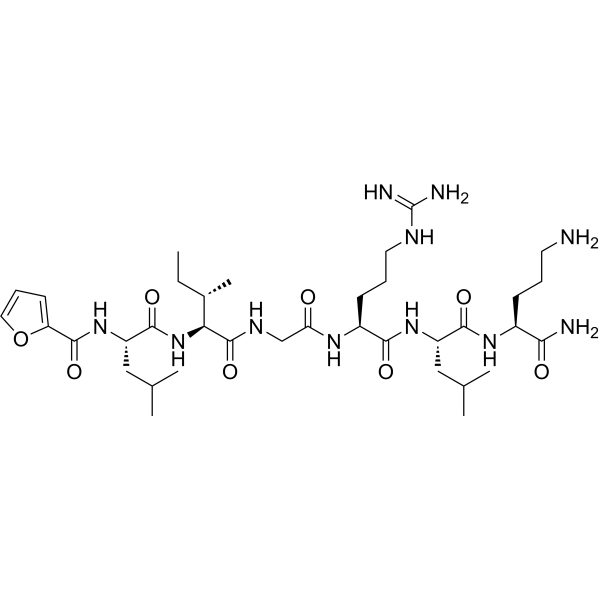
2-Furoyl-LIGRLO-amidePAR2 Agonist -
HY-P2518
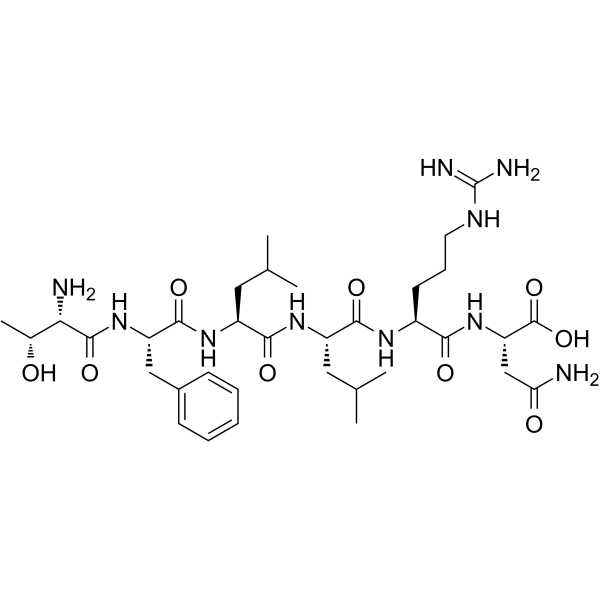
Protease-Activated Receptor-1, PAR-1 AgonistPAR-1 Agonist Peptide -
HY-10219
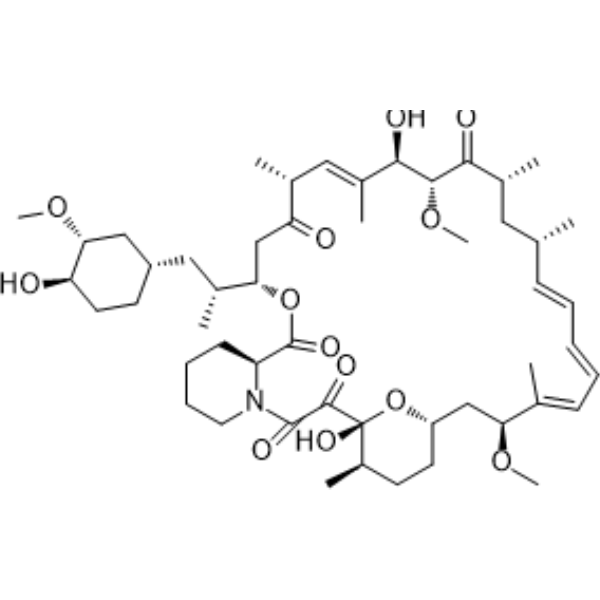
RapamycinmTOR Inhibitor -
HY-P4803
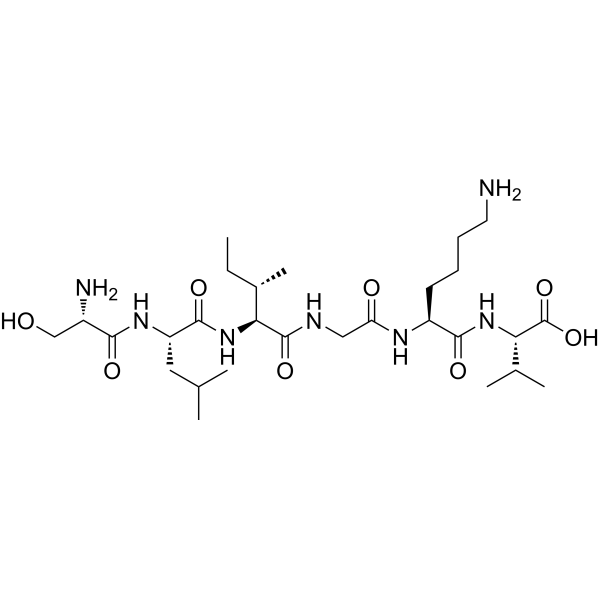
PAR-2 (1-6) (human)PAR2 Agonist -
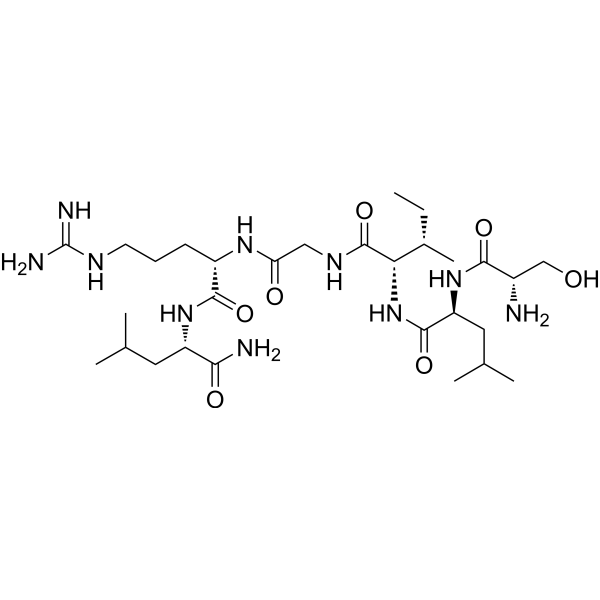
HY-P1308
SLIGRL-NH2PAR-2 Agonist -
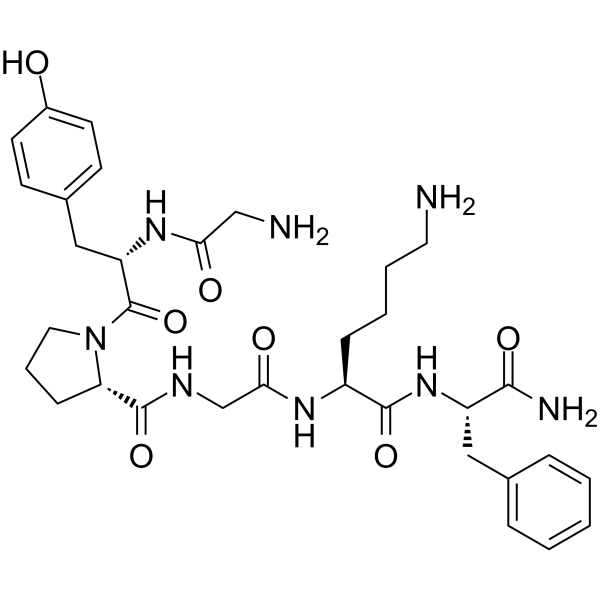
HY-P0297
Protease-Activated Receptor-4PAR Agonist -
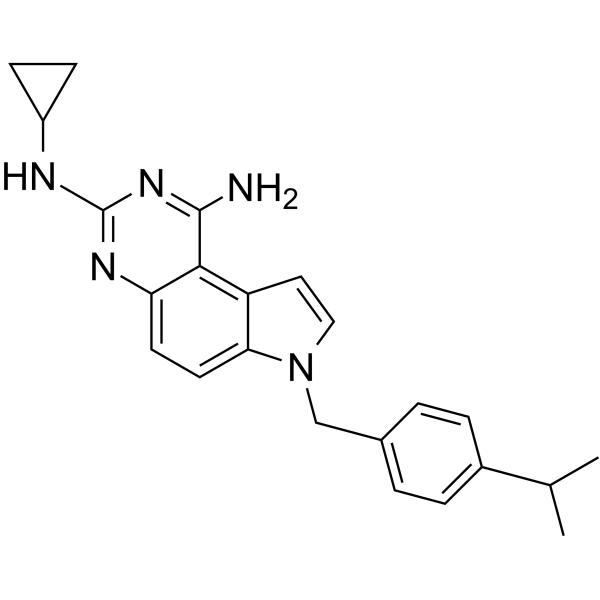
HY-14993
SCH79797PAR1 Antagonist -
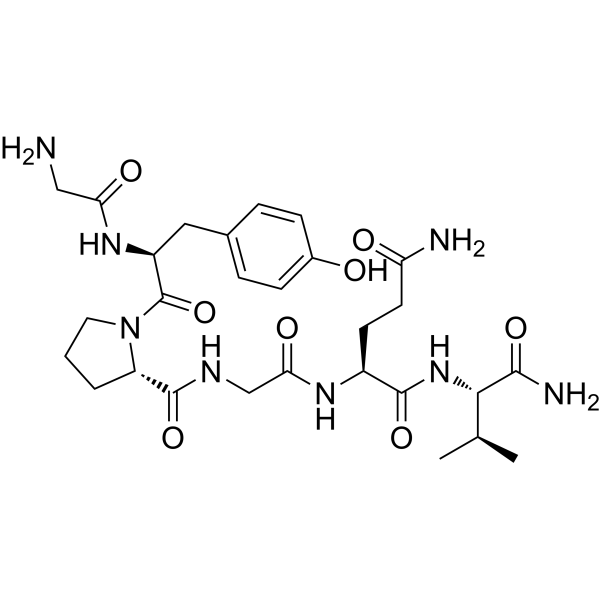
HY-P4004
PAR-4 (1-6) amide (human)Platelets Activator -
HY-P1309A
PAR-4 Agonist Peptide, amide TFAPAR-4 Agonist
Publications Citing Use of MedChemExpress (MCE) TFLLR-NH2TFA
More

Biological Activity
Description
IC50 & Target
|
PAR1 1.9 μM (EC50) |
In Vitro
PAR1 agonists stimulate concentration-dependent increases in [Ca2+]i and in the proportions of neurones. The maximal increase in [Ca2+]i above basal is detected in response to 10 μm TF-NH2 (peak 196.5±20.4 nM, n=25) when 50-80% of identified neurones responded[1]. SW620 cells cultured in the supernatant of TFLLR-NH2-activated platelets upregulate E-cadherin expression and downregulate the vimentin expression. In the in vitro platelet culture system, a TFLLR-NH2 dose-dependent increase of secreted TGF-β1 is detected in the supernatant[2].
MedChemExpress (MCE) has not independently confirmed the accuracy of these methods. They are for reference only. .
In Vivo
MedChemExpress (MCE) has not independently confirmed the accuracy of these methods. They are for reference only.


Chemical Information
-
CAS No. 1313730-19-6
-
Appearance Solid
-
Molecular Weight 761.83
-
Formula C33H54F3N9O8
-
Color White to off-white
-
Sequence Shortening
TFLLR-NH2
-
Shipping
Room temperature in continental US; may vary elsewhere.
-
Storage
Sealed storage, away from moisture
Powder -80°C 2 years -20°C 1 year * In solvent : -80°C, 6 months; -20°C, 1 month (sealed storage, away from moisture)


Publications (3)
-
Journal Impact Factor
-
Most Recent
-
Cells
Impact of Short-Term (+)-JQ1 Exposure on Mouse Aorta: Unanticipated Inhibition of Smooth Muscle Contractility. [Abstract]2023 May 24;12(11):1461. PMID: 37296583 -
-
bioRxiv
2024 Jul 26:2024.07.26.605282. PMID: 39091869


Solvent & Solubility
In Vitro:
DMSO : 100 mg/mL (131.26 mM; Need ultrasonic; Hygroscopic DMSO has a significant impact on the solubility of product, please use newly opened DMSO)
H2O : 100 mg/mL (131.26 mM; Need ultrasonic)
Please refer to the solubility information to select the appropriate solvent. Once prepared, please aliquot and store the solution to prevent product inactivation from repeated freeze-thaw cycles.
Storage method and period of stock solution: -80°C, 6 months; -20°C, 1 month (sealed storage, away from moisture). When stored at -80°C, please use it within 6 months. When stored at -20°C, please use it within 1 month.
* Note: If you choose water as the stock solution, please dilute it to the working solution, then filter and sterilize it with a 0.22 μm filter before use.
Please refer to the solubility information to select the appropriate solvent. Once prepared, please aliquot and store the solution to prevent product inactivation from repeated freeze-thaw cycles.
Storage method and period of stock solution: -80°C, 6 months; -20°C, 1 month (sealed storage, away from moisture). When stored at -80°C, please use it within 6 months. When stored at -20°C, please use it within 1 month.
* Note: If you choose water as the stock solution, please dilute it to the working solution, then filter and sterilize it with a 0.22 μm filter before use.
Concentration (start) × Volume (start) = Concentration (final) × Volume (final)
In Vivo:
Select the appropriate dissolution method based on your experimental animal and administration route.
- For the following dissolution methods, please ensure to first prepare a clear stock solution using an In Vitro approach and then sequentially add co-solvents:
- To ensure reliable experimental results, the clarified stock solution can be appropriately stored based on storage conditions. As for the working solution for In Vivo experiments, it is recommended to prepare freshly and use it on the same day.
- The percentages shown for the solvents indicate their volumetric ratio in the final prepared solution. If precipitation or phase separation occurs during preparation, heat and/or sonication can be used to aid dissolution.
Add each solvent one by one: 10% DMSO 40% PEG300 5% Tween-80 45% Saline
Solubility: ≥ 2.5 mg/mL (3.28 mM); Clear solution
This protocol yields a clear solution of ≥ 2.5 mg/mL (saturation unknown).
Taking 1 mL working solution as an example, add 100 μL DMSO stock solution (25.0 mg/mL) to 400 μL PEG300, and mix evenly; then add 50 μL Tween-80 and mix evenly; then add 450 μL Saline to adjust the volume to 1 mL.
Preparation of Saline: Dissolve 0.9 g sodium chloride in ddH₂O and dilute to 100 mL to obtain a clear Saline solution.
Add each solvent one by one: 10% DMSO 90% (20% SBE-β-CD in Saline)
Solubility: ≥ 2.5 mg/mL (3.28 mM); Clear solution
This protocol yields a clear solution of ≥ 2.5 mg/mL (saturation unknown).
Taking 1 mL working solution as an example, add 100 μL DMSO stock solution (25.0 mg/mL) to 900 μL 20% SBE-β-CD in Saline, and mix evenly.
Preparation of 20% SBE-β-CD in Saline (4°C, storage for one week): 2 g SBE-β-CD powder is dissolved in 10 mL Saline, completely dissolve until clear.
For the following dissolution methods, please prepare the working solution directly:
It is recommended to prepare fresh solutions and use them promptly within a short period of time.
The percentages shown for the solvents indicate their volumetric ratio in the final prepared solution. If precipitation or phase separation occurs during preparation, heat and/or sonication can be used to aid dissolution.
Add each solvent one by one: PBS
Solubility: 33.33 mg/mL (43.75 mM); Clear solution; Need ultrasonic
In Vivo Dissolution Calculator
Please enter the basic information of animal experiments:
-
-
-
-
Recommended: Prepare an additional quantity of animals to account for potential losses during experiments.
Working solution concentration: 0.22 mg/mL
This product has good water solubility, please refer to the measured solubility data in water/PBS/Saline for details.


Purity & Documentation
-
Data Sheet (279 KB)
-
SDS (396 KB)
- English - EN (396 KB)
- Français - FR (396 KB)
- Deutsch - DE (396 KB)
- Norwegian - NO (396 KB)
- Español - ES (396 KB)
- Swedish - SV (396 KB)
- Italian - IT (396 KB)
- Korean - KR (396 KB)
- Portuguese - PT (396 KB)
-
Handling Instructions (2659 KB)
References
[1]. de Garavilla L, et al. Agonists of proteinase-activated receptor 1 induce plasma extravasation by a neurogenic mechanism. Br J Pharmacol. 2001 Aug;133(7):975-87. [Content Brief]
[2]. Kawabata A, et al. Characterization of the protease-activated receptor-1-mediated contraction and relaxation in the rat duodenal smooth muscle. [Content Brief]
[3]. Jia Y, et al. Activation of platelet protease-activated receptor-1 induces epithelial-mesenchymal transition and chemotaxis of colon cancer cell line SW620. Oncol Rep. 2015 Jun;33(6):2681-8. [Content Brief]


Complete Stock Solution Preparation Table
Please refer to the solubility information to select the appropriate solvent. Once prepared, please aliquot and store the solution to prevent product inactivation from repeated freeze-thaw cycles.
Storage method and period of stock solution: -80°C, 6 months; -20°C, 1 month (sealed storage, away from moisture). When stored at -80°C, please use it within 6 months. When stored at -20°C, please use it within 1 month.
| Optional Solvent | Concentration Solvent Mass | 1 mg | 5 mg | 10 mg | 25 mg |
|---|---|---|---|---|---|
| DMSO / H2O | 1 mM | 1.3126 mL | 6.5631 mL | 13.1263 mL | 32.8157 mL |
| 5 mM | 0.2625 mL | 1.3126 mL | 2.6253 mL | 6.5631 mL | |
| 10 mM | 0.1313 mL | 0.6563 mL | 1.3126 mL | 3.2816 mL | |
| 15 mM | 0.0875 mL | 0.4375 mL | 0.8751 mL | 2.1877 mL | |
| 20 mM | 0.0656 mL | 0.3282 mL | 0.6563 mL | 1.6408 mL | |
| 25 mM | 0.0525 mL | 0.2625 mL | 0.5251 mL | 1.3126 mL | |
| 30 mM | 0.0438 mL | 0.2188 mL | 0.4375 mL | 1.0939 mL | |
| 40 mM | 0.0328 mL | 0.1641 mL | 0.3282 mL | 0.8204 mL | |
| 50 mM | 0.0263 mL | 0.1313 mL | 0.2625 mL | 0.6563 mL | |
| 60 mM | 0.0219 mL | 0.1094 mL | 0.2188 mL | 0.5469 mL | |
| 80 mM | 0.0164 mL | 0.0820 mL | 0.1641 mL | 0.4102 mL | |
| 100 mM | 0.0131 mL | 0.0656 mL | 0.1313 mL | 0.3282 mL |
* Note: If you choose water as the stock solution, please dilute it to the working solution, then filter and sterilize it with a 0.22 μm filter before use.


TFLLR-NH2TFA Related Classifications
HY-P0226A Related Classifications
 Powered by Bioz