



Chlorpyrifos
Based on 2 publication(s) in Google Scholar
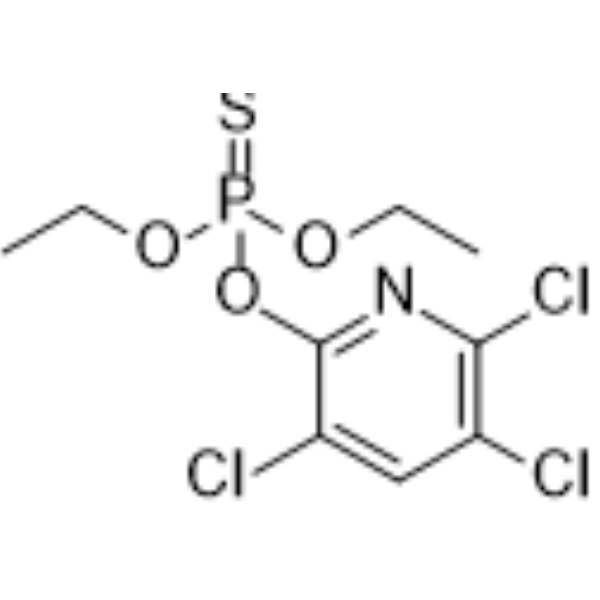
Chlorpyrifos is a neurotoxic insecticide that belongs to the class of thionite esters. Chlorpyrifos is also a AChE inhibitor that affects neurological function in insects, humans and other animals. Chlorpyrifos interferes with cell replication and differentiation, ultimately altering synaptic transmission in neurons.
연구목적의 판매만을 진행합니다. 환자를 대상으로 한 판매는 하지 않습니다.
- Purity : 99.95%
- CAS No.: 2921-88-2
- 화학식: C9H11Cl3NO3PS
- 분자량:350.59
-
보관:
4°C, sealed storage, away from moisture
* In solvent : -80°C, 6 months; -20°C, 1 month (sealed storage, away from moisture)

To place orders, for customer services and technical support, please contact: MedChemExpress USA
Tel: 609-228-6898 E-mail: [email protected] [email protected]


-
 Biological Activity
-
Chemical Information
-
용액&용해도
- Protocol
- 순도&문서
- References
-
 Help & FAQs


-
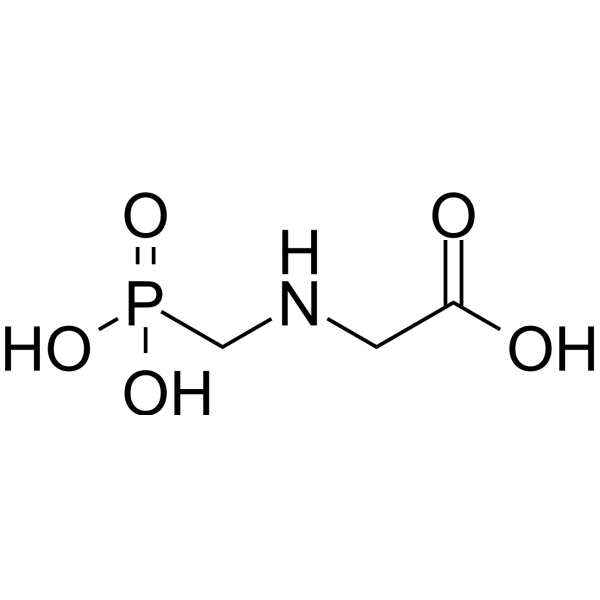
HY-B0863
GlyphosateEPSPS Inhibitor -
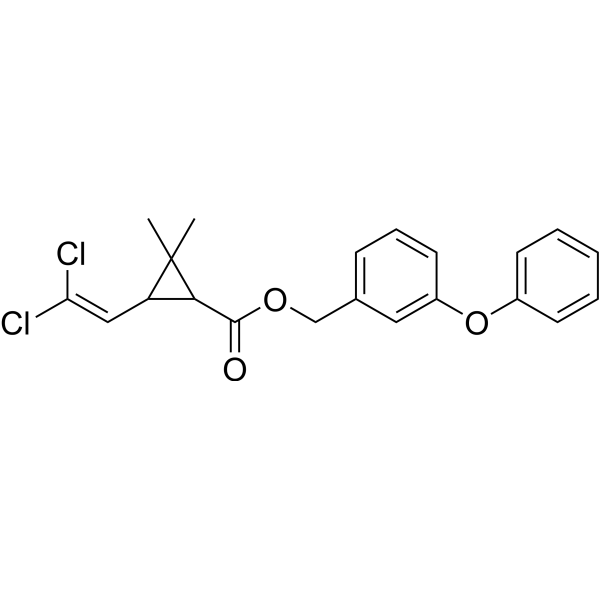
HY-B0887
PermethrinInsecticide, Mitochondrial complex I Inhibitor -
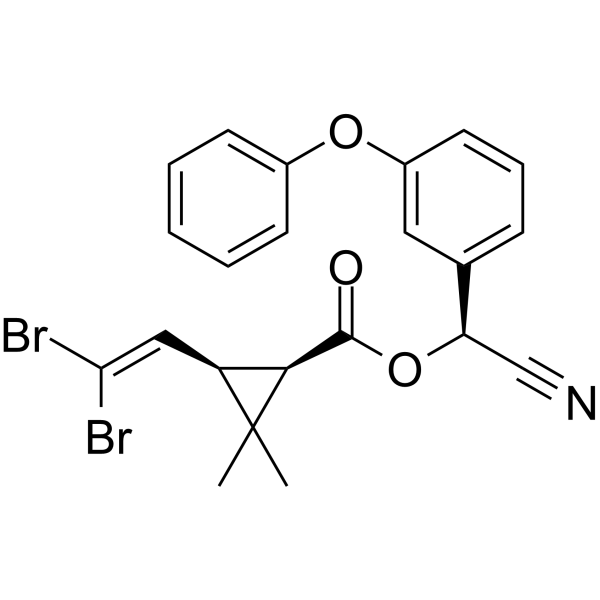
HY-B1971
DeltamethrinInsecticide -
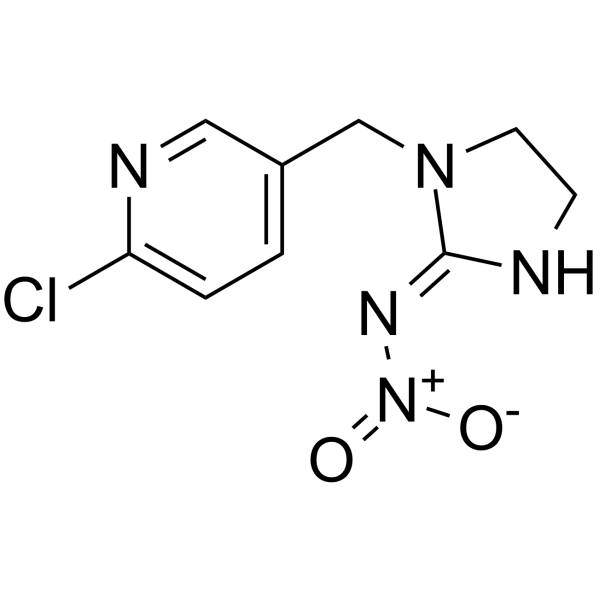
HY-B0838
ImidaclopridInsecticide -

HY-B0815R
Chlorpyrifos (Standard)Muscarinic Antagonist -
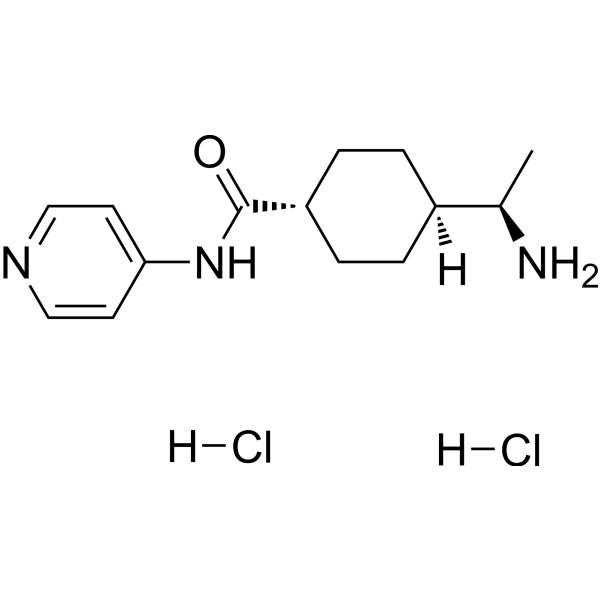
HY-10583
Y-27632 dihydrochlorideROCK Inhibitor -
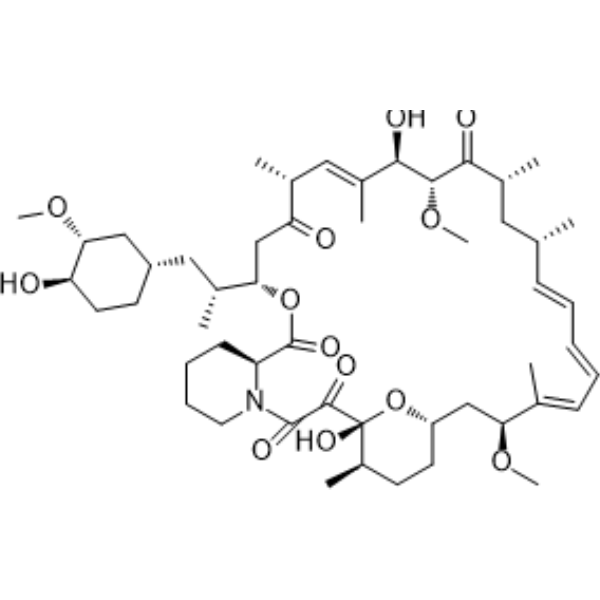
HY-10219
RapamycinmTOR Inhibitor -
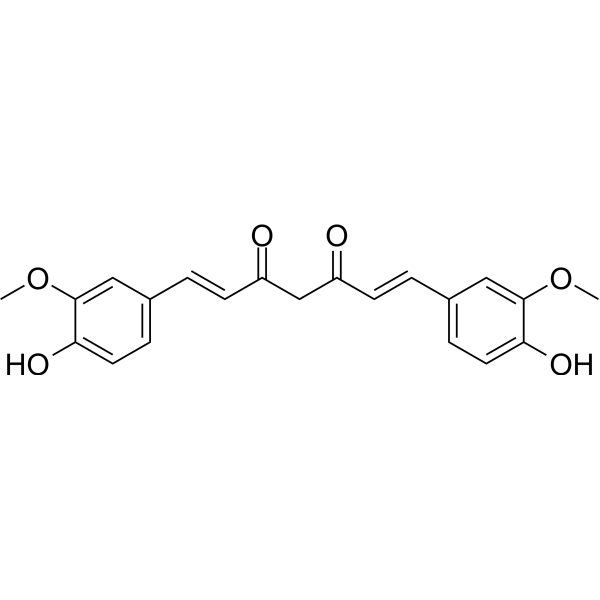
HY-N0005
Curcuminp300 Histone Acetylatransferase Inhibitor -
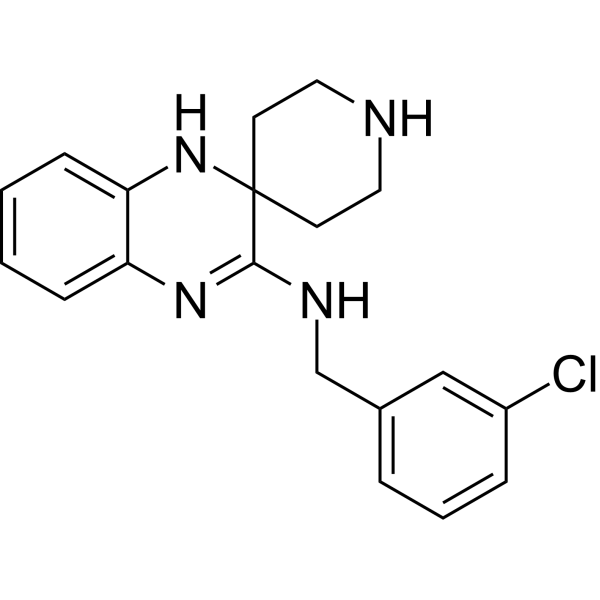
HY-12726
Liproxstatin-1Ferroptosis Inhibitor -
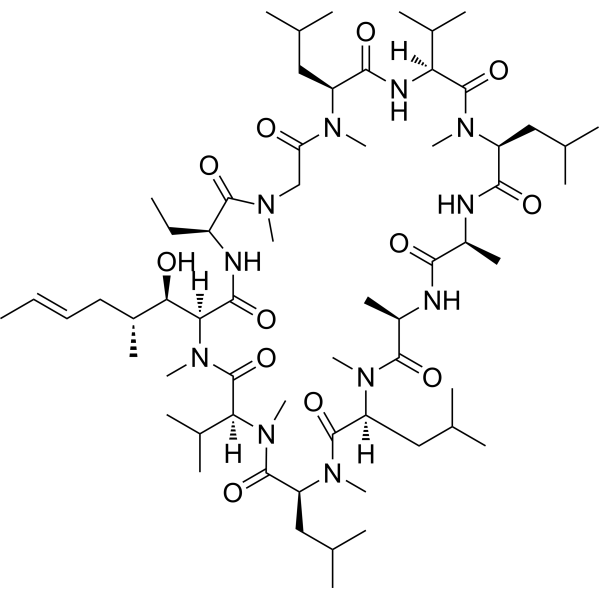
HY-B0579
Cyclosporin ACalcineurin Inhibitor -
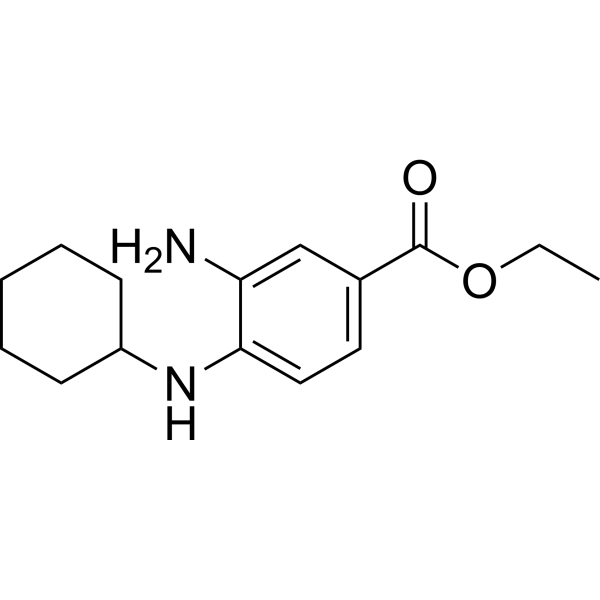
HY-100579
Ferrostatin-1Ferroptosis Inhibitor -
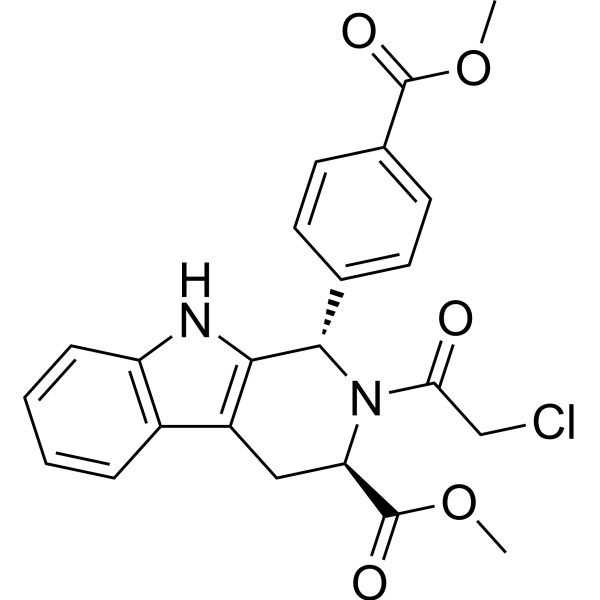
HY-100218A
RSL3GPX4 Inhibitor
Publications Citing Use of MedChemExpress (MCE) Chlorpyrifos
More Customer Validation & Images

-
In Vivo Efficacy Study
-
In Vivo Efficacy Study
-
In Vivo Efficacy Study


Biological Activity
제품 설명
IC50 & Target
|
AChE |
In Vitro
Chlorpyrifos mediates desulfuration to produce chlorpyrifos oxon (CPO), which has higher affinity toward the active site of serine-dependent ester hydrolases such as AChE[2].
Chlorpyrifos (3.9-250 μM; 24-72 h) is toxic to oligodendrocyte progenitors[3].
Chlorpyrifos toxicity is associated with (7.5-480 μM; 18 h) nuclear condensation and elevation of caspase 3/7 activity, (60 μM; 2, 4 h) Heme oxygenase-1 mRNA expression in Central Glia (CG-4) cells, and (30, 60, 120 μM; 24 h) enhances H2DCF-DA intensity[3].
MedChemExpress (MCE) has not independently confirmed the accuracy of these methods. They are for reference only.
-
Cell Line:Oligodendrocyte CG-4 cells
-
Concentration:3.9, 7.8, 15.6, 31.25, 62.5, 125, and 250 μM
-
Incubation Time:24, 48, and 72 hours
-
Result:Significantly inhibited cell viability over 62.5 μM.
-
Cell Line:Oligodendrocyte CG-4 cells
-
Concentration:0, 30, 60, 120 μM
-
Incubation Time:24 hours
-
Result:Resulted nuclear condensation and elevation in a dose-dependent manner.
In Vivo
Chlorpyrifos (1 mg/kg and 5 mg/kg for 1 mL/kg; s.c.; once daily for 3 d) has adverse effect on learning and memory abilities of rats, and affects pregnant rats on gestational days 9-12, results offspring behavioral abnormalities[4].
MedChemExpress (MCE) has not independently confirmed the accuracy of these methods. They are for reference only.


Chemical Information
-
CAS No. 2921-88-2
-
Appearance Solid
-
분자량 350.59
-
화학식 C9H11Cl3NO3PS
-
Color White to off-white
-
SMILES
S=P(OCC)(OCC)OC1=NC(Cl)=C(Cl)C=C1Cl
-
선적
Room temperature in continental US; may vary elsewhere.
-
보관
4°C, sealed storage, away from moisture
* In solvent : -80°C, 6 months; -20°C, 1 month (sealed storage, away from moisture)


Publications (2)
-
Journal Impact Factor
-
Most Recent
-
Anal Chem
Exposome-Scale Investigation of Cl-/Br-Containing Chemicals Using High-Resolution Mass Spectrometry, Multistage Machine Learning, and Cloud Computing. [Abstract]2025 Jun 3;97(21):11099-11109. PMID: 40401576 -
Chemosphere
Antagonistic effects and mechanisms of carbendazim and chlorpyrifos on the neurobehavior of larval zebrafish. [Abstract]2022 Apr:293:133522. PMID: 34995633
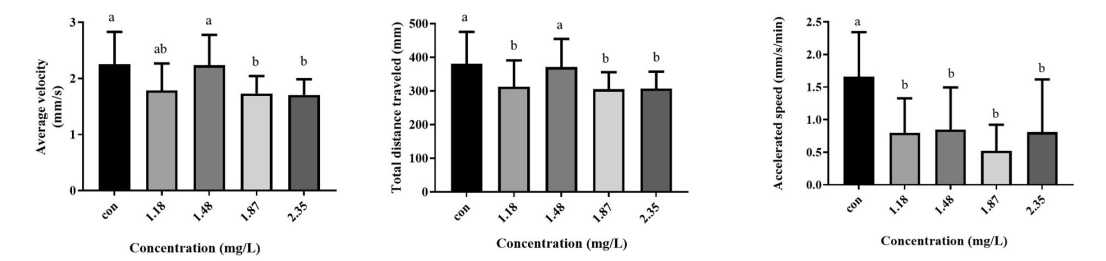
Chlorpyrifos purchased from MedChemExpress. Usage Cited in: Chemosphere. 2022 Apr:293:133522. [Abstract]
Exposure to carbendazim and chlorpyrifos (0-2.35 mg/mL) together at the indicated concentrations generally reduced swimming activity. Although angular velocity, turn angle, and meander did not differ significantly from controls during the 3-min free-swimming period under darkness, average velocity, total distance traveled, and light-dark acceleration were significantly reduced at higher combined doses (all p < 0.05).
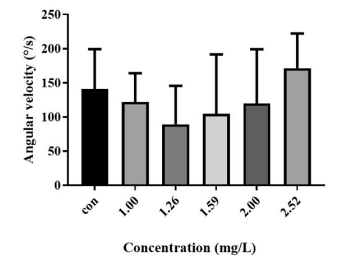
Chlorpyrifos purchased from MedChemExpress. Usage Cited in: Chemosphere. 2022 Apr:293:133522. [Abstract]
Effects of chlorpyrifos (0-2.52 mg/L, 120 h) on larval zebrafish swimming behavior at 5 dpf.
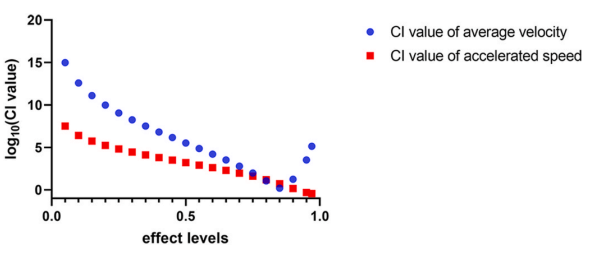
Chlorpyrifos purchased from MedChemExpress. Usage Cited in: Chemosphere. 2022 Apr:293:133522. [Abstract]
Combination index (CI) values of carbendazim and chlorpyrifos on zebrafish average swim velocity and acceleration during the lightdark transition.


용액&용해도
In Vitro:
H2O : 100 mg/mL (285.23 mM; Need ultrasonic)
DMSO : 50 mg/mL (142.62 mM; Need ultrasonic; Hygroscopic DMSO has a significant impact on the solubility of product, please use newly opened DMSO)
Please refer to the solubility information to select the appropriate solvent. Once prepared, please aliquot and store the solution to prevent product inactivation from repeated freeze-thaw cycles.
Storage method and period of stock solution: -80°C, 6 months; -20°C, 1 month (sealed storage, away from moisture). When stored at -80°C, please use it within 6 months. When stored at -20°C, please use it within 1 month.
* Note: If you choose water as the stock solution, please dilute it to the working solution, then filter and sterilize it with a 0.22 μm filter before use.
Please refer to the solubility information to select the appropriate solvent. Once prepared, please aliquot and store the solution to prevent product inactivation from repeated freeze-thaw cycles.
Storage method and period of stock solution: -80°C, 6 months; -20°C, 1 month (sealed storage, away from moisture). When stored at -80°C, please use it within 6 months. When stored at -20°C, please use it within 1 month.
* Note: If you choose water as the stock solution, please dilute it to the working solution, then filter and sterilize it with a 0.22 μm filter before use.
Concentration (start) × Volume (start) = Concentration (final) × Volume (final)
In Vivo:
Select the appropriate dissolution method based on your experimental animal and administration route.
- For the following dissolution methods, please ensure to first prepare a clear stock solution using an In Vitro approach and then sequentially add co-solvents:
- To ensure reliable experimental results, the clarified stock solution can be appropriately stored based on storage conditions. As for the working solution for In Vivo experiments, it is recommended to prepare freshly and use it on the same day.
- The percentages shown for the solvents indicate their volumetric ratio in the final prepared solution. If precipitation or phase separation occurs during preparation, heat and/or sonication can be used to aid dissolution.
Add each solvent one by one: 10% DMSO 90% (20% SBE-β-CD in Saline)
Solubility: 2.5 mg/mL (7.13 mM); Suspended solution; Need ultrasonic
This protocol yields a suspended solution of 2.5 mg/mL. Suspended solution can be used for oral and intraperitoneal injection.
Taking 1 mL working solution as an example, add 100 μL DMSO stock solution (25.0 mg/mL) to 900 μL 20% SBE-β-CD in Saline, and mix evenly.
Preparation of 20% SBE-β-CD in Saline (4°C, storage for one week): 2 g SBE-β-CD powder is dissolved in 10 mL Saline, completely dissolve until clear.
In Vivo Dissolution Calculator
Please enter the basic information of animal experiments:
-
-
-
-
Recommended: Prepare an additional quantity of animals to account for potential losses during experiments.
Working solution concentration: 0.22 mg/mL
This product has good water solubility, please refer to the measured solubility data in water/PBS/Saline for details.


순도&문서
-
Data Sheet (282 KB)
-
SDS (624 KB)
- English - EN (624 KB)
- Français - FR (624 KB)
- Deutsch - DE (624 KB)
- Norwegian - NO (624 KB)
- Español - ES (624 KB)
- Swedish - SV (624 KB)
- Italian - IT (624 KB)
- Korean - KR (624 KB)
- Portuguese - PT (624 KB)
-
Handling Instructions (2659 KB)
References
[1]. Silva MH. Effects of low-dose chlorpyrifos on neurobehavior and potential mechanisms: A review of studies in rodents, zebrafish, and Caenorhabditis elegans. Birth Defects Res. 2020 Apr 1;112(6):445-479. [Content Brief]
[2]. Choi K, et al. Metabolism of chlorpyrifos and chlorpyrifos oxon by human hepatocytes. J Biochem Mol Toxicol. 2006;20(6):279-91. [Content Brief]
[3]. Saulsbury MD, et al. Chlorpyrifos induces oxidative stress in oligodendrocyte progenitor cells. Toxicology. 2009 May 2;259(1-2):1-9. [Content Brief]
[4]. Icenogle LM, et al. Behavioral alterations in adolescent and adult rats caused by a brief subtoxic exposure to chlorpyrifos during neurulation. Neurotoxicol Teratol. 2004 Jan-Feb;26(1):95-101. [Content Brief]


Complete Stock Solution Preparation Table
Please refer to the solubility information to select the appropriate solvent. Once prepared, please aliquot and store the solution to prevent product inactivation from repeated freeze-thaw cycles.
Storage method and period of stock solution: -80°C, 6 months; -20°C, 1 month (sealed storage, away from moisture). When stored at -80°C, please use it within 6 months. When stored at -20°C, please use it within 1 month.
| Optional Solvent | Concentration Solvent Mass | 1 mg | 5 mg | 10 mg | 25 mg |
|---|---|---|---|---|---|
| DMSO / H2O | 1 mM | 2.8523 mL | 14.2617 mL | 28.5233 mL | 71.3084 mL |
| 5 mM | 0.5705 mL | 2.8523 mL | 5.7047 mL | 14.2617 mL | |
| 10 mM | 0.2852 mL | 1.4262 mL | 2.8523 mL | 7.1308 mL | |
| 15 mM | 0.1902 mL | 0.9508 mL | 1.9016 mL | 4.7539 mL | |
| 20 mM | 0.1426 mL | 0.7131 mL | 1.4262 mL | 3.5654 mL | |
| 25 mM | 0.1141 mL | 0.5705 mL | 1.1409 mL | 2.8523 mL | |
| 30 mM | 0.0951 mL | 0.4754 mL | 0.9508 mL | 2.3769 mL | |
| 40 mM | 0.0713 mL | 0.3565 mL | 0.7131 mL | 1.7827 mL | |
| 50 mM | 0.0570 mL | 0.2852 mL | 0.5705 mL | 1.4262 mL | |
| 60 mM | 0.0475 mL | 0.2377 mL | 0.4754 mL | 1.1885 mL | |
| 80 mM | 0.0357 mL | 0.1783 mL | 0.3565 mL | 0.8914 mL | |
| 100 mM | 0.0285 mL | 0.1426 mL | 0.2852 mL | 0.7131 mL |
* Note: If you choose water as the stock solution, please dilute it to the working solution, then filter and sterilize it with a 0.22 μm filter before use.


Chlorpyrifos Related Classifications
HY-B0815 Related Classifications
 Powered by Bioz