



PQM130

Based on 1 Customer Validation
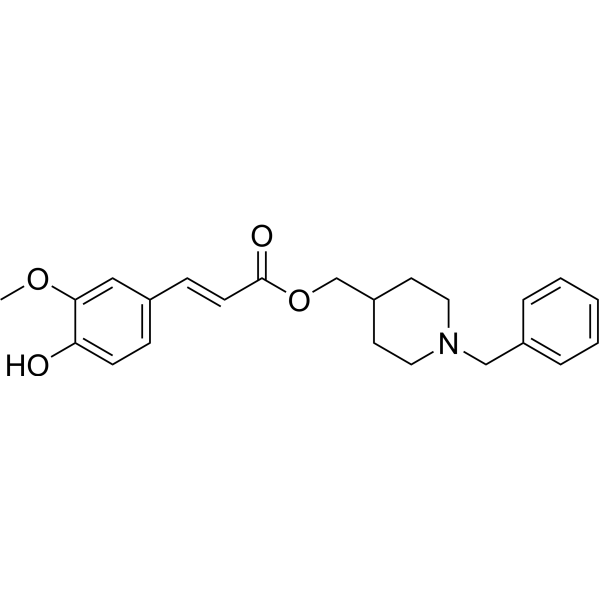
PQM130, a Feruloyl-Donepezil Hybrid compound with brain penatration, is a multitarget agent candidate against the neurotoxicity induced by Aβ1-42 oligomer (AβO) and shows anti-inflammatory activity. PQM130 acts as a neuroprotective compound for anti-AD agent development.
연구목적의 판매만을 진행합니다. 환자를 대상으로 한 판매는 하지 않습니다.
- Purity : 99.17%
- CAS No.: 2089415-51-8
- 화학식: C23H27NO4
- 분자량:381.46
-
보관:
4°C, protect from light
* In solvent : -80°C, 6 months; -20°C, 1 month (protect from light)

To place orders, for customer services and technical support, please contact: MedChemExpress USA
Tel: 609-228-6898 E-mail: [email protected] [email protected]


-
 Biological Activity
-
Chemical Information
-
용액&용해도
- Protocol
- 순도&문서
- References
-
 Help & FAQs


-
HY-19370
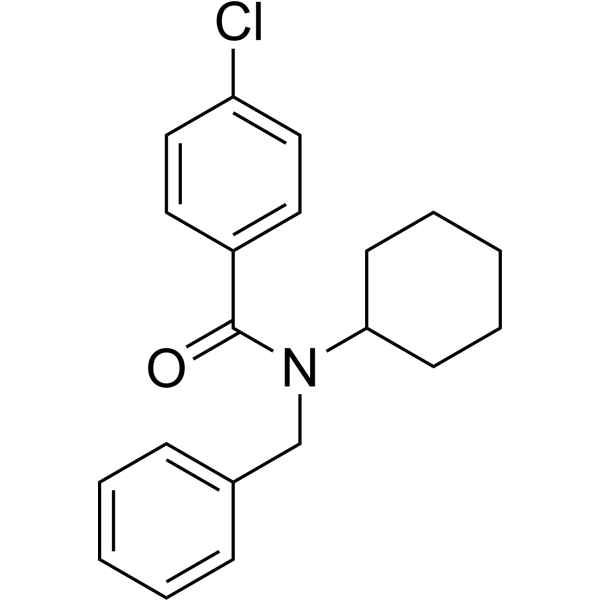
FPS-ZM1Amyloid-β Inhibitor -
HY-50682
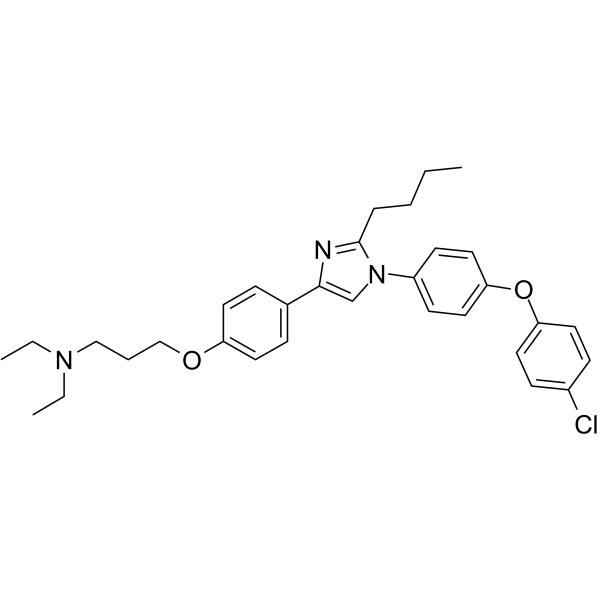
AzeliragonRAGE Inhibitor -

HY-P1363A
β-Amyloid (1-42), humanAmyloid β Peptide -

HY-P1363B
β-Amyloid (1-42), human, HFIP-treatedβ-Amyloid (1-42) Peptide -
HY-18292
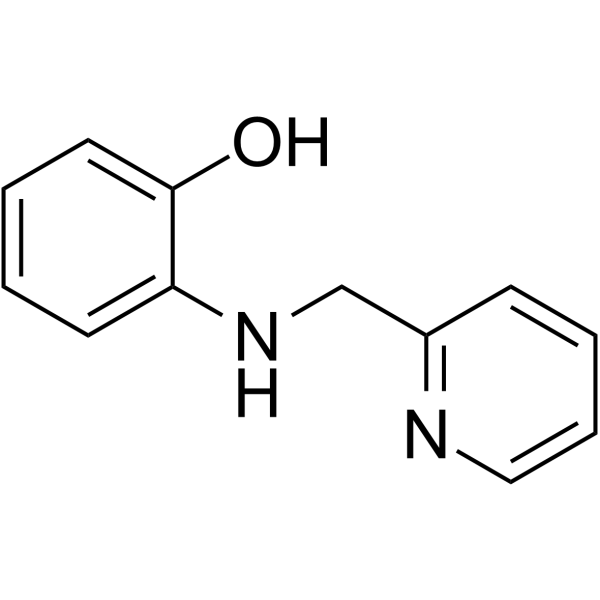
ARN2966APP Translation Modulator -
HY-17631A
Edonerpic maleate -
HY-N0615
Notoginsenoside R1Apoptosis Inhibitor -
HY-103240
Methoxy-X04Fluorescent Dye -
HY-15374
FrentizoleAβ-ABAD Inbihitor -
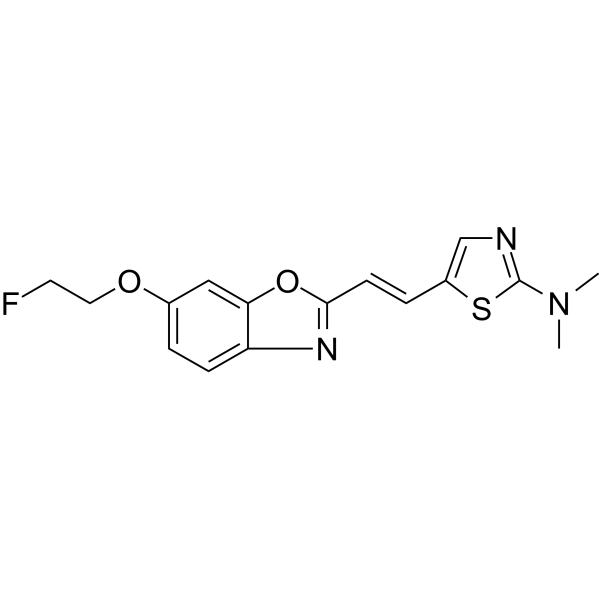
HY-105252A
BF 227 -
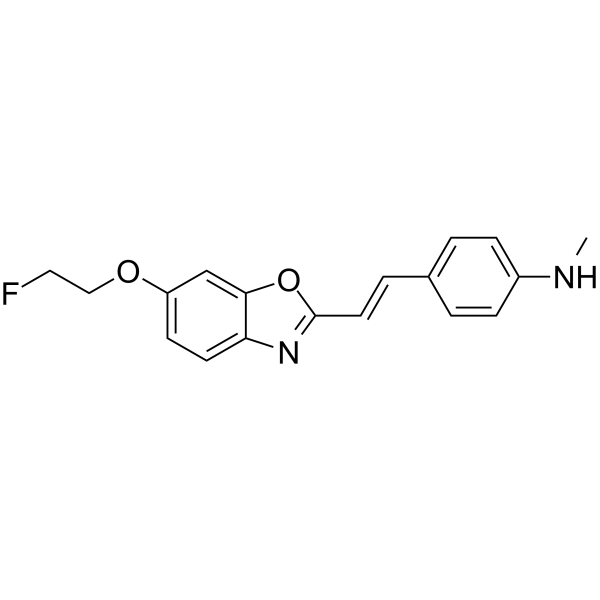
HY-112830
BF-168 -
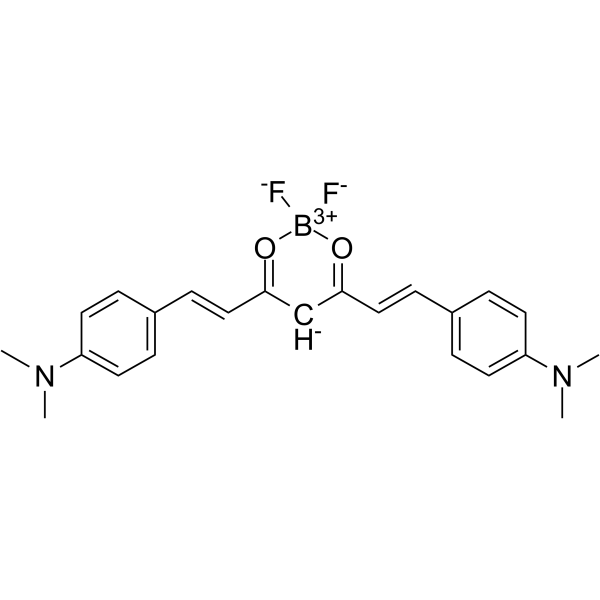
HY-103242
CRANAD-2Fluorescent Probe


Biological Activity
제품 설명
Cellular Effect
|
Cell Line

|
Type | Value | Description | References |
|---|---|---|---|---|
| SH-SY5Y | IC50 |
16.87 μM
Compound: 12a
|
Antioxidant activity in human SH-SY5Y cells assessed as reduction in H2O2-induced reactive oxygen species formation measured after 24 hrs by DCFH-DA probe based fluorescence assay
Antioxidant activity in human SH-SY5Y cells assessed as reduction in H2O2-induced reactive oxygen species formation measured after 24 hrs by DCFH-DA probe based fluorescence assay
|
[PMID: 28282613] |
In Vivo
MedChemExpress (MCE) has not independently confirmed the accuracy of these methods. They are for reference only.
-
Animal Model:Adult male C57Bl/6 mice (9 weeks old, 25-30 g body weight) [1].
-
Dosage:0.5 and 1.0 mg/kg.
-
Administration:IP injection daily for 10 days.
-
Result:Ameliorated Aβ1-42O-induced cognitive deficits in mice.
Prevented Aβ1-42O-induced neuronal death in mice.
Antagonized Aβ1-42O-Induced Oxidative Stress in Mice.
Regulated GSK3β and ERK1/2 protein expressions in mice.
Reduced Aβ1-42O-induced astrocytic activation in mice.


Chemical Information
-
CAS No. 2089415-51-8
-
Appearance Solid
-
분자량 381.46
-
화학식 C23H27NO4
-
Color Light yellow to yellow
-
SMILES
O=C(OCC1CCN(CC2=CC=CC=C2)CC1)/C=C/C3=CC=C(O)C(OC)=C3
-
선적
Room temperature in continental US; may vary elsewhere.
-
보관
4°C, protect from light
* In solvent : -80°C, 6 months; -20°C, 1 month (protect from light)


용액&용해도
In Vitro:
DMSO : 1.82 mg/mL (4.77 mM; ultrasonic and warming and heat to 60°C; Hygroscopic DMSO has a significant impact on the solubility of product, please use newly opened DMSO)
Please refer to the solubility information to select the appropriate solvent. Once prepared, please aliquot and store the solution to prevent product inactivation from repeated freeze-thaw cycles.
Storage method and period of stock solution: -80°C, 6 months; -20°C, 1 month (protect from light). When stored at -80°C, please use it within 6 months. When stored at -20°C, please use it within 1 month.
Please refer to the solubility information to select the appropriate solvent. Once prepared, please aliquot and store the solution to prevent product inactivation from repeated freeze-thaw cycles.
Storage method and period of stock solution: -80°C, 6 months; -20°C, 1 month (protect from light). When stored at -80°C, please use it within 6 months. When stored at -20°C, please use it within 1 month.
Concentration (start) × Volume (start) = Concentration (final) × Volume (final)


순도&문서
-
Data Sheet (269 KB)
-
SDS (252 KB)
- English - EN (252 KB)
- Français - FR (252 KB)
- Deutsch - DE (252 KB)
- Norwegian - NO (252 KB)
- Español - ES (252 KB)
- Swedish - SV (252 KB)
- Italian - IT (252 KB)
- Korean - KR (252 KB)
- Portuguese - PT (252 KB)
-
Handling Instructions (2659 KB)
References


Complete Stock Solution Preparation Table
Please refer to the solubility information to select the appropriate solvent. Once prepared, please aliquot and store the solution to prevent product inactivation from repeated freeze-thaw cycles.
Storage method and period of stock solution: -80°C, 6 months; -20°C, 1 month (protect from light). When stored at -80°C, please use it within 6 months. When stored at -20°C, please use it within 1 month.
| Optional Solvent | Concentration Solvent Mass | 1 mg | 5 mg | 10 mg | 25 mg |
|---|---|---|---|---|---|
| DMSO | 1 mM | 2.6215 mL | 13.1075 mL | 26.2151 mL | 65.5377 mL |


PQM130 Related Classifications
HY-128346 Related Classifications
 Powered by Bioz