



MC-betaglucuronide-MMAE-1

Based on 1 Customer Validation
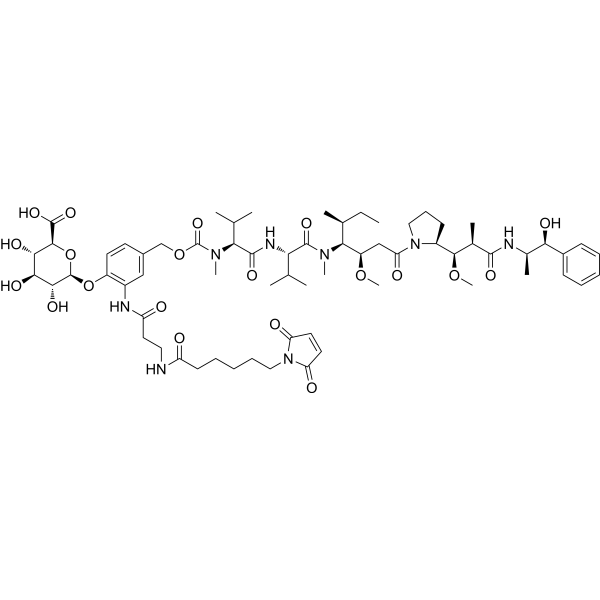
MC-betaglucuronide-MMAE-1 is a agent-linker conjugate for ADC with potent antitumor activity by using MMAE (a tubulin polymerization inhibitor), linked via the cleavable ADC linker MC-betaglucuronide.
For research use only. We do not sell to patients.
- Purity : 99.23%
- CAS No.: 1703778-92-0
- Formula: C66H98N8O20
- Molecular Weight:1323.53
-
Storage:
-20°C, protect from light
* The compound is unstable in solutions, freshly prepared is recommended.

To place orders, for customer services and technical support, please contact: MedChemExpress USA
Tel: 609-228-6898 E-mail: [email protected] [email protected]


-
 Biological Activity
-
Chemical Information
-
Solvent & Solubility
- Protocols
- Purity & Documentation
- References
-
 Help & FAQs


-
HY-13631E
DeruxtecanDrug-Linker Conjugates for ADC -
HY-128946
CL2A-SN-38DNA Topoisomerase I Inhibitor -
HY-147239
MC-VA-PABC-MMAEDrug-Linker Conjugate For ADC -
HY-153179
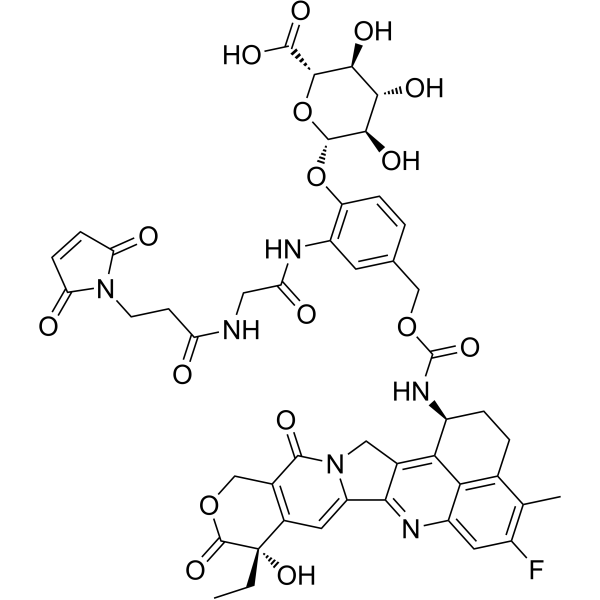
Mal-Gly-PAB-Exatecan-D-glucuronic acidADC Intermediate Compound -
HY-141156
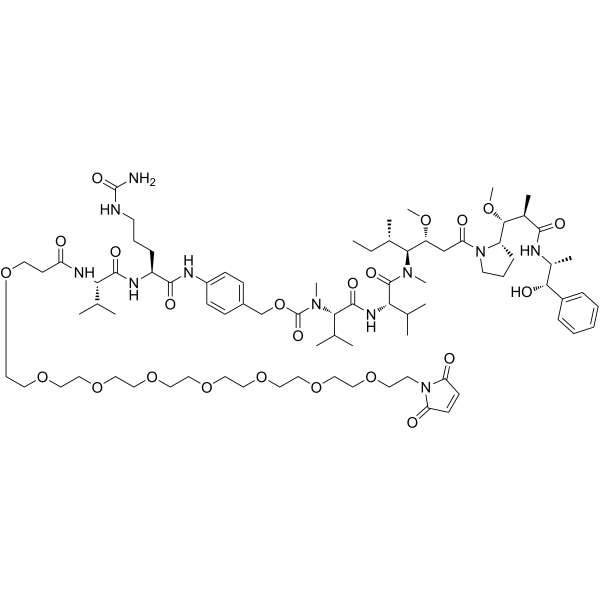
Mal-PEG8-Val-Cit-PAB-MMAEDrug-Linker Conjugates for ADC -
HY-15575
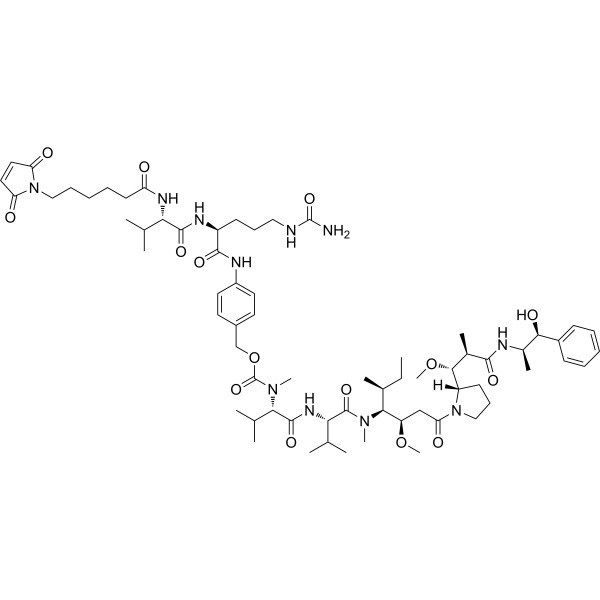
VcMMAEDrug-Linker Conjugate for ADC -
HY-15141
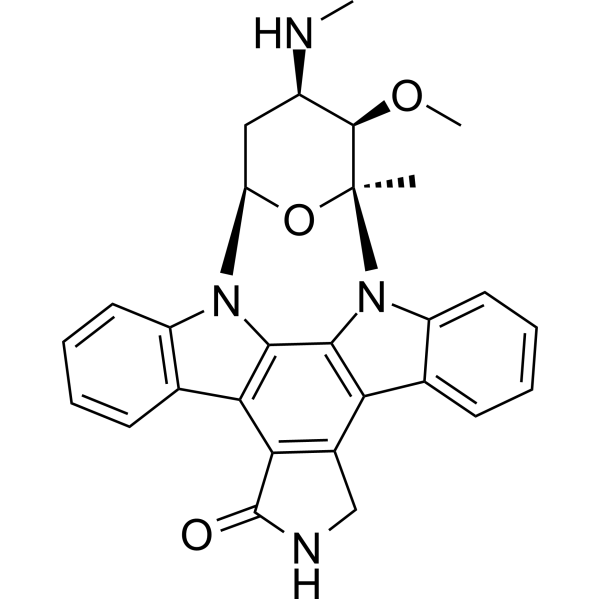
StaurosporinePKC/PKA Inhibitor -
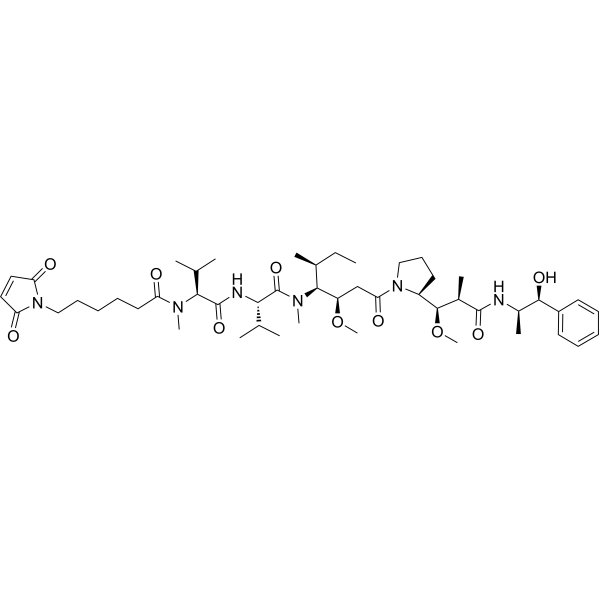
HY-15741
Mc-MMAEDrug-Linker Conjugate for ADC -
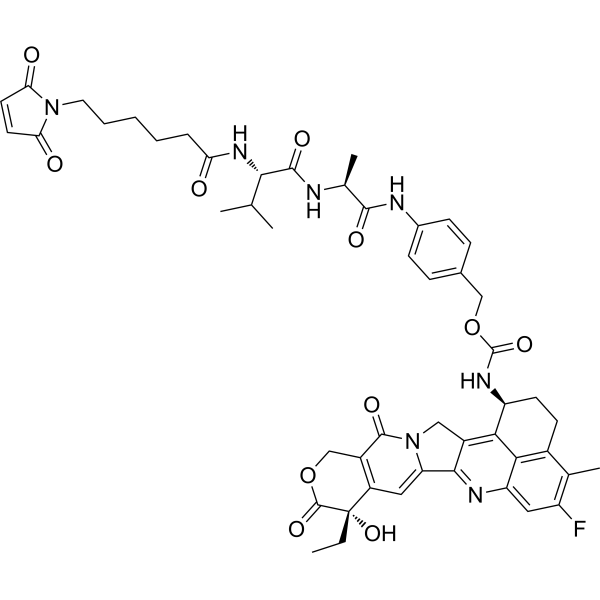
HY-147270
MC-VA-PAB-ExatecanDrug-Linker Conjugate for ADC -
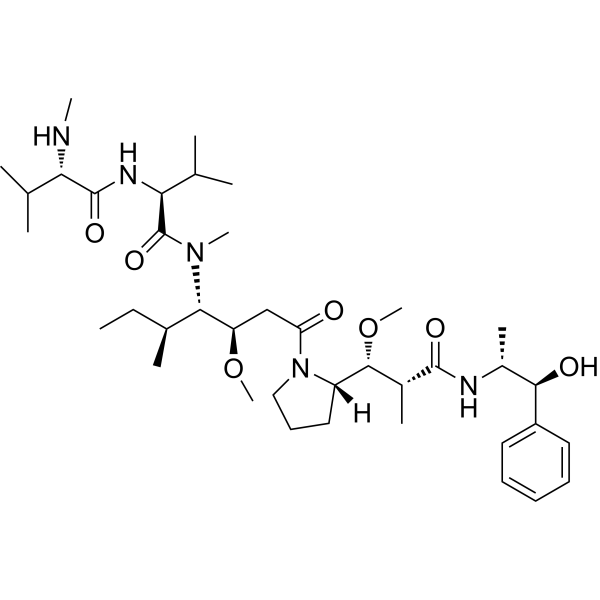
HY-15162
Monomethyl auristatin EAntimitotic Agent -
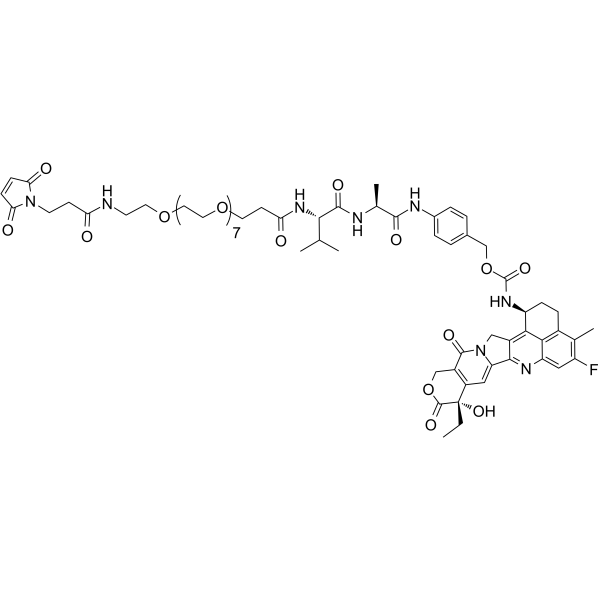
HY-147271
Mal-PEG8-Val-Ala-PAB-ExatecanAnti-Nectin-4 ADC Linker -
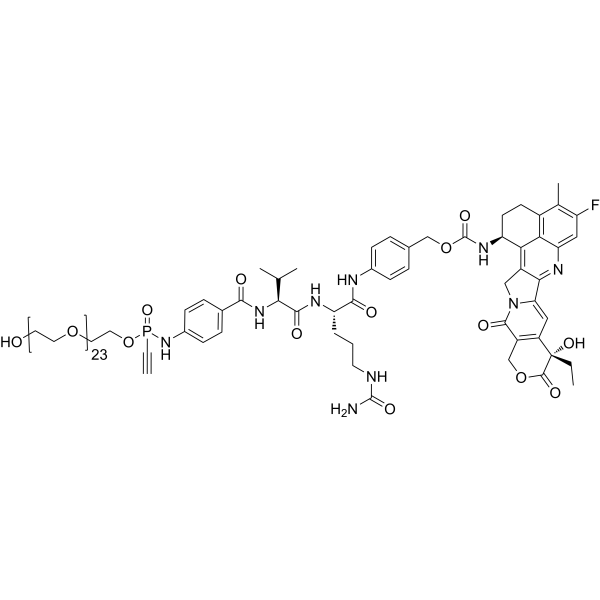
HY-163099
P5(PEG24)-VC-PAB-ExatecanTOP1 Inhibitor
All Drug-Linker Conjugates for ADC Isoforms
More

Biological Activity
Description
IC50 & Target
|
Auristatin |
In Vitro
ADCs are comprised of an antibody to which is attached an ADC cytotoxin through an ADC linker.
MedChemExpress (MCE) has not independently confirmed the accuracy of these methods. They are for reference only. Further protocols information, click here.


Chemical Information
-
CAS No. 1703778-92-0
-
Appearance Solid
-
Molecular Weight 1323.53
-
Formula C66H98N8O20
-
Color White to off-white
-
SMILES
O[C@H]1[C@H](O)[C@@H](O)[C@H](OC2=C(NC(CCNC(CCCCCN3C(C=CC3=O)=O)=O)=O)C=C(COC(N(C)[C@@H](C(C)C)C(N[C@H](C(N(C)[C@@H]([C@H](CC)C)[C@H](OC)CC(N4[C@H]([C@H](OC)[C@@H](C)C(N[C@H](C)[C@@H](O)C5=CC=CC=C5)=O)CCC4)=O)=O)C(C)C)=O)=O)C=C2)O[C@@H]1C(O)=O
-
Shipping
Room temperature in continental US; may vary elsewhere.
-
Storage
-20°C, protect from light
* The compound is unstable in solutions, freshly prepared is recommended.


Solvent & Solubility
In Vitro:
DMSO : ≥ 100 mg/mL (75.56 mM; Hygroscopic DMSO has a significant impact on the solubility of product, please use newly opened DMSO)
* "≥" means soluble, but saturation unknown.
Please refer to the solubility information to select the appropriate solvent. The compound is unstable in solutions, freshly prepared is recommended.
Please refer to the solubility information to select the appropriate solvent. The compound is unstable in solutions, freshly prepared is recommended.
Concentration (start) × Volume (start) = Concentration (final) × Volume (final)

Protocols
-
Subcutaneous Cell-Line-Derived Xenograft
Subcutaneous cell-line-derived xenograft (CDX) models are established by implanting cultured human cancer cell lines into immunodeficient mice, where the injected cells form localized tumors that can be monitored in vivo as a measure of tumorigenic potential, growth kinetics, and treatment response. These models are widely used in oncology research because they allow reproducible tumor formation and enable comparative assessment of tumor growth between different cell lines or genetic manipulations in a controlled in vivo microenvironment. Subcutaneous implantation of cancer cells in immunodeficient mice is a standard approach for evaluating tumor growth behavior and therapeutic response across multiple cancer types, including prostate, esophageal, pancreatic, and colon cancer models.


Purity & Documentation
-
Data Sheet (271 KB)
-
SDS (252 KB)
- English - EN (252 KB)
- Français - FR (252 KB)
- Deutsch - DE (252 KB)
- Norwegian - NO (252 KB)
- Español - ES (252 KB)
- Swedish - SV (252 KB)
- Italian - IT (252 KB)
- Korean - KR (252 KB)
- Portuguese - PT (252 KB)
-
Handling Instructions (2659 KB)
References


Complete Stock Solution Preparation Table
Please refer to the solubility information to select the appropriate solvent. The compound is unstable in solutions, freshly prepared is recommended.
| Optional Solvent | Concentration Solvent Mass | 1 mg | 5 mg | 10 mg | 25 mg |
|---|---|---|---|---|---|
| DMSO | 1 mM | 0.7556 mL | 3.7778 mL | 7.5556 mL | 18.8889 mL |
| 5 mM | 0.1511 mL | 0.7556 mL | 1.5111 mL | 3.7778 mL | |
| 10 mM | 0.0756 mL | 0.3778 mL | 0.7556 mL | 1.8889 mL | |
| 15 mM | 0.0504 mL | 0.2519 mL | 0.5037 mL | 1.2593 mL | |
| 20 mM | 0.0378 mL | 0.1889 mL | 0.3778 mL | 0.9444 mL | |
| 25 mM | 0.0302 mL | 0.1511 mL | 0.3022 mL | 0.7556 mL | |
| 30 mM | 0.0252 mL | 0.1259 mL | 0.2519 mL | 0.6296 mL | |
| 40 mM | 0.0189 mL | 0.0944 mL | 0.1889 mL | 0.4722 mL | |
| 50 mM | 0.0151 mL | 0.0756 mL | 0.1511 mL | 0.3778 mL | |
| 60 mM | 0.0126 mL | 0.0630 mL | 0.1259 mL | 0.3148 mL |


MC-betaglucuronide-MMAE-1 Related Classifications
HY-136317 Related Classifications
 Powered by Bioz