



MicroRNA Inhibitor Negative Control
Based on 14 publication(s) in Google Scholar
MicroRNA Inhibitor Negative Control is a full-length nucleotide 2'-methoxy modified oligonucleotide, and can be used as a negative control. The sequence of MicroRNA Inhibitor Negative Control is derived from cel-mir-239b. It has minimal sequence identity with miRNAs in human, mouse, and rat.
For research use only. We do not sell to patients.
- Purity : 97.18%
- Molecular Weight:6953.56
-
Storage:
-20°C, sealed storage, away from moisture
* In solvent : -80°C, 6 months; -20°C, 1 month (sealed storage, away from moisture)


To place orders, for customer services and technical support, please contact: MedChemExpress USA
Tel: 609-228-6898 E-mail: [email protected] [email protected]


-
 Biological Activity
-
Chemical Information
- Purity & Documentation
- References
-
 Help & FAQs


-

HY-R04602
MicroRNA Mimic Negative ControlMicroRNA Mimic Negative Control -

HY-K2017
siRNA/miRNA Transfection Reagent -
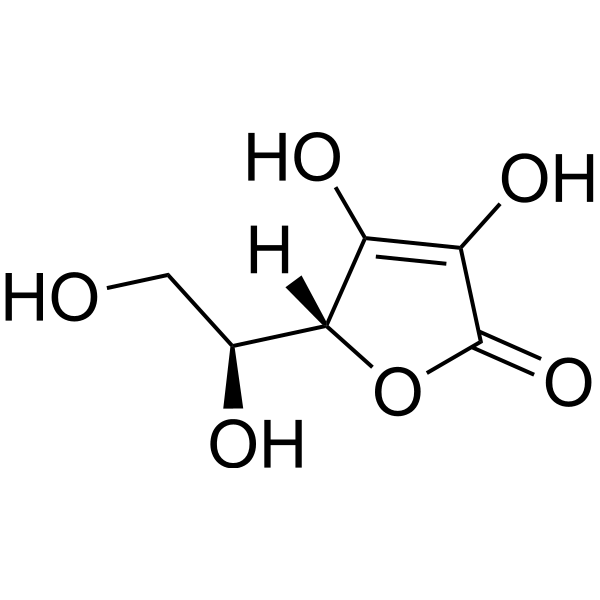
HY-B0166
L-Ascorbic acidAntioxidant -
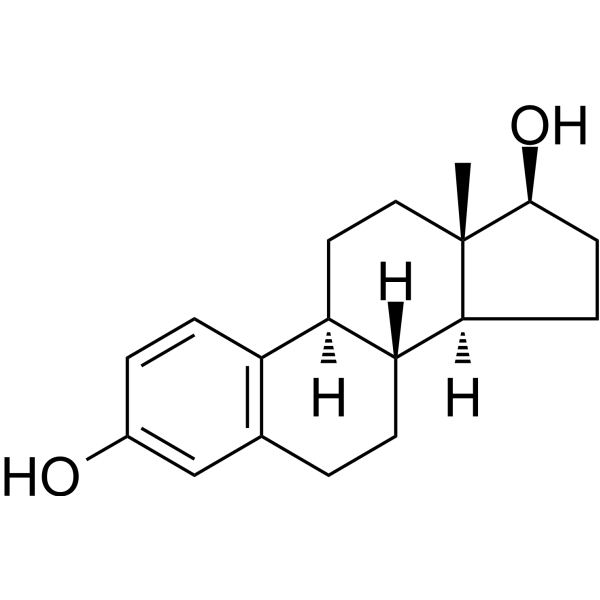
HY-B0141
EstradiolHuman Endogenous Metabolite -
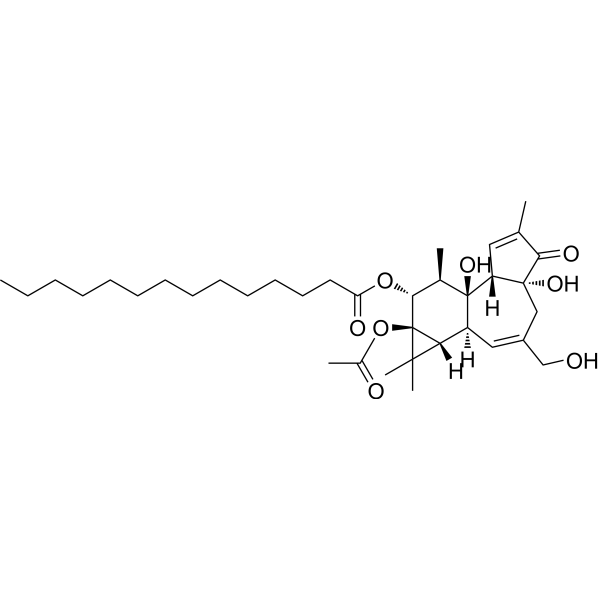
HY-18739
Phorbol 12-myristate 13-acetatePKC Activator -
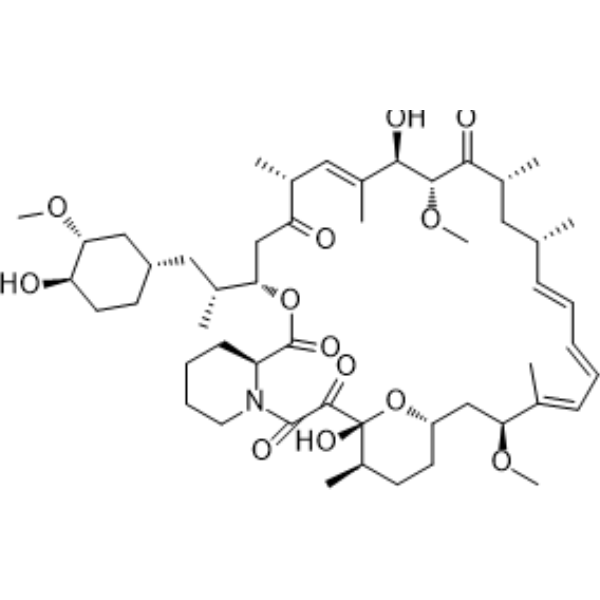
HY-10219
RapamycinmTOR Inhibitor -
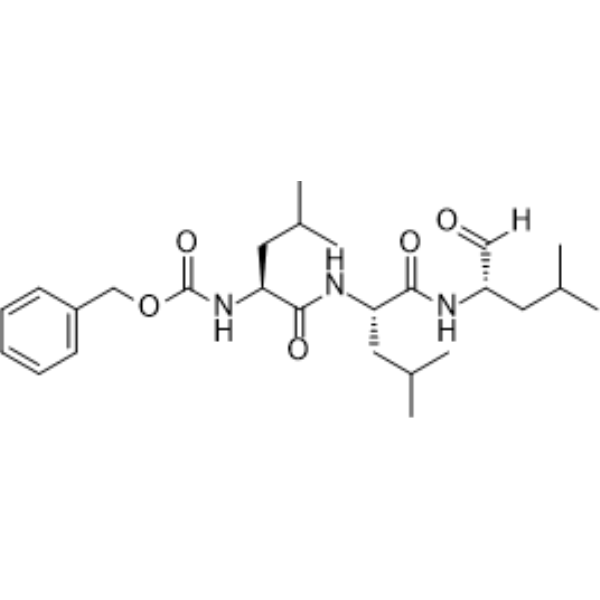
HY-13259
MG-132Proteasome Inhibitor -
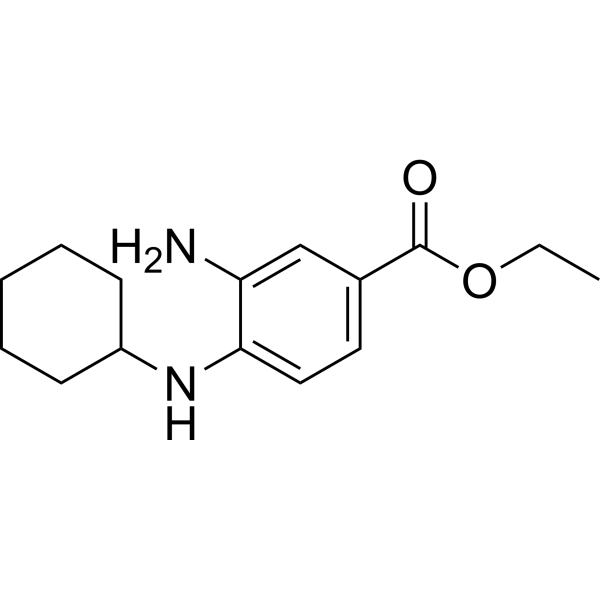
HY-100579
Ferrostatin-1Ferroptosis Inhibitor -
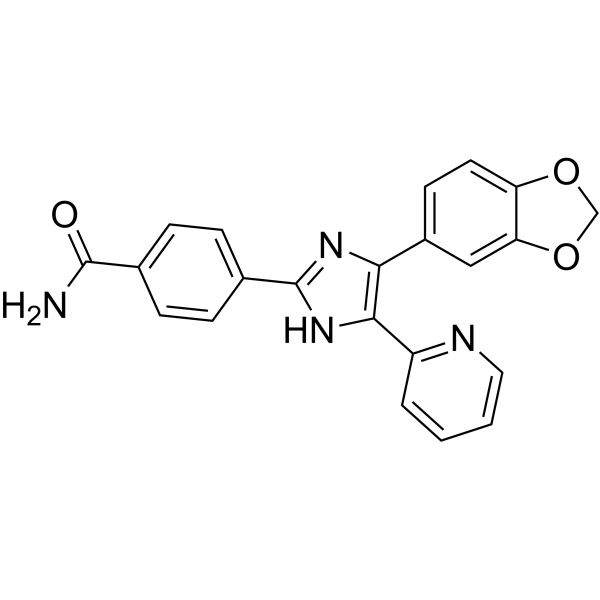
HY-10431
SB-431542TGF-β Receptor Kinase Inhibitor -
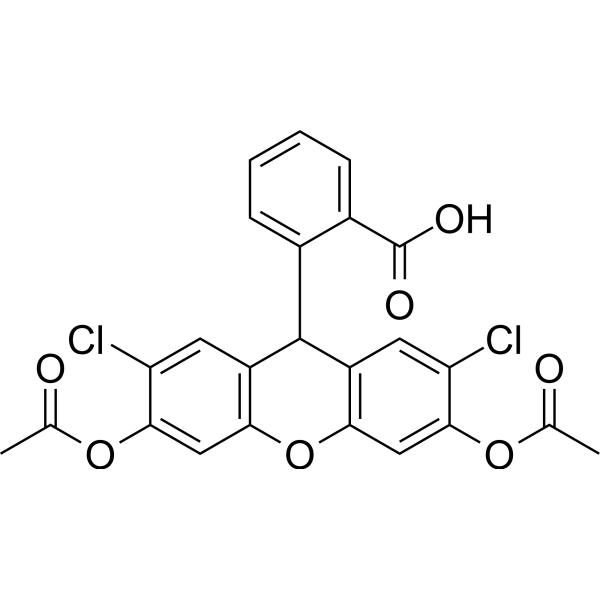
HY-D0940
H2DCFDAROS-Sensitive Probe -
HY-100218A
RSL3GPX4 Inhibitor -

HY-P3160
FibronectinTissue Injury Biomarker
Publications Citing Use of MedChemExpress (MCE) MicroRNA Inhibitor Negative Control
More- ACS Nano. 2025 Feb 4;19(4):4924-4941. [Abstract]
- Adv Sci (Weinh). 2025 Dec 14:e02250. [Abstract]
- Research (Wash D C). 2026 May 7:9:1248. [Abstract]
- Research (Wash D C). 2026 Mar 24.
- Br J Pharmacol. 2026 Mar 10. [Abstract]
- Int J Mol Sci. 2024 May 30;25(11):6019. [Abstract]
- Diabetol Metab Syndr. 2025 Oct 29;17(1):412. [Abstract]
- Sci Rep. 2025 Apr 9;15(1):12182. [Abstract]
- Hum Cell. 2025 Aug 27;38(5):152. [Abstract]
- Odontology. 2026 Jul 7.
- Cytotechnology. 2026 May 11;78(3):113.
- Oncol Lett. 2024 Apr 10;27(6):262. [Abstract]
- Tohoku J Exp Med. 2025 Jun 26. [Abstract]
- bioRxiv. 2026 May 29.


Biological Activity
Description
In Vitro
1. miRNA Resuspension
1.1 Briefly centrifuge the tube to ensure that the dried miRNA is at the bottom of the tube.
1.2 Resuspend the miRNA using nuclease free water to generate 20 μM stock solution.
For 5 nmol miRNA: add 250 μL nuclease free water.
For 20 nmol miRNA: add 1000 μL nuclease free water.
1.3 Aliquot miRNAs into one or more tubes to limit the number of freeze-thaw cycles (<5).
1.4 Store at or below -20°C or -80°C in a non-frost-free freezer until use.
2. Prepare cells
2.1 Inoculate cells in advance for cell transfection. The viability and general health of cells prior to transfection significantly affect transfection result.
3. Transfection
3.1 Prepare transfection mix A and B.
For per well of a 6-well plate: A: 240 μL serum-free medium + 10 μL miRNA; B: 230 μL serum-free medium + 20 μL siRNA/miRNA Transfection Reagent (HY-K2017).
For per well of a 12-well plate: A: 95 μL serum-free medium + 5 μL miRNA; B: 90 μL serum-free medium + 10 μL siRNA/miRNA Transfection Reagent (HY-K2017).
For per well of a 24-well plate: A: 47.5 μL serum-free medium + 2.5 μL miRNA; B: 45 μL serum-free medium + 5 μL siRNA/miRNA Transfection Reagent (HY-K2017).
For per well of a 96-well plate: A: 24.5 μL serum-free medium + 0.5 μL miRNA; B: 24 μL serum-free medium + 1 μL siRNA/miRNA Transfection Reagent (HY-K2017).
Note: The recommended working concentration is 100 nM for miRNA inhibitors. miRNA function can vary greatly, depending on the miRNA, the cell line, and the chosen analysis method. To determine the concentration that provides optimal results, optimization experiments using varying mimic/inhibitor concentrations should be performed. The optimized range suggests changing the miRNA concentration in the range of 20 to 500 nM.
If other transfection reagents are used, the amount of transfection reagent needs to be adjusted according to the specific situation.
3.2 Mix A and B gently. Incubate at room temperature for 15 minutes.
3.3 Remove culture medium from cells, wash with PBS.
3.4 Add transfection mix (A+B) to cells.
For per well of a 6-well plate: add 1500 μL serum-free medium, then add 500 μL of the transfection mix (A+B) to the well, and mix well.
For per well of a 12-well plate: add 800 μL serum-free medium, then add 200 μL of the transfection mix (A+B) to the well, and mix well.
For per well of a 24-well plate: add 400 μL serum-free medium, then add 100 μL of the transfection mix (A+B) to the well, and mix well.
For per well of a 96-well plate: add 50 μL serum-free medium, then add 50 μL of the transfection mix (A+B) to the well, and mix well.
3.5 Incubate cells for 1-3 days at 37°C. Then, analyze transfected cells. The medium can be replaced with fresh serum-containing medium after 6 hours if necessary.
Note: Antibiotics can increase toxicity and should be omitted during transfection. Culture medium containing polyanions such as heparin, heparin sulfate or dextran sulfate can inhibit transfection.
MedChemExpress (MCE) has not independently confirmed the accuracy of these methods. They are for reference only. .


Chemical Information
-
Appearance Solid
-
Molecular Weight 6953.56
-
Color White to off-white
-
SMILES
[MicroRNA Inhibitor Negative Control]
-
Shipping
Room temperature in continental US; may vary elsewhere.
-
Storage
-20°C, sealed storage, away from moisture
* In solvent : -80°C, 6 months; -20°C, 1 month (sealed storage, away from moisture)
-
miRBase Accession Number
-
Mature miRNA Sequence
UUUGUACUACACAAAAGUACUG
-
Stem-loop ID
cel-miR-239b
-
Stem-loop Sequence
GCGACAGAUGCAAUUUUUGUACUACACAAAAGUACUGGUCAUUUAAGUUGAGGCUCAGCACUUUUGUGGUGUGCAAAAAUGGCAAGUUGCUUUUAUCU
-
Species
Caenorhabditis elegans


Publications (14)
-
Journal Impact Factor
-
Most Recent
-
ACS Nano
Remodeling the Proinflammatory Microenvironment in Osteoarthritis through Interleukin-1 Beta Tailored Exosome Cargo for Inflammatory Regulation and Cartilage Regeneration. [Abstract]2025 Feb 4;19(4):4924-4941. PMID: 39848926 -
Adv Sci (Weinh)
Circular RNA PTPN4 Contributes to Blood-Brain Barrier Disruption during Early Epileptogenesis. [Abstract]2025 Dec 14:e02250. PMID: 41391036 -
Research (Wash D C)
Hypoxia-Challenged sEVs-Engineered Nanofiber Scaffolds Accelerate Diabetic Wound Healing via Reversing Cellular Dysfunction of Skin Repair Cells. [Abstract]2026 May 7:9:1248. PMID: 42109884 -
-
Br J Pharmacol
Exosomes from macrophages intervened by Jiedu Yangxin decoction mediated endothelial-to-mesenchymal transition to improve myocardial fibrosis after myocardial infarction. [Abstract]2026 Mar 10. PMID: 41804264 -
Int J Mol Sci
Transcriptional Up-Regulation of FBXW7 by KCa1.1 K+ Channel Inhibition through the Nrf2 Signaling Pathway in Human Prostate Cancer LNCaP Cell Spheroid Model. [Abstract]2024 May 30;25(11):6019. PMID: 38892210 -
Diabetol Metab Syndr
Systematic validation of miR-503-5p abnormal expression in diabetic vascular complications: a meta-analysis and exploration of its targeted regulatory mechanism in retinopathy. [Abstract]2025 Oct 29;17(1):412. PMID: 41162983 -
Sci Rep
MiR-556-3p mediated repression of klotho under oxidative stress promotes fibrosis of renal tubular epithelial cells. [Abstract]2025 Apr 9;15(1):12182. PMID: 40204752 -
Hum Cell
FTO inhibited miR-487a-3p biosynthesis via N6-methyladenosine-dependent pathway to promote WNT5A-mediated osteogenic differentiation of adipose-derived stem cells. [Abstract]2025 Aug 27;38(5):152. PMID: 40864302 -
-
-
Oncol Lett
2024 Apr 10;27(6):262. PMID: 38646496 -
Tohoku J Exp Med
MiR-324-3p Drives Malignant Behaviors of Tumor Cells by Promoting M2 Macrophage Polarization in Laryngeal Squamous Cell Carcinoma. [Abstract]2025 Jun 26. PMID: 40571644 -


Purity & Documentation
-
Data Sheet (271 KB)
-
SDS (251 KB)
- English - EN (251 KB)
- Français - FR (251 KB)
- Deutsch - DE (251 KB)
- Norwegian - NO (251 KB)
- Español - ES (251 KB)
- Swedish - SV (251 KB)
- Italian - IT (251 KB)
- Korean - KR (251 KB)
- Portuguese - PT (251 KB)
-
Handling Instructions (2659 KB)
References

Calculators
Concentration (start) × Volume (start) = Concentration (final) × Volume (final)


MicroRNA Inhibitor Negative Control Related Classifications
HY-RI04602 Related Classifications
 Powered by Bioz