



N,N-Dicyclohexylcarbodiimide(DCC)
Based on 2 publication(s) in Google Scholar
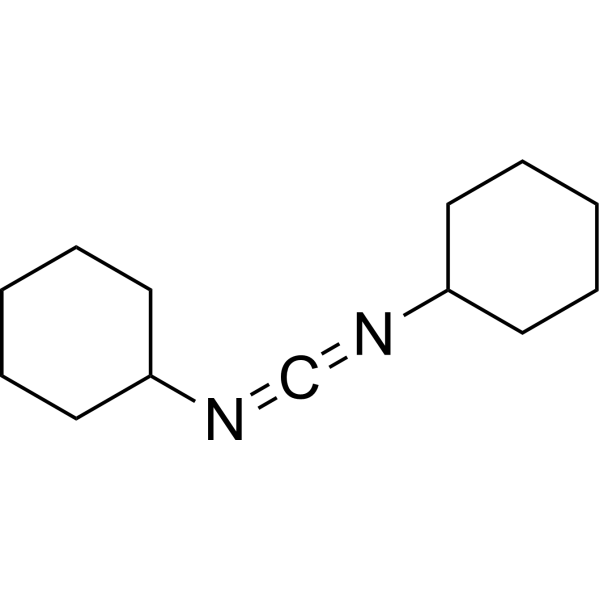
N,N-Dicyclohexylcarbodiimide(DCC) is a dehydrating and condensing agent. N,N-Dicyclohexylcarbodiimide(DCC) enhances adenylate cyclase activity. N,N-Dicyclohexylcarbodiimide(DCC) inhibits amine accumulation. N,N-Dicyclohexylcarbodiimide(DCC) is used to prepare 3-phenylcoumarin derivatives, sulfated derivatives of purslane polysaccharides.
For research use only. We do not sell to patients.
- Purity : 99.43%
- CAS No.: 538-75-0
- Formula: C13H22N2
- Molecular Weight:206.33
-
Storage:Pure form -20°C, 3 years , 4°C, 2 years ; In solvent -80°C, 6 months , -20°C, 1 month

To place orders, for customer services and technical support, please contact: MedChemExpress USA
Tel: 609-228-6898 E-mail: [email protected] [email protected]


-
 Biological Activity
-
Chemical Information
-
Solvent & Solubility
- Purity & Documentation
- References
-
 Help & FAQs


-
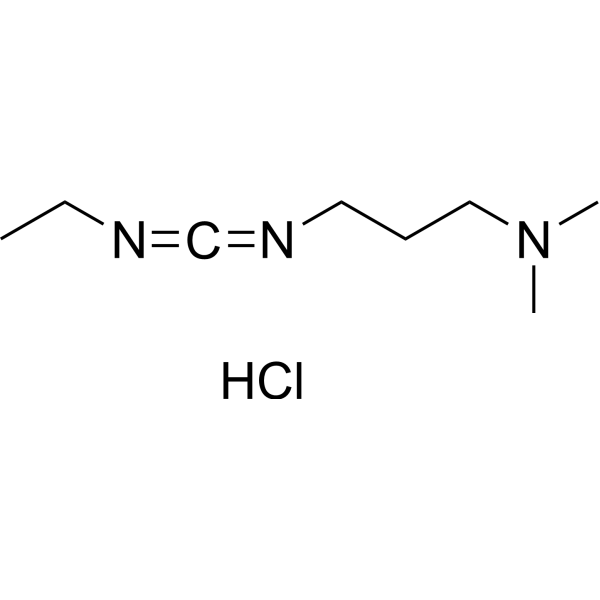
HY-D0178
1-Ethyl-(3-dimethylaminopropyl)carbodiimide hydrochloride -
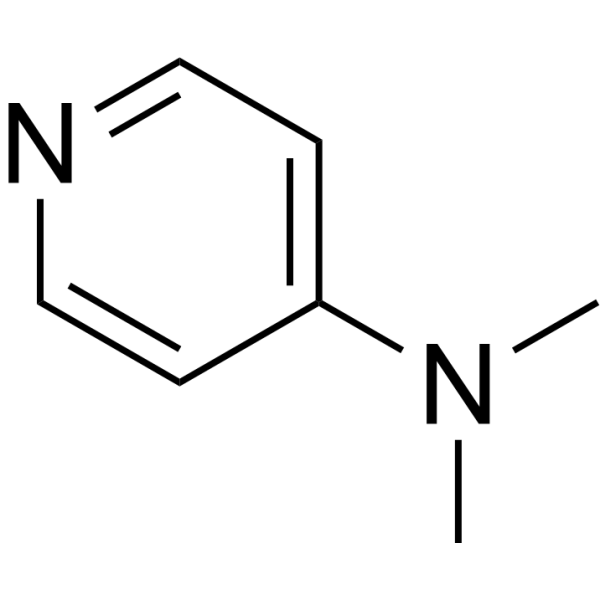
HY-Y1089
4-Dimethylaminopyridine -
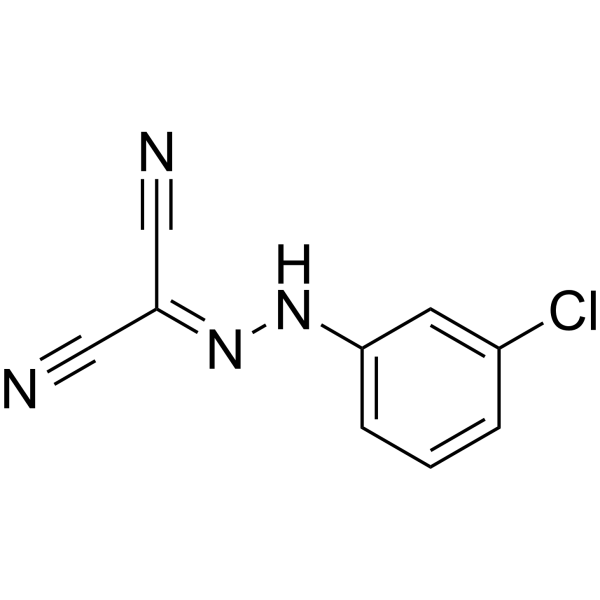
HY-100941
CCCP -
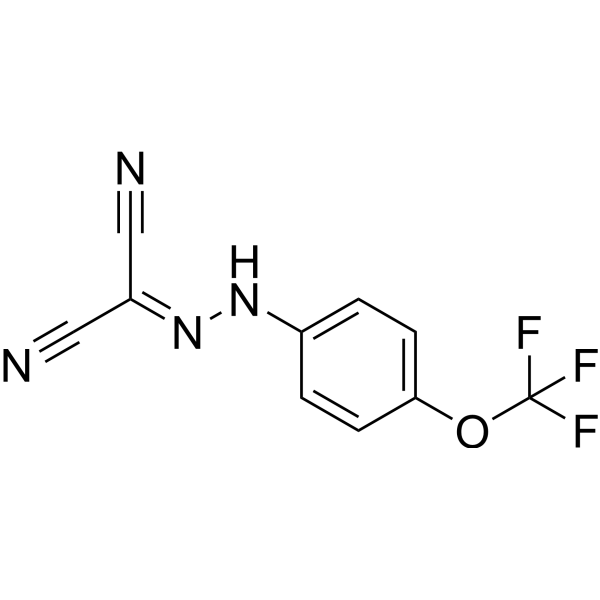
HY-100410
FCCP -

HY-Y1092R
N,N-Dicyclohexylcarbodiimide(DCC) (Standard) -
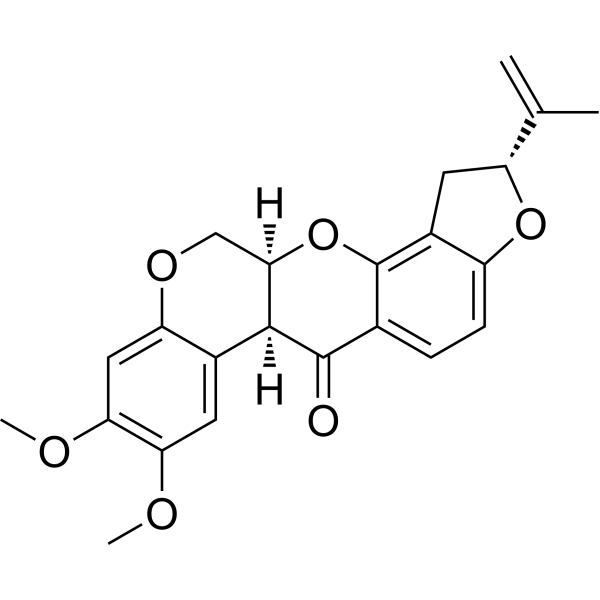
HY-B1756
Rotenone -
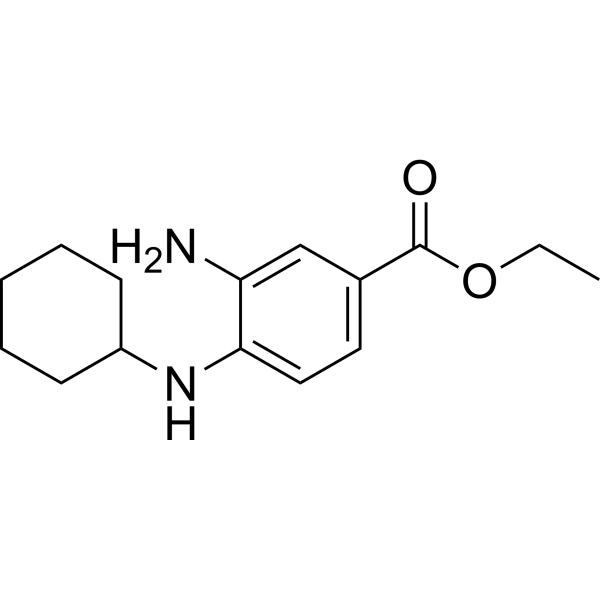
HY-100579
Ferrostatin-1 -
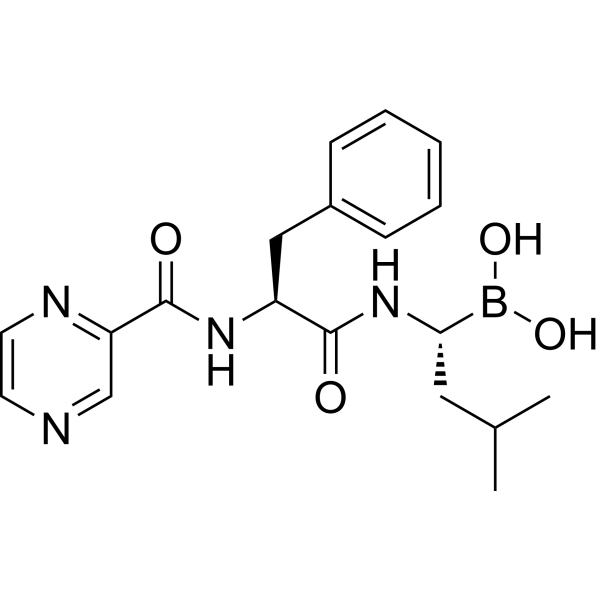
HY-10227
Bortezomib -
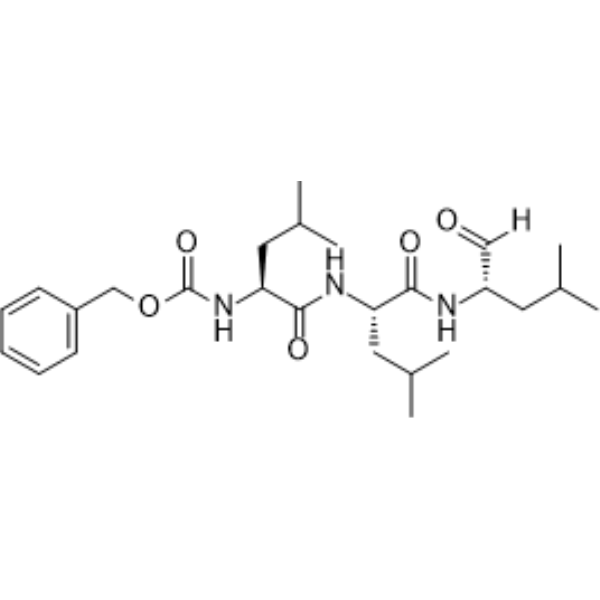
HY-13259
MG-132 -
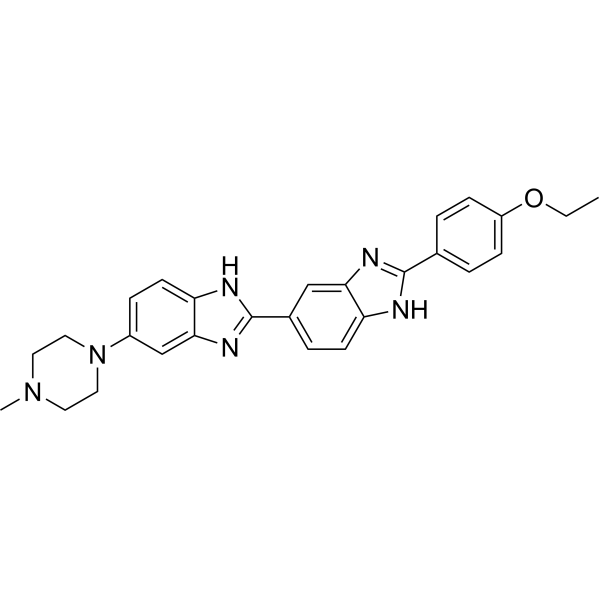
HY-15559
Hoechst 33342 -
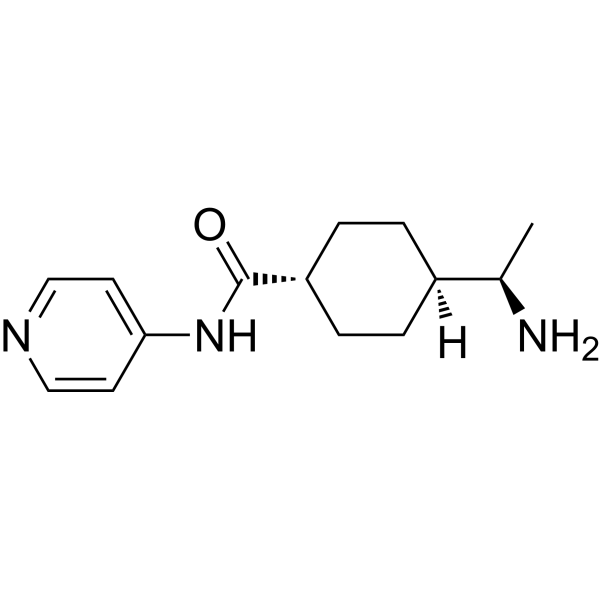
HY-10071
Y-27632 -

HY-Y1703
HATU
Publications Citing Use of MedChemExpress (MCE) N,N-Dicyclohexylcarbodiimide(DCC)
More

Biological Activity
Description
Cellular Effect
|
Cell Line

|
Type | Value | Description | References |
|---|---|---|---|---|
| MT4 | CC50 |
232 μM
Compound: DDC
|
Cytotoxic concentration required to reduce the viability of mock-infected MT-4 cells by 50%.
Cytotoxic concentration required to reduce the viability of mock-infected MT-4 cells by 50%.
|
[PMID: 1995896] |
| MT4 | IC50 |
0.137 μM
Compound: DDC
|
Effective concentration required to achieve 50% protection of MT-4 cells against the cytopathic effect of HIV-1.
Effective concentration required to achieve 50% protection of MT-4 cells against the cytopathic effect of HIV-1.
|
[PMID: 1995896] |
In Vitro
N,N-Dicyclohexylcarbodiimide (DCC) inhibits transporter-mediated amine accumulation and binding of the transporter's two ligands (Reserpine (HY-N0480) and Tetrabenazine (HY-B0590))[1].
N,N-Dicyclohexylcarbodiimide (DCC) (10-500 μM; 30 min) shows that low concentrations (10-50 μM) slightly enhance adenylate cyclase activity, while higher concentrations (50-200 μM) gradually reduce the response of the enzyme to Lutropin (HY-109551)[2].
MedChemExpress (MCE) has not independently confirmed the accuracy of these methods. They are for reference only.


Chemical Information
-
CAS No. 538-75-0
-
Appearance <34°C Solid,>35°C Liquid
-
Molecular Weight 206.33
-
Formula C13H22N2
-
Color Colorless to off-white
-
SMILES
C1(N=C=NC2CCCCC2)CCCCC1
-
Shipping
Room temperature in continental US; may vary elsewhere.
-
Storage
Pure form -20°C 3 years 4°C 2 years In solvent -80°C 6 months -20°C 1 month


Publications (2)
-
Journal Impact Factor
-
Most Recent


Solvent & Solubility
In Vitro:
DMSO : 100 mg/mL (484.66 mM; Need ultrasonic; Hygroscopic DMSO has a significant impact on the solubility of product, please use newly opened DMSO)
Please refer to the solubility information to select the appropriate solvent. Once prepared, please aliquot and store the solution to prevent product inactivation from repeated freeze-thaw cycles.
Storage method and period of stock solution: -80°C, 6 months; -20°C, 1 month. When stored at -80°C, please use it within 6 months. When stored at -20°C, please use it within 1 month.
Please refer to the solubility information to select the appropriate solvent. Once prepared, please aliquot and store the solution to prevent product inactivation from repeated freeze-thaw cycles.
Storage method and period of stock solution: -80°C, 6 months; -20°C, 1 month. When stored at -80°C, please use it within 6 months. When stored at -20°C, please use it within 1 month.
Concentration (start) × Volume (start) = Concentration (final) × Volume (final)
In Vivo:
Select the appropriate dissolution method based on your experimental animal and administration route.
- For the following dissolution methods, please ensure to first prepare a clear stock solution using an In Vitro approach and then sequentially add co-solvents:
- To ensure reliable experimental results, the clarified stock solution can be appropriately stored based on storage conditions. As for the working solution for In Vivo experiments, it is recommended to prepare freshly and use it on the same day.
- The percentages shown for the solvents indicate their volumetric ratio in the final prepared solution. If precipitation or phase separation occurs during preparation, heat and/or sonication can be used to aid dissolution.
Add each solvent one by one: 10% DMSO 40% PEG300 5% Tween-80 45% Saline
Solubility: ≥ 2.5 mg/mL (12.12 mM); Clear solution
This protocol yields a clear solution of ≥ 2.5 mg/mL (saturation unknown).
Taking 1 mL working solution as an example, add 100 μL DMSO stock solution (25.0 mg/mL) to 400 μL PEG300, and mix evenly; then add 50 μL Tween-80 and mix evenly; then add 450 μL Saline to adjust the volume to 1 mL.
Preparation of Saline: Dissolve 0.9 g sodium chloride in ddH₂O and dilute to 100 mL to obtain a clear Saline solution.
Add each solvent one by one: 10% DMSO 90% (20% SBE-β-CD in Saline)
Solubility: ≥ 2.5 mg/mL (12.12 mM); Clear solution
This protocol yields a clear solution of ≥ 2.5 mg/mL (saturation unknown).
Taking 1 mL working solution as an example, add 100 μL DMSO stock solution (25.0 mg/mL) to 900 μL 20% SBE-β-CD in Saline, and mix evenly.
Preparation of 20% SBE-β-CD in Saline (4°C, storage for one week): 2 g SBE-β-CD powder is dissolved in 10 mL Saline, completely dissolve until clear.
In Vivo Dissolution Calculator
Please enter the basic information of animal experiments:
-
-
-
-
Recommended: Prepare an additional quantity of animals to account for potential losses during experiments.
Please enter your animal formula composition:
-
%DMSO +
Recommended: Keep the proportion of DMSO in working solution below 2% if your animal is weak.
-
%+
-
+%Tween-80 + +
-
%Saline +
The co-solvents required include: DMSO, . All of co-solvents are available by MedChemExpress (MCE). , Tween 80. All of co-solvents are available by MedChemExpress (MCE).
Working solution concentration: 0.22 mg/mL
Method for preparing stock solution: mg drug dissolved in μL DMSO. Stock solution concentration: mg/mL.
1. Take μL DMSO stock solution;
2. Add μL .
μL , mix evenly;
3. Then add μL Tween 80, mix evenly;
4. Then add μL
Please ensure that the stock solution in the first step is dissolved to a clear state, and add co-solvents in sequence. You can use ultrasonic heating (ultrasonic cleaner, recommended frequency 20-40 kHz), vortexing, etc. to assist dissolution.


Purity & Documentation
-
Data Sheet (273 KB)
-
SDS (642 KB)
- English - EN (642 KB)
- Français - FR (642 KB)
- Deutsch - DE (642 KB)
- Norwegian - NO (642 KB)
- Español - ES (642 KB)
- Swedish - SV (642 KB)
- Italian - IT (642 KB)
- Korean - KR (642 KB)
- Portuguese - PT (642 KB)
-
Handling Instructions (2659 KB)
References
[1]. Suchi R, et al. Covalent modification of the amine transporter with N,N'-dicyclohexylcarbodiimide. Biochemistry. 1991 Jul 2;30(26):6490-4. [Content Brief]
[2]. Azulai R, et al. Uncoupling of gonadotropin-sensitive adenylate cyclase by N,N'-dicyclohexylcarbodiimide. Evidence for modification of two sites. Mol Cell Endocrinol. 1980 Apr;18(1):1-10. [Content Brief]
[3]. Al-Sheddi ES, et al. Novel all trans-retinoic Acid derivatives: cytotoxicity, inhibition of cell cycle progression and induction of apoptosis in human cancer cell lines. Molecules. 2015 May 7;20(5):8181-97. [Content Brief]
[4]. Chen T, et al. Sulfated modification and cytotoxicity of Portulaca oleracea L. polysaccharides. Glycoconj J. 2010 Aug;27(6):635-42. [Content Brief]
[5]. Sashidhara KV, et al. Discovery and synthesis of novel 3-phenylcoumarin derivatives as antidepressant agents. Bioorg Med Chem Lett. 2011 Apr 1;21(7):1937-41. [Content Brief]
[6]. Kim KS, et al. Oral Nanoparticles Exhibit Specific High-Efficiency Intestinal Uptake and Lymphatic Transport. ACS Nano. 2018 Sep 25;12(9):8893-8900. [Content Brief]


Complete Stock Solution Preparation Table
Please refer to the solubility information to select the appropriate solvent. Once prepared, please aliquot and store the solution to prevent product inactivation from repeated freeze-thaw cycles.
Storage method and period of stock solution: -80°C, 6 months; -20°C, 1 month. When stored at -80°C, please use it within 6 months. When stored at -20°C, please use it within 1 month.
| Optional Solvent | Concentration Solvent Mass | 1 mg | 5 mg | 10 mg | 25 mg |
|---|---|---|---|---|---|
| DMSO | 1 mM | 4.8466 mL | 24.2330 mL | 48.4660 mL | 121.1651 mL |
| 5 mM | 0.9693 mL | 4.8466 mL | 9.6932 mL | 24.2330 mL | |
| 10 mM | 0.4847 mL | 2.4233 mL | 4.8466 mL | 12.1165 mL | |
| 15 mM | 0.3231 mL | 1.6155 mL | 3.2311 mL | 8.0777 mL | |
| 20 mM | 0.2423 mL | 1.2117 mL | 2.4233 mL | 6.0583 mL | |
| 25 mM | 0.1939 mL | 0.9693 mL | 1.9386 mL | 4.8466 mL | |
| 30 mM | 0.1616 mL | 0.8078 mL | 1.6155 mL | 4.0388 mL | |
| 40 mM | 0.1212 mL | 0.6058 mL | 1.2117 mL | 3.0291 mL | |
| 50 mM | 0.0969 mL | 0.4847 mL | 0.9693 mL | 2.4233 mL | |
| 60 mM | 0.0808 mL | 0.4039 mL | 0.8078 mL | 2.0194 mL | |
| 80 mM | 0.0606 mL | 0.3029 mL | 0.6058 mL | 1.5146 mL | |
| 100 mM | 0.0485 mL | 0.2423 mL | 0.4847 mL | 1.2117 mL |


N,N-Dicyclohexylcarbodiimide(DCC) Related Classifications
HY-Y1092 Related Classifications
 Powered by Bioz