



TBPB

Based on 1 Customer Validation
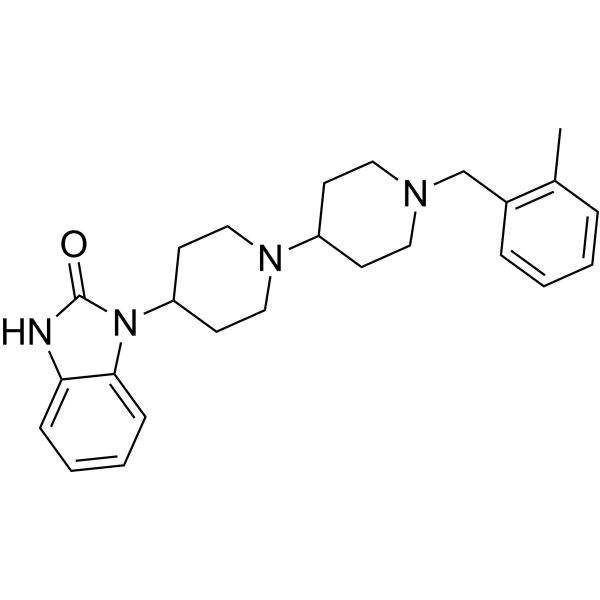
TBPB (tert-butyl peroxybenzoate) is a highly selective, blood-brain-permeable M1 mAChR allosteric agonist (EC50=289 nM) with anti-schizophrenia and anti-inflammatory activities. TBPB can enhance the sensitivity of M1 receptors to acetylcholine, activate downstream signaling pathways, and inhibit the release of pro-inflammatory cytokines (TNF-α, IL-6). TBPB can regulate the processing of amyloid and can be used in the study of neurodegenerative diseases (such as Alzheimer's disease) and inflammation-related diseases (such as sepsis).
For research use only. We do not sell to patients.
- Purity : 99.78%
- CAS No.: 634616-95-8
- Formula: C25H32N4O
- Molecular Weight:404.55
-
Storage:Powder -20°C, 3 years , 4°C, 2 years ; In solvent -80°C, 2 years , -20°C, 1 year

To place orders, for customer services and technical support, please contact: MedChemExpress USA
Tel: 609-228-6898 E-mail: [email protected] [email protected]


-
 Biological Activity
-
Chemical Information
-
Solvent & Solubility
- Protocols
- Purity & Documentation
- References
-
 Help & FAQs


-
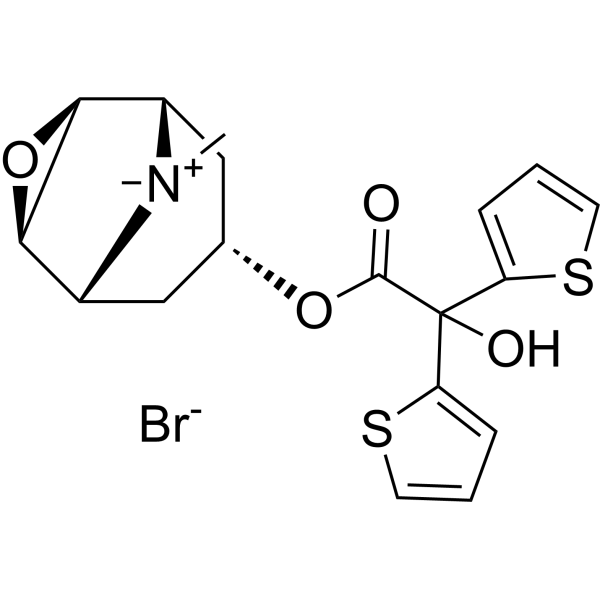
HY-17360
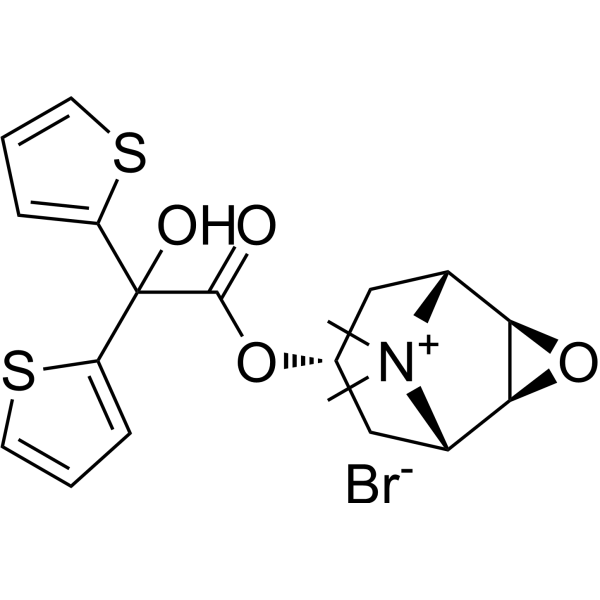
Tiotropium BromidemAChR Antagonist -
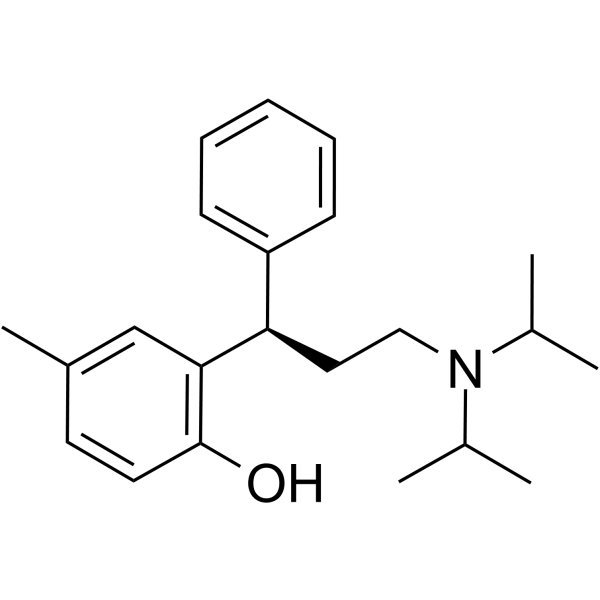
HY-A0024
TolterodinemAChR Inhibitor -
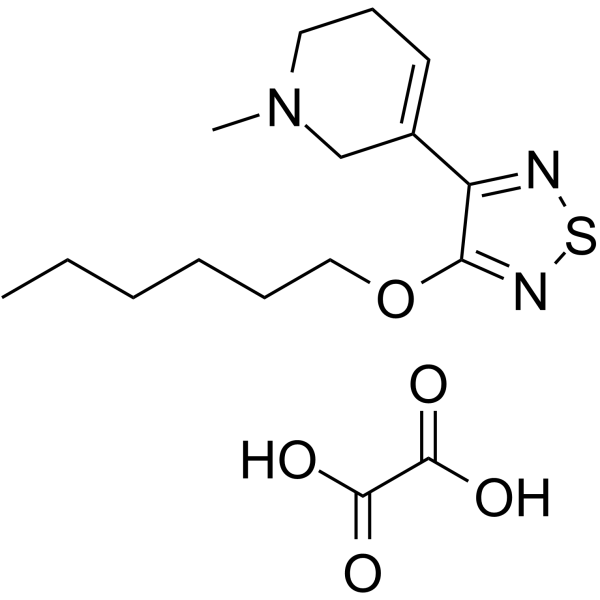
HY-13410
Xanomeline oxalateM1/M4 Agonist -

HY-A0024R
Tolterodine (Standard)Analytical Standard -
HY-17360R
Tiotropium Bromide (Standard)mAChR Antagonist -

HY-13410R
Xanomeline oxalate (Standard)M1/M4 Agonist -
HY-12426
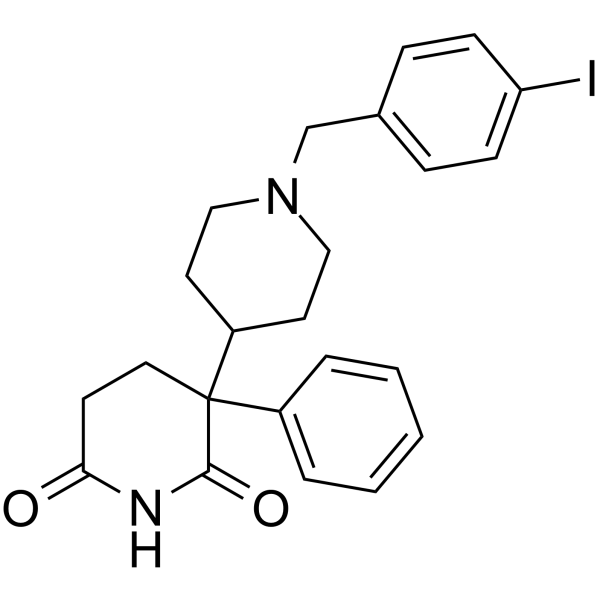
mAChR-IN-1


Biological Activity
Description
IC50 & Target
[1]|
mAChR1 289 nM (EC50) |
Cellular Effect
|
Cell Line

|
Type | Value | Description | References |
|---|---|---|---|---|
| CHO | EC50 |
>30 μM
Compound: 1, TBPB
|
Partial agonist activity at human muscarinic M2 receptor expressed in CHO cells calcium response
Partial agonist activity at human muscarinic M2 receptor expressed in CHO cells calcium response
|
[PMID: 23200253] |
| CHO | EC50 |
>30 μM
Compound: 1, TBPB
|
Partial agonist activity at human muscarinic M3 receptor expressed in CHO cells calcium response
Partial agonist activity at human muscarinic M3 receptor expressed in CHO cells calcium response
|
[PMID: 23200253] |
| CHO | EC50 |
>30 μM
Compound: 1, TBPB
|
Partial agonist activity at human muscarinic M4 receptor expressed in CHO cells calcium response
Partial agonist activity at human muscarinic M4 receptor expressed in CHO cells calcium response
|
[PMID: 23200253] |
| CHO | EC50 |
>30 μM
Compound: 1, TBPB
|
Partial agonist activity at human muscarinic M5 receptor expressed in CHO cells calcium response
Partial agonist activity at human muscarinic M5 receptor expressed in CHO cells calcium response
|
[PMID: 23200253] |
| CHO | EC50 |
>30 μM
Compound: 1, TBPB
|
Partial agonist activity at rat muscarinic M2 receptor expressed in CHO cells calcium response
Partial agonist activity at rat muscarinic M2 receptor expressed in CHO cells calcium response
|
[PMID: 23200253] |
| CHO | EC50 |
>30 μM
Compound: 1, TBPB
|
Partial agonist activity at rat muscarinic M3 receptor expressed in CHO cells calcium response
Partial agonist activity at rat muscarinic M3 receptor expressed in CHO cells calcium response
|
[PMID: 23200253] |
| CHO | EC50 |
>30 μM
Compound: 1, TBPB
|
Partial agonist activity at rat muscarinic M4 receptor expressed in CHO cells calcium response
Partial agonist activity at rat muscarinic M4 receptor expressed in CHO cells calcium response
|
[PMID: 23200253] |
| CHO | EC50 |
>30 μM
Compound: 1, TBPB
|
Partial agonist activity at rat muscarinic M5 receptor expressed in CHO cells calcium response
Partial agonist activity at rat muscarinic M5 receptor expressed in CHO cells calcium response
|
[PMID: 23200253] |
| CHO | EC50 |
255 nM
Compound: 1, TBPB
|
Partial agonist activity at human muscarinic M1 receptor expressed in CHO cells calcium response
Partial agonist activity at human muscarinic M1 receptor expressed in CHO cells calcium response
|
[PMID: 23200253] |
| CHO | EC50 |
79.6 nM
Compound: 1, TBPB
|
Partial agonist activity at rat muscarinic M1 receptor expressed in CHO cells calcium response
Partial agonist activity at rat muscarinic M1 receptor expressed in CHO cells calcium response
|
[PMID: 23200253] |
| CHO | IC50 |
1.29 μM
Compound: 1, TBPB
|
Antagonist activity at rat muscarinic M2 receptor expressed in CHO cells assessed as inhibition of Ach-induced calcium response
Antagonist activity at rat muscarinic M2 receptor expressed in CHO cells assessed as inhibition of Ach-induced calcium response
|
[PMID: 23200253] |
| CHO | IC50 |
2.3 μM
Compound: 1, TBPB
|
Antagonist activity at human muscarinic M3 receptor expressed in CHO cells assessed as inhibition of Ach-induced calcium response
Antagonist activity at human muscarinic M3 receptor expressed in CHO cells assessed as inhibition of Ach-induced calcium response
|
[PMID: 23200253] |
| CHO | IC50 |
3.5 μM
Compound: 1, TBPB
|
Antagonist activity at human muscarinic M2 receptor expressed in CHO cells assessed as inhibition of Ach-induced calcium response
Antagonist activity at human muscarinic M2 receptor expressed in CHO cells assessed as inhibition of Ach-induced calcium response
|
[PMID: 23200253] |
| CHO | IC50 |
3.97 μM
Compound: 1, TBPB
|
Antagonist activity at rat muscarinic M5 receptor expressed in CHO cells assessed as inhibition of Ach-induced calcium response
Antagonist activity at rat muscarinic M5 receptor expressed in CHO cells assessed as inhibition of Ach-induced calcium response
|
[PMID: 23200253] |
| CHO | IC50 |
4.9 μM
Compound: 1, TBPB
|
Antagonist activity at human muscarinic M5 receptor expressed in CHO cells assessed as inhibition of Ach-induced calcium response
Antagonist activity at human muscarinic M5 receptor expressed in CHO cells assessed as inhibition of Ach-induced calcium response
|
[PMID: 23200253] |
| CHO | IC50 |
493 nM
Compound: 1, TBPB
|
Antagonist activity at rat muscarinic M4 receptor expressed in CHO cells assessed as inhibition of Ach-induced calcium response
Antagonist activity at rat muscarinic M4 receptor expressed in CHO cells assessed as inhibition of Ach-induced calcium response
|
[PMID: 23200253] |
| CHO | IC50 |
5.48 μM
Compound: 1, TBPB
|
Antagonist activity at rat muscarinic M3 receptor expressed in CHO cells assessed as inhibition of Ach-induced calcium response
Antagonist activity at rat muscarinic M3 receptor expressed in CHO cells assessed as inhibition of Ach-induced calcium response
|
[PMID: 23200253] |
| CHO | IC50 |
734 nM
Compound: 1, TBPB
|
Antagonist activity at human muscarinic M4 receptor expressed in CHO cells assessed as inhibition of Ach-induced calcium response
Antagonist activity at human muscarinic M4 receptor expressed in CHO cells assessed as inhibition of Ach-induced calcium response
|
[PMID: 23200253] |
| CHO-K1 | EC50 |
6.5 nM
Compound: 4, TBPB
|
Agonist activity at human muscarinic M1 receptor expressed in CHO-K1 cells assessed as increase of acetylcholine-induced calcium flux by FLIPR assay
Agonist activity at human muscarinic M1 receptor expressed in CHO-K1 cells assessed as increase of acetylcholine-induced calcium flux by FLIPR assay
|
[PMID: 20684563] |
In Vivo
MedChemExpress (MCE) has not independently confirmed the accuracy of these methods. They are for reference only.
-
Animal Model:Random-bred albino mice (male/female, 18-22 g) with E. coli-induced sepsis[3]
-
Dosage:60 mg/kg
-
Administration:Subcutaneous injection, single dose, 2 hours prior to sepsis induction
-
Result:Reduced 4-hour mortality by 20% and 24-hour mortality by 23.2% compared to vehicle control.
Significantly decreased blood concentrations of TNF-α, IL-1β, and IL-6 by 2.8-, 2.2-, and 7.3-fold respectively at 4 hours post-sepsis induction.


Chemical Information
-
CAS No. 634616-95-8
-
Appearance Solid
-
Molecular Weight 404.55
-
Formula C25H32N4O
-
Color White to off-white
-
SMILES
O=C1N(C2CCN(C3CCN(CC4=C(C)C=CC=C4)CC3)CC2)C5=CC=CC=C5N1
-
Shipping
Room temperature in continental US; may vary elsewhere.
-
Storage
Powder -20°C 3 years 4°C 2 years In solvent -80°C 2 years -20°C 1 year


Solvent & Solubility
In Vitro:
DMSO : 20 mg/mL (49.44 mM; Need ultrasonic; Hygroscopic DMSO has a significant impact on the solubility of product, please use newly opened DMSO)
Please refer to the solubility information to select the appropriate solvent. Once prepared, please aliquot and store the solution to prevent product inactivation from repeated freeze-thaw cycles.
Storage method and period of stock solution: -80°C, 2 years; -20°C, 1 year. When stored at -80°C, please use it within 2 years. When stored at -20°C, please use it within 1 year.
Please refer to the solubility information to select the appropriate solvent. Once prepared, please aliquot and store the solution to prevent product inactivation from repeated freeze-thaw cycles.
Storage method and period of stock solution: -80°C, 2 years; -20°C, 1 year. When stored at -80°C, please use it within 2 years. When stored at -20°C, please use it within 1 year.
Concentration (start) × Volume (start) = Concentration (final) × Volume (final)
In Vivo:
Select the appropriate dissolution method based on your experimental animal and administration route.
- For the following dissolution methods, please ensure to first prepare a clear stock solution using an In Vitro approach and then sequentially add co-solvents:
- To ensure reliable experimental results, the clarified stock solution can be appropriately stored based on storage conditions. As for the working solution for In Vivo experiments, it is recommended to prepare freshly and use it on the same day.
- The percentages shown for the solvents indicate their volumetric ratio in the final prepared solution. If precipitation or phase separation occurs during preparation, heat and/or sonication can be used to aid dissolution.
Add each solvent one by one: 10% DMSO 40% PEG300 5% Tween-80 45% Saline
Solubility: ≥ 2 mg/mL (4.94 mM); Clear solution
This protocol yields a clear solution of ≥ 2 mg/mL (saturation unknown).
Taking 1 mL working solution as an example, add 100 μL DMSO stock solution (20.0 mg/mL) to 400 μL PEG300, and mix evenly; then add 50 μL Tween-80 and mix evenly; then add 450 μL Saline to adjust the volume to 1 mL.
Preparation of Saline: Dissolve 0.9 g sodium chloride in ddH₂O and dilute to 100 mL to obtain a clear Saline solution.
Add each solvent one by one: 10% DMSO 90% (20% SBE-β-CD in Saline)
Solubility: ≥ 2 mg/mL (4.94 mM); Clear solution
This protocol yields a clear solution of ≥ 2 mg/mL (saturation unknown).
Taking 1 mL working solution as an example, add 100 μL DMSO stock solution (20.0 mg/mL) to 900 μL 20% SBE-β-CD in Saline, and mix evenly.
Preparation of 20% SBE-β-CD in Saline (4°C, storage for one week): 2 g SBE-β-CD powder is dissolved in 10 mL Saline, completely dissolve until clear.
In Vivo Dissolution Calculator
Please enter the basic information of animal experiments:
-
-
-
-
Recommended: Prepare an additional quantity of animals to account for potential losses during experiments.
Please enter your animal formula composition:
-
%DMSO +
Recommended: Keep the proportion of DMSO in working solution below 2% if your animal is weak.
-
%+
-
+%Tween-80 + +
-
%Saline +
The co-solvents required include: DMSO, . All of co-solvents are available by MedChemExpress (MCE). , Tween 80. All of co-solvents are available by MedChemExpress (MCE).
Working solution concentration: 0.22 mg/mL
Method for preparing stock solution: mg drug dissolved in μL DMSO. Stock solution concentration: mg/mL.
1. Take μL DMSO stock solution;
2. Add μL .
μL , mix evenly;
3. Then add μL Tween 80, mix evenly;
4. Then add μL
Please ensure that the stock solution in the first step is dissolved to a clear state, and add co-solvents in sequence. You can use ultrasonic heating (ultrasonic cleaner, recommended frequency 20-40 kHz), vortexing, etc. to assist dissolution.

Protocols
-
LPS-Induced Endotoxemia/Systemic Inflammation
Lipopolysaccharide (LPS)-induced endotoxemia is a widely used in vivo model of acute systemic inflammation in which LPS, a Gram-negative bacterial endotoxin, activates innate immune signaling primarily through TLR4, leading to rapid and transient induction of pro-inflammatory cytokines such as TNF-α, IL-6, and IL-1β in circulation and tissues. This cytokine surge is commonly used as a measurable readout of systemic inflammatory activation and immune dysregulation, and is typically assessed within hours after intraperitoneal LPS administration in mouse models of endotoxemia. The model captures key features of systemic inflammatory response syndrome, including cytokine release, immune cell activation, and downstream tissue responses, and has been used to evaluate anti-inflammatory interventions such as cytokine modulation, lipid mediators, and immune cell-targeting therapies.
-
Research Protocol for Inflammation-related Diseases
The NLRP3 inflammasome is a cytosolic innate immune signaling platform that integrates priming signals and danger-signal activation to promote caspase-1 activation, maturation of IL-1β and IL-18, and gasdermin D-mediated pyroptotic cell death. The core experimental logic is to determine whether inflammatory disease phenotypes are driven by increased NLRP3 expression, ASC-containing inflammasome assembly, caspase-1 cleavage, GSDMD cleavage, and extracellular release of IL-1β/IL-18 rather than by nonspecific cell injury alone. The pathway is strongly linked to inflammation-related disease phenotypes because monosodium urate crystals activate NALP3/NLRP3 inflammasome signaling in gout-like crystal inflammation, cholesterol crystals activate NLRP3 inflammasomes in atherogenesis models, and DSS-induced intestinal inflammation has been reported to involve NLRP3 inflammasome activity. However, experimental colitis studies also show context-dependent protective effects of NLRP3 inflammasome co
-
Amyloid: Congo Red Amyloid Staining
Congo red amyloid staining is a histochemical method used to detect extracellular amyloid deposits in tissue sections based on the affinity of Congo red dye for β-pleated sheet-rich protein aggregates. When bound to amyloid, Congo red produces characteristic apple-green birefringence under polarized light microscopy, which is widely regarded as a diagnostic feature of amyloid deposition in histopathology. The diagnostic principle relies on the combination of dye binding (congophilia) and optical anisotropy under polarized illumination, which distinguishes amyloid from most non-amyloid eosinophilic extracellular deposits in routine histological evaluation. Amyloid identification by Congo red staining remains a cornerstone in diagnostic pathology despite the availability of adjunct methods such as immunohistochemistry and mass spectrometry, particularly because of its ability to localize deposits directly within tissue architecture. The specificity of Congo red-positive deposits is incre
-
Alzheimer’s Disease Modeling
Alzheimer’s Disease (AD) is a neurodegenerative disorder characterized by a progressive decline in cognitive functions and loss of specific types of neurons and synapses. Alzheimer's symptoms can be simulated in mice by injecting drugs (such as Aβ) or genetically modified.


Purity & Documentation
-
Data Sheet (276 KB)
-
SDS (254 KB)
- English - EN (254 KB)
- Français - FR (254 KB)
- Deutsch - DE (254 KB)
- Norwegian - NO (254 KB)
- Español - ES (254 KB)
- Swedish - SV (254 KB)
- Italian - IT (254 KB)
- Korean - KR (254 KB)
- Portuguese - PT (254 KB)
-
Handling Instructions (2659 KB)
References
[1]. Miller NR, et al. Synthesis and SAR of analogs of the M1 allosteric agonist TBPB. Part II: Amides, sulfonamides and ureas--the effect of capping the distal basic piperidine nitrogen. Bioorg Med Chem Lett. 2008 Oct 15;18(20):5443-7. [Content Brief]
[3]. Zabrodskii PF, et al. Combined Effects of M1 Muscarinic Acetylcholine Receptor Agonist TBPB and α7n-Acetylcholine Receptor Activator GTS-21 on Mouse Mortality and Blood Concentration of Proinflammatory Cytokines in Sepsis. Bull Exp Biol Med. 2017 Apr;162(6):750-753. [Content Brief]


Complete Stock Solution Preparation Table
Please refer to the solubility information to select the appropriate solvent. Once prepared, please aliquot and store the solution to prevent product inactivation from repeated freeze-thaw cycles.
Storage method and period of stock solution: -80°C, 2 years; -20°C, 1 year. When stored at -80°C, please use it within 2 years. When stored at -20°C, please use it within 1 year.
| Optional Solvent | Concentration Solvent Mass | 1 mg | 5 mg | 10 mg | 25 mg |
|---|---|---|---|---|---|
| DMSO | 1 mM | 2.4719 mL | 12.3594 mL | 24.7188 mL | 61.7971 mL |
| 5 mM | 0.4944 mL | 2.4719 mL | 4.9438 mL | 12.3594 mL | |
| 10 mM | 0.2472 mL | 1.2359 mL | 2.4719 mL | 6.1797 mL | |
| 15 mM | 0.1648 mL | 0.8240 mL | 1.6479 mL | 4.1198 mL | |
| 20 mM | 0.1236 mL | 0.6180 mL | 1.2359 mL | 3.0899 mL | |
| 25 mM | 0.0989 mL | 0.4944 mL | 0.9888 mL | 2.4719 mL | |
| 30 mM | 0.0824 mL | 0.4120 mL | 0.8240 mL | 2.0599 mL | |
| 40 mM | 0.0618 mL | 0.3090 mL | 0.6180 mL | 1.5449 mL |


TBPB Related Classifications
HY-14562 Related Classifications
 Powered by Bioz