



Oct4 inducer-1

Based on 1 Customer Validation
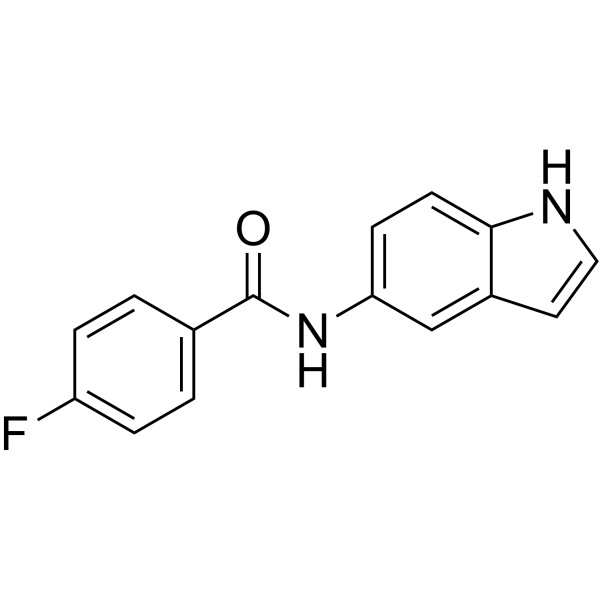
Oct4 inducer-1 (compound OAC-3) is a potent Oct4 activator. Oct4 inducer-1 activates Oct4 and Nanog promoters and enhances induced pluripotent stem cells (iPSC) formation. Oct4 inducer-1 facilitates the reprogramming of cells by enhancing efficiency and shortening the reprogramming time.
For research use only. We do not sell to patients.
- Purity : 99.92%
- CAS No.: 182564-41-6
- Formula: C15H11FN2O
- Molecular Weight:254.26
-
Storage:
4°C, protect from light
* In solvent : -80°C, 6 months; -20°C, 1 month (protect from light)

To place orders, for customer services and technical support, please contact: MedChemExpress USA
Tel: 609-228-6898 E-mail: [email protected] [email protected]


-
 Biological Activity
-
Chemical Information
-
Solvent & Solubility
- Protocols
- Purity & Documentation
- References
-
 Help & FAQs


-
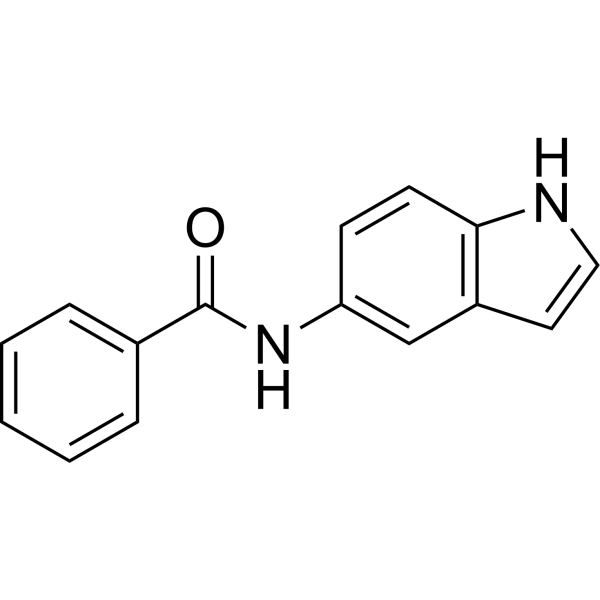
HY-12884
OAC2Oct3/4 Activator -
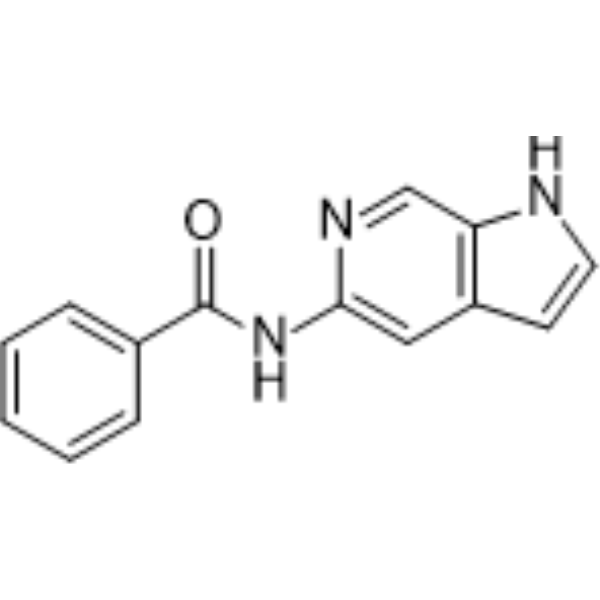
HY-12303
OAC1Oct4 Activator -
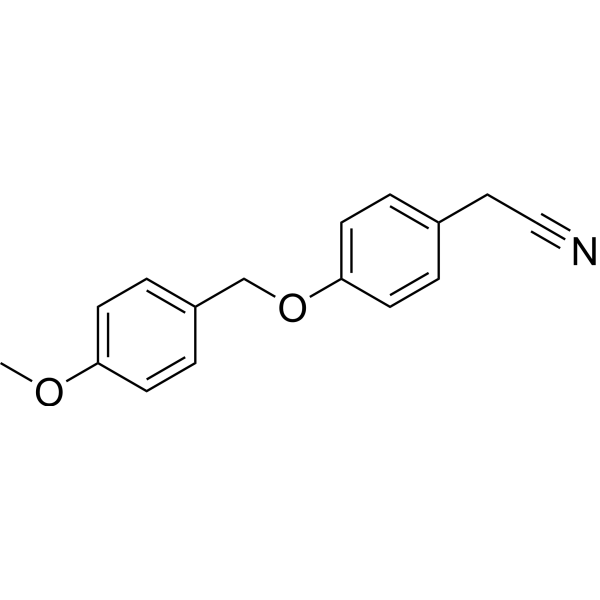
HY-18771
O4I1Oct3/4 Activator -
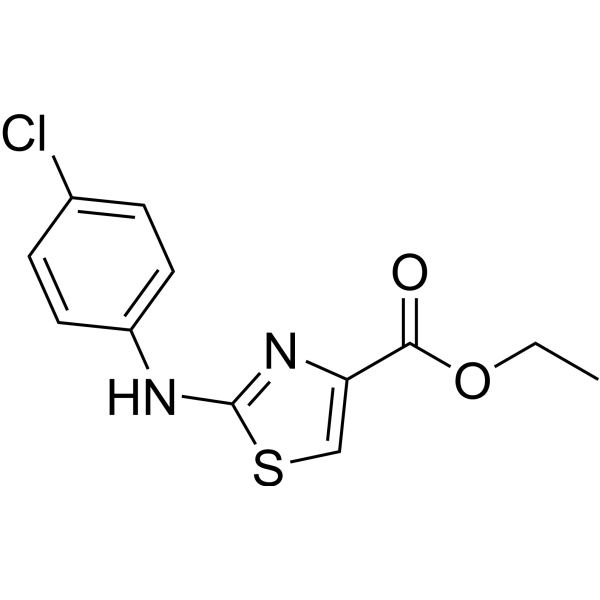
HY-18772
O4I2Oct3/4 Inducer -
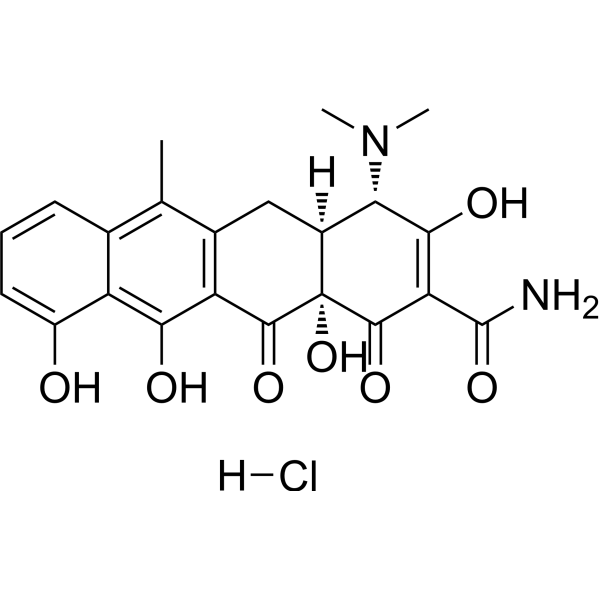
HY-118660
Anhydrotetracycline hydrochlorideTetracycline Destructase Enzymes Inhibitor -
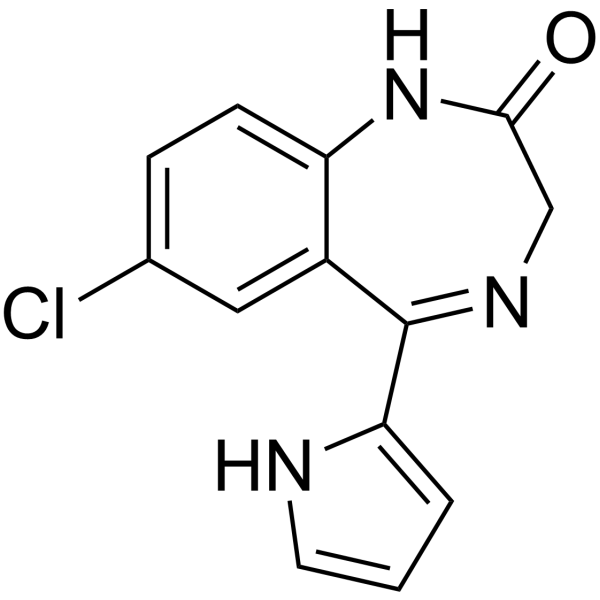
HY-108470
Ro5-3335RUNX1-CBFB Inhibitor -
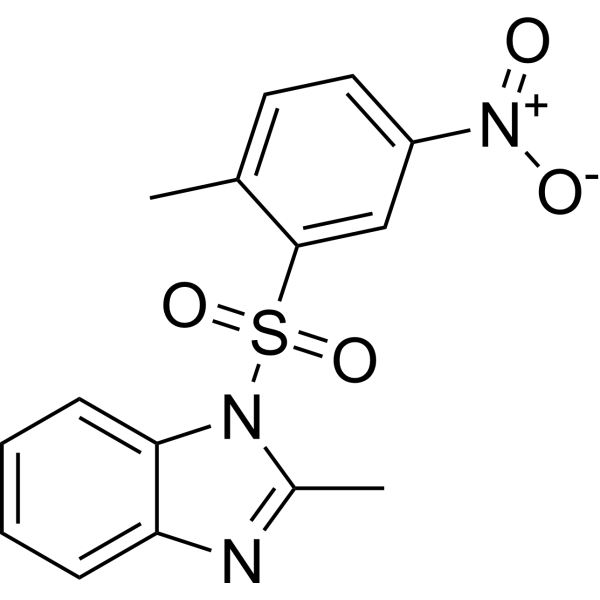
HY-108469
BI-6015HNF4α Antagonist -
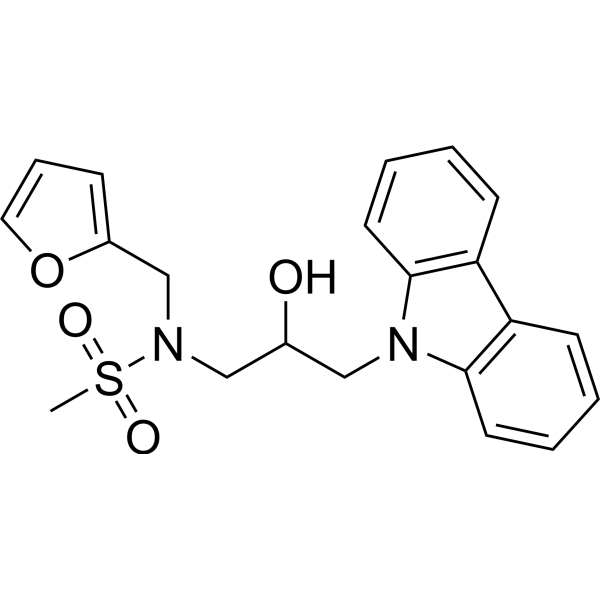
HY-108468
KL001Cryptochrome Stabilizer -
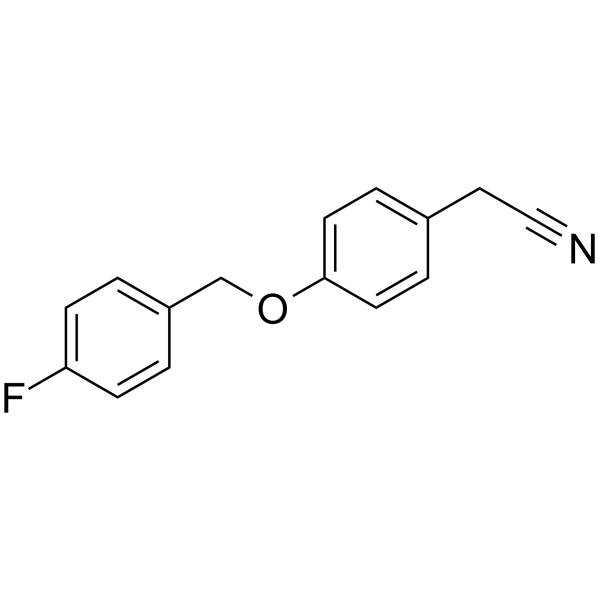
HY-18773
Oct3/4-inducer-1Oct3/4 Activator -
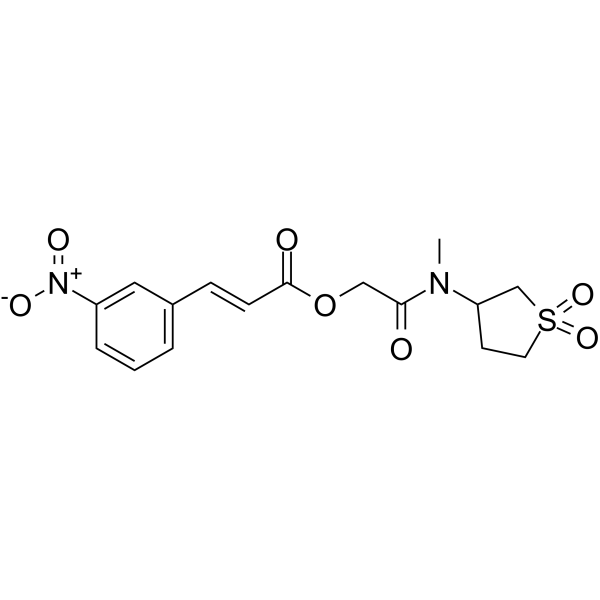
HY-W011044
CID 5951923KLF5 Inhibitor -

HY-108468R
KL001 (Standard)Reference Standard -

HY-118660R
Anhydrotetracycline hydrochloride (Standard)Tetracycline Destructase Enzymes Inhibitor


Biological Activity
Description
In Vitro
Oct4 inducer-1 (compound OAC-3; 1 μM) enhances reprogramming efficiency by activating Oct4-luc reporter and Nanog-luc reporter in embryonic stem cells (ESCs). Oct4 inducer-1 increases induced pluripotent stem cells (iPSC) generation and accelerates the appearance of iPSC-like colonies[1].
Oct4 inducer-1 (1 μM; 4F (OSKM) infected mouse embryonic fibroblast (MEF)) enhances reprogramming efficiency in iSF1 media[1].
MedChemExpress (MCE) has not independently confirmed the accuracy of these methods. They are for reference only.


Chemical Information
-
CAS No. 182564-41-6
-
Appearance Solid
-
Molecular Weight 254.26
-
Formula C15H11FN2O
-
Color Light brown to brown
-
SMILES
O=C(C1=CC=C(C=C1)F)NC2=CC=C3NC=CC3=C2
-
Shipping
Room temperature in continental US; may vary elsewhere.
-
Storage
4°C, protect from light
* In solvent : -80°C, 6 months; -20°C, 1 month (protect from light)


Solvent & Solubility
In Vitro:
DMSO : 250 mg/mL (983.25 mM; Need ultrasonic; Hygroscopic DMSO has a significant impact on the solubility of product, please use newly opened DMSO)
Please refer to the solubility information to select the appropriate solvent. Once prepared, please aliquot and store the solution to prevent product inactivation from repeated freeze-thaw cycles.
Storage method and period of stock solution: -80°C, 6 months; -20°C, 1 month (protect from light). When stored at -80°C, please use it within 6 months. When stored at -20°C, please use it within 1 month.
Please refer to the solubility information to select the appropriate solvent. Once prepared, please aliquot and store the solution to prevent product inactivation from repeated freeze-thaw cycles.
Storage method and period of stock solution: -80°C, 6 months; -20°C, 1 month (protect from light). When stored at -80°C, please use it within 6 months. When stored at -20°C, please use it within 1 month.
Concentration (start) × Volume (start) = Concentration (final) × Volume (final)


Purity & Documentation
-
Data Sheet (269 KB)
-
SDS (393 KB)
- English - EN (393 KB)
- Français - FR (393 KB)
- Deutsch - DE (393 KB)
- Norwegian - NO (393 KB)
- Español - ES (393 KB)
- Swedish - SV (393 KB)
- Italian - IT (393 KB)
- Korean - KR (393 KB)
- Portuguese - PT (393 KB)
-
Handling Instructions (2659 KB)
References


Complete Stock Solution Preparation Table
Please refer to the solubility information to select the appropriate solvent. Once prepared, please aliquot and store the solution to prevent product inactivation from repeated freeze-thaw cycles.
Storage method and period of stock solution: -80°C, 6 months; -20°C, 1 month (protect from light). When stored at -80°C, please use it within 6 months. When stored at -20°C, please use it within 1 month.
| Optional Solvent | Concentration Solvent Mass | 1 mg | 5 mg | 10 mg | 25 mg |
|---|---|---|---|---|---|
| DMSO | 1 mM | 3.9330 mL | 19.6649 mL | 39.3298 mL | 98.3246 mL |
| 5 mM | 0.7866 mL | 3.9330 mL | 7.8660 mL | 19.6649 mL | |
| 10 mM | 0.3933 mL | 1.9665 mL | 3.9330 mL | 9.8325 mL | |
| 15 mM | 0.2622 mL | 1.3110 mL | 2.6220 mL | 6.5550 mL | |
| 20 mM | 0.1966 mL | 0.9832 mL | 1.9665 mL | 4.9162 mL | |
| 25 mM | 0.1573 mL | 0.7866 mL | 1.5732 mL | 3.9330 mL | |
| 30 mM | 0.1311 mL | 0.6555 mL | 1.3110 mL | 3.2775 mL | |
| 40 mM | 0.0983 mL | 0.4916 mL | 0.9832 mL | 2.4581 mL | |
| 50 mM | 0.0787 mL | 0.3933 mL | 0.7866 mL | 1.9665 mL | |
| 60 mM | 0.0655 mL | 0.3277 mL | 0.6555 mL | 1.6387 mL | |
| 80 mM | 0.0492 mL | 0.2458 mL | 0.4916 mL | 1.2291 mL | |
| 100 mM | 0.0393 mL | 0.1966 mL | 0.3933 mL | 0.9832 mL |


Oct4 inducer-1 Related Classifications
HY-119672 Related Classifications
 Powered by Bioz