



Potassium chloride, for cell culture
Based on 1 publication(s) in Google Scholar
Potassium chloride, for cell culture is potassium chloride that can be used for cell culture. Potassium chloride, for cell culture increases extracellular potassium ion concentration to induce cellular depolarization, thereby activating voltage-gated calcium channels and regulating intracellular calcium signaling. Potassium chloride, for cell culture upregulates Brn-5. Potassium chloride, for cell culture inhibits the proliferation of neurons and some plant cells.
For research use only. We do not sell to patients.
- Purity : 99.80%
- CAS No.: 7447-40-7
- Formula: KCl
- Molecular Weight:74.55
-
Storage:
RT, sealed storage, away from moisture and light.
In solvent -80°C, 1 year , -20°C, 6 months


To place orders, for customer services and technical support, please contact: MedChemExpress USA
Tel: 609-228-6898 E-mail: [email protected] [email protected]


-
 Biological Activity
-
Chemical Information
-
Solvent & Solubility
- Protocols
- Purity & Documentation
- References
-
 Help & FAQs


-

HY-Y0344D
Sodium chloride, for cell cultureBiochemical Assay Reagent -
HY-D0861
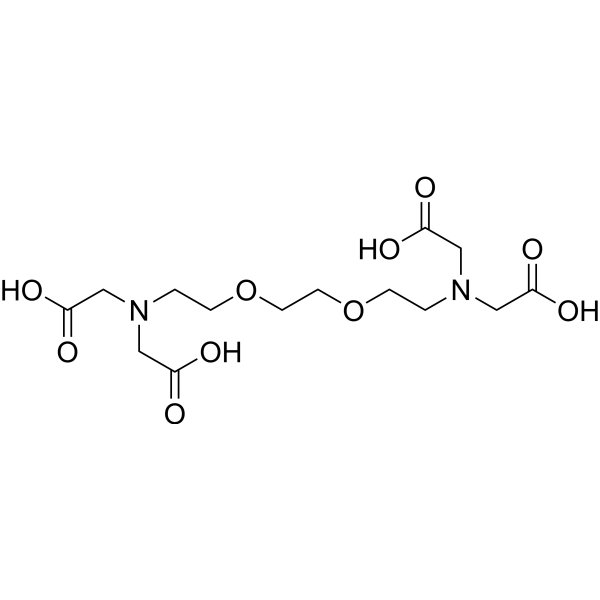
EGTACalcium Ion Chelator -
HY-Y0332K
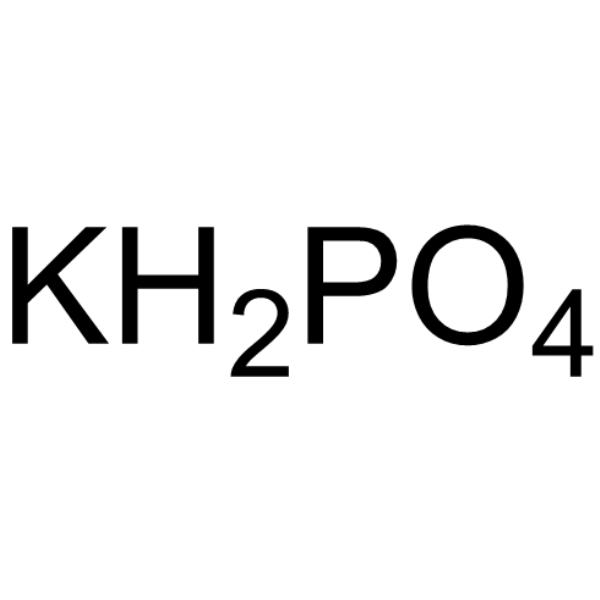
Potassium dihydrogen phosphate, for cell cultureCell Culture Reagent -

HY-Y0406E
Calcium chloride anhydrous, for cell cultureCalcium Chloride -

HY-Y0537
Potassium chloride, AR, 99.5%Potassium Supplement -

HY-108536D
Calcium chloride dihydrate, for cell culture, 99%Biochemical Reagent -
HY-D0857
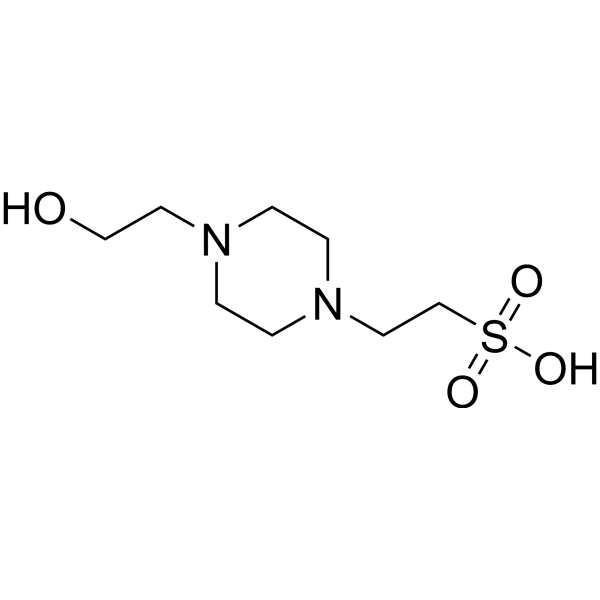
HEPESZwitterionic Buffer -
HY-Y0332B
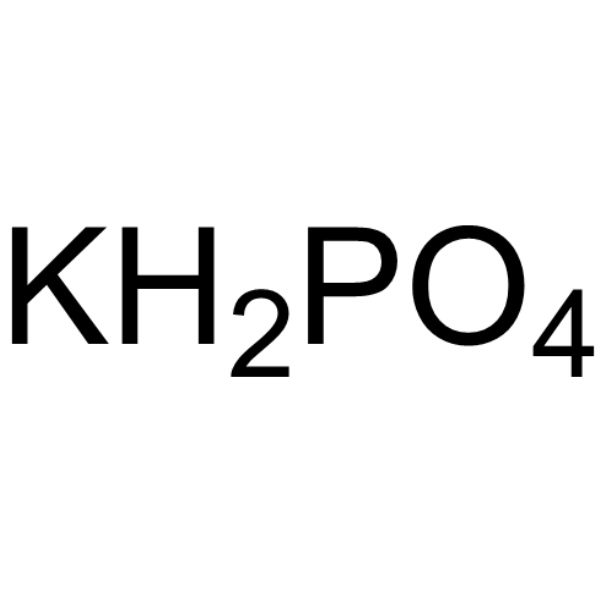
Potassium dihydrogen phosphate, AR,99.5%Cell Culture Reagent -

HY-Y0537B
Potassium chloride, for molecular biologyPotassium Chloride -

HY-W094475C
Magnesium sulfate heptahydrate, for cell cultureAnti-Inflammatory Agent -

HY-Y0537C
Potassium chloride, ≥99.99% trace metals basisPotassium chloride -
HY-W019981C
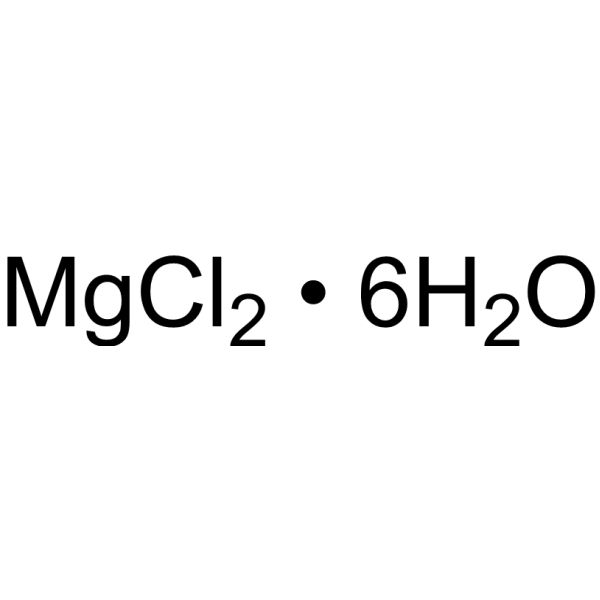
Magnesium chloride hexahydrate, for cell cultureMagnesium Ion Source
Publications Citing Use of MedChemExpress (MCE) Potassium chloride, for cell culture
MoreAll Calcium Channel Isoforms
More

Biological Activity
Description
Cellular Effect
|
Cell Line

|
Type | Value | Description | References |
|---|---|---|---|---|
| HEK293 | EC50 |
174 mM
Compound: 4873
|
Substrate uptake by the Sodium/Potassium/Calcium Exchanger 4 (NCKX4, SLC24A4) as assessed by Screen Questtrade mark Fluo-8 NW calcium assay kit in HEK-293 JumpIN-SLC24A4 cells (PubChem AID: 1794814)
Substrate uptake by the Sodium/Potassium/Calcium Exchanger 4 (NCKX4, SLC24A4) as assessed by Screen Questtrade mark Fluo-8 NW calcium assay kit in HEK-293 JumpIN-SLC24A4 cells (PubChem AID: 1794814)
|
10.5281/zenodo.7360317 |
| HEK293 | EC50 |
280 mM
Compound: 4873
|
Substrate uptake by the Sodium/Potassium/Calcium Exchanger 2 (NCKX2, SLC24A2) as assessed by Screen Questtrade mark Fluo-8 NW calcium assay kit in HEK-293 JumpIN-SLC24A2 cells (PubChem AID: 1794815)
Substrate uptake by the Sodium/Potassium/Calcium Exchanger 2 (NCKX2, SLC24A2) as assessed by Screen Questtrade mark Fluo-8 NW calcium assay kit in HEK-293 JumpIN-SLC24A2 cells (PubChem AID: 1794815)
|
10.5281/zenodo.7360329 |
In Vitro
Potassium chloride, for cell culture (25-50 mM; 24-48 h) inhibits the proliferation of cerebellar granule neuron progenitors and antagonizes the mitogenic response to IGF-I in cultured cells, while allowing cultured granule cells to continue to differentiate[1].
Potassium chloride, for cell culture (50-800 mM; 12-72 h) inhibits the growth of Ginkgo biloba cell suspensions[2].
MedChemExpress (MCE) has not independently confirmed the accuracy of these methods. They are for reference only. Further protocols information, click here.
-
Cell Line:Cerebellar granule neuron progenitors
-
Concentration:5 mM (control), 25 mM, 50 mM
-
Incubation Time:24, 48 h
-
Result:Upregulated Brn-5 expression (a differentiation marker), with higher expression at 48 h.


Chemical Information
-
CAS No. 7447-40-7
-
Appearance Solid
-
Molecular Weight 74.55
-
Formula KCl
-
Color White to light yellow
-
SMILES
[K]Cl
-
Shipping
Room temperature in continental US; may vary elsewhere.
-
Storage
RT, sealed storage, away from moisture and light
In solvent -80°C 1 year -20°C 6 months


Publications (1)
-
Journal Impact Factor
-
Most Recent


Solvent & Solubility
In Vitro:
H2O : 100 mg/mL (1341.38 mM; Need ultrasonic)
Please refer to the solubility information to select the appropriate solvent. Once prepared, please aliquot and store the solution to prevent product inactivation from repeated freeze-thaw cycles.
Storage method and period of stock solution: -80°C, 1 year; -20°C, 6 months. When stored at -80°C, please use it within 1 year. When stored at -20°C, please use it within 6 months.
* Note: If you choose water as the stock solution, please dilute it to the working solution, then filter and sterilize it with a 0.22 μm filter before use.
Please refer to the solubility information to select the appropriate solvent. Once prepared, please aliquot and store the solution to prevent product inactivation from repeated freeze-thaw cycles.
Storage method and period of stock solution: -80°C, 1 year; -20°C, 6 months. When stored at -80°C, please use it within 1 year. When stored at -20°C, please use it within 6 months.
* Note: If you choose water as the stock solution, please dilute it to the working solution, then filter and sterilize it with a 0.22 μm filter before use.
Concentration (start) × Volume (start) = Concentration (final) × Volume (final)

Protocols
-
Calcium Spark Assay
Calcium sparks are localized, transient increases in intracellular calcium concentration ([Ca2+]i) that occur in cardiac myocytes and represent elementary events underlying excitation-contraction coupling. These events are generated by the coordinated opening of clusters of ryanodine receptors (RyRs) on the sarcoplasmic reticulum membrane, leading to a brief release of Ca2+ into the cytosol. The detection and analysis of calcium sparks provide insights into the mechanisms of calcium handling and signaling in cardiac cells. Imaging techniques using fluorescent calcium indicators such as Fluo-3 are employed to visualize these subcellular calcium transients with high spatial and temporal resolution. The protocol is based on established methodologies described in primary literature for both experimental measurement and automated analysis of calcium sparks.
-
Ca2+ Staining Technique
Ca2+ staining is an experimental technique that utilizes specific fluorescent probes (such as Fluo-4 AM, Fura-2, etc.) to qualitatively or quantitatively detect dynamic changes in intracellular Ca2+ concentrations; this is achieved by monitoring the changes in fluorescent signals generated when these probes bind to free intracellular calcium ions. The underlying principle relies primarily on the presence of chelating groups within the probe's molecular structure that possess high affinity for calcium ions.
-
Cell Viability Determination by MTT Colorimetric Assay
The following protocol uses the MTT colorimetric assay as a classic literature-established method for assessing cell viability/metabolic activity in cultured mammalian cells. MTT[3-(4,5-dimethylthiazol-2-yl)-2,5-diphenyltetrazolium bromide] is reduced by metabolically active cells to a colored formazan product; the amount of formazan is quantified spectrophotometrically and provides an indirect measure of metabolically active viable cells. Importantly, MTT reduction reflects cellular oxidoreductase/metabolic activity rather than an absolute direct count of living cells, so changes in cellular metabolism can alter the signal independently of cell number.


Purity & Documentation
-
Data Sheet (280 KB)
-
SDS (254 KB)
- English - EN (254 KB)
- Français - FR (254 KB)
- Deutsch - DE (254 KB)
- Norwegian - NO (254 KB)
- Español - ES (254 KB)
- Swedish - SV (254 KB)
- Italian - IT (254 KB)
- Korean - KR (254 KB)
- Portuguese - PT (254 KB)
-
Handling Instructions (2659 KB)
References


Complete Stock Solution Preparation Table
Please refer to the solubility information to select the appropriate solvent. Once prepared, please aliquot and store the solution to prevent product inactivation from repeated freeze-thaw cycles.
Storage method and period of stock solution: -80°C, 1 year; -20°C, 6 months. When stored at -80°C, please use it within 1 year. When stored at -20°C, please use it within 6 months.
| Optional Solvent | Concentration Solvent Mass | 1 mg | 5 mg | 10 mg | 25 mg |
|---|---|---|---|---|---|
| H2O | 1 mM | 13.4138 mL | 67.0691 mL | 134.1382 mL | 335.3454 mL |
| 5 mM | 2.6828 mL | 13.4138 mL | 26.8276 mL | 67.0691 mL | |
| 10 mM | 1.3414 mL | 6.7069 mL | 13.4138 mL | 33.5345 mL | |
| 15 mM | 0.8943 mL | 4.4713 mL | 8.9425 mL | 22.3564 mL | |
| 20 mM | 0.6707 mL | 3.3535 mL | 6.7069 mL | 16.7673 mL | |
| 25 mM | 0.5366 mL | 2.6828 mL | 5.3655 mL | 13.4138 mL | |
| 30 mM | 0.4471 mL | 2.2356 mL | 4.4713 mL | 11.1782 mL | |
| 40 mM | 0.3353 mL | 1.6767 mL | 3.3535 mL | 8.3836 mL | |
| 50 mM | 0.2683 mL | 1.3414 mL | 2.6828 mL | 6.7069 mL | |
| 60 mM | 0.2236 mL | 1.1178 mL | 2.2356 mL | 5.5891 mL | |
| 80 mM | 0.1677 mL | 0.8384 mL | 1.6767 mL | 4.1918 mL | |
| 100 mM | 0.1341 mL | 0.6707 mL | 1.3414 mL | 3.3535 mL |
* Note: If you choose water as the stock solution, please dilute it to the working solution, then filter and sterilize it with a 0.22 μm filter before use.


Potassium chloride, for cell culture Related Classifications
HY-Y0537E Related Classifications
 Powered by Bioz