



PVA (Mw 205000)

Based on 1 Customer Validation
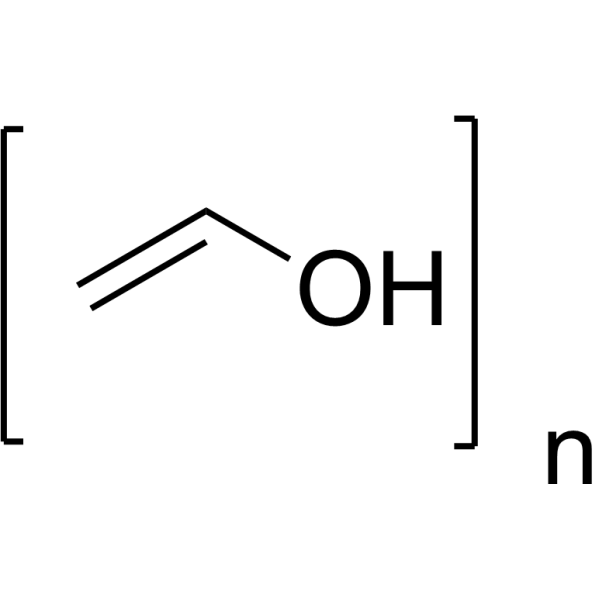
PVA (Polyvinyl alcohol) (Mw 205000) is a polyvinyl alcohol with a molecular weight of 205000, which is used as a biological additive. PVA (Mw 205000) can be cross-linked through physical or chemical methods to form hydrogels, and is widely applied in fields such as biomedicine, food packaging, textiles, papermaking, sensing, and electronic devices. After PVA enema, it has an improving effect on acute colitis induced by DSS (HY-116282C) in mice.
For research use only. We do not sell to patients.
- CAS No.: 9002-89-5
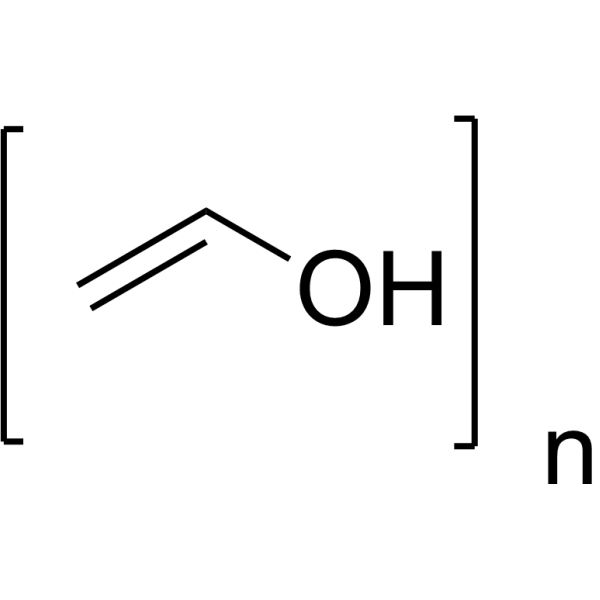
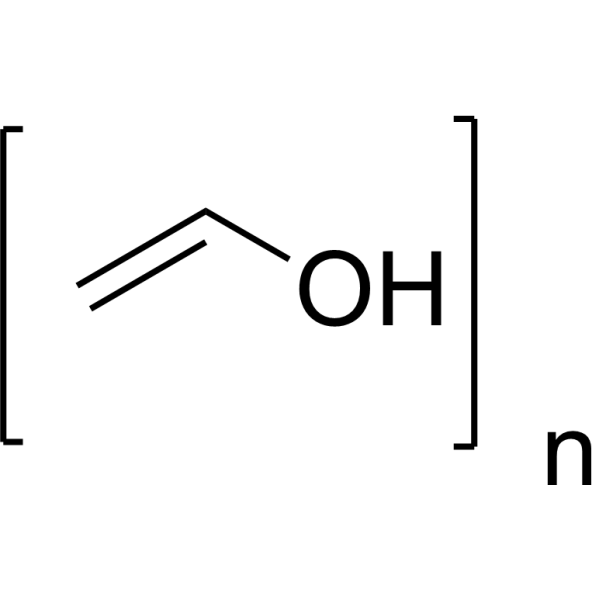
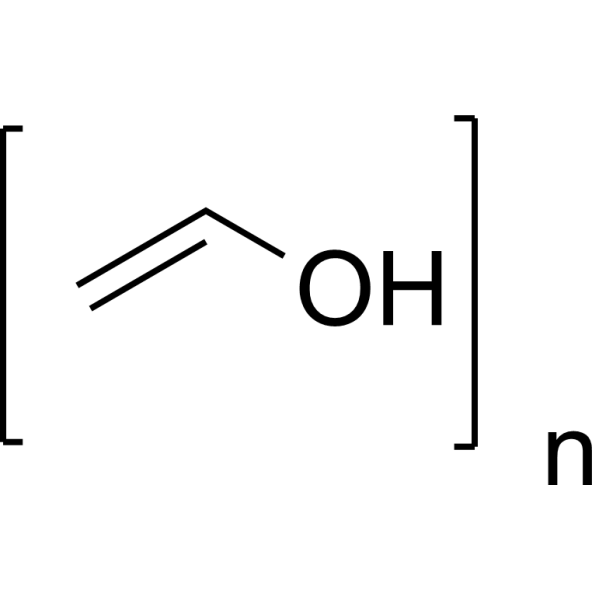
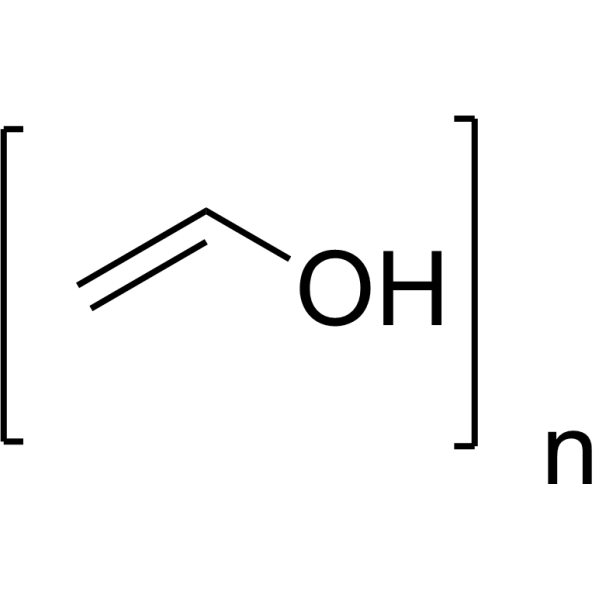
- Formula: (C2H4O)n
- Molecular Weight:205000 (Average)
-
Storage:
Store at room temperature, keep dry and cool.
In solvent -80°C, 1 year , -20°C, 6 months


To place orders, for customer services and technical support, please contact: MedChemExpress USA
Tel: 609-228-6898 E-mail: [email protected] [email protected]


-
 Biological Activity
-
Chemical Information
-
Solvent & Solubility
- Protocols
- Purity & Documentation
- References
-
 Help & FAQs


-

HY-Y0850U
PVA (Mw 31000, 87-89% hydrolyzed, ~630 polymerization)Polymer -
HY-Y0850L
Polyvinyl alcohol (Mw 85000-124000, 99+% hydrolyzed)Polyvinyl alcohol -

HY-Y0850U3
PVA (Mw 125000, 98-99% hydrolyzed, ~2800 polymerization)Wound Dressing -
HY-Y0850E
Polyvinyl alcohol (Mw 30000-70000, 87-90% hydrolyzed)Dressing Meterial -
HY-Y0850
Polyvinyl alcohol (Mw 146000-186000, 99+% hydrolyzed)Biochemical reagents -
HY-Y0850J
Polyvinyl alcohol (Mw 13000-23000, 87-89% hydrolyzed)Polyvinyl Alcohol -

HY-Y0850U4
PVA (Mw 145000, 99+% hydrolyzed, ~3300 polymerization)Polyvinyl Alcohol -
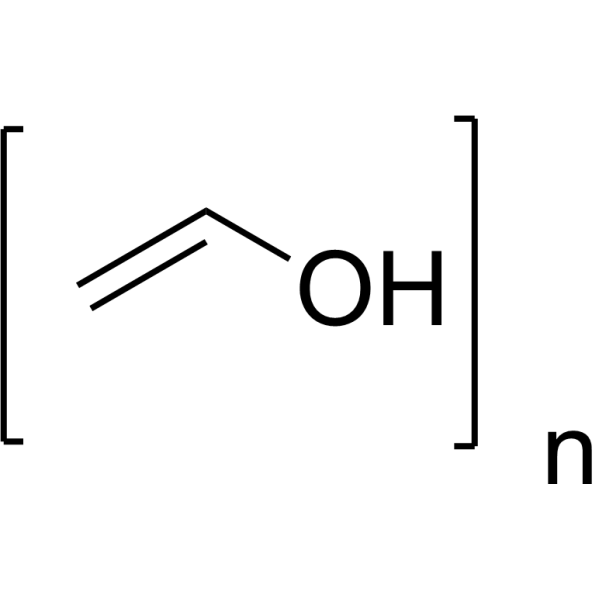
HY-Y0850K
Polyvinyl alcohol (Mw 31000-50000, 98-99% hydrolyzed)Biochemical Reagent -
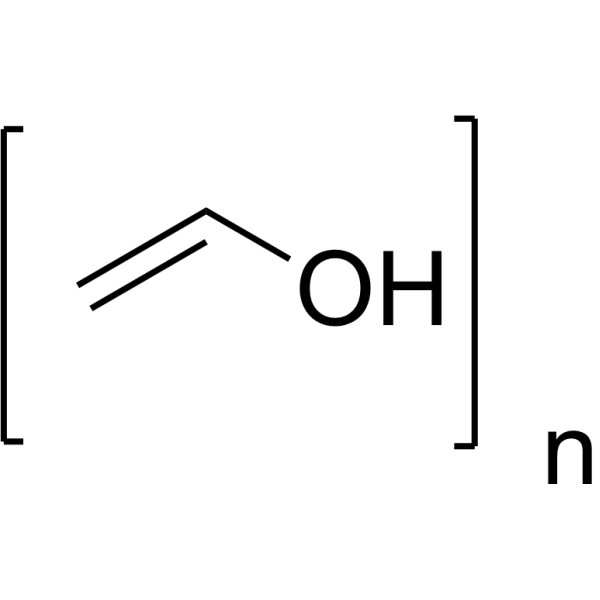
HY-Y0850O
Polyvinyl alcohol (Mw 31000-50000, 87-89% hydrolyzed)Emulsification Stabilizer -
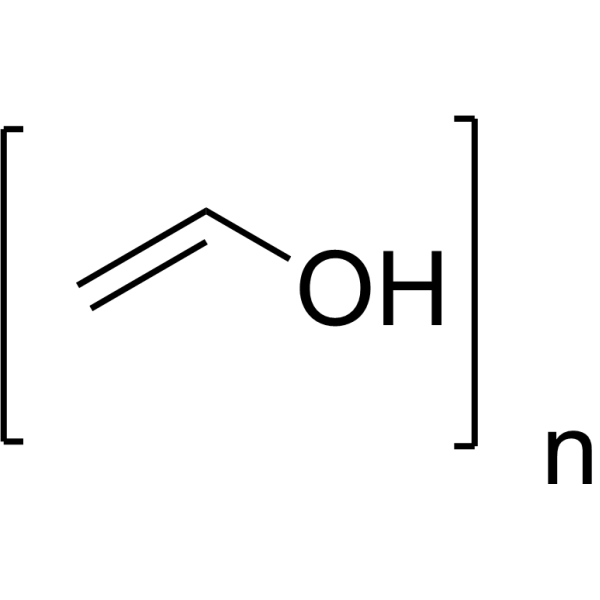
HY-Y0850H
Polyvinyl alcohol (Mw 89000-98000, 99+% hydrolyzed)Biochemical Reagent -
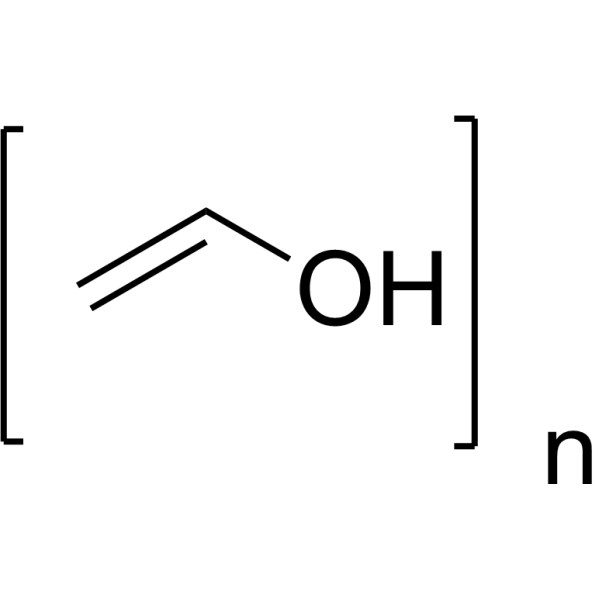
HY-Y0850I
Polyvinyl alcohol (Mw 9000-10000, 80% hydrolyzed)Biochemical Reagent -
HY-Y0850N
Polyvinyl alcohol (Mw 13000-23000, 98% hydrolyzed)Biochemical Reagent


Biological Activity
Description
In Vitro
PVA (Mw 205000), when fabricated into hydrogels, can be used for the development of artificial cartilage, electronic skin, and wound dressings. Its hydrogels can provide a moist environment for wounds, and actively combat infections, regulate inflammation, and promote tissue regeneration[3].
MedChemExpress (MCE) has not independently confirmed the accuracy of these methods. They are for reference only. Further protocols information, click here.


Chemical Information
-
CAS No. 9002-89-5
-
Appearance Solid
-
Molecular Weight 205000 (Average)
-
Formula (C2H4O)n
-
Color White to off-white
-
SMILES
CCC(O)C.[n]
-
Synonyms
Polyvinyl alcohol (Mw 205000); Poly(Ethenol) (Mw 205000)
-
Shipping
Room temperature in continental US; may vary elsewhere.
-
Storage
Store at room temperature, keep dry and cool
In solvent -80°C 1 year -20°C 6 months


Solvent & Solubility
In Vitro:
H2O : 50 mg/mL (ultrasonic and warming and heat to 60°C)

Protocols
-
DSS-Induced Colitis
Dextran sulfate sodium (DSS)-induced colitis is generated by administering DSS in mouse drinking water, producing epithelial injury, barrier disruption, weight loss, diarrhea, fecal blood, colon shortening, histologic mucosal damage, and inflammatory mediator changes; the model is mainly used to study acute or chronic intestinal inflammation resembling selected features of ulcerative colitis. DSS injury is interpreted through clinical and tissue readouts rather than a single molecular endpoint: daily body weight, stool consistency, and bleeding are combined into a disease activity index, while colon length, histology, cytokines, myeloperoxidase activity, intestinal permeability, and tight-junction markers provide complementary measures of inflammation and barrier damage.
-
TNBS-Induced Colitis
TNBS-induced colitis is produced by intrarectal delivery of 2,4,6-trinitrobenzene sulfonic acid in ethanol, where ethanol disrupts the mucosal barrier and TNBS haptenates colonic proteins, generating immune-mediated colonic inflammation with weight loss, diarrhea, ulceration, transmural injury, inflammatory-cell infiltration, and cytokine responses. The model is used as an experimental intestinal inflammation model with Crohn’s disease–like features, especially when Th1-type responses, IL-12–dependent inflammation, chronic relapsing inflammation, or fibrosis-related endpoints are studied.


Purity & Documentation
-
Data Sheet (266 KB)
-
SDS (422 KB)
- English - EN (422 KB)
- Français - FR (422 KB)
- Deutsch - DE (422 KB)
- Norwegian - NO (422 KB)
- Español - ES (422 KB)
- Swedish - SV (422 KB)
- Italian - IT (422 KB)
- Korean - KR (422 KB)
- Portuguese - PT (422 KB)
-
Handling Instructions (2659 KB)
References

Calculators
Concentration (start) × Volume (start) = Concentration (final) × Volume (final)


PVA (Mw 205000) Related Classifications
HY-Y0850U6 Related Classifications
 Powered by Bioz