



(R,R)-Secoisolariciresinol diglucoside
Based on 1 publication(s) in Google Scholar
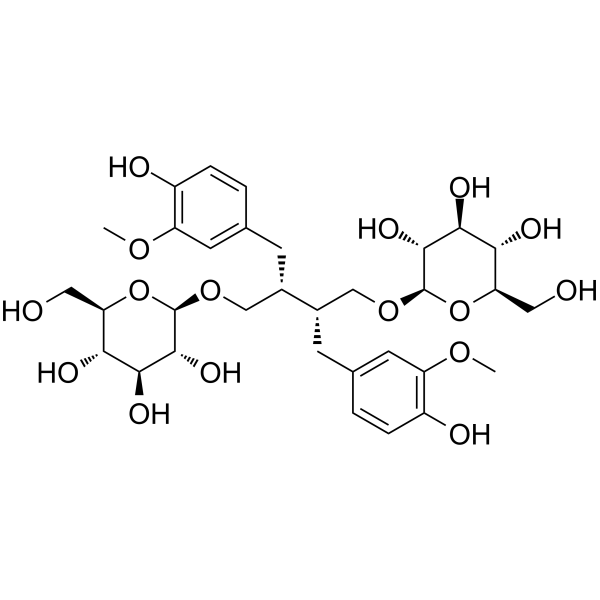
(R,R)-Secoisolariciresinol diglucoside ((R,R)-SDG) is an isomer of Secoisolariciresinol diglucoside (HY-105008). (R,R)-Secoisolariciresinol diglucoside scavenges hydroxyl radicals, peroxyl radicals, and DPPH radicals. (R,R)-Secoisolariciresinol diglucoside reduces γ-ray-induced strand breaks in calf thymus DNA. (R,R)-Secoisolariciresinol diglucoside can be used in studies of oxidant-dependent inflammatory tissue injury.
For research use only. We do not sell to patients.
- Purity : 99.21%
- CAS No.: 158932-33-3
- Formula: C32H46O16
- Molecular Weight:686.70
-
Storage:Powder -20°C, 3 years , 4°C, 2 years ; In solvent -80°C, 2 years , -20°C, 1 year

To place orders, for customer services and technical support, please contact: MedChemExpress USA
Tel: 609-228-6898 E-mail: [email protected] [email protected]


-
 Biological Activity
-
Chemical Information
-
Solvent & Solubility
- Purity & Documentation
- References
-
 Help & FAQs


-
HY-N0020
EchinacosideWnt/β-catenin Signaling Inhibitor -
HY-N0527
PentagalloylglucoseAntioxidant -
HY-N1992
Theaflavin 3,3'-digallateVirus Protease Inhibitor -
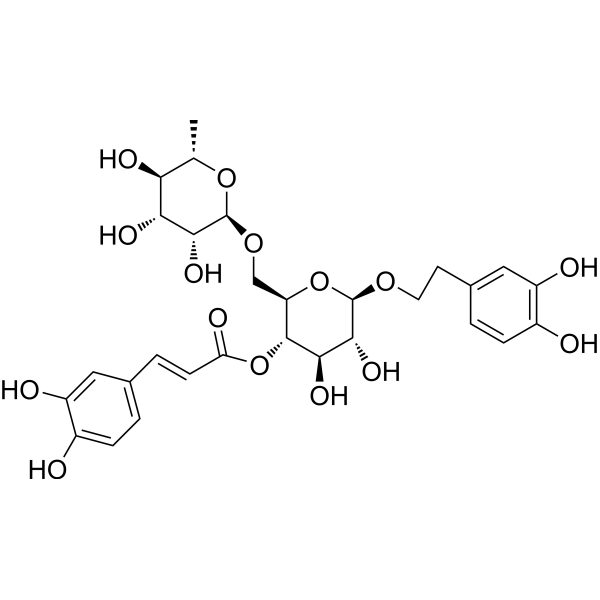
HY-N0028
Forsythiaside AAnti-Inflammatory Agent -
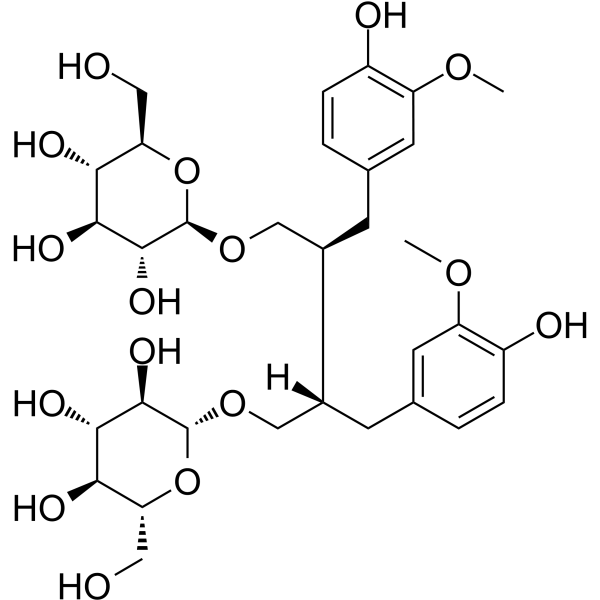
HY-105008
Secoisolariciresinol diglucosideAnti-inflammatory Drug -
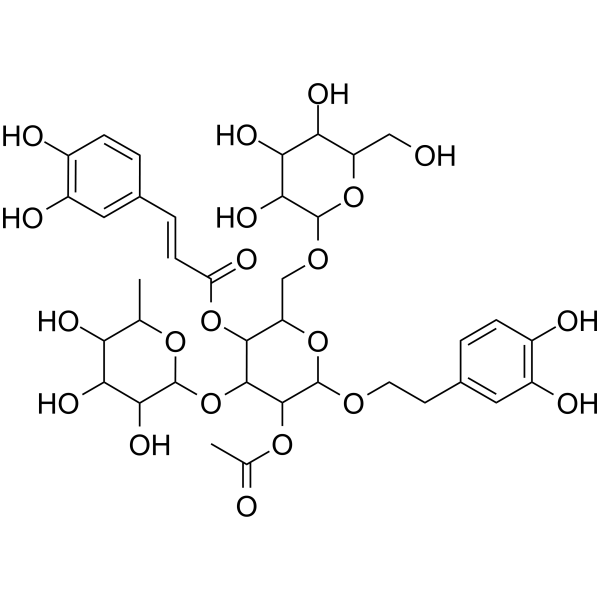
HY-N2155
Tubuloside AHepatoprotective Agent -
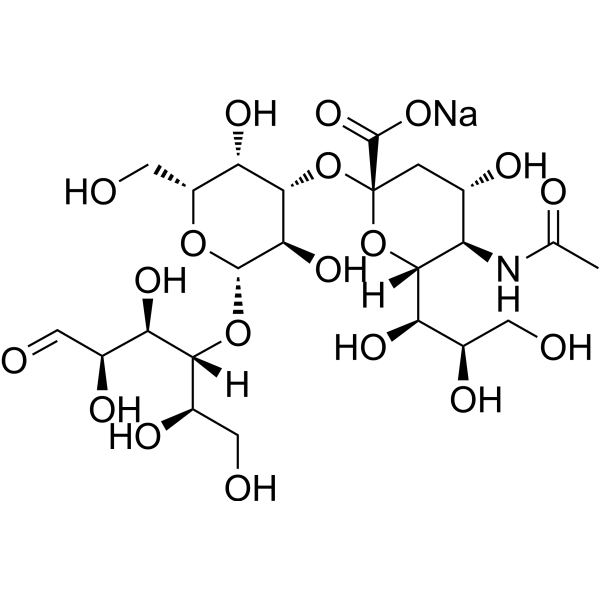
HY-108065A
3'-Sialyllactose sodiumPrebiotic -

HY-N6937R
(R,R)-Secoisolariciresinol diglucoside (Standard)Natural Product
Publications Citing Use of MedChemExpress (MCE) (R,R)-Secoisolariciresinol diglucoside
MoreAll DNA/RNA Synthesis Isoforms
More

Biological Activity
Description
Cellular Effect
|
Cell Line

|
Type | Value | Description | References |
|---|---|---|---|---|
| RAW264.7 | IC50 |
106.34 μM
|
Inhibition of myeloperoxidase activity in RAW 264.7 murine macrophages measured with APF-based fluorometric kit after 1 min incubation with LPS and LGM2605.
Inhibition of myeloperoxidase activity in RAW 264.7 murine macrophages measured with APF-based fluorometric kit after 1 min incubation with LPS and LGM2605.
|
29524540 |
In Vitro
(R,R)-Secoisolariciresinol diglucoside (25-250 μM; 30 min) inhibits γ-radiation-induced relaxation of pBR322 plasmid DNA in a concentration-dependent manner, with an EC50 of 127.96 μM[2].
(R,R)-Secoisolariciresinol diglucoside (25-250 μM; 30 min) reduces γ-ray-induced DNA strand breaks in calf thymus DNA in a concentration-dependent manner within the concentration range of 25 to 250 μM[2].
(R,R)-Secoisolariciresinol diglucoside exhibits iron-reducing activity in cell-free assays, with an EC50 of 331.94 μM[3].
(R,R)-Secoisolariciresinol diglucoside scavenges hydroxyl radicals in the cell-free HORAC assay, with an activity of 1.96 Gallic acid equivalents[3].
(R,R)-Secoisolariciresinol diglucoside scavenges peroxyl radicals in the cell-free ORAC assay, with an activity of 2.20 Trolox equivalents[3].
(R,R)-Secoisolariciresinol diglucoside (5-500 μM) scavenges DPPH free radicals in cell-free assays, with an EC50 of 123.63 μM[3].
MedChemExpress (MCE) has not independently confirmed the accuracy of these methods. They are for reference only.


Chemical Information
-
CAS No. 158932-33-3
-
Appearance Solid
-
Molecular Weight 686.70
-
Formula C32H46O16
-
Color White to off-white
-
SMILES
COC(C=C1C[C@@H](CO[C@@H]2O[C@@H]([C@H]([C@@H]([C@H]2O)O)O)CO)[C@H](CO[C@@H]3O[C@@H]([C@H]([C@@H]([C@H]3O)O)O)CO)CC4=CC(OC)=C(C=C4)O)=C(C=C1)O
-
Synonyms
(R,R)-SDG; (R,R)-LGM2605
-
Structure Classification
-
Initial Source
-
Shipping
Room temperature in continental US; may vary elsewhere.
-
Storage
Powder -20°C 3 years 4°C 2 years In solvent -80°C 2 years -20°C 1 year


Publications (1)
-
Journal Impact Factor
-
Most Recent
-
Adv Sci (Weinh)
ZFPL1 Promotes Colorectal Cancer Progression by Stabilizing ASS1 to Drive the Urea Cycle and M2 Macrophage-Mediated Metastatic Colonization. [Abstract]2025 Dec;12(46):e05291. PMID: 41216870


Solvent & Solubility
In Vitro:
DMSO : 100 mg/mL (145.62 mM; Need ultrasonic; Hygroscopic DMSO has a significant impact on the solubility of product, please use newly opened DMSO)
Please refer to the solubility information to select the appropriate solvent. Once prepared, please aliquot and store the solution to prevent product inactivation from repeated freeze-thaw cycles.
Storage method and period of stock solution: -80°C, 2 years; -20°C, 1 year. When stored at -80°C, please use it within 2 years. When stored at -20°C, please use it within 1 year.
Please refer to the solubility information to select the appropriate solvent. Once prepared, please aliquot and store the solution to prevent product inactivation from repeated freeze-thaw cycles.
Storage method and period of stock solution: -80°C, 2 years; -20°C, 1 year. When stored at -80°C, please use it within 2 years. When stored at -20°C, please use it within 1 year.
Concentration (start) × Volume (start) = Concentration (final) × Volume (final)
In Vivo:
Select the appropriate dissolution method based on your experimental animal and administration route.
- For the following dissolution methods, please ensure to first prepare a clear stock solution using an In Vitro approach and then sequentially add co-solvents:
- To ensure reliable experimental results, the clarified stock solution can be appropriately stored based on storage conditions. As for the working solution for In Vivo experiments, it is recommended to prepare freshly and use it on the same day.
- The percentages shown for the solvents indicate their volumetric ratio in the final prepared solution. If precipitation or phase separation occurs during preparation, heat and/or sonication can be used to aid dissolution.
Add each solvent one by one: 10% DMSO 40% PEG300 5% Tween-80 45% Saline
Solubility: ≥ 2.08 mg/mL (3.03 mM); Clear solution
This protocol yields a clear solution of ≥ 2.08 mg/mL (saturation unknown).
Taking 1 mL working solution as an example, add 100 μL DMSO stock solution (20.8 mg/mL) to 400 μL PEG300, and mix evenly; then add 50 μL Tween-80 and mix evenly; then add 450 μL Saline to adjust the volume to 1 mL.
Preparation of Saline: Dissolve 0.9 g sodium chloride in ddH₂O and dilute to 100 mL to obtain a clear Saline solution.
Add each solvent one by one: 10% DMSO 90% (20% SBE-β-CD in Saline)
Solubility: ≥ 2.08 mg/mL (3.03 mM); Clear solution
This protocol yields a clear solution of ≥ 2.08 mg/mL (saturation unknown).
Taking 1 mL working solution as an example, add 100 μL DMSO stock solution (20.8 mg/mL) to 900 μL 20% SBE-β-CD in Saline, and mix evenly.
Preparation of 20% SBE-β-CD in Saline (4°C, storage for one week): 2 g SBE-β-CD powder is dissolved in 10 mL Saline, completely dissolve until clear.
In Vivo Dissolution Calculator
Please enter the basic information of animal experiments:
-
-
-
-
Recommended: Prepare an additional quantity of animals to account for potential losses during experiments.
Please enter your animal formula composition:
-
%DMSO +
Recommended: Keep the proportion of DMSO in working solution below 2% if your animal is weak.
-
%+
-
+%Tween-80 + +
-
%Saline +
The co-solvents required include: DMSO, . All of co-solvents are available by MedChemExpress (MCE). , Tween 80. All of co-solvents are available by MedChemExpress (MCE).
Working solution concentration: 0.22 mg/mL
Method for preparing stock solution: mg drug dissolved in μL DMSO. Stock solution concentration: mg/mL.
1. Take μL DMSO stock solution;
2. Add μL .
μL , mix evenly;
3. Then add μL Tween 80, mix evenly;
4. Then add μL
Please ensure that the stock solution in the first step is dissolved to a clear state, and add co-solvents in sequence. You can use ultrasonic heating (ultrasonic cleaner, recommended frequency 20-40 kHz), vortexing, etc. to assist dissolution.


Purity & Documentation
-
Data Sheet (290 KB)
-
SDS (393 KB)
- English - EN (393 KB)
- Français - FR (393 KB)
- Deutsch - DE (393 KB)
- Norwegian - NO (393 KB)
- Español - ES (393 KB)
- Swedish - SV (393 KB)
- Italian - IT (393 KB)
- Korean - KR (393 KB)
- Portuguese - PT (393 KB)
-
Handling Instructions (2659 KB)
References
[1]. Mishra OP, et al. Synthetic secoisolariciresinol diglucoside (LGM2605) inhibits myeloperoxidase activity in inflammatory cells. Biochimica et biophysica acta. General subjects. 2018 Jun;1862(6):1364-1375. [Content Brief]
[2]. Mishra OP, et al. Novel synthetic (S,S) and (R,R)-secoisolariciresinol diglucosides (SDGs) protect naked plasmid and genomic DNA From gamma radiation damage. Radiat Res. 2014 Jul;182(1):102-10. [Content Brief]
[3]. Mishra OP, et al. Synthesis and antioxidant evaluation of (S,S)- and (R,R)-secoisolariciresinol diglucosides (SDGs). Bioorg Med Chem Lett. 2013 Oct 1;23(19):5325-8. [Content Brief]


Complete Stock Solution Preparation Table
Please refer to the solubility information to select the appropriate solvent. Once prepared, please aliquot and store the solution to prevent product inactivation from repeated freeze-thaw cycles.
Storage method and period of stock solution: -80°C, 2 years; -20°C, 1 year. When stored at -80°C, please use it within 2 years. When stored at -20°C, please use it within 1 year.
| Optional Solvent | Concentration Solvent Mass | 1 mg | 5 mg | 10 mg | 25 mg |
|---|---|---|---|---|---|
| DMSO | 1 mM | 1.4562 mL | 7.2812 mL | 14.5624 mL | 36.4060 mL |
| 5 mM | 0.2912 mL | 1.4562 mL | 2.9125 mL | 7.2812 mL | |
| 10 mM | 0.1456 mL | 0.7281 mL | 1.4562 mL | 3.6406 mL | |
| 15 mM | 0.0971 mL | 0.4854 mL | 0.9708 mL | 2.4271 mL | |
| 20 mM | 0.0728 mL | 0.3641 mL | 0.7281 mL | 1.8203 mL | |
| 25 mM | 0.0582 mL | 0.2912 mL | 0.5825 mL | 1.4562 mL | |
| 30 mM | 0.0485 mL | 0.2427 mL | 0.4854 mL | 1.2135 mL | |
| 40 mM | 0.0364 mL | 0.1820 mL | 0.3641 mL | 0.9101 mL | |
| 50 mM | 0.0291 mL | 0.1456 mL | 0.2912 mL | 0.7281 mL | |
| 60 mM | 0.0243 mL | 0.1214 mL | 0.2427 mL | 0.6068 mL | |
| 80 mM | 0.0182 mL | 0.0910 mL | 0.1820 mL | 0.4551 mL | |
| 100 mM | 0.0146 mL | 0.0728 mL | 0.1456 mL | 0.3641 mL |


(R,R)-Secoisolariciresinol diglucoside Related Classifications
HY-N6937 Related Classifications
 Powered by Bioz