



FGF-19 Protein, Human
Based on 1 publication(s) in Google Scholar
FGF-19 Protein, Human could activate a physiologically important, insulin-independent endocrine pathway that regulates hepatic protein and glycogen metabolism.
- Species: Human
- Source: E. coli
-
Storage:Stored at -20°C for 2 years from date of receipt. After reconstitution, it is stable at 4°C for 1 week or -20°C for longer (with carrier protein). It is recommended to freeze aliquots at -20°C or -80°C for extended storage.


To place orders, for customer services and technical support, please contact: MedChemExpress USA
Tel: 609-228-6898 E-mail: [email protected] [email protected]


-
 Biological Activity
-
Technical Parameters
-
Product Properties
- Documentation
- References
- Help & FAQs


-
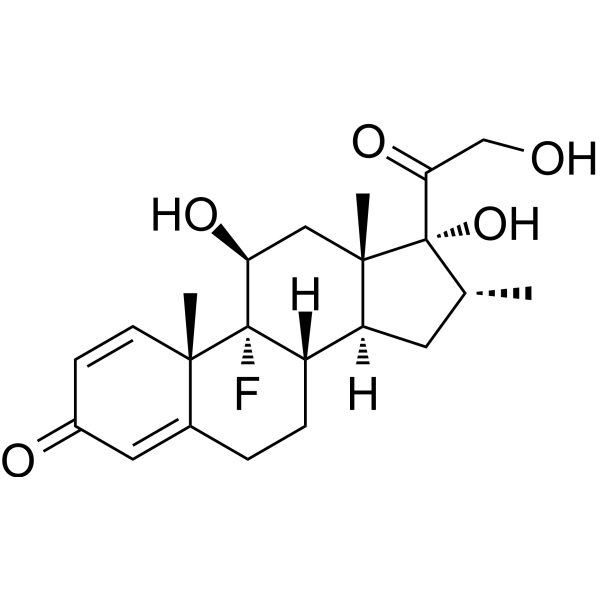
HY-14648
DexamethasoneGR Agonist -

HY-P7008
BMP-7 Protein, Human -
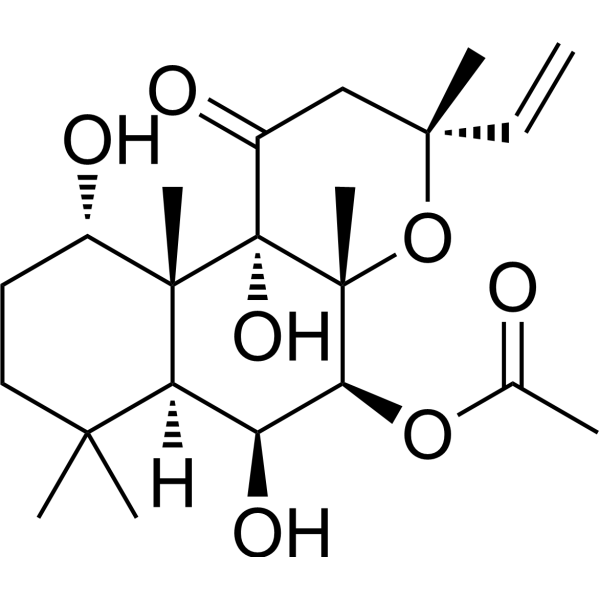
HY-15371
ForskolinAdenylate Cyclase Activator -
HY-P7121
HGF Protein, Human (CHO) -
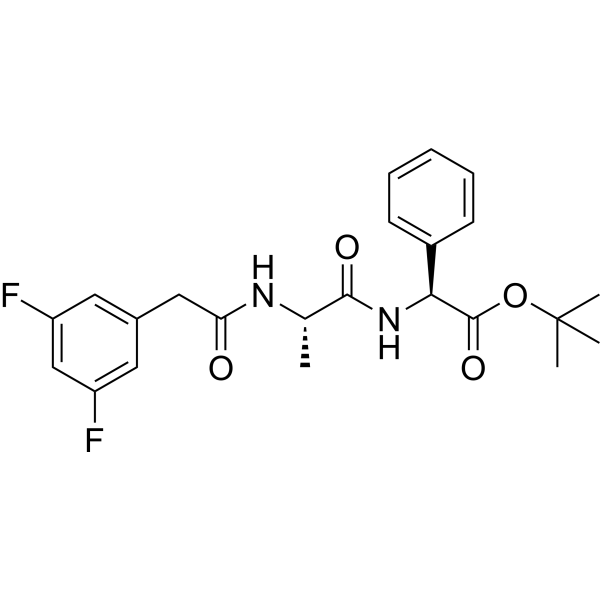
HY-13027
DAPTγ-secretase Inhibitor -
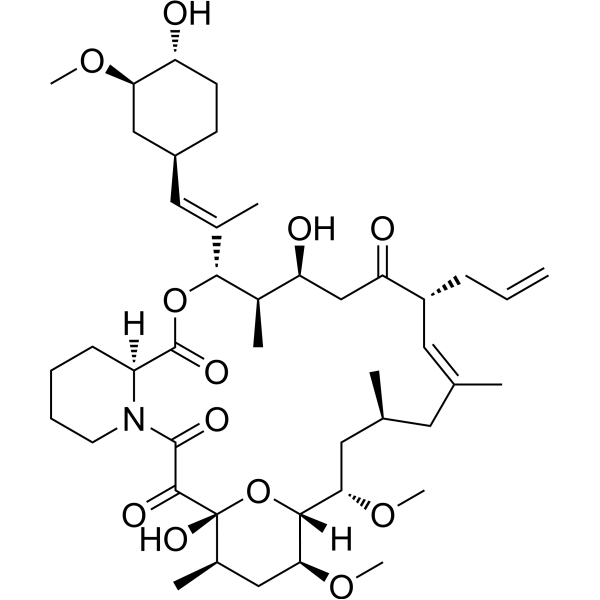
HY-13756
TacrolimusCalcineurin Inhibitor -
HY-B0215
AcetylcysteineMucolytic Agent -
HY-10432
A 83-01ALK4/5/7 Inhibitor -
HY-P7008A
BMP-7 Protein, Human (His) -
HY-P70781
SCF Protein, Human -
HY-P7044
IL-6 Protein, Human -
HY-P7058
TNF-alpha/TNFSF2 Protein, Human


Biological Activity
Description
FGF-19 Protein, Human could activate a physiologically important, insulin-independent endocrine pathway that regulates hepatic protein and glycogen metabolism.
Background
Fibroblast growth factor 19 (FGF19, also called FGF15 in rodents) is a member of a subfamily of fibroblast growth factors that govern nutrient metabolism. FGF19 binds to a receptor complex composed of the FGF receptor 4 (FGFR4) and a coreceptor called β-Klotho, which are both highly expressed in liver. FGF19 is an enterokine synthesized and released when bile acids are taken up into the ileum. FGF19 stimulates hepatic protein and glycogen synthesis but does not induce lipogenesis. FGF19 activates a physiologically important, insulin-independent endocrine pathway that regulates hepatic protein and glycogen metabolism[1].
Verified Bioactivity
The ED50 is <288.5 ng/mL as measured by murine Balb/c 3T3 cells, corresponding to a specific activity of >3.46 × 10³ units/mg.
MCE Validation Data
-
Purity - SDS-PAGE
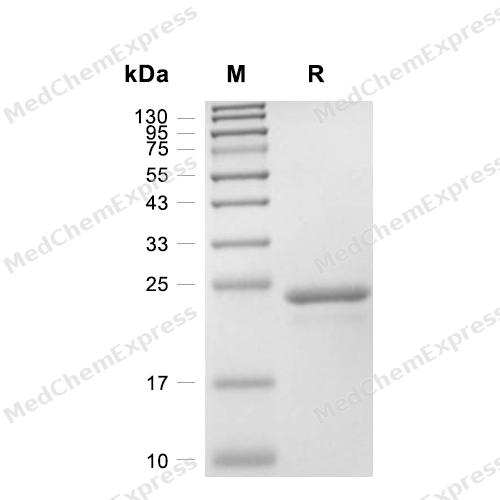
Purity - SDS-PAGE
-
Bioactivity - Cell-Based Assay
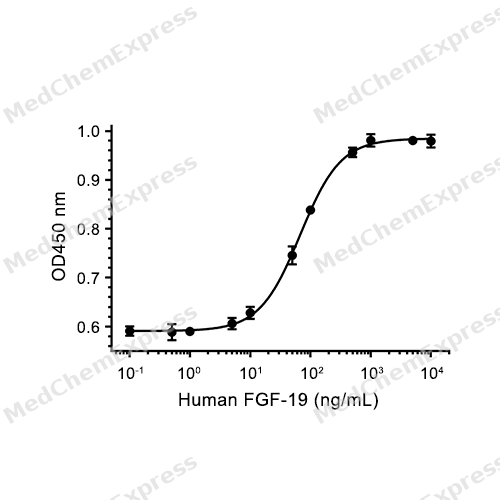
Bioactivity - Cell-Based Assay


Publications (1)
-
Journal Impact Factor
-
Most Recent


Technical Parameters
-
Species Human
-
Source E. coli
-
Tag Tag Free
-
Accession
O95750 (R23-K216)
-
Molecular Construction
-
N-term
-
FGF-19 (R23-K216)
Accession # O95750 -
C-term
-
-
Protein Length
Full Length of Mature Protein
-
Synonyms
FGF19; Fibroblast Growth Factor; Fibroblast Growth Factor 19; FGF; FGF-19
-
AA Sequence
RPLAFSDAGPHVHYGWGDPIRLRHLYTSGPHGLSSCFLRIRADGVVDCARGQSAHSLLEIKAVALRTVAIKGVHSVRYLCMGADGKMQGLLQYSEEDCAFEEEIRPDGYNVYRSEKHRLPVSLSSAKQRQLYKNRGFLPLSHFLPMLPMVPEEPEDLRGHLESDMFSSPLETDSMDPFGLVTGLEAVRSPSFEK
-
Predicted Molecular Mass
21.7 kDa
-
Molecular Weight
Approximately 21-27 kDa, based on SDS-PAGE under reducing conditions.
-
Purity
≥ 95%, as determined by reducing SDS-PAGE.


Product Properties
Lyophilized powder.
Lyophilized from a 0.2 μm filtered solution of PBS, pH 7.4.
<1 EU/μg, determined by LAL method.
It is not recommended to reconstitute to a concentration less than 100 μg/mL in ddH2O. For long term storage it is recommended to add a carrier protein (0.1% BSA, 5% HSA, 10% FBS or 5% Trehalose).
Stored at -20°C for 2 years from date of receipt. After reconstitution, it is stable at 4°C for 1 week or -20°C for longer (with carrier protein). It is recommended to freeze aliquots at -20°C or -80°C for extended storage.
Room temperature in continental US; may vary elsewhere.


Documentation
-
Data Sheet (261 KB)
-
SDS (251 KB)
- English - EN (251 KB)
- Français - FR (251 KB)
- Deutsch - DE (251 KB)
- Norwegian - NO (251 KB)
- Español - ES (251 KB)
- Swedish - SV (251 KB)
- Italian - IT (251 KB)
- Korean - KR (251 KB)
- Portuguese - PT (251 KB)
-
Handling Instructions (2659 KB)


References

Calculators
Concentration (start) × Volume (start) = Concentration (final) × Volume (final)


 Powered by Bioz

