



IL-1 alpha Protein, Human
Based on 5 publication(s) in Google Scholar
IL-1 alpha is a ubiquitous and pivotal pro-inflammatory cytokine. IL-1 alpha is produced by monocytes and macrophages as a proprotein, which is proteolytically processed and released in response to cell injury, and thus induces apoptosis. IL-1 alpha plays an important role in inflammation and bridges the innate and adaptive immune systems. IL-1 alpha mediates the activation of NF-kappa-B and the three MAPK pathways p38, p42/p44 and JNK pathways. IL-1 alpha protein, Human is a recombinant protein consisting of 159 amino acids (S113-A271) and is produced by E. coli.
- Species: Human
- Source: E. coli
-
Storage:Stored at -20°C for 2 years from date of receipt. After reconstitution, it is stable at 4°C for 1 week or -20°C for longer (with carrier protein). It is recommended to freeze aliquots at -20°C or -80°C for extended storage.


To place orders, for customer services and technical support, please contact: MedChemExpress USA
Tel: 609-228-6898 E-mail: [email protected] [email protected]


-
 Biological Activity
-
Technical Parameters
-
Product Properties
- Documentation
- References
- Help & FAQs


-

HY-P7058
TNF-alpha/TNFSF2 Protein, Human -
HY-P70465
OSM Protein, Human (His) -
HY-P7039
IL-22 Protein, Human -
HY-P70527
IL-17A Protein, Human (HEK293, His) -
HY-P7036
IL-17A Protein, Human -
HY-P7028
IL-1 beta Protein, Human -
HY-P7025
IFN-gamma Protein, Human -
HY-P70445
IL-4 Protein, Human -
HY-P70426A
TNF-alpha/TNFSF2 protein, Human (His) -
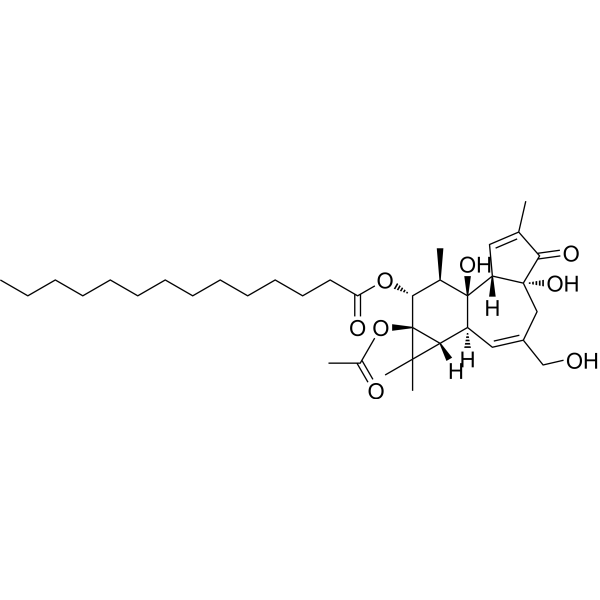
HY-18739
Phorbol 12-myristate 13-acetate -
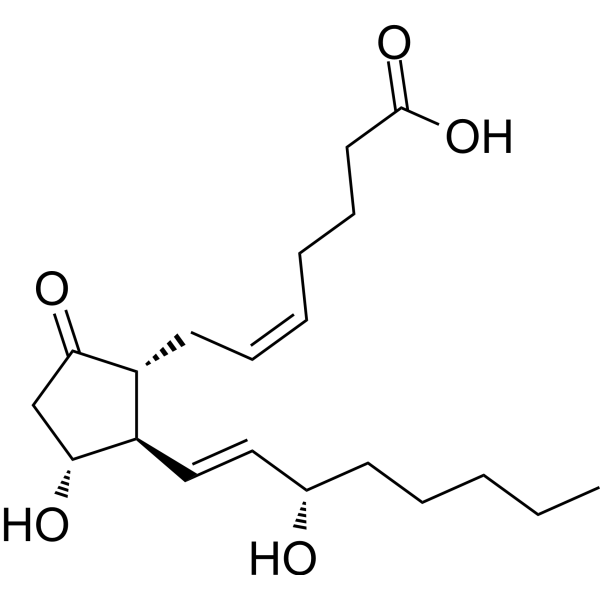
HY-101952
Prostaglandin E2 -
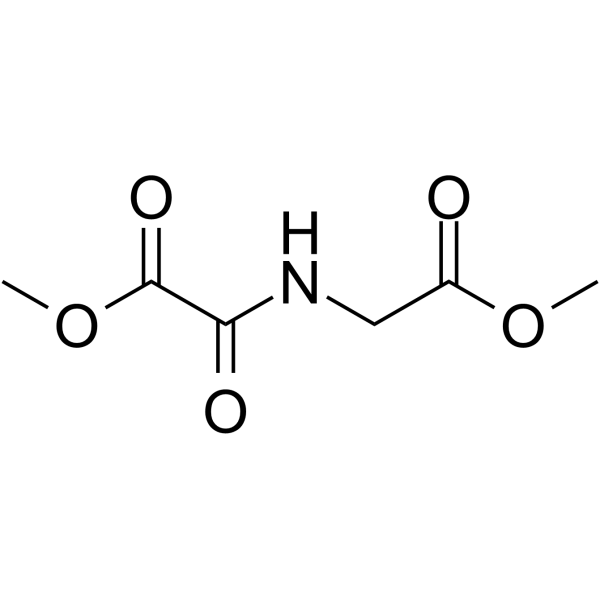
HY-15893
DMOG


Biological Activity
Description
IL-1 alpha is a ubiquitous and pivotal pro-inflammatory cytokine. IL-1 alpha is produced by monocytes and macrophages as a proprotein, which is proteolytically processed and released in response to cell injury, and thus induces apoptosis. IL-1 alpha plays an important role in inflammation and bridges the innate and adaptive immune systems. IL-1 alpha mediates the activation of NF-kappa-B and the three MAPK pathways p38, p42/p44 and JNK pathways[1][4]. IL-1 alpha protein, Human is a recombinant protein consisting of 159 amino acids (S113-A271) and is produced by E. coli.
Background
IL-1 alpha (interleukin-1 alpha) is a major agonist of IL-1. IL-1α is present in all mesenchymal cells in particular, cells rich in IL-1α constitute tissues with a barrier function, such as keratinocytes in the skin, type 2 epithelial cells in the lung, the epithelium of the entire gastrointestinal tract, endothelial cells in blood vessels, and astrocytes in the brain[1]. The precursor of IL-1α (ProIL-1α) is processed by the Ca2+-dependent protease calpain (including caspase-1) into the mature 17 kDa form and the 16 kDa N-terminal cleavage product – the propiece of IL-1α, also termed IL-1α N-terminal peptide (IL-1NTP). The latent form of calpain is activated in cells under inflammatory conditions and especially upon loss of plasma membrane integrity, which occurs during necrosis. pro-IL-1α and mature IL-1α bind to IL-1R and induces the secretion of IL-6 and TNF[5]. IL-1α acts as an ‘alarmin’ and as a primum movens of tissue inflammation[1]. IL-1 alpha trigger inflammation in a pathway initiated through Myd88 activation and culminated in NF-κB–induced transcription of inflammatory genes[2]. IL-1 alpha inhibits differentiation of preadipocytes and lipid accumulation[3]. IL-1 alpha induces apoptosis and inhibits the osteoblast differentiation[4].
In Vitro
IL-1 alpha (0.5, 1, 2.5, 5, 10 ng/mL; 5 days) significantly reduces the cell viability in MC3T3-E1 cells[4].
IL-1 alpha (0.5, 1, 2.5, 5, 10 ng/mL 24 h) decreases the ALP and caspase-3 activity in MC3T3-E1 cells, increases the expression of Bax and caspase-3 mRNA and protein level in a dose-dependent manner, decreases the mRNA expression and the protein levels of Runx2, ALP, OSX and OCN; induces apoptosis[4].
In Vivo
IL-1 alpha (10 µg/kg; i.p.) significantly increases the TG (triglyceride) level at 12 h in serum in C57BL/6J male mice[3].
IL-1 alpha (1, 10, 100 ng/mL; 8 days) inhibits differentiation of preadipocytes and lipid accumulation in a dose-dependent manner in 3T3-L1 cells[3].
Verified Bioactivity
1.The ED50 is <1.0 pg/mL as measured by murine D10S cells, corresponding to a specific activity of >1.0 × 10⁹ units/mg.
2.Measured in a cell proliferation assay using D10.G4.1 mouse helper T cells. The ED50 for this effect is ≤5.562 pg/mL, corresponding to a specific activity is ≥1.79× 10⁸ units/mg.
3.Measured in a cell proliferation assay using CTLL-2 cells. The ED50 for this effect is 10.95 pg/mL,
corresponding to a specific activity is 91.32×10⁶ units/mg.
4.Measured by its ability to down regulate the expression of CCN2 in NIH-3T3 mouse embryonic fibroblast cells. The ED50 for this effect is <30 pg/mL.
MCE Validation Data
-
Purity - SDS-PAGE
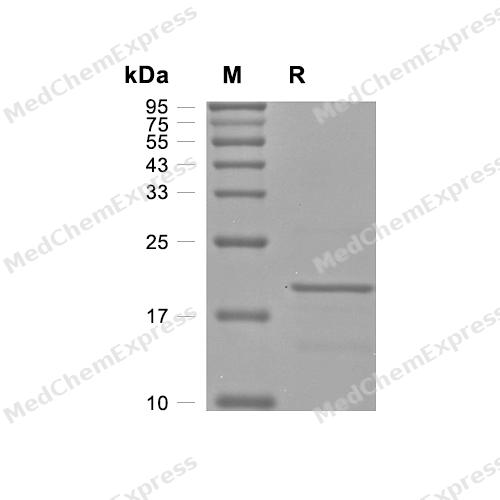
Purity - SDS-PAGE
-
Bioactivity - Cell-Based Assay
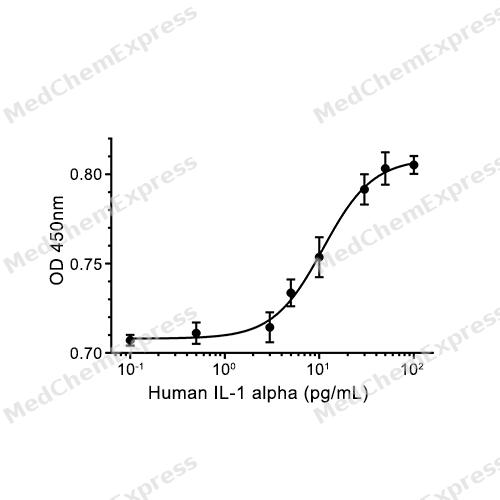
Bioactivity - Cell-Based Assay


Publications (5)
-
Journal Impact Factor
-
Most Recent
-
Int J Biol Macromol
Bacterial cellulose membrane integrating phase-transited lysozyme nanofilm loaded with biguanides for dressing treatment of atopic dermatitis. [Abstract]2025 Aug 21;323(Pt 1):147047. PMID: 40848785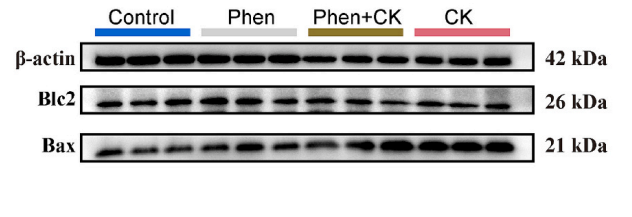
IL-1 alpha Protein, Human purchased from MedChemExpress. Usage Cited in: Int J Biol Macromol. 2025 Aug 21;323(Pt 1):147047. [Abstract]
Western blot analysis showing the protein expression levels of Bcl-2 and Bax in HDF cells . CK: cytokine cocktail containing IL-1α (HY-P7027, IL-1 alpha Protein, Human) (10 ng/mL; 24 h) and IL-4.
-
Sci Rep
BIRC5 modulates keratinocyte proliferation and apoptosis via PI3K/AKT/mTOR-mediated autophagy. [Abstract]2026 Apr 29;16(1):20062. PMID: 42056221 -
Oncol Rep
The MyD88 inhibitor, ST2825, induces cell cycle arrest and apoptosis by suppressing the activation of the NF‑κB/AKT1/p21 pathway in pancreatic cancer. [Abstract]2023 Aug;50(2):148. PMID: 37326109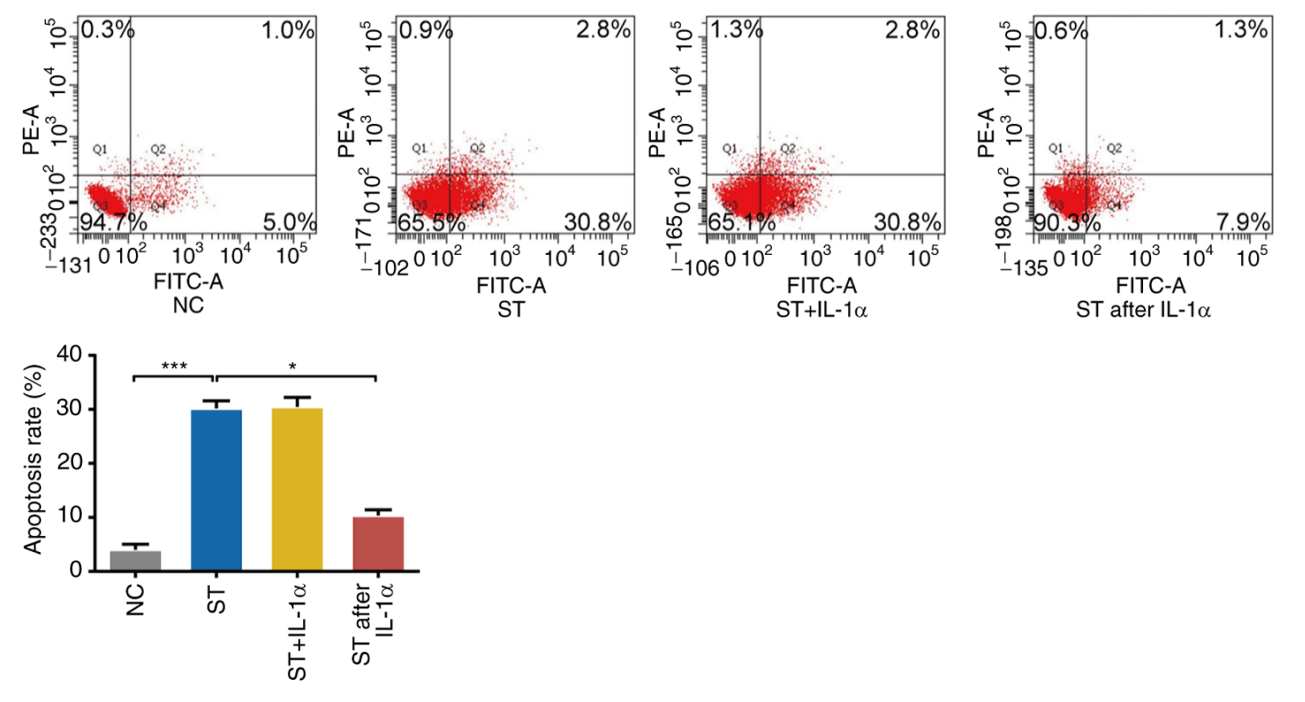
IL-1 alpha Protein, Human purchased from MedChemExpress. Usage Cited in: Oncol Rep. 2023 Aug;50(2):148. [Abstract]
Flow cytometric analysis in the Annexin V-FITC/PI apoptosis assay to determine the ratio of apoptotic PANC-1 cells following ST2825 treatment combined with IL-1α (HY-P7027, IL-1 alpha Protein, Human) (10 ng/mL; 24 h). The results demonstrated that IL‑1α pretreatment for 24 h significantly reversed ST2825‑induced apoptosis.
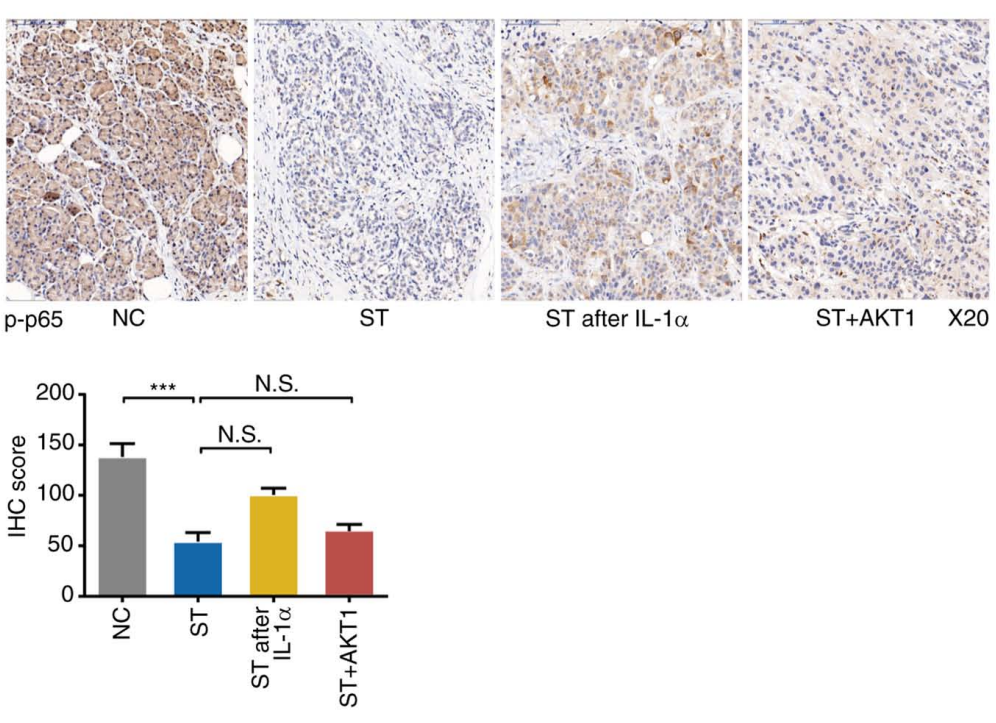
IL-1 alpha Protein, Human purchased from MedChemExpress. Usage Cited in: Oncol Rep. 2023 Aug;50(2):148. [Abstract]
IHC analysis of phosphorylated-p65 expression in the tumors of the groups in negative control, ST2825 (ST), ST after IL-1α (HY-P7027, IL-1 alpha Protein, Human) (10 ng/mL; 1 week) and ST + AKT1). The results showed that the level of phosphorylated p65 decreased in the ST2825 group relative to the negative control group. This reduction was partially reversed in ST2825-treated cells with IL‑1α pretreatment, whereas no such reversal was observed in the ST2825 + AKT1 group.
IL-1 alpha Protein, Human purchased from MedChemExpress. Usage Cited in: Oncol Rep. 2023 Aug;50(2):148. [Abstract]
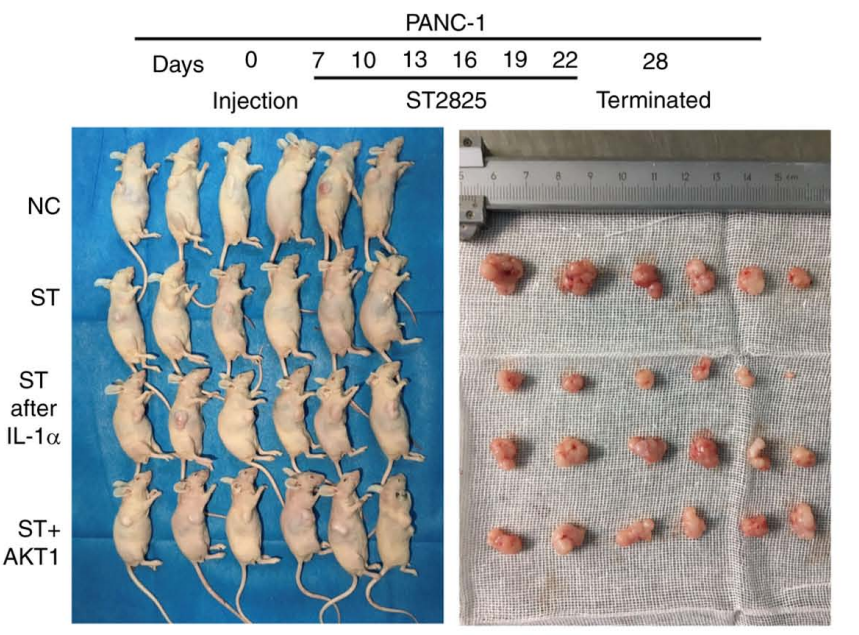
Image of each nude mouse and its hypodermic tumor in four groups (the mice treated with negative control, ST2825, ST after IL-1α (HY-P7027, IL-1 alpha Protein, Human) (10 ng/mL; 1 week) and ST + AKT1).
IL-1 alpha Protein, Human purchased from MedChemExpress. Usage Cited in: Oncol Rep. 2023 Aug;50(2):148. [Abstract]
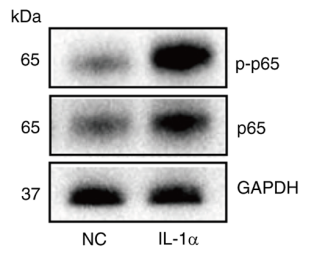
Western blot analysis of NC and IL-1α (HY-P7027, IL-1 alpha Protein, Human)‑treated (10 ng/mL for 1 week) cells. The results of western blot analysis demonstrated that IL-1α increased the level of phosphorylated p65 and phosphorylated akt1, and reduced the expression of p21. NC, negative control.
-
Oncol Res
IL1A: a novel prognostic biomarker and potential therapeutic target for renal clear cell carcinoma. [Abstract]2025 Jun 26;33(7):1739-1755. PMID: 40612864 -
Naunyn Schmiedebergs Arch Pharmacol
The molecular mechanism of berberine affecting psoriasis skin inflammation by regulating keratinocyte pyroptosis via the p38 MAPK/NF-κB pathway. [Abstract]2025 Apr;398(4):3843-3859. PMID: 39365309


Technical Parameters
-
Species Human
-
Source E. coli
-
Tag Tag Free
-
Accession
P01583 (S113-A271)
-
Molecular Construction
-
N-term
-
IL-1α (S113-A271)
Accession # P01583 -
C-term
-
-
Protein Length
Full Length of Mature Protein
-
Synonyms
IL1A; IL-1A; Prev. IL1; Preinterleukin 1 Alpha; IL1F1; Interleukin-1 Alpha; Hematopoietin-1; IL-1 Alpha; IL1-ALPHA; Interleukin 1 Alpha; Pro-Interleukin-1-Alpha
-
AA Sequence
SAPFSFLSNVKYNFMRIIKYEFILNDALNQSIIRANDQYLTAAALHNLDEAVKFDMGAYKSSKDDAKITVILRISKTQLYVTAQDEDQPVLLKEMPEIPKTITGSETNLLFFWETHGTKNYFTSVAHPNLFIATKQDYWVCLAGGPPSITDFQILENQA
-
Predicted Molecular Mass
18 kDa
-
Molecular Weight
Approximately 17 kDa, based on SDS-PAGE under reducing conditions.
-
Purity
≥ 95%, as determined by reducing SDS-PAGE.


Product Properties
Lyophilized powder
1.Lyophilized from a 0.22 μm filtered solution of 20 mM Tris-HCl, 150 mM NaCl, pH 7.5.
2.Lyophilized from a 0.22 μm filtered solution of PBS, pH 7.4.
3.Lyophilized from a 0.22 μm filtered solution of 50 mM Tris-HCl, 300 mM NaCl, 200 mM arginine, pH 8.0.
4.Lyophilized from a 0.22 μm filtered solution of PBS, pH 7.4, 8% trehalose.
Please refer to the lot-specific COA for specific buffer information.
Note: For SPR assay, please replace the buffer. Primary amine components (e.g., Tris, imidazole) can affect protein-coupled chips.
<1 EU/μg, determined by LAL method.
It is not recommended to reconstitute to a concentration less than 100 μg/mL in ddH2O. For long term storage it is recommended to add a carrier protein (0.1% BSA, 5% HSA, 10% FBS or 5% Trehalose).
Stored at -20°C for 2 years from date of receipt. After reconstitution, it is stable at 4°C for 1 week or -20°C for longer (with carrier protein). It is recommended to freeze aliquots at -20°C or -80°C for extended storage.
Room temperature in continental US; may vary elsewhere.


Documentation
-
Data Sheet (265 KB)
-
SDS (252 KB)
- English - EN (252 KB)
- Français - FR (252 KB)
- Deutsch - DE (252 KB)
- Norwegian - NO (252 KB)
- Español - ES (252 KB)
- Swedish - SV (252 KB)
- Italian - IT (252 KB)
- Korean - KR (252 KB)
- Portuguese - PT (252 KB)
-
Handling Instructions (2659 KB)


References
[1]. Cavalli G, et al. Interleukin 1α: a comprehensive review on the role of IL-1α in the pathogenesis and treatment of autoimmune and inflammatory diseases. Autoimmun Rev. 2021 Mar;20(3):102763. [Content Brief]
[2]. Wu T, et al. Involvement of p38 and p42/44 MAP kinases and protein kinase C in the interferon-gamma and interleukin-1alpha-induced phosphorylation of 85-kDa cytosolic phospholipase A(2) in primary human bronchial epithelial cells. Cytokine. 2004 Jan 7;25(1):11-20. [Content Brief]
[3]. Um JY, et al. Functional polymorphism of IL-1 alpha and its potential role in obesity in humans and mice. PLoS One. 2011;6(12):e29524. [Content Brief]
[4]. Guo C, et al. IL-1α induces apoptosis and inhibits the osteoblast differentiation of MC3T3-E1 cells through the JNK and p38 MAPK pathways. Int J Mol Med. 2016 Jul;38(1):319-27. [Content Brief]
[5]. Malik A,et al. Function and regulation of IL-1α in inflammatory diseases and cancer. Immunol Rev. 2018 Jan;281(1):124-137. [Content Brief]

Calculators
Concentration (start) × Volume (start) = Concentration (final) × Volume (final)


 Powered by Bioz

