



IL-17A Protein, Human
Based on 6 publication(s) in Google Scholar
IL-17A is a homodimeric cytokine and plays a critical role in host defense mechanisms against many bacterial and fungal pathogens as well as allergic and autoimmune responses. IL-17A induces the production of antimicrobial peptides, cytokines, chemokines, and matrix metalloproteinases. IL-17A Protein, Human is a recombinant human IL-17A protein and is expressed in E. coli. It consists of 137 amino acids (I19-A155).
- Species: Human
- Source: E. coli
-
Storage:Stored at -20°C for 2 years from date of receipt. After reconstitution, it is stable at 4°C for 1 week or -20°C for longer (with carrier protein). It is recommended to freeze aliquots at -20°C or -80°C for extended storage.


To place orders, for customer services and technical support, please contact: MedChemExpress USA
Tel: 609-228-6898 E-mail: [email protected] [email protected]


-
 Biological Activity
-
Technical Parameters
-
Product Properties
- Documentation
- References
- Help & FAQs


-

HY-P7058
TNF-alpha/TNFSF2 Protein, Human -
HY-P7039
IL-22 Protein, Human -
HY-P7027
IL-1 alpha Protein, Human -
HY-P70465
OSM Protein, Human (His) -
HY-P70445
IL-4 Protein, Human -
HY-P7025
IFN-gamma Protein, Human -
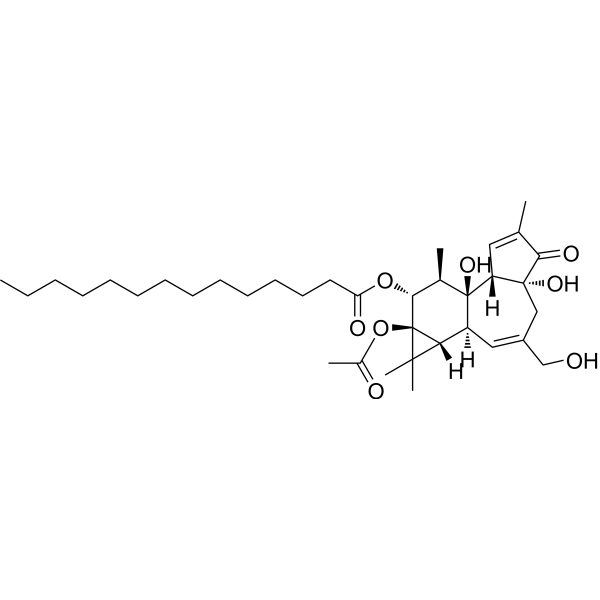
HY-18739
Phorbol 12-myristate 13-acetate -
HY-P7028
IL-1 beta Protein, Human -
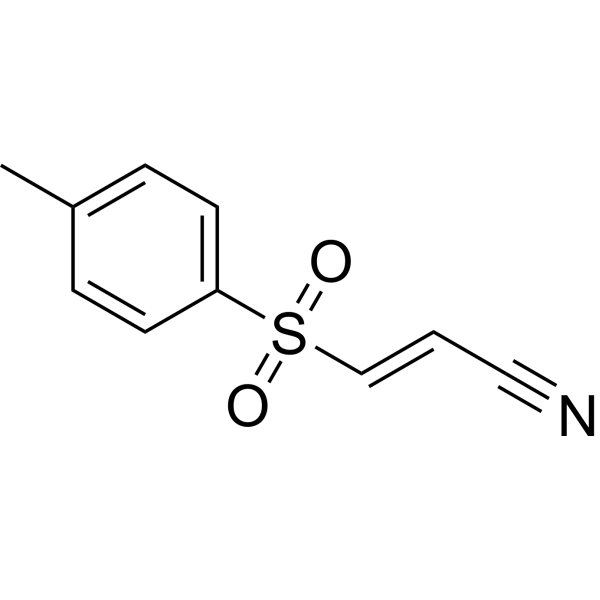
HY-13453
BAY 11-7082 -

HY-D1056
Lipopolysaccharides, from E. coli O55:B5 -
HY-P7044
IL-6 Protein, Human -
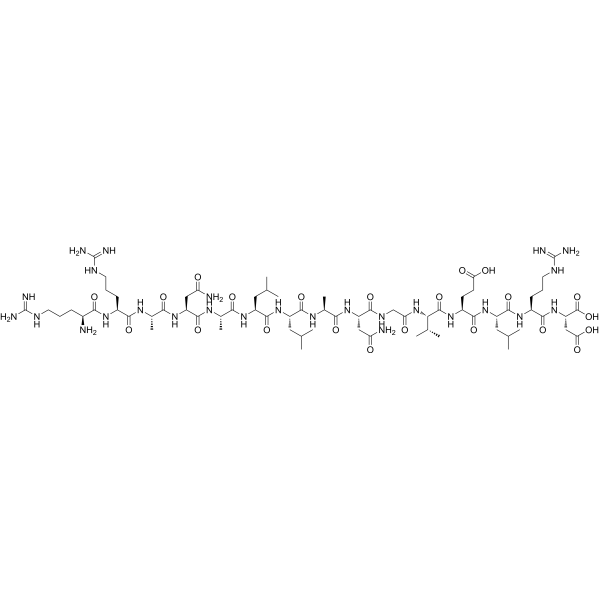
HY-P1860
TNF-α (31-45), human


Biological Activity
Description
IL-17A is a homodimeric cytokine and plays a critical role in host defense mechanisms against many bacterial and fungal pathogens as well as allergic and autoimmune responses. IL-17A induces the production of antimicrobial peptides, cytokines, chemokines, and matrix metalloproteinases[1][2]. IL-17A Protein, Human is a recombinant human IL-17A protein and is expressed in E. coli. It consists of 137 amino acids (I19-A155).
Background
Interleukin-17A (IL-17A), also known as CTLA-8, belongs to the IL-17 cytokine family. IL-17A is expressed in memory Th17 cells and is a product of memory CD4+ T cells. IL-17A is also produced by a wide variety of immune cells, including CD8+ T cells, γδT cells, natural killer T (NKT) cells, monocytes, and neutrophils[1][2][3].
The human IL-17A shares 63.23% amino acid sequence identity with mouse and 61.90% identity with rat.
IL-17A plays a critical role in host defense mechanisms against many bacterial and fungal pathogens as well as allergic and autoimmune responses. IL-17A induces the production of antimicrobial peptides (defensins and S100 proteins), cytokines (IL-6, G-CSF, and GM-CSF), chemokines (CXCL1, CXCL5, IL-8, CCL2, and CCL7), and matrix metalloproteinases (MMP1, MMP3, and MMP13). IL-17A is detrimental in viral infection through promoting neutrophilic inflammation. IL-17A is a homodimeric cytokine and shares similar biological activities with IL-17F. IL-17A binds to IL-17RA with high affinity, and IL-17RA is required for the biological activity of IL-17A. In tumorigenesis, IL-17A recruits myeloid derived suppressor cells (MDSCs) to dampen anti-tumor immunity. IL-17A also enhances tumor growth in vivo through the induction of IL-6[1][2].
IL-17A can be used for the research of autoimmune diseases, infection and cancer[1][4].
In Vitro
IL-17A (100 ng/mL; 24 h) inhibits the expression of thymic stromal lymphopoietin (TSLP) in human primary keratinocytes[5].
IL-17A (0.1–100 ng/mL; 0-24 h) significantly potentiates TNF-α-induced IL-8 protein secretion and gene expression in a concentration- and time-dependent manner[6].
Verified Bioactivity
1.Measured by its ability to induce IL-6 secretion by NIH-3T3 mouse embryonic fibroblast cells and the ED50 is 1-7 ng/mL.
2.Measured by its ability to induce CXCL1/GRO alpha secretion in HT-29 human colon adenocarcinoma cells. The ED50 for this effect is ≤3.340 ng/mL. Corresponding to a specific activity is ≥2.99 × 10⁵ U/mg.


Publications (6)
-
Journal Impact Factor
-
Most Recent
-
FASEB J
MiR•101 and miR•122 Targeting δ-Catenin to Regulate Keratinocyte Responsiveness to IL-17A in Psoriasis. [Abstract]2025 Apr 15;39(7):e70539. PMID: 40202916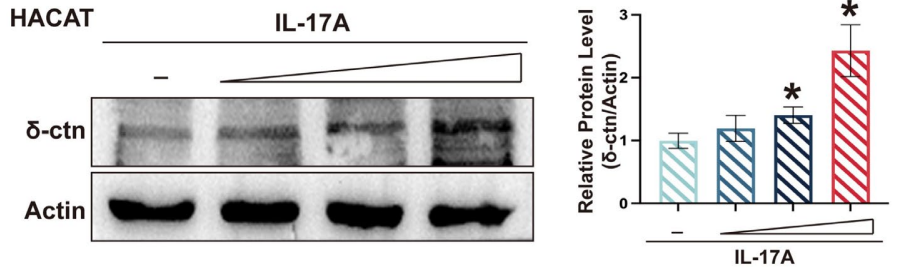
IL-17A Protein, Human purchased from MedChemExpress. Usage Cited in: FASEB J. 2025 Apr 15;39(7):e70539. [Abstract]
HACAT cells were treated with different concentrations of IL-17A (0, 25, 50, 100 ng/mL) for 24 h. Lysates were immunoblotted with indicated antibodies. Sample numbers, n = 3. The results showed that IL-17A protein induced δ-catenin expression in a concentration-dependent manner.
IL-17A Protein, Human purchased from MedChemExpress. Usage Cited in: FASEB J. 2025 Apr 15;39(7):e70539. [Abstract]
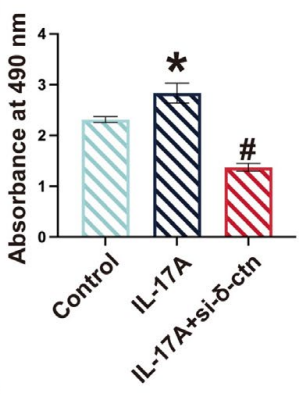
HACATs that silenced δ-ctn were then treated with 100 ng/mL of IL-17A in 24 h. Cells were performed with CCK8 assay, and the cell proliferation rate was measured by the absorbance at OD 450 nm.
IL-17A Protein, Human purchased from MedChemExpress. Usage Cited in: FASEB J. 2025 Apr 15;39(7):e70539. [Abstract]
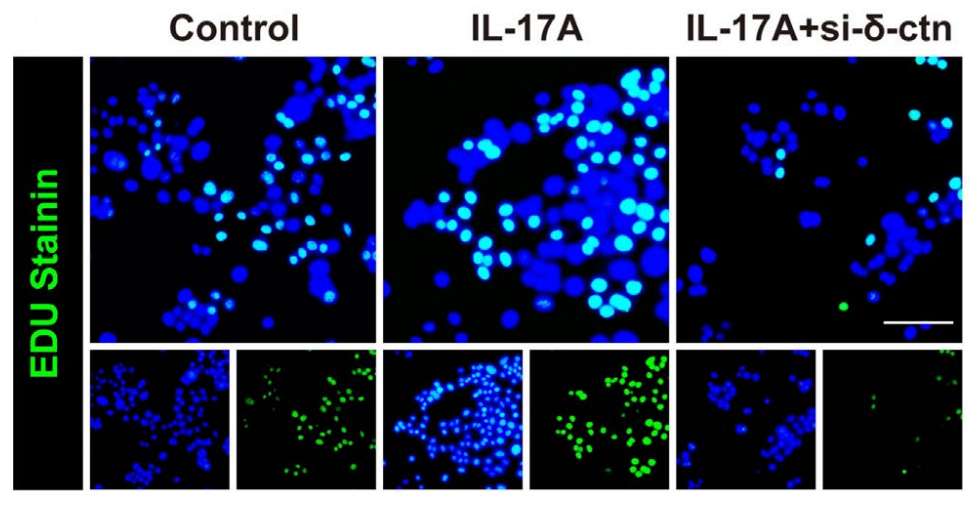
Images of EDU staining by HACATs that silenced δ-ctn were then treated with 100 ng/mL of IL-17A in 24 h, and cells were co-stained with DAPI to visualize nuclei. Bar = 50 μm. Sample numbers, n = 3.
-
Clin Immunol
Exploring TH17-mediated inflammation in epidermolytic ichthyosis: Clinical and mechanistic insight. [Abstract]2025 Aug:277:110494. PMID: 40288548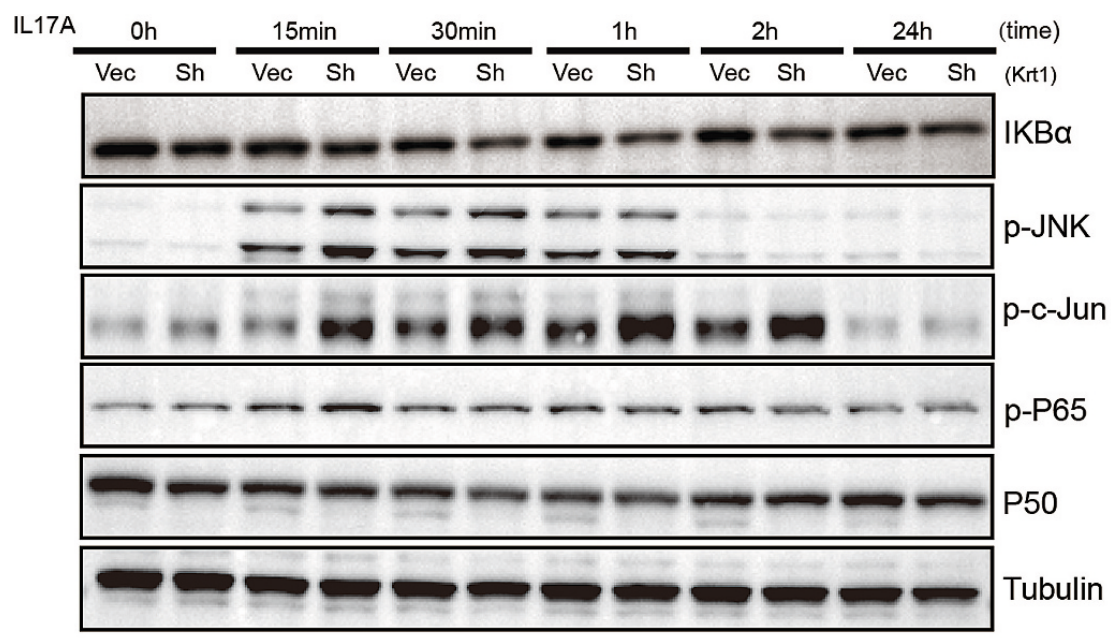
IL-17A Protein, Human purchased from MedChemExpress. Usage Cited in: Clin Immunol. 2025 Aug:277:110494. [Abstract]
IL-17A protein (100 ng/mL; 15 min-24 h) significantly downregulated the expression level of IκBα protein in KRT1-knockdown HaCaT cells.
IL-17A Protein, Human purchased from MedChemExpress. Usage Cited in: Clin Immunol. 2025 Aug:277:110494. [Abstract]
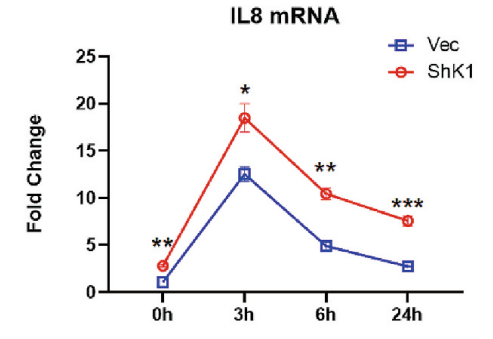
RT-qPCR analysis of IL-8 expression in KRT1 knockdown cells stimulated with IL-17A (100 ng/mL) at 3 h, 6 h, 24 h. The results showed that in KRT1-knockdown cells, the expression level of IL-8 protein was significantly upregulated after stimulation with IL-17A protein for 3 h, 6 h, and 24 h, respectively.
-
Naunyn Schmiedebergs Arch Pharmacol
The molecular mechanism of berberine affecting psoriasis skin inflammation by regulating keratinocyte pyroptosis via the p38 MAPK/NF-κB pathway. [Abstract]2025 Apr;398(4):3843-3859. PMID: 39365309 -
-
-
Front Med
2025 Aug;19(4):653-664. PMID: 40522618


Technical Parameters
-
Species Human
-
Source E. coli
-
Tag Tag Free
-
Accession
Q16552 (G24-A155)
-
Molecular Construction
-
N-term
-
IL-17A (G24-A155)
Accession # Q16552 -
C-term
-
-
Protein Length
Full Length of Mature Protein
-
Synonyms
IL17A; Cytotoxic T-Lymphocyte-Associated Protein 8; Prev. CTLA8; Interleukin-17A; Prev. IL17; CTLA-8; IL-17A; Interleukin-17; IL-17; ILA17; Interleukin 17 (Cytotoxic T-Lymphocyte-Associated Serine Esterase 8); Interleukin 17A; Cytotoxic T-Lymphocyte-Associated Antigen 8
-
AA Sequence
GITIPRNPGCPNSEDKNFPRTVMVNLNIHNRNTNTNPKRSSDYYNRSTSPWNLHRNEDPERYPSVIWEAKCRHLGCINADGNVDYHMNSVPIQQEILVLRREPPHCPNSFRLEKILVSVGCTCVTPIVHHVA
-
Predicted Molecular Mass
15.3 kDa
-
Molecular Weight
Approximately 16 kDa, based on SDS-PAGE under reducing conditions.
-
Purity
≥ 95%, as determined by reducing SDS-PAGE.


Product Properties
Lyophilized powder
1.Lyophilized from a 0.22 μm filtered solution of 20 mM PB, 150 mM NaCl, pH 7.4.
2.Lyophilized from a 0.22 μm filtered solution of 50 mM Tris-HCl, 200 mM NaCl, 500 mM arginine, pH 8.0.
3.Lyophilized from a 0.22 μm filtered solution of 4 mM HCl, pH 2.5.
Please refer to the lot-specific COA for specific buffer information.
Note: For SPR assay, please replace the buffer. Primary amine components (e.g., Tris, imidazole) can affect protein-coupled chips.
<1 EU/μg, determined by LAL method.
It is not recommended to reconstitute to a concentration less than 100 μg/mL in ddH2O. For long term storage it is recommended to add a carrier protein (0.1% BSA, 5% HSA, 10% FBS or 5% Trehalose).
Stored at -20°C for 2 years from date of receipt. After reconstitution, it is stable at 4°C for 1 week or -20°C for longer (with carrier protein). It is recommended to freeze aliquots at -20°C or -80°C for extended storage.
Room temperature in continental US; may vary elsewhere.


Documentation
-
Data Sheet (264 KB)
-
SDS (251 KB)
- English - EN (251 KB)
- Français - FR (251 KB)
- Deutsch - DE (251 KB)
- Norwegian - NO (251 KB)
- Español - ES (251 KB)
- Swedish - SV (251 KB)
- Italian - IT (251 KB)
- Korean - KR (251 KB)
- Portuguese - PT (251 KB)
-
Handling Instructions (2659 KB)


References
[1]. Chen K, et al. Interluekin-17A (IL17A). Gene. 2017 May 30;614:8-14. [Content Brief]
[2]. Iwakura Y, et al. The roles of IL-17A in inflammatory immune responses and host defense against pathogens. Immunol Rev. 2008 Dec;226:57-79. [Content Brief]
[3]. Cua DJ, et al. Innate IL-17-producing cells: the sentinels of the immune system. Nat Rev Immunol. 2010 Jul;10(7):479-89. [Content Brief]
[4]. Wright JF, et al. The human IL-17F/IL-17A heterodimeric cytokine signals through the IL-17RA/IL-17RC receptor complex. J Immunol. 2008 Aug 15;181(4):2799-805. [Content Brief]
[5]. Kinoshita H, et al. Cytokine milieu modulates release of thymic stromal lymphopoietin from human keratinocytes stimulated with double-stranded RNA. J Allergy Clin Immunol. 2009 Jan;123(1):179-86. [Content Brief]
[6]. Henness S, et al. IL-17A acts via p38 MAPK to increase stability of TNF-alpha-induced IL-8 mRNA in human ASM. Am J Physiol Lung Cell Mol Physiol. 2006 Jun;290(6):L1283-90. [Content Brief]

Calculators
Concentration (start) × Volume (start) = Concentration (final) × Volume (final)


 Powered by Bioz

