



KGF-2/FGF-10 Protein, Human (169a.a)
Based on 1 publication(s) in Google Scholar
KGF-2/FGF-10 belongs to the fibroblast growth factor family and is a heparin-binding protein secreted by mesenchymal cells. KGF-2/FGF-10 regulates epithelial cell function by binding to the FGFR2-IIIb/FGFR1-IIIb receptors of epithelial cells. KGF-2/FGF-10 can be used in the study of tissue repair and prevention of fibrosis in diseases such as lung injury and corneal alkali burns. KGF-2/FGF-10 Protein, Human (169a.a) is the recombinant human-derived KGF-2/FGF-10 protein, expressed by E.coli, with tag-free.
- Species: Human
- Source: E. coli
-
Storage:Stored at -20°C for 2 years from date of receipt. After reconstitution, it is stable at 4°C for 1 week or -20°C for longer (with carrier protein). It is recommended to freeze aliquots at -20°C or -80°C for extended storage.


To place orders, for customer services and technical support, please contact: MedChemExpress USA
Tel: 609-228-6898 E-mail: [email protected] [email protected]


-
 Biological Activity
-
Technical Parameters
-
Product Properties
- Documentation
- References
- Help & FAQs


-
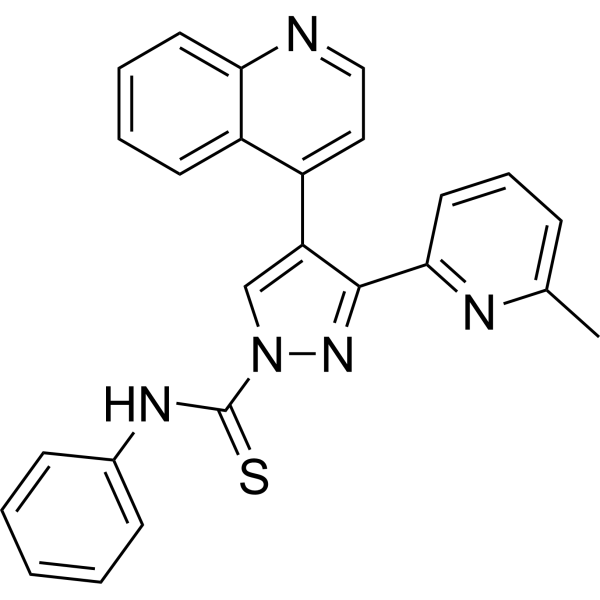
HY-10432
A 83-01ALK4/5/7 Inhibitor -

HY-P7109
EGF Protein, Human -
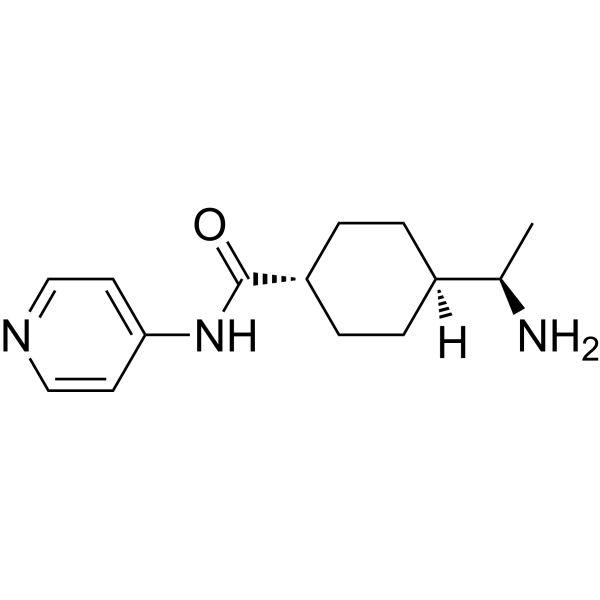
HY-10071
Y-27632ROCK Inhibitor -
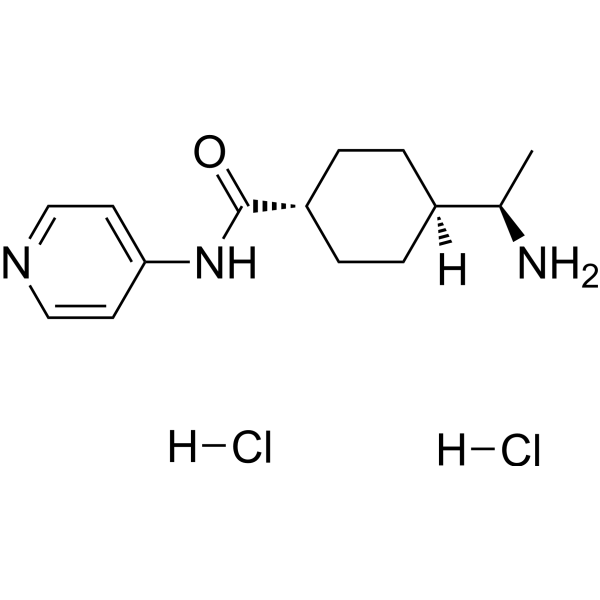
HY-10583
Y-27632 dihydrochlorideROCK Inhibitor -
HY-P70558
Noggin Protein, Human (HEK293) -
HY-P70597
KGF/FGF-7 Protein, Human -
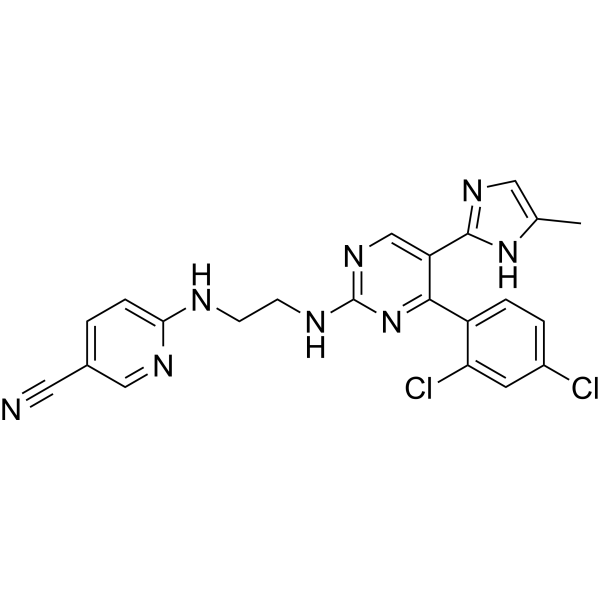
HY-10182
LaduviglusibGSK-3 Inhibitor -
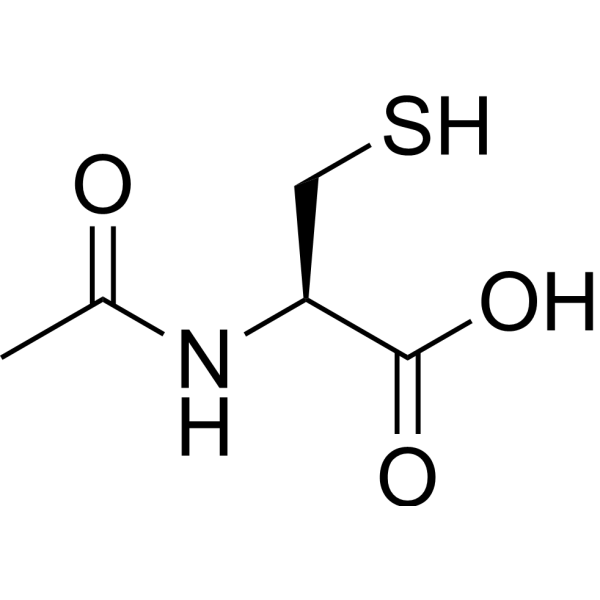
HY-B0215
AcetylcysteineMucolytic Agent -
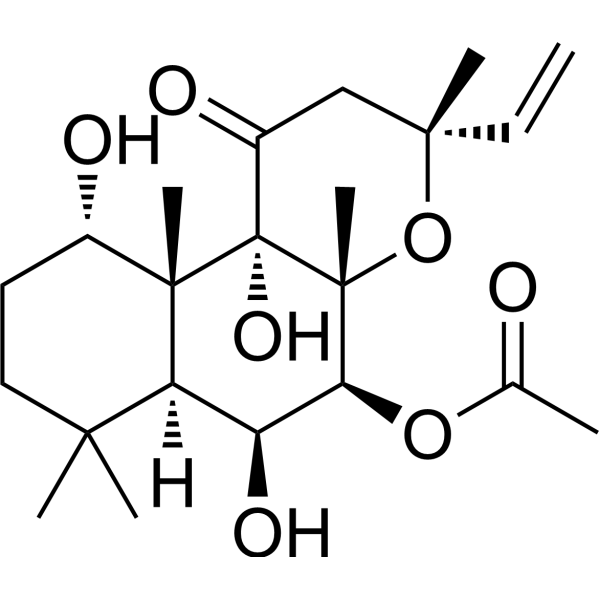
HY-15371
ForskolinAdenylate Cyclase Activator -
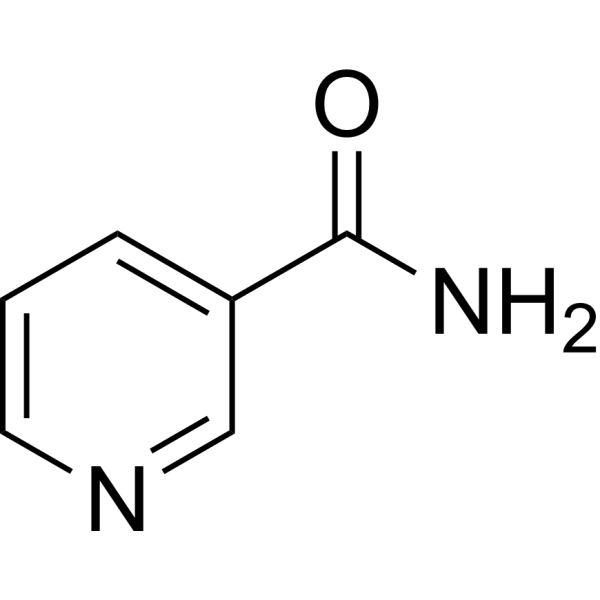
HY-B0150
NicotinamideSIRT Inhibitor -
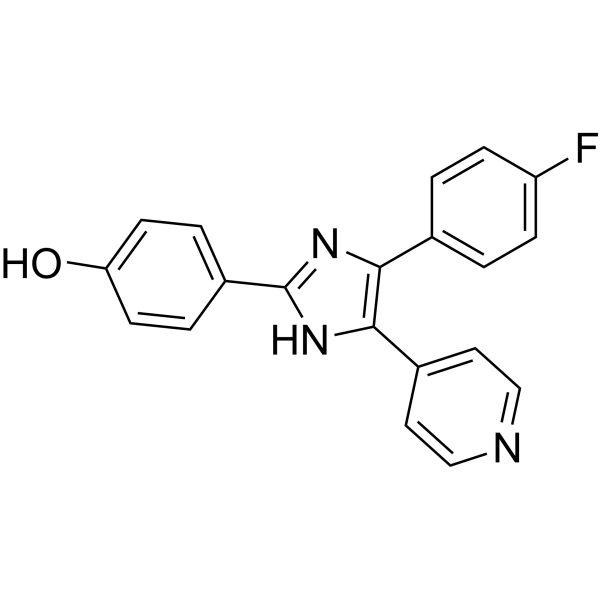
HY-10295
SB 202190p38 MAPK Inhibitor -
HY-10431
SB-431542TGF-β Receptor Kinase Inhibitor


Biological Activity
Description
KGF-2/FGF-10 belongs to the fibroblast growth factor family and is a heparin-binding protein secreted by mesenchymal cells. KGF-2/FGF-10 regulates epithelial cell function by binding to the FGFR2-IIIb/FGFR1-IIIb receptors of epithelial cells. KGF-2/FGF-10 can be used in the study of tissue repair and prevention of fibrosis in diseases such as lung injury and corneal alkali burns[2][3]. KGF-2/FGF-10 Protein, Human (169a.a) is the recombinant human-derived KGF-2/FGF-10 protein, expressed by E.coli, with tag-free.
Background
KGF-2/FGF-10 (keratinocyte growth factor-2) belongs to the fibroblast growth factor family (FGF family) and is a 20 kD heparin-binding protein secreted by mesenchymal cells. KGF-2/FGF-10 mainly acts on epithelial cells, and its receptors are FGFR2-IIIb and FGFR1-IIIb (IIIb subtype of fibroblast growth factor receptor 2/1) expressed by epithelial cells. Its function is mainly mediated by the FGF-2 IIIb receptor, which is a transmembrane receptor expressed only by epithelial cells[1]. KGF-2 promotes the growth, proliferation and differentiation of epithelial cells and has a good effect in treating epithelial damage. KGF-2 can enhance corneal wound healing in a rabbit model of carbon dioxide laser-induced corneal injury. KGF-2/FGF-10 regulates epithelial cell proliferation, migration and differentiation by binding to FGFR2-IIIb/FGFR1-IIIb receptors, and participates in tissue repair and inflammation regulation. KGF-2/FGF-10 is induced by inflammatory factors (such as TNF-α and IL-1β) upstream, and promotes cell adhesion downstream through integrins (such as VLA-4)[2][3]. KGF-2/FGF-10 participates in AMPK, PI3K-mTOR, MAPK/ERK and p38 pathways. In the AMPK pathway, KGF-2/FGF-10 activates AMPK in lung injury, inhibits NLRP3 inflammasome and pyroptosis (GSDMD/IL-1β)[2]; in the PI3K-mTOR pathway, KGF-2/FGF-10 promotes alveolar type II cell autophagy (such as increased LC3II and decreased p62)[2]; in the MAPK/ERK and p38 pathways, KGF-2/FGF-10 activates ERK1/2 and p38 in corneal repair, promotes fibroblast migration, and inhibits TGF-β1-induced α-SMA expression and myofibroblast differentiation[3].
KGF-2/FGF-10 can be used in the research of lung diseases, corneal repair, and the prevention and treatment of tissue fibrosis. In the ventilator-induced lung injury (VILI) model, KGF-2/FGF-10 alleviates pulmonary edema by protecting the alveolar-capillary barrier, reducing the release of inflammatory factors (TNF-α, MIP-2), and increasing the expression of surfactant proteins (SP-A/B/C)[2]. KGF-2/FGF-10 accelerates epithelial healing and inhibited scar formation (reduced α-SMA and myofibroblasts) in the corneal alkali burn model, with a better effect than bFGF[3]. KGF-2/FGF-10 also inhibits the differentiation of myofibroblasts and reduces the expression of fibrosis-related proteins[3].
In Vitro
In the proliferation assay of rabbit corneal fibroblasts (RCFs), KGF-2/FGF-10 (human; 50 mg/mL; 48 h) promotes cell proliferation in a dose-dependent manner, and its effect could be blocked by the ERK1/2 inhibitor PD98059[3].
In the RCF scratch migration assay, KGF-2/FGF-10 (human; 50 mg/mL; 24 h) significantly promotes cell migration, with a stronger effect than bFGF, and the migration is dependent on the p38 and ERK1/2 signaling pathways. The p38 inhibitor SB203580 or the ERK1/2 inhibitor PD98059 could partially inhibit this effect[3].
KGF-2/FGF-10 (human; 50 mg/mL) significantly inhibits α-SMA expression and myofibroblast differentiation in TGF-β1-induced RCF differentiation experiments, and the effect is better than bFGF[3].
In Vivo
KGF-2/FGF-10 (human; 5 mg/kg; 72 h after administration, intratracheal instillation; single dose) significantly improves pulmonary edema, reduces the levels of inflammatory factors (TNF-α, MIP-2) in bronchoalveolar lavage fluid, increases the number of alveolar type II cells and the mRNA expression of lung surfactant proteins (SP-A, SP-B, SP-C), and alleviates lung tissue pathological damage in the rat ventilator-induced lung injury (VILI) model[3].
KGF-2/FGF-10 (human; 50 mg/mL; topical eye drops; 3 times/day; 14 days) accelerates corneal epithelial healing (wound closure within 7 days), reduces α-SMA expression and myofibroblast differentiation, and reduces corneal thickness and scar formation in the rat corneal alkali burn model, with better effects than bFGF[3].
Verified Bioactivity
Measured in a cell proliferation assay using 4MBr-5 rhesus monkey epithelial cells. The ED50 for this effect is ≤84.07 ng/mL, corresponding to a specificactivity is ≥1.2×10⁴ Unit/mg.
MCE Validation Data
-
Purity - SDS-PAGE
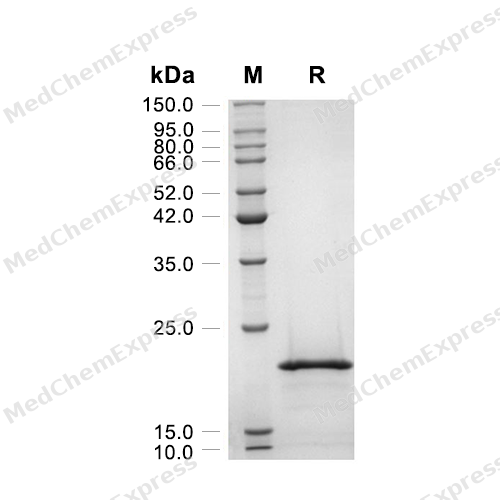
Purity - SDS-PAGE
-
Bioactivity - Cell-Based Assay
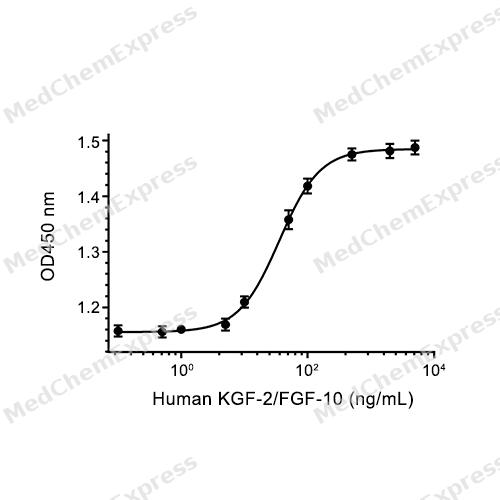
Bioactivity - Cell-Based Assay


Publications (1)
-
Journal Impact Factor
-
Most Recent
-
Cell Rep Med
A human patient-derived organoid biobank to model tumor heterogeneity and therapeutic vulnerability for oral squamous cell carcinoma. [Abstract]2026 Feb 17;7(2):102622. PMID: 41707653


Technical Parameters
-
Species Human
-
Source E. coli
-
Tag Tag Free
-
Accession
O15520 (L40-S208)
-
Molecular Construction
-
N-term
-
FGF-10 (L40-S208)
Accession # O15520 -
C-term
-
-
Protein Length
Full Length of Mature Protein
-
Synonyms
FGF10; Produced By Fibroblasts Of Urinary Bladder Lamina Propria; Fibroblast Growth Factor 10; Fibroblast Growth Factor; Keratinocyte Growth Factor 2; LADD3; FGF-10; FGF
-
AA Sequence
LGQDMVSPEATNSSSSSFSSPSSAGRHVRSYNHLQGDVRWRKLFSFTKYFLKIEKNGKVSGTKKENCPYSILEITSVEIGVVAVKAINSNYYLAMNKKGKLYGSKEFNNDCKLKERIEENGYNTYASFNWQHNGRQMYVALNGKGAPRRGQKTRRKNTSAHFLPMVVHS
-
Predicted Molecular Mass
19.1 kDa
-
Molecular Weight
Approximately 19-22 kDa, based on SDS-PAGE under reducing conditions, due to the glycosylation.
-
Purity
≥ 95%, as determined by reducing SDS-PAGE.


Product Properties
Lyophilized powder
1.Lyophilized from a 0.22 μm filtered solution of 10 mM Tris, 5% sucrose, 4% mannitol, 0.02% Tween 80, pH 8.0.
2.Lyophilized from a 0.22 μm filtered solution of 50 mM Tris-HCl, 300 mM NaCl, pH 7.4.
3.Lyophilized from a 0.22 μm filtered solution of 20 mM PB, 150 mM NaCl, pH 7.4.
4.Lyophilized from a 0.22 μm filtered solution of PBS.
5.Lyophilized from a 0.22 μm filtered solution of PBS, pH 7.4, 5% trehalose.
6.Lyophilized from a 0.22 μm filtered solution of PBS, pH 7.4, 8% trehalose.
Please refer to the lot-specific COA for specific buffer information.
Note: For SPR assay, please replace the buffer. Primary amine components (e.g., Tris, imidazole) can affect protein-coupled chips.
<1 EU/μg, determined by LAL method.
It is not recommended to reconstitute to a concentration less than 100 μg/mL in ddH2O. For long term storage it is recommended to add a carrier protein (0.1% BSA, 5% HSA, 10% FBS or 5% Trehalose).
Stored at -20°C for 2 years from date of receipt. After reconstitution, it is stable at 4°C for 1 week or -20°C for longer (with carrier protein). It is recommended to freeze aliquots at -20°C or -80°C for extended storage.
Room temperature in continental US; may vary elsewhere.


Documentation
-
Data Sheet (265 KB)
-
SDS (252 KB)
- English - EN (252 KB)
- Français - FR (252 KB)
- Deutsch - DE (252 KB)
- Norwegian - NO (252 KB)
- Español - ES (252 KB)
- Swedish - SV (252 KB)
- Italian - IT (252 KB)
- Korean - KR (252 KB)
- Portuguese - PT (252 KB)
-
Handling Instructions (2659 KB)


References
[1]. Cai J, et al. Pharmacokinetics of topically applied recombinant human keratinocyte growth factor-2 in alkali-burned and intact rabbit eye. Exp Eye Res. 2015 Jul;136:93-9. [Content Brief]
[2]. Bi J, et al. Keratinocyte growth factor-2 intratracheal instillation significantly attenuates ventilator-induced lung injury in rats. J Cell Mol Med. 2014 Jun;18(6):1226-35. [Content Brief]
[3]. Cai J, et al. Comparative Analysis of KGF-2 and bFGF in Prevention of Excessive Wound Healing and Scar Formation in a Corneal Alkali Burn Model. Cornea. 2019 Nov;38(11):1430-1437. [Content Brief]

Calculators
Concentration (start) × Volume (start) = Concentration (final) × Volume (final)


 Powered by Bioz

