



S 17092
Based on 1 publication(s) in Google Scholar
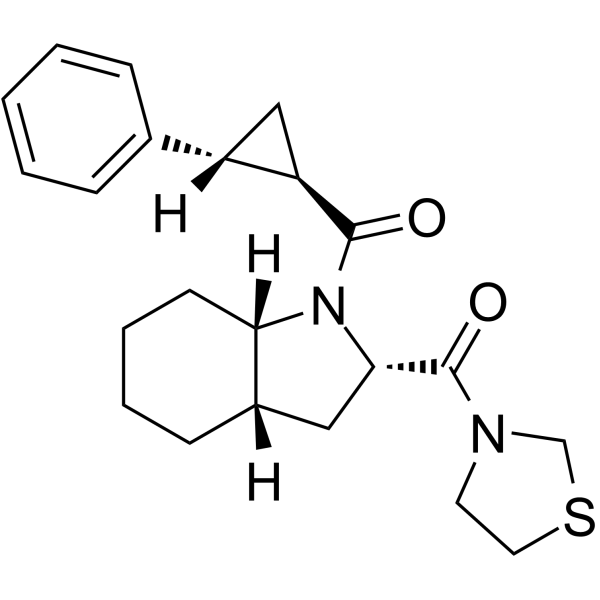
S 17092 (S 17092-1) is an orally active cerebral prolyl-endopeptidase (PEP) inhibitor with an IC50 of 1.2 nM. S 17092 inhibits cell apoptosis. S 17092 mechanism of action is to inhibit the activity of PEP, slowing down the degradation of neuroactive peptides and thus enhancing memory function. S 17092 can be used for the research of memory impairment and cognitive disorders associated with cerebral aging.
Nur für Forschungszwecke. Wir verkaufen nicht an Patienten.
- Reinheit : 99.78%
- CAS. Nr.: 176797-26-5
- Formel: C22H28N2O2S
- Molecular Weight:384.53
-
Speicherung:Powder -20°C, 3 years , 4°C, 2 years ; In solvent -80°C, 6 months , -20°C, 1 month

To place orders, for customer services and technical support, please contact: MedChemExpress USA
Tel: 609-228-6898 E-mail: [email protected] [email protected]


-
 Biologische Aktivität
-
Chemical Information
-
Lösungsmittel & Löslichkeit
- Protokoll
- Reinheit & Dokumentation
- Verweise
-
 Help & FAQs


-
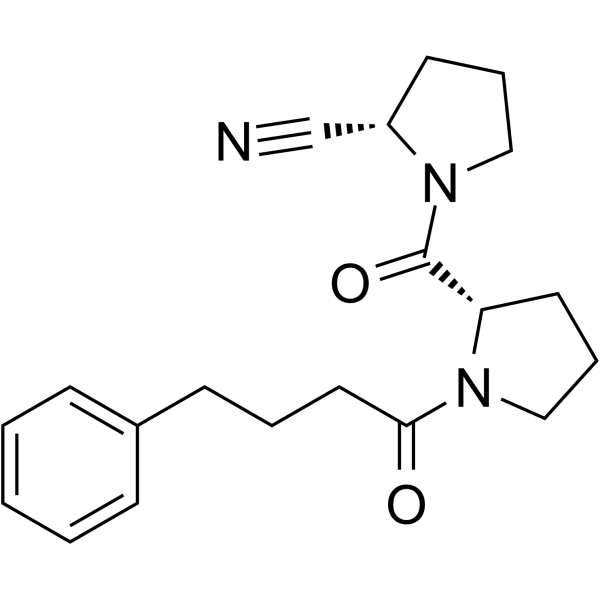
HY-100475
KYP-2047POP Inhibitor -
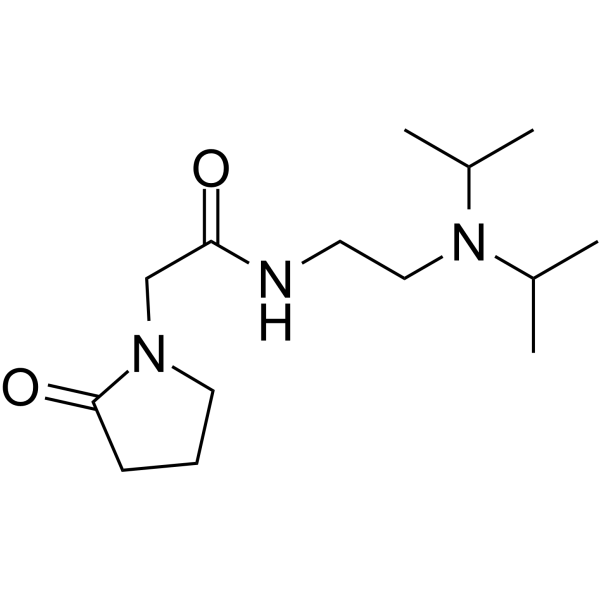
HY-17455
PramiracetamPREP Inhibitor -
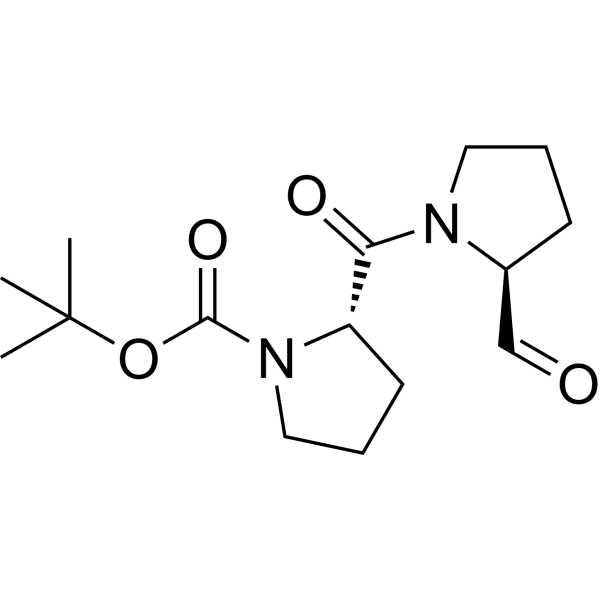
HY-113951
Prolyl Endopeptidase Inhibitor 1Prolyl endopeptidase Inhibitor -
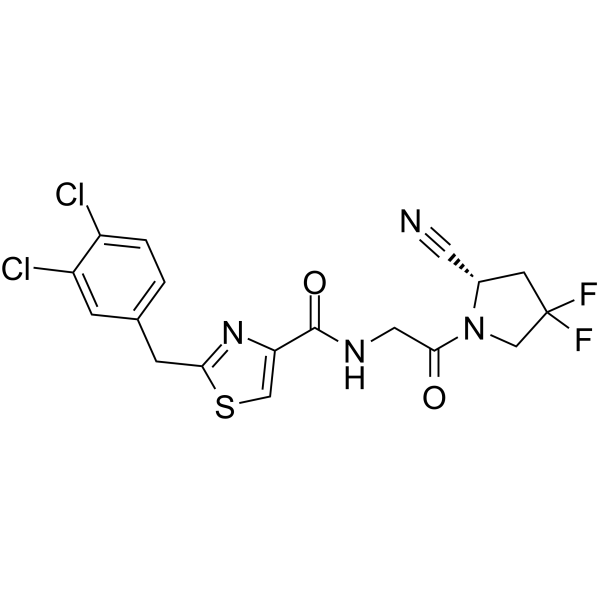
HY-W404002
BR102910FAP Inhibitor -
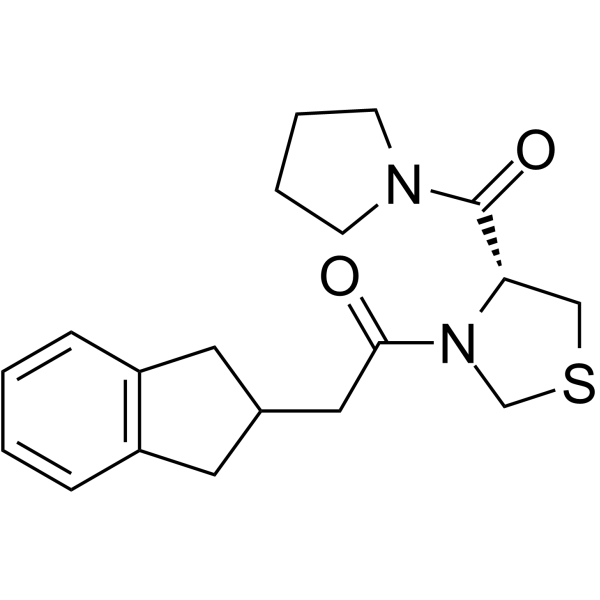
HY-19123
Z-321Prolylendopeptidase Inhibitor -

HY-17455R
Pramiracetam (Standard)PREP Inhibitor -
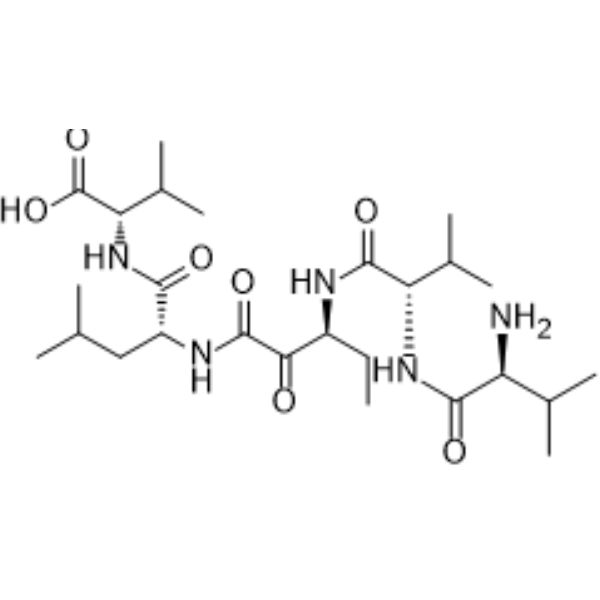
HY-125432
PoststatinProlyl Endopeptidase Inhibitor -
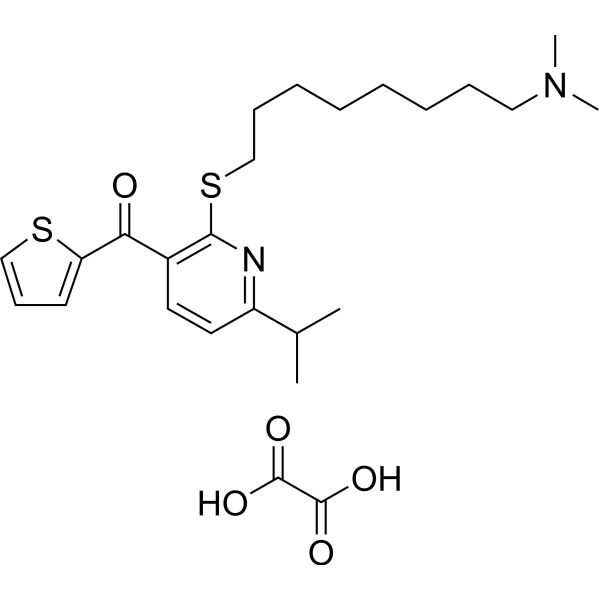
HY-107758
Y-29794 oxalateProlyl Endopeptidase Inhibitor
Publications Citing Use of MedChemExpress (MCE) S 17092
More

Biologische Aktivität
Beschreibung
In Vitro
S 17092 produces inhibition of PEP activity in the cerebral cortex of Wistar rats; the minimal effective drug concentration is 0.1 nM[1].
S 17092 (10-7-10 μM) blocks the HEK 293 which displayed an intracellular PEP-like activity[1].
S 17092 (100 μM, 2-4 h) prevents T cell receptor (TCR)-mediated apoptosis in cells, inhibits the inducible activities of both caspase-8 and caspase-3 in N3-6-71 cells[2].
S-17092 (1-30 μM, 4 h) alone has no effect on 3H-CDPDAG accumulation, but it reverses the effect of lithium and carbachol with an EC50 of 10 μM[3].
MedChemExpress (MCE) has not independently confirmed the accuracy of these methods. They are for reference only.
-
Cell Line:N3-6-71, thymocytes and peripheral T cells of BALB/c mice
-
Concentration:100 μM
-
Incubation Time:2 h for thymocytes, 4 h for N3-6-71 and peripheral T cells
-
Result:Was able to entirely block activation-induced cell death (AICD) in N3-6-71 cells, inhibits the inducible activities of both caspase-8 and caspase-3.
Reduced PEP activity was observed as assessed by Suc-Gly-Pro-MCA cleavage in thymocytes.
Showed little or no toxicity when added alone at the concentrations tested in thymocytes.
Showed a reduced cell death in thymocytes and peripheral T cells.
In Vivo
S 17092 (10 mg/kg; p.o.; 7 days and again 1 h before each daily memory test) alleviates the Scopolamine (HY-N0296)-induced memory deficit, improves learning and working memory performances in young, elderly and old C57BL/6 mice[1].
S 17092 (0.01-30 mg/kg; i.p.; 60 or 120 min before session 1 then 24 h later 60 or 120 min before session 2, respectively) dose-dependently increases the retention time, alleviating scopolamine-induced amnesia in rats[1].
S 17092 is a long acting PEP inhibitor (t1/2 > 9 h). The 50% inhibitory dose (ID50) for cortical PEP activity are 7.4 and 13.4 mg/kg at one hour after p.o. in Wistar rat and NMRI mouse, respectively[1].
MedChemExpress (MCE) has not independently confirmed the accuracy of these methods. They are for reference only.
-
Animal Model:3-5 months old male C57BL/6 mice[1]
-
Dosage:10 mg/kg
-
Administration:Oral gavage (p.o.); twice daily for 7 days and 60 min prior to the training sessions
-
Result:Correct responses in the experimental group were 55, 58, and 74% in sessions 1, 2, and 3, respectively. Performance in experimental group was similar to that in non-amnesic controls.
Improved learning and memory performances in young amnesic C57BL/6 mice.
-
Animal Model:Adult male Macaca fascicularis monkeys treated with MPTP[1]
-
Dosage:1, 3, 10 mg/kg
-
Administration:Oral gavage (p.o.); 7 days
-
Result:Significantly improved variable delayed response (VDR) performance (76.9% correct responses vs. post-MPTP only) at 3 mg/kg, but not at 1 or 10 mg/kg doses.
VDR performance tended to revert back to a normal delay-dependent pattern of response, performance significantly improved on shorter (2, 5, and 10 sec delay) but not on longer delay trials at the 3mg/kg dose. Improved performance on shorter delay trials was not seen with either the 1 or 10 mg/kg doses.
Significant improvements in DMS (delayed matching-to-sample) performance were observed after administration at either 3 or 10 mg/kg doses.
Significantly improved DA (delayed alternation) performance at the 3 mg/kg dose, from 79% at baseline to 90.6% after 7-days or longer treatments.
-
Animal Model:21-22 and 25 months old C57BL/6 mice[1]
-
Dosage:10 mg/kg
-
Administration:Oral gavage (p.o.); 7 days and again 1 h before each daily memory test
-
Result:With correct responses of 45 and 70% in control and experimental animals, respectively, in session 5 and 46 and 65%, respectively, in session 6 in 21-22 months old C57BL/6 mice.
Had a beneficial effect on the selective deficit observed 25 months old C57BL/6 mice.
-
Animal Model:Rats treated with scopolamine[1]
-
Dosage:0.01-30 mg/kg
-
Administration:Intraperitoneal injection (i.p.); 60 or 120 min before session 1 then 24 h later 60 or 120 min before session 2, respectively
-
Result:Dose-dependently increased the retention time, alleviating scopolamine-induced amnesia. The maximum effect using 10 mg/kg with the 60 min pretest dosing interval was achieved using 3 mg/kg in the 120 min tests, suggesting that brain neuropeptide turnover may have been increased by increasing the time interval between the administration and the test.


Chemical Information
-
CAS. Nr. 176797-26-5
-
Appearance Solid
-
Molecular Weight 384.53
-
Formel C22H28N2O2S
-
Color White to off-white
-
SMILES
O=C([C@H]1[C@@](C2=CC=CC=C2)([H])C1)N3[C@]4([H])[C@](CCCC4)([H])C[C@H]3C(N5CCSC5)=O
-
Synonyms
S 17092-1
-
Versand
Room temperature in continental US; may vary elsewhere.
-
Speicherung
Powder -20°C 3 years 4°C 2 years In solvent -80°C 6 months -20°C 1 month


Publications (1)
-
Journal Impact Factor
-
Most Recent
-
J Med Chem
Structure-Guided Optimization of 4-Chloro-Pyrazolopyridine Analogs for Covalent PREP Inhibition. [Abstract]2026 Jan 22;69(2):1303-1321. PMID: 41512187


Lösungsmittel & Löslichkeit
In Vitro:
DMSO : ≥ 100 mg/mL (260.06 mM; Hygroscopic DMSO has a significant impact on the solubility of product, please use newly opened DMSO)
* "≥" means soluble, but saturation unknown.
Please refer to the solubility information to select the appropriate solvent. Once prepared, please aliquot and store the solution to prevent product inactivation from repeated freeze-thaw cycles.
Storage method and period of stock solution: -80°C, 6 months; -20°C, 1 month. When stored at -80°C, please use it within 6 months. When stored at -20°C, please use it within 1 month.
Please refer to the solubility information to select the appropriate solvent. Once prepared, please aliquot and store the solution to prevent product inactivation from repeated freeze-thaw cycles.
Storage method and period of stock solution: -80°C, 6 months; -20°C, 1 month. When stored at -80°C, please use it within 6 months. When stored at -20°C, please use it within 1 month.
Konzentration (Stammlösung) × Volumen (Stammlösung) = Konzentration (Ziellösung) × Volumen (Ziellösung)


Reinheit & Dokumentation
-
Data Sheet (286 KB)
-
SDS (392 KB)
- English - EN (392 KB)
- Français - FR (392 KB)
- Deutsch - DE (392 KB)
- Norwegian - NO (392 KB)
- Español - ES (392 KB)
- Swedish - SV (392 KB)
- Italian - IT (392 KB)
- Korean - KR (392 KB)
- Portuguese - PT (392 KB)
-
Handling Instructions (2659 KB)
Verweise
[1]. Philippe Morain, et al. S 17092: a prolyl endopeptidase inhibitor as a potential therapeutic drug for memory impairment. Preclinical and clinical studies. CNS Drug Rev. Spring 2002;8(1):31-52. [Content Brief]
[2]. Odaka C, et al. Murine T cells expressing high activity of prolyl endopeptidase are susceptible to activation-induced cell death. FEBS Lett. 2002 Feb 13;512(1-3):163-7. [Content Brief]
[3]. Di Daniel E, et al. Prolyl oligopeptidase binds to GAP-43 and functions without its peptidase activity. Mol Cell Neurosci. 2009 Jul;41(3):373-82. [Content Brief]


Complete Stock Solution Preparation Table
Please refer to the solubility information to select the appropriate solvent. Once prepared, please aliquot and store the solution to prevent product inactivation from repeated freeze-thaw cycles.
Storage method and period of stock solution: -80°C, 6 months; -20°C, 1 month. When stored at -80°C, please use it within 6 months. When stored at -20°C, please use it within 1 month.
| Optional Solvent | Concentration Solvent Mass | 1 mg | 5 mg | 10 mg | 25 mg |
|---|---|---|---|---|---|
| DMSO | 1 mM | 2.6006 mL | 13.0029 mL | 26.0058 mL | 65.0144 mL |
| 5 mM | 0.5201 mL | 2.6006 mL | 5.2012 mL | 13.0029 mL | |
| 10 mM | 0.2601 mL | 1.3003 mL | 2.6006 mL | 6.5014 mL | |
| 15 mM | 0.1734 mL | 0.8669 mL | 1.7337 mL | 4.3343 mL | |
| 20 mM | 0.1300 mL | 0.6501 mL | 1.3003 mL | 3.2507 mL | |
| 25 mM | 0.1040 mL | 0.5201 mL | 1.0402 mL | 2.6006 mL | |
| 30 mM | 0.0867 mL | 0.4334 mL | 0.8669 mL | 2.1671 mL | |
| 40 mM | 0.0650 mL | 0.3251 mL | 0.6501 mL | 1.6254 mL | |
| 50 mM | 0.0520 mL | 0.2601 mL | 0.5201 mL | 1.3003 mL | |
| 60 mM | 0.0433 mL | 0.2167 mL | 0.4334 mL | 1.0836 mL | |
| 80 mM | 0.0325 mL | 0.1625 mL | 0.3251 mL | 0.8127 mL | |
| 100 mM | 0.0260 mL | 0.1300 mL | 0.2601 mL | 0.6501 mL |


S 17092 Related Classifications
HY-15114 Related Classifications
 Powered by Bioz