



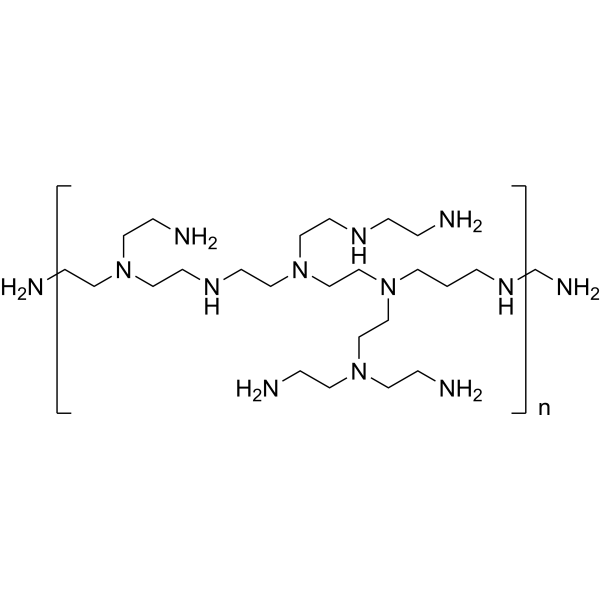
Polyethylenimine (branched) (30% in water)
Based on 9 publication(s) in Google Scholar
Polyethylenimine (branched) (30% in water) is a organic macromolecule with high cationic-charge-density potential. Polyethylenimine (branched) (30% in water) can ensnare DNA as well as attach to cell membrane. Polyethylenimine (branched) (30% in water) also retains a substantial buffering capacity at virtually any pH.
For research use only. We do not sell to patients.
- CAS No.: 9002-98-6
- Formula: (C2H5N)x
-
Storage:
Solution, -20°C, protect from light, 2 years

To place orders, for customer services and technical support, please contact: MedChemExpress USA
Tel: 609-228-6898 E-mail: [email protected] [email protected]


-
 Biological Activity
-
Chemical Information
- Purity & Documentation
- References
-
 Help & FAQs


-

HY-W250110E
Polyethylenimine (branched) (MW 25000)Cationic Polymer -
HY-K0010
Protease Inhibitor Cocktail (EDTA-Free, 100× in DMSO) -
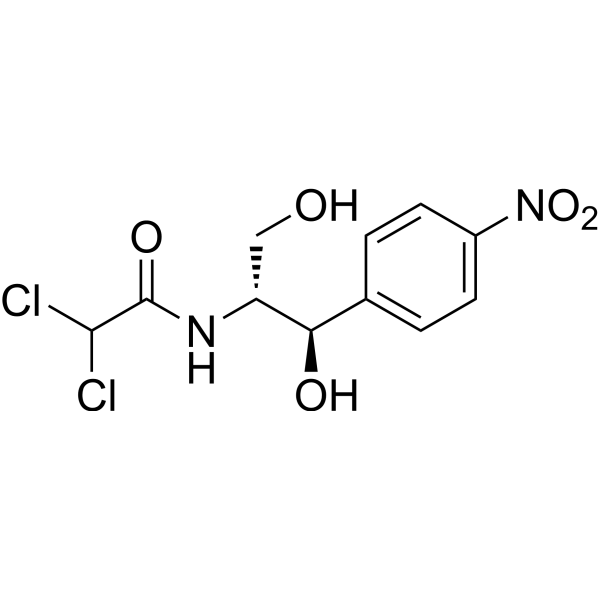
HY-B0239
ChloramphenicolHIF-1α Inhibitor -

HY-W250110I
Polyethylenimine (branched) (MW 10000)Cationic Polymer -
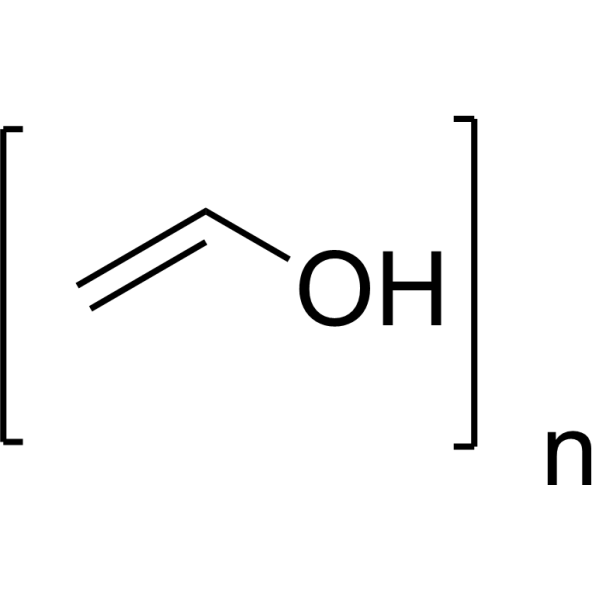
HY-Y0850E
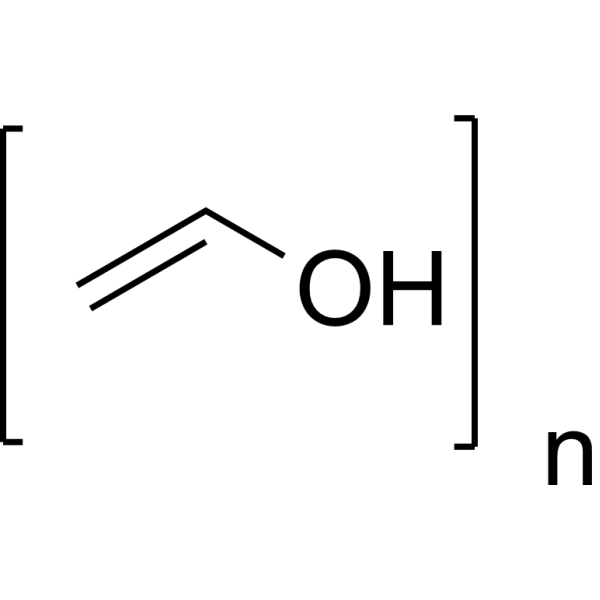
Polyvinyl alcohol (Mw 30000-70000, 87-90% hydrolyzed)Dressing Meterial -
HY-Y0850
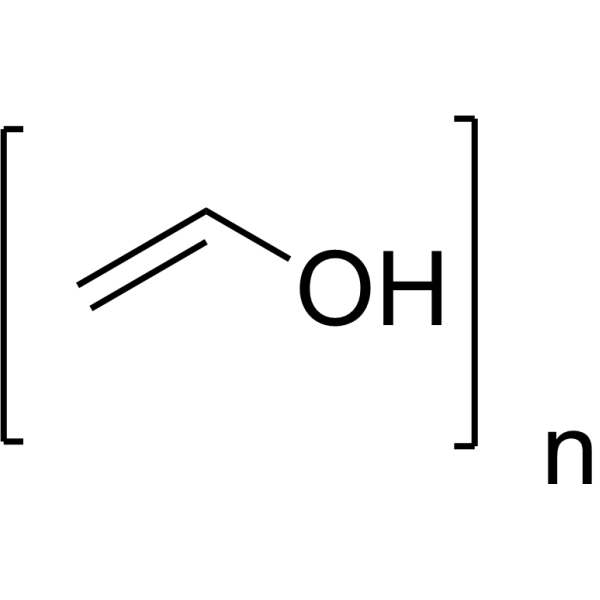
Polyvinyl alcohol (Mw 146000-186000, 99+% hydrolyzed)Biochemical reagents -
HY-Y0850J
Polyvinyl alcohol (Mw 13000-23000, 87-89% hydrolyzed)Polyvinyl Alcohol -

HY-Y0850U4
PVA (Mw 145000, 99+% hydrolyzed, ~3300 polymerization)Polyvinyl Alcohol -

HY-Y0850U
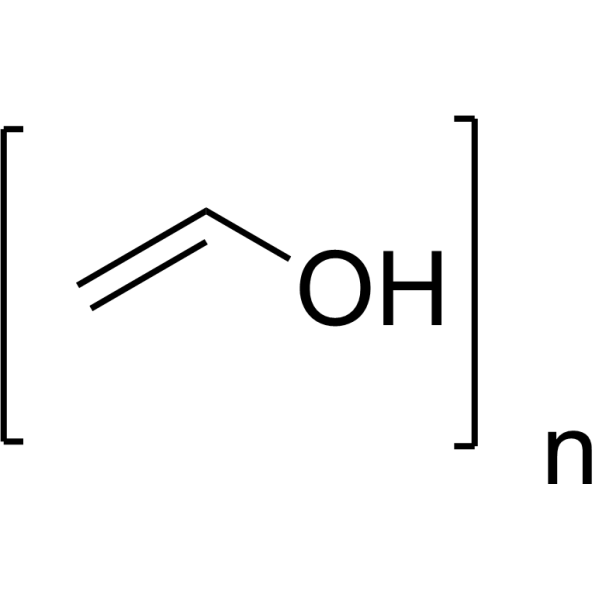
PVA (Mw 31000, 87-89% hydrolyzed, ~630 polymerization)Polymer -
HY-Y0850K
Polyvinyl alcohol (Mw 31000-50000, 98-99% hydrolyzed)Biochemical Reagent -
HY-Y0850O
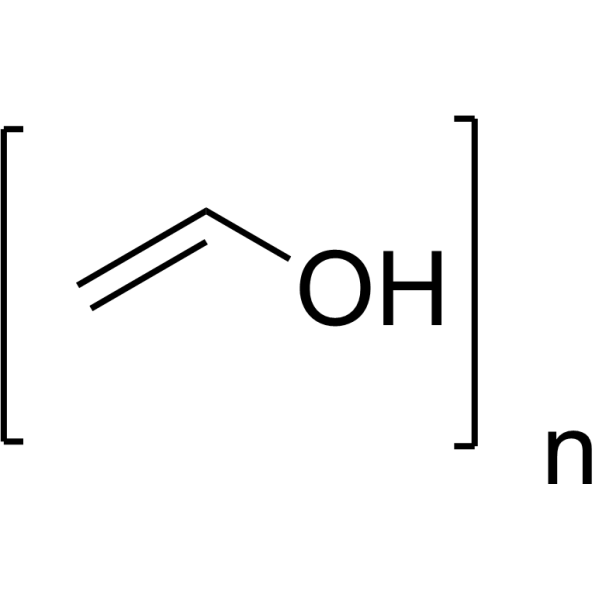
Polyvinyl alcohol (Mw 31000-50000, 87-89% hydrolyzed)Emulsification Stabilizer -
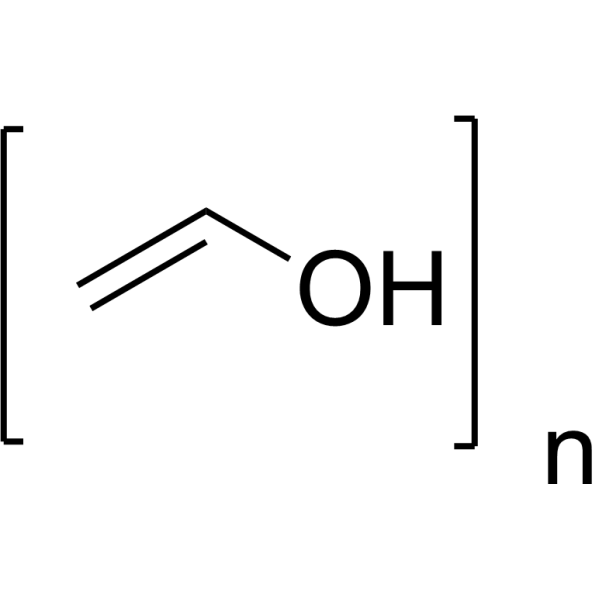
HY-Y0850H
Polyvinyl alcohol (Mw 89000-98000, 99+% hydrolyzed)Biochemical Reagent
Publications Citing Use of MedChemExpress (MCE) Polyethylenimine (branched) (30% in water)
More- J Extracell Vesicles. 2025 Nov;14(11):e70186. [Abstract]
- Nat Commun. 2024 Aug 2;15(1):6511. [Abstract]
- Cell Death Dis. 2024 Mar 14;15(3):216. [Abstract]
- J Immunother Cancer. 2025 Jun 8;13(6):e011642. [Abstract]
- Clin Transl Med. 2025 Feb;15(2):e70231. [Abstract]
- Cell Rep. 2026 Mar 24;45(4):117193. [Abstract]
- Noncoding RNA Res. 2025 Feb 22:12:42-55. [Abstract]
- Endocrine. 2026 May 2;91(1):151. [Abstract]
- Prostate. 2024 Mar;84(4):317-328. [Abstract]


Biological Activity
Description
In Vitro
Polyethylenimine branched (ranged PEI/DNA ratio, 24 h) reaches maximal transfection efficiency at 9-13.5 equivalents of PEI nitrogen per DNA phosphate and does not affect cell metabolism in 3T3 cells. [1].
MedChemExpress (MCE) has not independently confirmed the accuracy of these methods. They are for reference only. .
In Vivo
MedChemExpress (MCE) has not independently confirmed the accuracy of these methods. They are for reference only.
Clinical Trial
| NCT Number | Sponsor | Condition | Start Date |
Phase

|
|---|---|---|---|---|
| NCT01329991 | Plexxikon| | 2011-05 | PHASE1 |


Chemical Information
-
CAS No. 9002-98-6
-
Appearance Liquid
-
Formula (C2H5N)x
-
Color Colorless to light yellow
-
SMILES
NCCN(CCN)CCN(CCCNCN)CCN(CCNCCN)CCNCCN(CCN)CCN.[n]
-
Shipping
Room temperature in continental US; may vary elsewhere.
-
Storage
Solution, -20°C, protect from light, 2 years


Publications (9)
-
Journal Impact Factor
-
Most Recent
-
J Extracell Vesicles
Efficient Scaling up EV-AAVs Production via Cellular Nanoporation for Familial Hypercholesterolaemia Therapy. [Abstract]2025 Nov;14(11):e70186. PMID: 41216903 -
Nat Commun
Engineering of a mammalian VMAT2 for cryo-EM analysis results in non-canonical protein folding. [Abstract]2024 Aug 2;15(1):6511. PMID: 39095428 -
Cell Death Dis
Histidine re-sensitizes pediatric acute lymphoblastic leukemia to 6-mercaptopurine through tetrahydrofolate consumption and SIRT5-mediated desuccinylation. [Abstract]2024 Mar 14;15(3):216. PMID: 38485947 -
J Immunother Cancer
Preclinical and clinical evaluation of intratumoral injection of an IL-12 expressing SKV-012 oncolytic virus for advanced solid tumors. [Abstract]2025 Jun 8;13(6):e011642. PMID: 40484644 -
Clin Transl Med
SHP2 inhibition and adjuvant therapy synergistically target KIT-mutant GISTs via ERK1/2-regulated GSK3β/cyclin D1 pathway. [Abstract]2025 Feb;15(2):e70231. PMID: 39981588 -
Cell Rep
Astrocytic AEBP1-NPAS3-LIPA pathway coordinates cholesterol homeostasis to regulate Alzheimer's pathology. [Abstract]2026 Mar 24;45(4):117193. PMID: 41880326 -
Noncoding RNA Res
LncRNA APTR amplification serves as a potential glioma biomarker and promotes glioma progression via miR-6734-5p/ TCF7/LEF1 axis. [Abstract]2025 Feb 22:12:42-55. PMID: 40103614 -
Endocrine
Single-nucleus RNA sequencing reveals the cellular composition and the mechanism underlying adrenal myelolipoma. [Abstract]2026 May 2;91(1):151. PMID: 42067723 -
Prostate
PrLZ regulates EMT and invasion in prostate cancer via the TGF-β1/p-smad2/miR-200 family/ZEB1 axis. [Abstract]2024 Mar;84(4):317-328. PMID: 38145367


Purity & Documentation
-
Data Sheet (269 KB)
-
SDS (537 KB)
- English - EN (537 KB)
- Français - FR (537 KB)
- Deutsch - DE (537 KB)
- Norwegian - NO (537 KB)
- Español - ES (537 KB)
- Swedish - SV (537 KB)
- Italian - IT (537 KB)
- Korean - KR (537 KB)
- Portuguese - PT (537 KB)
-
Handling Instructions (2659 KB)
References

Calculators
Concentration (start) × Volume (start) = Concentration (final) × Volume (final)


Polyethylenimine (branched) (30% in water) Related Classifications
HY-W250110 Related Classifications
 Powered by Bioz