192 Results for "

PAMs

" in MedChemExpress (MCE) Product Catalog:
Products (192)

192 Results for "PAMs" in MCE Product Catalog:

Cat. No.: HY-131196
CAS No.: 1624297-26-2
Target:  

mAChR

Research Areas:  

Neurological Disease

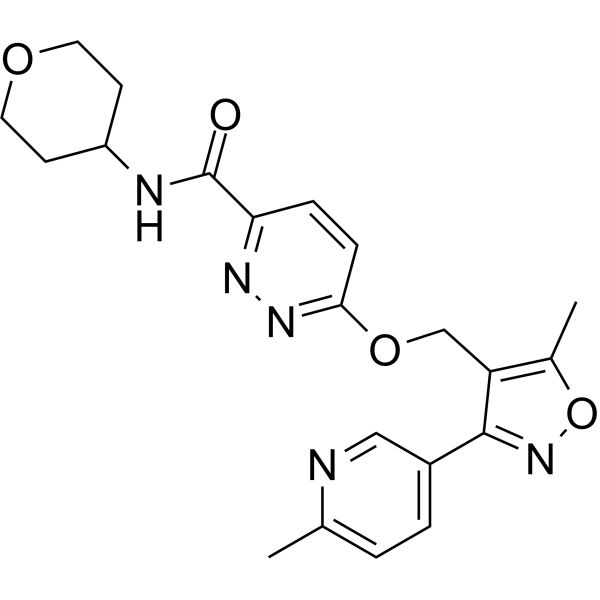
M3 mAChR agonist 1 is an M3-preferring M3/M5 mAChR dual positive allosteric modulators (PAM). M3 mAChR agonist 1 shows excellent subtype selectivity over other subtypes of mAChRs including M1, M2, and M4 mAChRs. M3 mAChR agonist 1 increases the contraction of isolated rat bladder strips by modulating the M3 muscarinic acetylcholine receptor, leading to enhanced signaling pathways. M3 mAChR agonist 1 can be used for the research of endocrinology .
loading...
    loading...
Cat. No.: HY-167922S
Heptadecanoyl L-carnitine-d3 HCl is the deuterium labeled (R,R,S)-GAT107 (HY-167922). (R,R,S)-GAT107 is a fully agonistic positive modulator of α7 nicotinic receptors with significant biological activity. Its activity is entirely present in its (+)-isomer 1b, while (-)-isomer 1a does not affect its activity when used together. Studies have shown that (R,R,S)-GAT107 is the most potent ago-PAM for α7 nicotinic receptors currently known and has the potential for further in vivo evaluation .
loading...
    loading...
Cat. No.: HY-173032
Target:  

mGluR

Research Areas:  

Neurological Disease

VU6033685 is the orally active positive allosteric modulator (PAM) for mGlu1 that positively modulates human mGlu1 and human mGlu5 with EC50 of 39 nM and 3960 nM. VU6033685 also inhibits CYP1A2, CYP2C9 and CYP2D6 with IC50 of 26, 22.3 and 23.8 μM, respectively. VU6033685 reverses amphetamine-induced rats hyperlocomotion, protects rats from MK-801 (HY-15084B)-induced cognitive impairment. VU6033685 exhibits good pharmacokinetics characteristics in rats with an oral bioavailability of 42.8% .
loading...
    loading...
Cat. No.: HY-175670
Target:  

GABA Receptor

Research Areas:  

Neurological Disease

GABAA receptor modulator-10 is an orally active, potent positive allosteric modulator (PAM) of the α1β2γ2 GABAA receptor with favorable blood-brain barrier (BBB) penetration. GABAA receptor modulator-10 enhances α1β2γ2 GABAA receptor function and potentiates GABA-evoked currents. GABAA receptor modulator-10 demonstrates potent antiepileptic efficacy in both the Pentetrazol (PTZ)- and Kainic Acid (KA) (HY-N2309)-induced mice epilepsy models. GABAA receptor modulator-10 can be used for the study of epilepsy .
loading...
    loading...
Cat. No.: HY-184478
CAS No.: 3103822-75-6
Target:  

GABA Receptor

Research Areas:  

Neurological Disease

GABAA receptor modulator-14 is an orally active, blood-brain barrier permeable selective positive allosteric modulator (PAM) of extrasynaptic δ-containing GABAA receptors (α4β3δ subtype) with an EC50 of 0.8 μM. GABAA receptor modulator-14 selectively enhances tonic neuronal inhibition by potentiating GABA-evoked currents mediated by extrasynaptic δ-GABAARs, produces rapid sustained antidepressant effects, elevates slow-wave NREM sleep and shows no addiction liability in mice. GABAA receptor modulator-14 can be applied to major depressive disorder (MDD) and comorbid insomnia research .
loading...
    loading...
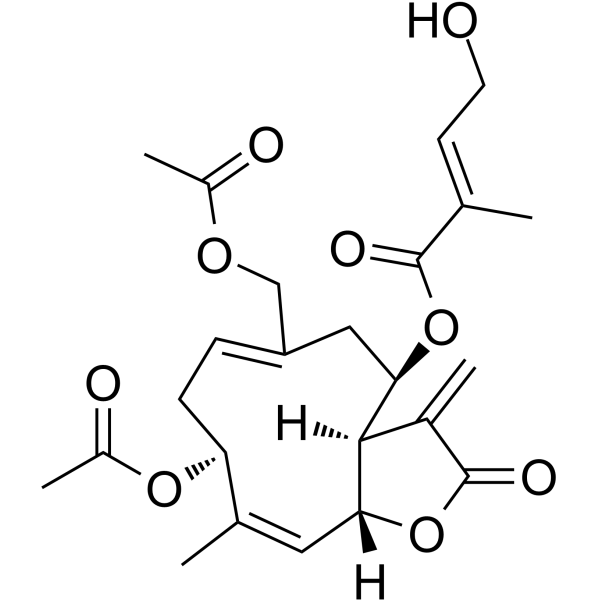
Cat. No.: HY-N0754
CAS No.: 877822-40-7
Eupalinolide A is a Yes-associated protein (YAP) degrader and HSP70 inducer. Eupalinolide A inhibits osteogenic differentiation of tendon-derived stem cells (TDSCs). Eupalinolide A induces autophagy in hepatocellular carcinoma cells via activating the ROS/ERK signaling pathway. Eupalinolide A protects PAM212 cells from UVB-, Menadione (HY-B0332)-, or heat shock-induced apoptosis. Eupalinolide A alleviates trauma-induced heterotopic ossification (HO) of Achilles tendon and inhibits growth of MHCC97-L and HCCLM3 hepatocellular carcinoma xenograft tumors in mice. Eupalinolide A can be used for the study of traumatic heterotopic ossification of tendons and hepatocellular carcinoma .
loading...
    loading...
Cat. No.: HY-175505
CAS No.: 2894793-37-2
Target:  

Dopamine Receptor

Research Areas:  

Neurological Disease

Dopamine D3 receptor antagonist-3 is a D3 dopamine receptor (D3R)-selective positive allosteric modulator (PAM)-antagonist that can cross the blood-brain barrier. Dopamine D3 receptor antagonist-3 exhibits antagonist activity in the D3R-mediated β-arrestin recruitment assay with an IC50 and a Kd of 2.5 μM and 0.49 μM. amine D3 receptor antagonist-3 is also an antagonist in the D3R-mediated Go-BRET assay with an IC50 of 0.34 μM. Dopamine D3 receptor antagonist-3 can be used for the study of neuropsychiatric disorders, including substance use disorder .
loading...
    loading...
Cat. No.: HY-W115727B
CAS No.: 9003-05-8
Synonyms: PAM,Anion,Mw 18 million
Polyacrylamide,Anion,Mw 18 million (PAM,Anion,Mw 18 million) is a multifunctional high molecular weight anionic polyacrylamide copolymer. The anionic properties of Polyacrylamide,Anion,Mw 18 million enable it to be used as a flocculant to achieve charge neutralization and aggregation, while its high molecular weight properties provide viscoelastic properties for fluid applications. Polyacrylamide series materials can maintain enzyme activity in enzyme immobilization, act as drug carriers to achieve controlled release, serve as smart materials responding to temperature/pH stimuli, and be used for in vitro toxin adsorption and soft tissue filling through mechanisms such as physical entrapment, covalent binding or chemical crosslinking. Polyacrylamide finds applications in biomedical engineering, environmental management and industrial applications .
loading...
    loading...
Cat. No.: HY-175504
CAS No.: 932544-59-7
Target:  

Dopamine Receptor PERK

Research Areas:  

Neurological Disease

MLS6357 is a D3 dopamine receptor (D3R)-selective positive allosteric modulator (PAM)-antagonist. MLS6357 exhibits antagonist activity in the D3R-mediated and the BRET-based β-arrestin recruitment assay with IC50s of 13 and 14 μM, and no activity for other DAR subtypes (D1R/D2R/D4R/D5R) (IC50 > 100 μM). MLS6357 is also an antagonist in the D3R-mediated Go-BRET assay with an IC50 of 17 μM. MLS6357 can be used for the study of neuropsychiatric disorders, including substance use disorder .
loading...
    loading...
Cat. No.: HY-132806
CAS No.: 2230009-48-8
Purity:  99.93%
Synonyms: RG-7816; RO-7017773
Target:  

GABA Receptor

Research Areas:  

Neurological Disease

Alogabat is a positive allosteric modulator (PAM) and agonist (Ki <100 nM) of the GABAA α5 receptor, targeting the α5β3γ2 subunit with a Ki of 8.7 nM. Alogabat increases the expression level of α5β3γ2 in oocytes (1.97-fold). GABAA has been implicated in cognitive impairment associated with central nervous system (CNS) disorders, brain cancer (including brain tumors such as medulloblastoma), and can be used in the study of mild cognitive impairment (MCI), amnestic MCI (aMCI), age-associated memory impairment (AAMI), age-related cognitive decline (ARCD), dementia, Alzheimer's disease (AD), prodromal AD, post-traumatic stress disorder (PTSD), schizophrenia, bipolar disorder, amyotrophic lateral sclerosis (ALS), cognitive impairment associated with cancer treatment, mental retardation, Parkinson's disease (PD), autism spectrum disorder, fragile X, Rett syndrome, obsessive-compulsive behavior, and substance addiction .
loading...
    loading...
Cat. No.: HY-175532
CAS No.: 3062458-27-6
Target:  

mAChR

Research Areas:  

Neurological Disease

M4 mAChR Modulator-2 is an orally active, selective, brain-penetrant positive allosteric modulator (PAM) of the M4 muscarinic acetylcholine receptor (M4 mAChR) (EC50 = 513 nM). M4 mAChR Modulator-2 exhibits high target selectivity, showing negligible affinity and low inhibition rates for non-target receptors (D1R/D2R/D3R, 5-HT subtypes, κ/δ/μ opioid receptors, H1, M1/M2) while specifically binding to M4 mAChR with a Ki of 377 nM and an inhibition rate of 62.8%. M4 mAChR Modulator-2 reverses Dizocilpine (MK-801) (HY-15084B)-induced hyperlocomotion in mice. M4 mAChR Modulator-2 can be used for the study of schizophrenia
loading...
    loading...
Cat. No.: HY-L170
258 compounds

An emerging drug design method is based on the secondary binding site effect, where small molecule drugs are designed to bind to secondary binding sites on target biomolecules rather than primary orthomorphic sites. Successful potential drugs (known as allosteric modulators) will be able to bind to allosteric sites and remotely alter (or modify) the conformation of the main orthosteric binding sites of biological targets. Allosteric modulators (AMs) are ligands of proteins that act through binding sites different from natural (orthosteric) ligand sites. AMs are relatively small, more lipophilic, and more rigid compounds. The binding efficacy of AMs with their targets is often slightly lower. AMs are divided into positive AMs (PAMs) and negative AMs (NAMs). AMs are ideal drug targets because they can fine-tune receptor activity while preserving the spatial and temporal signal transduction characteristics of endogenous ligands, resulting in fewer targeted side effects, improved subtype selectivity, and better promotion of biased signal transduction than normal ligands.

MCE designs a unique collection of 258 small allosteric modulators. It is a good tool to be used for research on metabolize, cancer and other diseases.

