195 Results for "

outer

" in MedChemExpress (MCE) Product Catalog:
Products (195)

195 Results for "outer" in MCE Product Catalog:

Cat. No.: HY-N2232
CAS No.: 66648-44-0
Synonyms: N-trans-Feruloyloctopamine
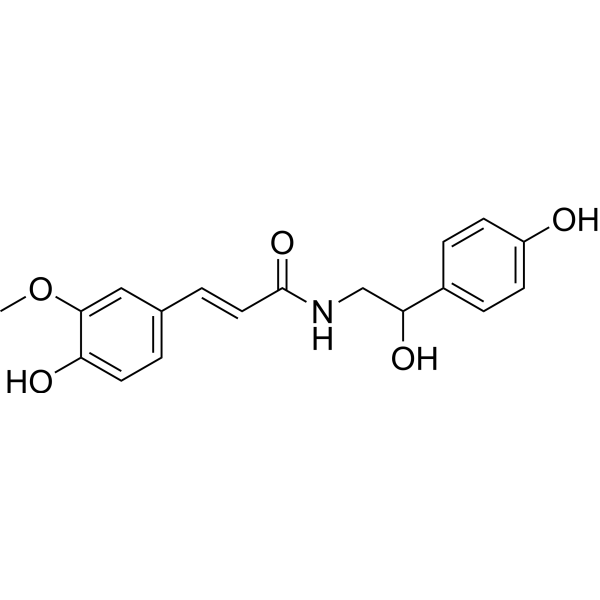
N-trans-feruloyloctopamine is a natural hydroxycinnamic acid amide compound derived from garlic outer skin, possessing tyrosinase inhibition, FGF2 inhibition, anti-melanogenic, and anti-tumor activities. N-trans-feruloyloctopamine inhibits tyrosinase activity and downregulates tyrosinase mRNA and protein expression (IC50 = 5.3 μM), and inhibits melanogenesis in α-MSH-stimulated B16F10 cells . N-trans-feruloyloctopamine inhibits Akt and p38 MAPK phosphorylation, binds to E-cadherin to block EMT, reduces Slug, inhibits hepatocellular carcinoma invasion, and induces hepatocellular carcinoma cell apoptosis. N-trans-feruloyloctopamine can be used in research related to hepatocellular carcinoma, pigmentation disorders, and UVB-induced skin damage .
loading...
    loading...
Cat. No.: HY-W008646R
CAS No.: 6779-87-9
NADH (disodium salt) (Standard) is the analytical standard of NADH (disodium salt). This product is intended for research and analytical applications. 7,8-Dihydro-L-biopterin is a NOS uncoupling inducer with blood-brain barrier permeability, and it is a reduced non-conjugated pteridine. 7,8-Dihydro-L-biopterin is the main metabolite of 4-amino-tetrahydro-L-biopterin, and it undergoes photooxidation to form biopterin. 7,8-Dihydro-L-biopterin promotes the conversion of nitric oxide synthase to a superoxide-producing form, thereby increasing oxidative stress levels in the renal outer medulla and inducing apoptosis. 7,8-Dihydro-L-biopterin is sensitive to the inhibitory effect of SOD, and it can be applied to research related to salt-sensitive hypertension, moderate to severe traumatic brain injury, and neurodegenerative diseases .
loading...
    loading...
Cat. No.: HY-P87278
Synonyms: hVDAC1 antibody; MGC111064 antibody; Mithocondrial porin antibody; OPM2, yeast, human complement of antibody; outer mitochondrial membrane protein porin 1 antibody; Plasmalemmal porin antibody; Porin 31 HL antibody; Porin 31 HM antibody; Porin 31HL antibody; Porin 31HM antibody

Host:  

Rabbit

Application:  

WB

Reactivity:  

Human, Mouse, Rat

loading...
    loading...
Cat. No.: HY-100395
CAS No.: 36098-33-6
Purity:  99.94%
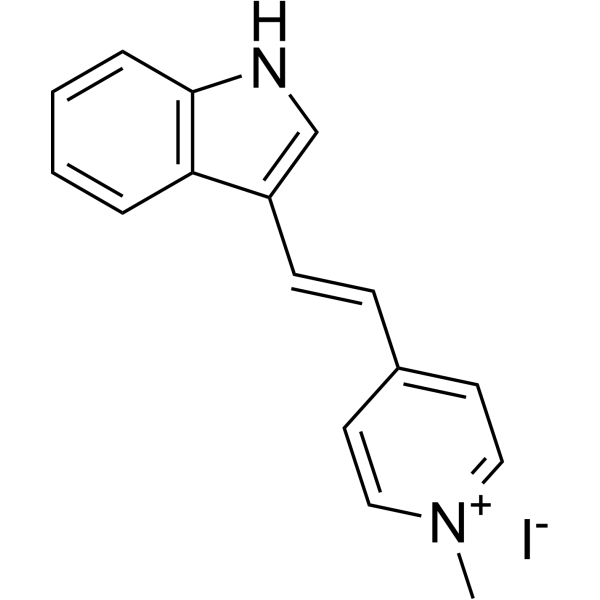
F16 is a mitochondrial permeability transition pore (PTP) modulator with an EC50 of 30 μM in mice. F16 promotes PTP opening, accumulates in cancer cell mitochondria, and induces mitochondrial depolarization, swelling, cristae disruption, outer membrane rupture, ATP depletion, reactive oxygen species (ROS) production, cytochrome c release and mitochondrial uncoupling. F16 induces cell cycle arrest at the G1 (occasionally G2) phase, reduces the phosphotyrosine content of Neu, as well as the levels of phosphorylated PKB/Akt and phosphorylated MAP kinase, downregulates the protein expression levels of Neu and PKB, triggers apoptosis in cells with moderate Bcl-2 expression, and induces necrosis in cells with overexpressed Bcl-2. F16 can be used in research related to breast cancer and gastric cancer .
loading...
    loading...
Cat. No.: HY-P11250
HVF18-a3-d is an antimicrobial peptide. HVF18-a3-d reduces NO production. HVF18-a3-d inhibits the production of TNF-α and IL-6, reduces ROS production, and suppresses the TLR4 signaling pathway, as well as LPS-induced phosphorylation of ERK, JNK, and p38 MAPK. HVF18-a3-d exhibits antimicrobial activity against a variety of bacteria by disrupting their outer and inner membranes. HVF18-a3-d protects mice from fatal septic shock induced by Acinetobacter baumannii resistant to Carbapenem. HVF18-a3-d shows anti-inflammatory and antioxidant effects .
loading...
    loading...
Cat. No.: HY-L144
1,112 compounds

Normal mitochondrial function is critical for maintaining cellular homeostasis because mitochondria produce ATP and are the major intracellular source of free radicals. Cellular dysfunctions induced by intracellular or extracellular insults converge on mitochondria and induce a sudden increase in permeability on the inner mitochondrial membrane, the so-called mitochondrial membrane permeability transition (MMPT). MMPT is caused by the opening of pores in the inner mitochondrial membrane, matrix swelling, and outer membrane rupture. The MMPT is an endpoint to initiate cell death because the pore opening together with the release of mitochondrial cytochrome c activates the apoptotic pathway of caspases.

The normal operation of mitochondrial function is important for maintaining normal cell death and treatment of mitochondrial diseases. MCE offers a unique collection of 1,112 compounds with identified and potential mitochondrial protective activity. MCE Mitochondrial Protection Compound Library is critical for drug discovery and development.

Cat. No.: HY-132893
CAS No.: 2830555-70-7
Target:  

TAM Receptor

Research Areas:  

Neurological Disease Cancer

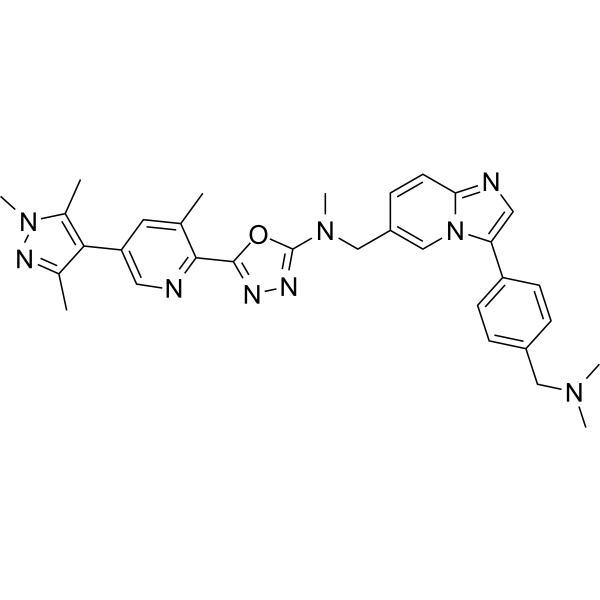
AZ14145845 is an orally active dual-target type 1½ kinase inhibitor of Mer/Axl, which inhibits Mer kinase (pIC50 = 9.0) and Axl kinase (pIC50 = 7.9) with high selectivity over Flt3 and Tyro3. AZ14145845 suppresses Mer- and Axl-dependent proliferation in Ba/F3 cells and inhibits efferocytosis in macrophages. AZ14145845 reduces the phagocytosis of photoreceptor outer segments by polarized human retinal epithelial cells. AZ14145845 inhibits tumor growth and induces tumor regression in vivo, and its combination with anti-PD1 antibody and ionizing radiation improves the survival rate of mice with colorectal cancer. AZ14145845 causes retinal degeneration in mice, with pathological changes similar to those in MERTK loss-of-function models. AZ14145845 can be used in studies related to retinal degeneration, lymphoma and colorectal cancer .
loading...
    loading...
Cat. No.: HY-D1737
RADA is a fluorescent D-amino acid (FDAA) with high photostability and thermostability, which emits yellow-to-orange fluorescence. RADA shows low outer membrane permeability in wild-type Gram-negative Escherichia coli, but it targets penicillin-binding proteins and L,D-transpeptidases, mimics the interaction between acyl acceptors and enzyme intermediates, and integrates into peptidoglycan during biosynthesis. As a peptidoglycan labeling reagent, RADA metabolically integrates into the nascent peptidoglycan of live bacterial cells, labels the peptidoglycan at the poles and lateral walls of mycobacteria, and enables visualization of peptidoglycan synthesis and remodeling processes. RADA serves as a non-specific stain for fixed cells, is non-toxic to bacterial cells, and its red-shifted excitation/emission spectra reduce phototoxicity. RADA also supports virtual pulse-chase labeling experiments and stochastic optical reconstruction microscopy for sub-diffraction-limited imaging of bacterial cell walls .
loading...
    loading...
Cat. No.: HY-100395R
CAS No.: 36098-33-6
F16 (Standard) is the analytical standard of F16 (HY-100395). This product is intended for research and analytical applications. F16 is a mitochondrial permeability transition pore (PTP) modulator with an EC50 of 30 μM in mice. F16 promotes PTP opening, accumulates in cancer cell mitochondria, and induces mitochondrial depolarization, swelling, cristae disruption, outer membrane rupture, ATP depletion, reactive oxygen species (ROS) production, cytochrome c release and mitochondrial uncoupling. F16 induces cell cycle arrest at the G1 (occasionally G2) phase, reduces the phosphotyrosine content of Neu, as well as the levels of phosphorylated PKB/Akt and phosphorylated MAP kinase, downregulates the protein expression levels of Neu and PKB, triggers apoptosis in cells with moderate Bcl-2 expression, and induces necrosis in cells with overexpressed Bcl-2. F16 can be used in research related to breast cancer and gastric cancer .
loading...
    loading...
Cat. No.: HY-187707
CAS No.: 108975-37-7
Target:  

Potassium Channel

Research Areas:  

Inflammation/Immunology

MPiN is a KV1.3 potassium channel inhibitor. The IC50 values of MPiN for inhibiting Kv1.3 currents are 1.1 μM (at -90 mV) and 0.6 μM (at -35 mV). MPiN exhibits in vivo efficacy in a mouse psoriasis model. MPiN can be used for the research of psoriasis .
loading...
    loading...
Cat. No.: HY-P705135
Purity:  ≥ 95%, as determined by reducing SDS-PAGE.
Synonyms: GUCY2D; Retinal Guanylate Cyclase 1; Prev. GUC1A4; Cone Rod Dystrophy 6; Prev. CORD6; CG-E; Prev. GUC2D; Central Areolar Choroidal Dystrophy; Prev. LCA; Leber Congenital Amaurosis 1; RETGC-1; CSNB1I; ROS-GC; RETGC1; Rod outer Segment Membrane Guanylate Cy
Species:  
Human
Source:  
HEK293
loading...
    loading...
Cat. No.: HY-184904
Target:  

Bacterial

Research Areas:  

Infection

Antimicrobial agent-52 is a broad-spectrum Bactericide. Antimicrobial agent-52 exerts rapid bactericidal effects against Gram-positive and Gram-negative pathogenic bacteria. Antimicrobial agent-52 exhibits activity against Staphylococcus aureus, Klebsiella pneumoniae, Acinetobacter baumannii, and Escherichia coli. Antimicrobial agent-52 can be used in the research of bacterial infections .
loading...
    loading...
Cat. No.: HY-D1439
CAS No.: 172807-13-5
Target:  

Fluorescent Dye

Research Areas:  

Neurological Disease

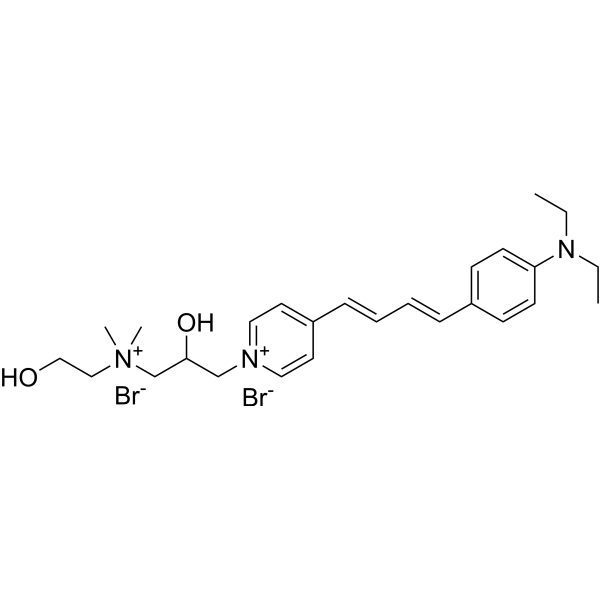
RH 795 is a lipophilic potentiometric styryl fluorescent dye (Ex/Em = 530 nm/712 nm). RH 795 stains the cell membranes of sensory cells and nerve fibers in living cells that maintain membrane potential, while it shows weak staining effect on supporting cells. RH 795 supports in vivo and in vitro confocal microscopy imaging of intact living inner ear cells and neuronal components. RH 795 can be used in studies related to hearing loss .
loading...
    loading...
Cat. No.: HY-D3570
Target:  

Fluorescent Dye

Research Areas:  

Others

AF405 DBCO is a blue fluorescent dye derivative containing a dibenzocyclooctyne (DBCO) group. AF405 DBCO reacts rapidly with azide-labeled biomolecules at room temperature without the need for a metal catalyst, enabling copper-free click chemistry (SPAAC) for applications in live-cell imaging, flow cytometry, super-resolution microscopy, and other research fields .
loading...
    loading...
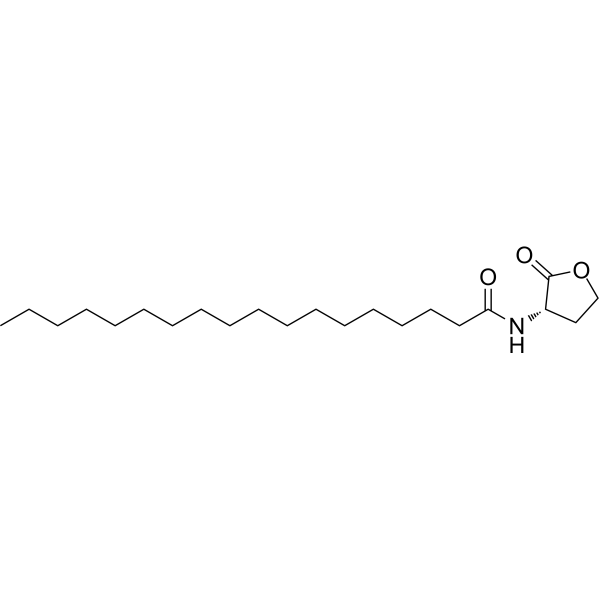
Cat. No.: HY-W127487
CAS No.: 479050-96-9
Quorum sensing is a regulatory system used by bacteria to control gene expression in response to increased cell density. This regulatory process manifests itself in a variety of phenotypes, including biofilm formation and virulence factor production. Coordinated gene expression is achieved through the production, release and detection of small diffusible signaling molecules called autoinducers. N-acylated homoserine lactones (AHLs) comprise a class of such autoinducers, each of which generally consists of a fatty acid coupled to a homoserine lactone (HSL). Modulation of bacterial quorum-sensing signaling systems to suppress pathogenesis represents a new approach to antimicrobial research for infectious diseases. AHLs differ in acyl length (C4-C18), C3 substitution (hydrogen, hydroxyl, or oxo group), and the presence or absence of one or more carbon-carbon double bonds in the fatty acid chain. These differences confer signaling specificity through the affinity of the LuxR family of transcriptional regulators. C18-HSL, one of four lipophilic long acyl side chain AHLs produced by the LuxI AHL synthase homolog SinI, is involved in quorum-sensing signaling in strains of Rhizobium meliloti (a nitrogen-fixing bacterial symbiont of the legume M. sativa) . C18-HSL and other hydrophobic AHLs tend to localize in the relatively lipophilic environment of bacterial cells and cannot diffuse freely across the cell membrane. Long-chain N-acyl homoserine lactones can be exported from cells by efflux pumps, or can be transported between communicating cells by extracellular outer membrane vesicles.
loading...
    loading...

