



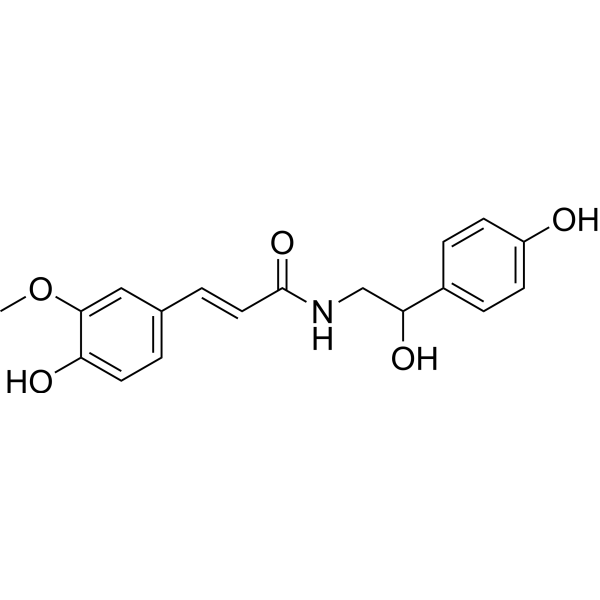
N-Feruloyloctopamine

Based on 1 Customer Validation
N-trans-feruloyloctopamine is a natural hydroxycinnamic acid amide compound derived from garlic outer skin, possessing tyrosinase inhibition, FGF2 inhibition, anti-melanogenic, and anti-tumor activities. N-trans-feruloyloctopamine inhibits tyrosinase activity and downregulates tyrosinase mRNA and protein expression (IC50 = 5.3 μM), and inhibits melanogenesis in α-MSH-stimulated B16F10 cells. N-trans-feruloyloctopamine inhibits Akt and p38 MAPK phosphorylation, binds to E-cadherin to block EMT, reduces Slug, inhibits hepatocellular carcinoma invasion, and induces hepatocellular carcinoma cell apoptosis. N-trans-feruloyloctopamine can be used in research related to hepatocellular carcinoma, pigmentation disorders, and UVB-induced skin damage.
Nur für Forschungszwecke. Wir verkaufen nicht an Patienten.
- Reinheit : 99.91%
- CAS. Nr.: 66648-44-0
- Formel: C18H19NO5
- Molecular Weight:329.35
-
Speicherung:
4°C, protect from light
* In solvent : -80°C, 6 months; -20°C, 1 month (protect from light)

To place orders, for customer services and technical support, please contact: MedChemExpress USA
Tel: 609-228-6898 E-mail: [email protected] [email protected]


-
 Biologische Aktivität
-
Chemical Information
-
Lösungsmittel & Löslichkeit
- Protokoll
- Reinheit & Dokumentation
- Verweise
-
 Help & FAQs


-
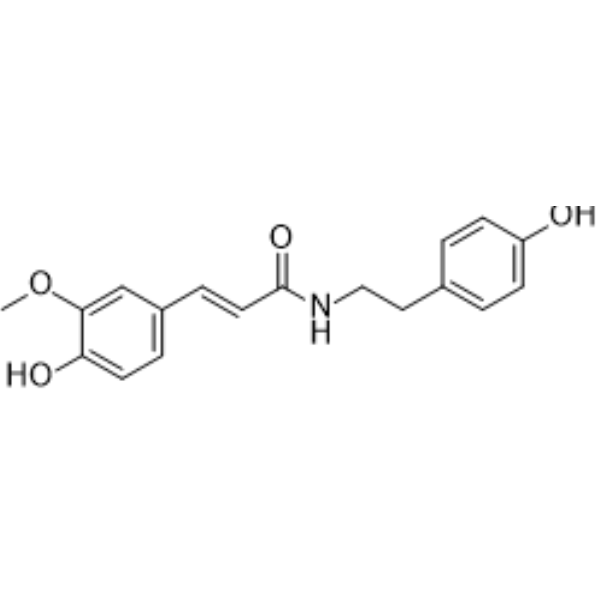
HY-N2410
N-trans-FeruloyltyramineAntioxidant -
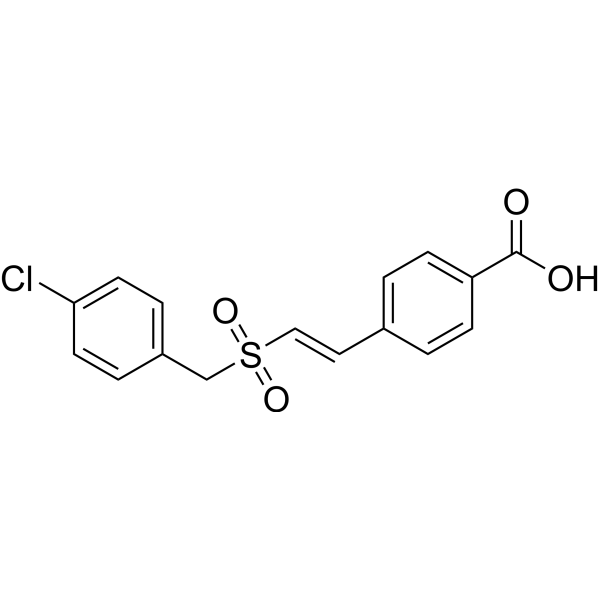
HY-101625
RecilisibRadioprotectant -
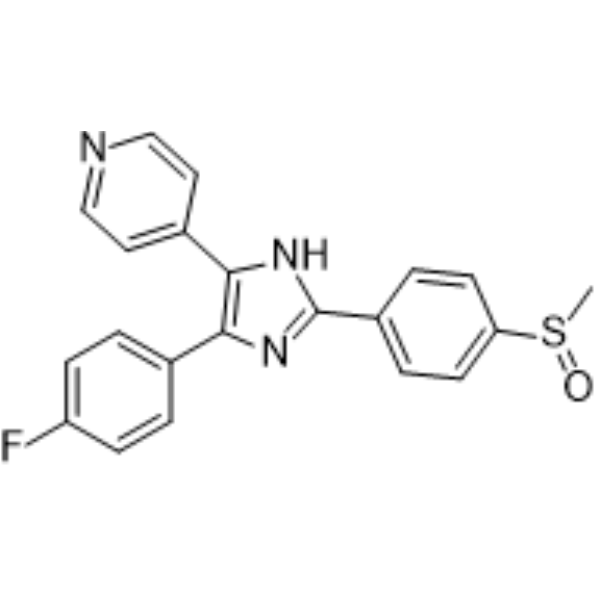
HY-10256
Adezmapimodp38 MAPK Inhibitor -
HY-10295
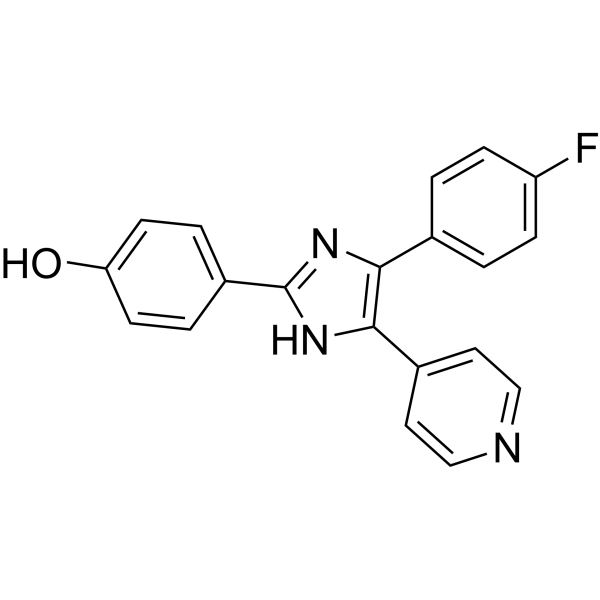
SB 202190p38 MAPK Inhibitor -
HY-15477
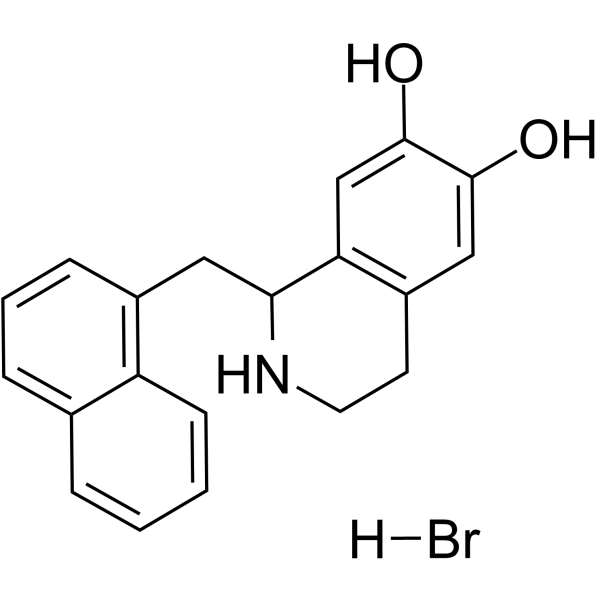
YS-49PI3K/Akt Activator -
HY-10320
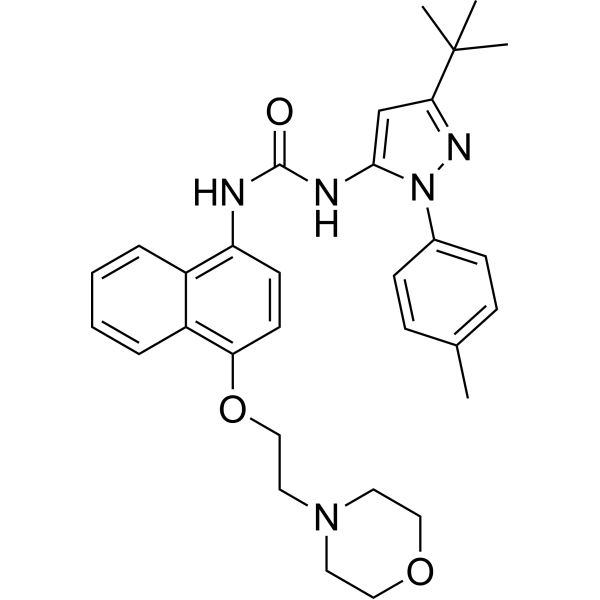
Doramapimodp38 MAPK Inhibitor -
HY-18749
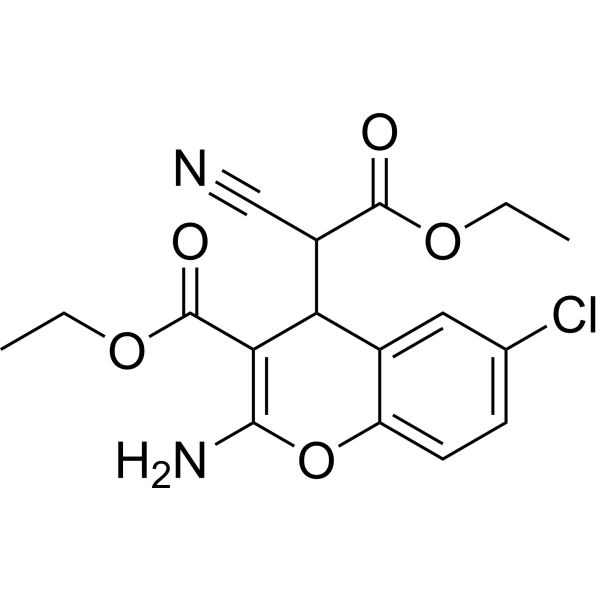
SC79Akt Activator -
HY-N0004
OridoninBacterial Inhibitor -
HY-B0094
ArtemisininParasite Inhibitor -
HY-N0751
ScutellarinSTAT Inhibitor -
HY-10578
PD 169316p38 MAP Kinase Inhibitor
Alle MEK Isoform-spezifische Produkte anzeigen
More

Biologische Aktivität
Beschreibung
|
BRafV600E |
Ras |
MEK2 |
MEK1 |
p38 MAPK |
Akt |
Cellular Effect
|
Cell Line

|
Type | Value | Description | References |
|---|---|---|---|---|
| HCCLM3 | IC50 |
2.27 mM
Compound: FO
|
Antiproliferative activity against human HCCLM3 cells assessed as reduction in cell viability after 48 hrs by CCK8 assay
Antiproliferative activity against human HCCLM3 cells assessed as reduction in cell viability after 48 hrs by CCK8 assay
|
[PMID: 28073674] |
| Huh-7 | IC50 |
1.99 mM
Compound: FO
|
Antiproliferative activity against human HuH7 cells assessed as reduction in cell viability after 48 hrs by CCK8 assay
Antiproliferative activity against human HuH7 cells assessed as reduction in cell viability after 48 hrs by CCK8 assay
|
[PMID: 28073674] |
In Vitro
N-trans-feruloyloctopamine (FO) (0.1-50 mM; 48 h) inhibits the proliferation of Huh7 and HCCLM3 cells, with IC50 values of 1.99 mM and 2.27 mM, respectively[1].
N-trans-feruloyloctopamine (NFO) binds to FGF2 with a KD of 8.507 × 10⁻⁶ M and disrupts the interaction between FGF2 and FGFR1-4 in HaCaT cells[4].
N-trans-feruloyloctopamine (2 mM; 48 h) does not significantly inhibit the migration of Huh7 and HCCLM3 cells in the scratch wound healing assay[1].
N-trans-feruloyloctopamine (2 mM; 48 h) potentially inhibits cell proliferation and invasion through the PI3K/Akt and p38 MAPK signaling pathways, and regulates EMT-related signaling in Huh7 and HCCLM3 cells by decreasing Slug and increasing E-cadherin; it directly binds E-cadherin to inhibit EMT-related cell invasion[1].
N-trans-feruloyloctopamine (1.5-96.0 μM; 72 h) shows little or no cytotoxicity against B16F10 cells, with an IC50 of >96 μM[3].
N-trans-feruloyloctopamine (1.5-96.0 μM) inhibits α-MSH-induced melanogenesis in B16F10 cells in a dose-dependent manner without cytotoxicity[3].
N-trans-feruloyloctopamine (48.0-96.0 μM; 1 h pre-treatment, followed by 24 h incubation with α-MSH) downregulates tyrosinase mRNA and protein expression in α-MSH-stimulated B16F10 cells[3].
MedChemExpress (MCE) has not independently confirmed the accuracy of these methods. They are for reference only.
-
Cell Line:Huh7 and HCCLM3
-
Concentration:0.1, 0.5, 5, 2, 4, 10, 20, 50 mM
-
Incubation Time:48 h
-
Result:Reached an IC50 of 1.99 mM in Huh7 cells.
Reached an IC50 of 2.27 mM in HCCLM3 cells.
Significantly inhibited cell proliferation compared to DMSO-treated controls.
-
Cell Line:Huh7 and HCCLM3
-
Concentration:2 mM
-
Incubation Time:48 h
-
Result:Revealed no significant delay in the relative cleared area between target reagent-treated groups and DMSO-treated groups in Huh7 cells and HCCLM3 cells.
-
Cell Line:Huh7 and HCCLM3
-
Concentration:2 mM
-
Incubation Time:48 h
-
Result:Did not affect the phosphorylation of p65 and ERK1/2.
Caused a significant decrease in the phosphorylation levels of Akt and p38 MAPK.
Resulted in a significant reduction of Slug and an upsurge of E-cadherin compared to DMSO-treated cells.
-
Cell Line:B16F10 melanoma cells
-
Concentration:1.5, 3.0, 6.0, 12.0, 24.0, 48.0, 96.0 μM
-
Incubation Time:72 h
-
Result:Displayed little or no cytotoxicity at all concentrations examined.
Exhibited an IC50 value of >96 μM.
Showed cytotoxicity values of 102.2% at 1.5 μM, 104.8% at 3.0 μM, 97.8% at 6.0 μM, 99.4% at 12.0 μM, 98.3% at 24.0 μM, 97.2% at 48.0 μM, and 96.0% at 96.0 μM.
-
Cell Line:B16F10 melanoma cells
-
Concentration:48.0, 96.0 μM
-
Incubation Time:1 h pre-treatment, followed by 24 h incubation with α-MSH
-
Result:Dose-dependently decreased tyrosinase mRNA expression levels in α-MSH-stimulated cells.
Significantly inhibited α-MSH-induced tyrosinase mRNA expression.
-
Cell Line:B16F10 melanoma cells
-
Concentration:48.0, 96.0 μM
-
Incubation Time:1 h pre-treatment, followed by 24 h incubation with α-MSH
-
Result:Dose-dependently decreased tyrosinase protein expression levels in α-MSH-stimulated cells.
Significantly inhibited α-MSH-induced tyrosinase protein expression.
In Vivo
N-trans-feruloyloctopamine (10% NFO-TSG; topical administration) acts primarily locally and rarely enters the systemic circulation, thereby reducing the potential risk of systemic toxicity[4].
MedChemExpress (MCE) has not independently confirmed the accuracy of these methods. They are for reference only.
-
Animal Model:C57BL/6J mice (6-8 weeks old, 18-20 g, male)[4]
-
Dosage:10% (w/v) NFO gel, 500 µL per mouse
-
Administration:topical; twice daily; 14 days
-
Result:Ameliorated UVB-induced skin damage and hyperpigmentation.
Inhibited pathological collagen fiber hyperplasia.
Significantly reduced pigmentation.
Inhibited functional activity of FGF2, blocking activation of the Ras/Raf/MEK/ERK signaling pathway.
Prevented UVB-induced inflammatory responses and cell proliferation.
Significantly reduced neutrophil (MPO and Ly6G) and macrophage (F4/80) recruitment to the skin.
Downregulated protein and mRNA expression of chemokines CXCL3, CCL4, and CCL5.
Alleviated UVB-induced pigmentation by inhibiting protein and mRNA expression of Mc1r, Dct, Tyr, and Tyrp1.
- Kinase activity and phosphorylation assays
- RNA extraction experimental
- Western Blot
- Detection of Apoptosis
- TUNEL staining for apoptotic DNA fragmentation
- Annexin V plus membrane-impermeant dye apoptosis staining
- Apoptosis Solutions
- Cell invasion
- Protocol for Kinase activity and phosphorylation assays
- Liver Cancer Modeling
- Protocol For Protein Expression And Purification


Chemical Information
-
CAS. Nr. 66648-44-0
-
Appearance Solid
-
Molecular Weight 329.35
-
Formel C18H19NO5
-
Color White to light yellow
-
SMILES
O=C(NCC(O)C1=CC=C(O)C=C1)/C=C/C2=CC=C(O)C(OC)=C2
-
Synonyms
N-trans-Feruloyloctopamine
-
Structure Classification
-
Initial Source
-
Versand
Room temperature in continental US; may vary elsewhere.
-
Speicherung
4°C, protect from light
* In solvent : -80°C, 6 months; -20°C, 1 month (protect from light)


Lösungsmittel & Löslichkeit
In Vitro:
DMSO : 100 mg/mL (303.63 mM; Need ultrasonic; Hygroscopic DMSO has a significant impact on the solubility of product, please use newly opened DMSO)
Please refer to the solubility information to select the appropriate solvent. Once prepared, please aliquot and store the solution to prevent product inactivation from repeated freeze-thaw cycles.
Storage method and period of stock solution: -80°C, 6 months; -20°C, 1 month (protect from light). When stored at -80°C, please use it within 6 months. When stored at -20°C, please use it within 1 month.
Please refer to the solubility information to select the appropriate solvent. Once prepared, please aliquot and store the solution to prevent product inactivation from repeated freeze-thaw cycles.
Storage method and period of stock solution: -80°C, 6 months; -20°C, 1 month (protect from light). When stored at -80°C, please use it within 6 months. When stored at -20°C, please use it within 1 month.
Konzentration (Stammlösung) × Volumen (Stammlösung) = Konzentration (Ziellösung) × Volumen (Ziellösung)
In Vivo:
Select the appropriate dissolution method based on your experimental animal and administration route.
- For the following dissolution methods, please ensure to first prepare a clear stock solution using an In Vitro approach and then sequentially add co-solvents:
- To ensure reliable experimental results, the clarified stock solution can be appropriately stored based on storage conditions. As for the working solution for In Vivo experiments, it is recommended to prepare freshly and use it on the same day.
- The percentages shown for the solvents indicate their volumetric ratio in the final prepared solution. If precipitation or phase separation occurs during preparation, heat and/or sonication can be used to aid dissolution.
Add each solvent one by one: 10% DMSO 40% PEG300 5% Tween-80 45% Saline
Solubility: ≥ 2.5 mg/mL (7.59 mM); Clear solution
This protocol yields a clear solution of ≥ 2.5 mg/mL (saturation unknown).
Taking 1 mL working solution as an example, add 100 μL DMSO stock solution (25.0 mg/mL) to 400 μL PEG300, and mix evenly; then add 50 μL Tween-80 and mix evenly; then add 450 μL Saline to adjust the volume to 1 mL.
Preparation of Saline: Dissolve 0.9 g sodium chloride in ddH₂O and dilute to 100 mL to obtain a clear Saline solution.
Add each solvent one by one: 10% DMSO 90% (20% SBE-β-CD in Saline)
Solubility: ≥ 2.5 mg/mL (7.59 mM); Clear solution
This protocol yields a clear solution of ≥ 2.5 mg/mL (saturation unknown).
Taking 1 mL working solution as an example, add 100 μL DMSO stock solution (25.0 mg/mL) to 900 μL 20% SBE-β-CD in Saline, and mix evenly.
Preparation of 20% SBE-β-CD in Saline (4°C, storage for one week): 2 g SBE-β-CD powder is dissolved in 10 mL Saline, completely dissolve until clear.
In Vivo Dissolution Calculator
Please enter the basic information of animal experiments:
-
-
-
-
Recommended: Prepare an additional quantity of animals to account for potential losses during experiments.
Please enter your animal formula composition:
-
%DMSO +
Recommended: Keep the proportion of DMSO in working solution below 2% if your animal is weak.
-
%+
-
+%Tween-80 + +
-
%Saline +
The co-solvents required include: DMSO, . All of co-solvents are available by MedChemExpress (MCE). , Tween 80. All of co-solvents are available by MedChemExpress (MCE).
Working solution concentration: 0.22 mg/mL
Method for preparing stock solution: mg drug dissolved in μL DMSO. Stock solution concentration: mg/mL. * In solvent : -80°C, 6 months; -20°C, 1 month (protect from light)
1. Take μL DMSO stock solution;
2. Add μL .
μL , mix evenly;
3. Then add μL Tween 80, mix evenly;
4. Then add μL
Please ensure that the stock solution in the first step is dissolved to a clear state, and add co-solvents in sequence. You can use ultrasonic heating (ultrasonic cleaner, recommended frequency 20-40 kHz), vortexing, etc. to assist dissolution.


Reinheit & Dokumentation
-
Data Sheet (289 KB)
-
SDS (252 KB)
- English - EN (252 KB)
- Français - FR (252 KB)
- Deutsch - DE (252 KB)
- Norwegian - NO (252 KB)
- Español - ES (252 KB)
- Swedish - SV (252 KB)
- Italian - IT (252 KB)
- Korean - KR (252 KB)
- Portuguese - PT (252 KB)
-
Handling Instructions (2659 KB)
Verweise
[1]. Bai ZT, et al. Inhibition of invasion by N-trans-feruloyloctopamine via AKT, p38MAPK and EMT related signals in hepatocellular carcinoma cells. Bioorganic & medicinal chemistry letters. 2017 Feb 15;27(4):989-993. [Content Brief]
[2]. Ma B, et al. N--Feruloyloctopamine Wakes Up BBC3, DDIT3, CDKN1A, and NOXA Signals to Accelerate HCC Cell Apoptosis. Analytical cellular pathology (Amsterdam). 2021;2021:1560307. [Content Brief]


Complete Stock Solution Preparation Table
Please refer to the solubility information to select the appropriate solvent. Once prepared, please aliquot and store the solution to prevent product inactivation from repeated freeze-thaw cycles.
Storage method and period of stock solution: -80°C, 6 months; -20°C, 1 month (protect from light). When stored at -80°C, please use it within 6 months. When stored at -20°C, please use it within 1 month.
| Optional Solvent | Concentration Solvent Mass | 1 mg | 5 mg | 10 mg | 25 mg |
|---|---|---|---|---|---|
| DMSO | 1 mM | 3.0363 mL | 15.1814 mL | 30.3628 mL | 75.9071 mL |
| 5 mM | 0.6073 mL | 3.0363 mL | 6.0726 mL | 15.1814 mL | |
| 10 mM | 0.3036 mL | 1.5181 mL | 3.0363 mL | 7.5907 mL | |
| 15 mM | 0.2024 mL | 1.0121 mL | 2.0242 mL | 5.0605 mL | |
| 20 mM | 0.1518 mL | 0.7591 mL | 1.5181 mL | 3.7954 mL | |
| 25 mM | 0.1215 mL | 0.6073 mL | 1.2145 mL | 3.0363 mL | |
| 30 mM | 0.1012 mL | 0.5060 mL | 1.0121 mL | 2.5302 mL | |
| 40 mM | 0.0759 mL | 0.3795 mL | 0.7591 mL | 1.8977 mL | |
| 50 mM | 0.0607 mL | 0.3036 mL | 0.6073 mL | 1.5181 mL | |
| 60 mM | 0.0506 mL | 0.2530 mL | 0.5060 mL | 1.2651 mL | |
| 80 mM | 0.0380 mL | 0.1898 mL | 0.3795 mL | 0.9488 mL | |
| 100 mM | 0.0304 mL | 0.1518 mL | 0.3036 mL | 0.7591 mL |


N-Feruloyloctopamine Related Classifications
HY-N2232 Related Classifications
 Powered by Bioz