235 Results for "

Integrin alpha

" in MedChemExpress (MCE) Product Catalog:
Products (235)

235 Results for "Integrin alpha" in MCE Product Catalog:

Cat. No.: HY-136692
CAS No.: 479203-71-9
Target:  

Integrin

Research Areas:  

Inflammation/Immunology

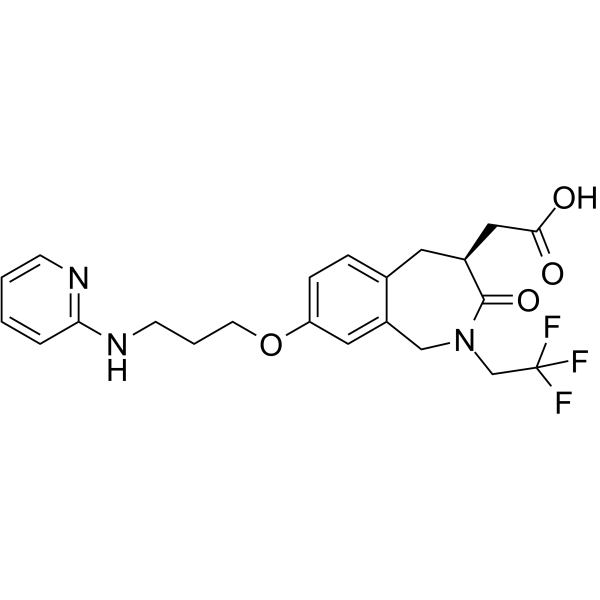
HMR 1031 is a very late antigen-4 (VLA4, i.e., integrin α4β1) inhibitor, with IC50 values of 0.7 nM and 0.3 nM against VLA-4/VCAM-1 and VLA-4/fibronectin, respectively. HMR 1031 blocks allergen-induced airway responses and airway inflammation in mouse and sheep models. HMR 1031 can be used in asthma-related research .
loading...
    loading...
Cat. No.: HY-P84957
Synonyms: Integrin alpha-X; CD11 antigen-like family member C; Leu M5; Leukocyte adhesion glycoprotein p150,95 alpha chain; Leukocyte adhesion receptor p150,95; CD antigen CD11c;
loading...
    loading...
Cat. No.: HY-19306
CAS No.: 205678-26-8
Target:  

Integrin

Research Areas:  

Cancer

SB-267268 is a selective and nonpeptidic alpha(v)beta3 (αvβ3) and alpha(v)beta5 (αvβ5) integrins antagonist, with Kis of 0.9, 0.5 and 0.7 nM for human αvβ3, monkey αvβ3 and human αvβ5, respectively. SB-267268 inhibits human and mouse αvβ3 with IC50s of 0.68 and 0.29 nM, respectively. SB-267268 reduces angiogenesis and VEGF expression .
loading...
    loading...
Cat. No.: HY-P11413
CAS No.: 139446-70-1
PAI-1 is a serine protease inhibitor (SERPIN). PAI-1 binds to and irreversibly inhibits uPA, tPA and furin; it also interacts with vitronectin, α1-acid glycoprotein, CRT, TLR4, proteasome α-3 subunit, uPAR, LRP1, Integrin αvβ3 and thrombin. PAI-1 regulates fibrinolysis, extracellular matrix turnover, cell migration, angiogenesis, inflammatory response and tissue remodeling; it mediates epithelial-mesenchymal transition (EMT)/endothelial-mesenchymal transition (EndMT), apoptosis and thrombus stabilization. PAI-1 can be used in research related to sepsis, acute lung injury, cardiovascular diseases, tissue fibrosis, diabetic nephropathy, obstructive nephropathy and non-insulin-dependent diabetes mellitus .
loading...
    loading...
Cat. No.: HY-P10934
CAS No.: 1095009-44-1
Synonyms: LXY2
Target:  

Integrin

Research Areas:  

Cancer

LXY3 (LXY2) is a VLA-3-blocking peptide that inhibits the interaction between integrin α3β1 (VLA-3) on neutrophil surfaces and laminin in the basement membrane, thereby preventing neutrophil migration across the tumor vascular basement membrane barrier. LXY3 is used to block neutrophil-mediated nanoparticle release from perivascular pools into the tumor interstitium. LXY3 is commonly employed for targeted imaging of breast cancer .
loading...
    loading...
Cat. No.: HY-P10993
CAS No.: 1407967-57-0
Target:  

Bcl-2 Family

Research Areas:  

Cancer

CT20p is an anticancer peptide based on the C hydrophobic terminus of Bax. CT20p has a unique cytotoxic effect independent of full-length Bax, and can act on mitochondria, leading to fusion-like aggregation and mitochondrial membrane hyperpolarization. CT20p can reduce α5β1 integrin levels and inhibit F-actin polymerization, thereby destroying the cytoskeleton and preventing cell attachment. CT20p can be used in the study of breast cancer .
loading...
    loading...
Cat. No.: HY-E70290
Synonyms: GALNT1
Research Areas:  

Cancer

N-Acetylgalactosaminyltransferase 1 (GALNT1) is a glycosyltransferase that initiates mucin-type O-glycosylation by transferring α-GalNAc from UDP-GalNAc to serine (Ser) or threonine (Thr) residues in proteins. Overexpression of N-Acetylgalactosaminyltransferase 1 in gastric cancer can promote abnormal O-glycosylation of CD44, thereby activating the Wnt/β-catenin signaling pathway and regulating the malignant behavior of gastric cancer cells. Additionally, N-Acetylgalactosaminyltransferase 1 plays a crucial role in cancer growth and metastasis by modifying the O-glycosylation of various glycoproteins, such as mucin (MUC1), osteopontin (OPN), matrix metalloproteinase-14 (MMP14), and integrin α3 .
loading...
    loading...
Cat. No.: HY-NP175
CAS No.: 9064-67-9
Collagen (bovine skin) is a three-dimensional cell culture matrix and morphoregulator extracted from bovine skin, which binds to integrins (such as α1β1, α2β1, α11β1) and discoidin domain receptors (DDR1 and DDR2). Collagen (bovine skin) can be reconstituted into a three-dimensional fibrous network to mimic the in vivo tissue environment. It can not only be modified through cross-linking or concentration adjustment, but also interact with fibronectin to enhance matrix-associated cellular activities. Collagen (bovine skin) mediates the proliferation, aggregation, durotactic migration and differentiation of fibroblasts, regulates the synthesis, remodeling and contraction of extracellular matrix, and modulates the expression, activation of MMP as well as cell apoptosis, etc. Collagen (bovine skin) can be used in studies related to the mechanisms of cancer occurrence and development .
loading...
    loading...
Cat. No.: HY-112948
CAS No.: 256928-75-3
Purity:  99.66%
Synonyms: 2MBC
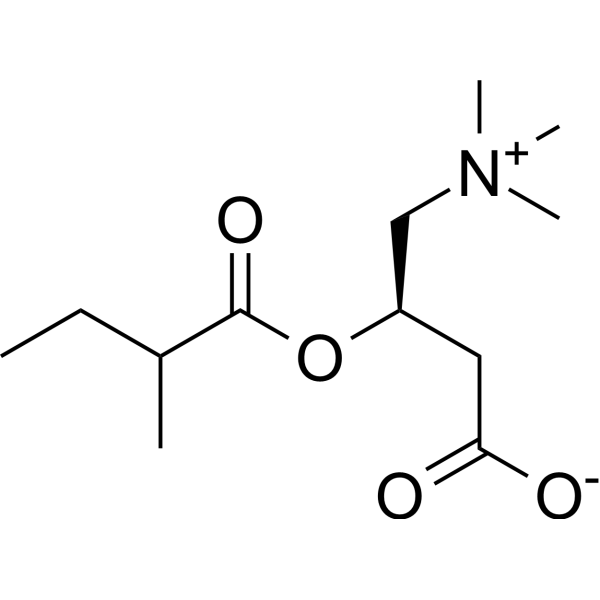
2-Methylbutyrylcarnitine (2MBC) is an orally active short-chain branched-chain acylcarnitine and a gut microbiota co-metabolite produced from 2-methylbutyric acid via branched-chain amino acid catabolism. 2-Methylbutyrylcarnitine activates platelet integrin α2β1 (Kd = 10.6 μM), initiates the downstream p38‑cPLA2 signaling cascade, elevates TXA2 production, and thereby enhances platelet hyperreactivity. 2-Methylbutyrylcarnitine can be used in research on atherosclerosis and thrombosis .
loading...
    loading...
Cat. No.: HY-W654264
Synonyms: 2MBC chloride
2-Methylbutyrylcarnitine chloride (2MBC chloride) is an orally active short-chain branched-chain acylcarnitine and a gut microbiota co-metabolite produced from 2-methylbutyric acid via branched-chain amino acid catabolism. 2-Methylbutyrylcarnitine chloride activates platelet integrin α2β1 (Kd = 10.6 μM), initiates the downstream p38‑cPLA2 signaling cascade, elevates TXA2 production, and thereby enhances platelet hyperreactivity. 2-Methylbutyrylcarnitine chloride can be used in research on atherosclerosis and thrombosis .
loading...
    loading...
Cat. No.: HY-P1189
CAS No.: 154303-05-6
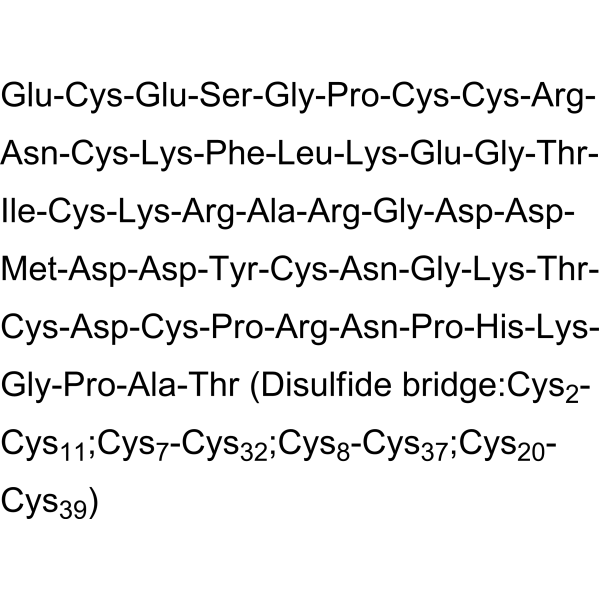
Echistatin is a naturally derived RGD-containing snake venom peptide. Echistatin exhibits an IC50 of 0.6 nM against mouse αvβ3 integrin, and acts as an antagonist against αvβ3, αII3, α5β1 integrins, pp125 FAK and paxillin. Echistatin reduces the phosphorylation of pp125 FAK and paxillin, inhibits the autophosphorylation and kinase activity of pp125 FAK, and weakens its binding to pp60src and paxillin. Echistatin disrupts the actin cytoskeleton and focal adhesions, induces melanoma cell detachment from fibronectin, and regulates cell adhesion and motility. Echistatin inhibits osteoclast maturation and migration, bone resorption, platelet aggregation, bone loss, as well as adhesion and metastasis of Lewis lung cancer cells; it also increases the number of osteoclasts and bone coverage area in mice with secondary hyperparathyroidism. Echistatin can be used in research related to melanoma, lung cancer and secondary hyperparathyroidism .
loading...
    loading...
Cat. No.: HY-P1189A
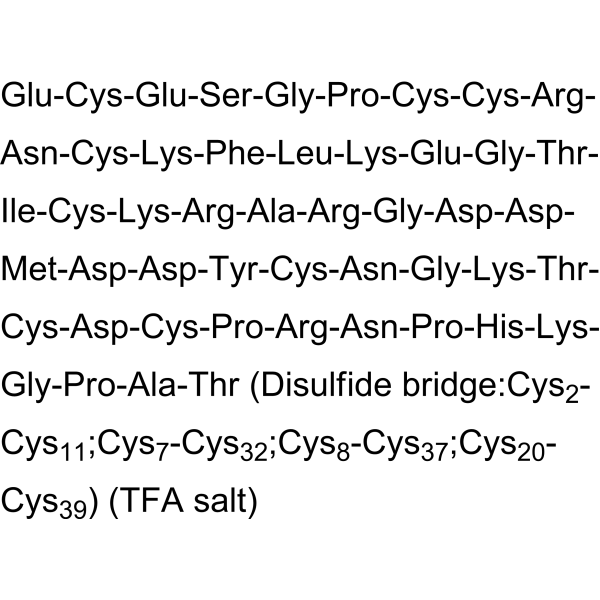
Echistatin TFA is a naturally derived RGD-containing snake venom peptide. Echistatin TFA exhibits an IC50 of 0.6 nM against mouse αvβ3 integrin, and acts as an antagonist against αvβ3, αII3, α5β1 integrins, pp125 FAK and paxillin. Echistatin TFA reduces the phosphorylation of pp125 FAK and paxillin, inhibits the autophosphorylation and kinase activity of pp125 FAK, and weakens its binding to pp60src and paxillin. Echistatin TFA disrupts the actin cytoskeleton and focal adhesions, induces melanoma cell detachment from fibronectin, and regulates cell adhesion and motility. Echistatin TFA inhibits osteoclast maturation and migration, bone resorption, platelet aggregation, bone loss, as well as adhesion and metastasis of Lewis lung cancer cells; it also increases the number of osteoclasts and bone coverage area in mice with secondary hyperparathyroidism. Echistatin TFA can be used in research related to melanoma, lung cancer and secondary hyperparathyroidism .
loading...
    loading...
Cat. No.: HY-P11087
CAS No.: 134335-45-8
Target:  

Collagen RUNX Integrin

Research Areas:  

Inflammation/Immunology

P15 is a type I collagen-mimetic peptide with pro-adhesive properties. P15 binds to membrane integrin, including α2β1, to mediate cell adhesion and trigger the production of growth factors and cytokines. P15 upregulates the expression of osteogenic genes via targets including RUNX2, OSTRX and BSP. P15 stimulates the adhesion and proliferation of osteoblasts, enhances alkaline phosphatase activity and calcium deposition, and supports osteogenic differentiation. P15 can be used in research related to periodontal bone defects, cervical intervertebral disc defects, and non-union/bone defects .
loading...
    loading...
Cat. No.: HY-122585
CAS No.: 2138321-18-1
Target:  

MMP Src FAK

Research Areas:  

Cancer

proMMP-9 inhibitor-3c (compound 3c) is a potent proMMP-9 inhibitor. proMMP-9 inhibitor-3c is specific for binding to the proMMP-9 hemopexin-like domain (Kd=320 nM). proMMP-9 inhibitor-3c disruption of MMP-9 homodimerization prevents association of proMMP-9 with both α4β1 integrin and CD44 and results in the dissociation of EGFR. This disruption results in decreased phosphorylation of Src and its downstream target proteins focal adhesion kinase (FAK) and paxillin (PAX) .
loading...
    loading...
Cat. No.: HY-181606
Research Areas:  

Neurological Disease Cancer

Cyclo (phg-isoDGR-k)-PEG4-non-cleavable-SAR405838 is a dual MDM2 and α5β1 integrin modulator. Cyclo (phg-isoDGR-k)-PEG4-non-cleavable-SAR405838 acts as an antiproliferative agent, apoptosis inducer and cell cycle regulator, induces reactivation of p53 and upregulation of p21, redistributes glioblastoma cells from the G0/G1 phase to the G2/M phase, and enhances apoptosis. Cyclo (phg-isoDGR-k)-PEG4-non-cleavable-SAR405838 is applicable to the research of glioblastoma .
loading...
    loading...

